• Fri frakt över 249 kr
  • •
  • Snabba leveranser
  • •
  • Billiga böcker
Kundservice

Du är på sajten för privatpersoner.

Företag, bibliotek eller offentlig verksamhet?

Du handlar på classic.bokus.com, där alla dina funktioner finns intakta.
Till classic.bokus.com
Bokus logotyp. Gå till startsidan.
  • Erbjudanden
  • Nyheter
  • Student
  • Topplistor
  • Barn & ungdom
  • Bokus Play
  • E-böcker
  • Pocketböcker
  • Spel & pussel

Må bättre, för mindre! Upp till 50% rabatt på hälsoböcker

Sidfot

Mina sidor

    Hjälp

    • Kundservice
    • Vanliga frågor och svar
    • Frakt och leverans
    • Retur vid ångerrätt
    • Reklamera vara
    • Betalning
    • Köpvillkor
    • Allmänna villkor
    • Information om webbplatsens tillgänglighet

    Om Bokus

    • Om oss
    • Pressrum
    • För studenter
    • För företag
    • För bibliotek och offentlig verksamhet
    • För leverantörer
    • Hållbarhet

    Populärt

    • Aktuella erbjudanden
    • Presentkort
    • Studentlitteratur
    • Nya böcker
    • Topplistor
    • Signerade böcker
    • Engelska böcker

    Inspiration

    • Boktips
    • BookTok
    • Populära bokserier
    • Barnbokskaraktärer
    • Populära författare
    Logotyp för Bokus
    Följ oss på Facebook (extern länk)Följ oss på Instagram (extern länk)Följ oss på YouTube (extern länk)Följ oss på TikTok (extern länk)
    bokus @ CookiesAnpassa cookiesIntegritetspolicyKöpvillkor
    Till Citymail hemsida (extern länk)Till Budbee hemsida (extern länk)Till Postnord hemsida (extern länk)Till Schenker hemsida (extern länk)Till Early Bird hemsida (extern länk)Till Walleys hemsida (extern länk)
    1. Historia och arkeologi
    2. Arkeologi

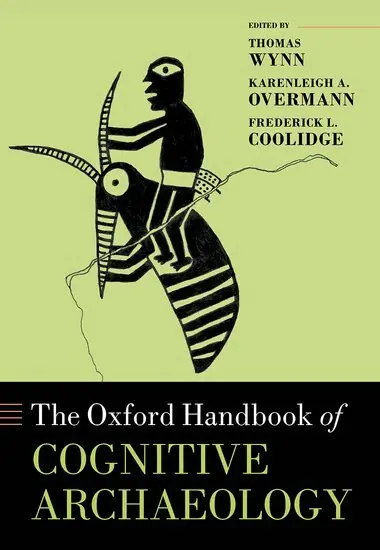
    The Oxford Handbook of Cognitive Archaeology

    AvThomas Wynn,Karenleigh Overmann

    Inbunden, Engelska, 2024

    Del i serien Oxford Library of Psychology

    3 095 kr

    Beställningsvara. Skickas inom 5-8 vardagar. Fri frakt över 249 kr.

    Beskrivning

    Cognitive Archaeology is a relatively young though fast growing discipline. The intellectual heart of cognitive archaeology is archaeology, the discipline that investigates the only direct evidence of the actions and decisions of prehistoric people. Its theories and methods are an eclectic mix of psychological, neuroscientific, paleoneurological, philosophical, anthropological, ethnographic, comparative, aesthetic, and experimental theories, methods, and models, united only by their focus on cognition. The Oxford Handbook of Cognitive Archaeology is a landmark publication, showcasing the theories, methods, and accomplishments of archaeologists who investigate the human mind, including its evolutionary development, its ideation (thoughts and beliefs), and its very nature-through material forms. The volume encompasses the wide spectrum of the discipline, showcasing contributions from more than 50 established and emerging scholars from Europe, Africa, Asia, Australia, and the Americas. Prominent among these are contributions that discuss the epistemological frameworks of both the evolutionary and ideational approaches and the leading theories that ground interpretations. Significantly, the majority of chapters deliver substantive contributions that analyze specific examples of material culture, from the oldest known stone tools to ceramic and rock art traditions of the recent millennium. These examples include the gamut of methods and techniques, including typology, replication studies, chaînes operatoires, neuroarchaeology, ethnographic comparison, and the direct historical approach. In addition, the book begins with retrospective essays by several of the pioneers of cognitive archaeology, presenting a broad range of state-of-the-art investigations into cognitive abilities, tackling thorny issues like the cognitive status of Neandertals, and concluding with speculative essays about the future of an archaeology of mind, and of the mind itself.

    Produktinformation

    • Utgivningsdatum:2024-03-27
    • Mått:180 x 255 x 60 mm
    • Vikt:2 422 g
    • Format:Inbunden
    • Språk:Engelska
    • Serie:Oxford Library of Psychology
    • Antal sidor:1 328
    • Förlag:OUP OXFORD
    • ISBN:9780192895950

    Utforska kategorier

    • Arkeologi inom Historia och arkeologi
    • Socialpsykologi och gruppsykologi inom Psykologi och pedagogik
    • Kognitiv psykologi inom Psykologi och pedagogik

    Mer om författaren

    Thomas Wynn is Distinguished Professor of Anthropology at the University of Colorado, Colorado Springs, where he has taught since 1977. He earned his PhD in Anthropology at the University of Illinois, Urbana. His training was in the archaeology of the Lower Palaeolithic (early Stone Age). His doctoral research opened a hitherto unexplored direction in Palaeolithic studies - the explicit use of psychological theory to interpret archaeological remains. He has published extensively in Palaeolithic studies (150+ articles and book chapters), with a particular emphasis on cognitive evolution.Karenleigh A. Overmann earned her doctorate in archaeology from the University of Oxford as a Clarendon scholar in 2016. In June 2020, she completed two years of postdoctoral research at the University of Bergen (MSCA individual fellowship, EU project 785793), and she was a visiting scholar at the University of Pittsburgh from Sept. 2020 to June 2021. She is currently an associate professor of anthropology (adjunct) and co-director of the Center for Cognitive Archaeology at the University of Colorado, Colorado Springs.Frederick L. Coolidge has a BA, MA, and PhD in Psychology from the University of Florida (UF) and completed a 2-year Postdoctoral Fellowship in Clinical Neuropsychology at UF. He worked as Forensic Psychologist at the South Florida State Mental Hospital before beginning his academic career at the University of Colorado, Colorado Springs (UCCS). He has received three Fulbright Fellowships to India (1987, 1992, 2005) and in 2015 was appointed Senior Visiting Scholar at Oxford University (Keble College). He received the annual UCCS research award, three UCCS teaching awards and awarded the title University of Colorado Presidential Teaching Scholar.

    Innehållsförteckning

    • 1: The archaeology of mind-Past, present, and future 2: Ideas of cognitive evolution in the making 3: Rock art and cognitive archaeology: A personal Southern African journey 4: Redescribing the Oldowan 5: Insights into the cognitive abilities of Oldowan and Acheulean hominins: Experimental approaches 6: The expert Neandertal mind and brain, revisited 7: What is cognitive archaeology? The material engagement approach 8: From technical reasoning to cumulative technological culture 9: Evolutionary neuroarchaeology 10: More than the sum of their parts? Networks as methods and as heuristics in cognitive archaeology 11: Towards an ecology of evolving skills 12: The evolution of human causal cognition 13: On the problem of the interpretation of symbols and symbolism in archaeology 14: Investigating cognitive abilities of early humans: The Windows Approach 15: Thinking, for example in and about the past: Approaches to ideational cognitive archaeology 16: Methods in neuroarchaeology 17: Experimental archaeology enables inferences about human cognition 18: Prehistoric numeracy: Approaches, assumptions, and issues 19: Systematically reconstructing behavioral architectures as a basis for cognitive archaeology 20: Tool use by New Caledonian crows can inform cognitive archaeology: A case study using Observational Action Coding 21: A Pleistocene record of making symbols 22: The cultural ecology of fear: Human funerary cognition in evolutionary perspective 23: Current conceptions of human cognition in understanding the origins of human art 24: The relevance of geometry to understanding human evolution from the perspective of cognitive domains and the Neurovisual Resonance Theory 25: The deep history of musicality: Evolutionary cognitive archaeology and music 26: The neuro-archaeology of language origins 27: Where are the children? Archaeological evidence of children in the hunter-gatherer societies of the Upper European Paleolithic