Tim Ayers - Böcker
Visar alla böcker från författaren Tim Ayers. Handla med fri frakt och snabb leverans.
7 produkter
7 produkter
Del 6 - Corpus Vitrearum Medii Aevi, Great Britain
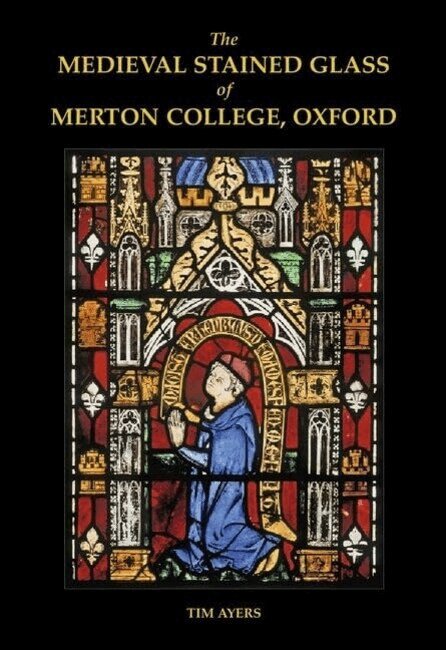
The Medieval Stained Glass of Merton College, Oxford
2013
3 512 kr
Skickas inom 7-10 vardagar
This is the first full study of the important medieval stained glass of Merton College, Oxford. The scheme in the chapel is exceptionally well preserved; with the nave of York Minster, it represents the largest surviving set of early fourteenth-century windows in Britain. Research for this volume in the rich college archives has provided a new date for them, and identified the glazier, whose business is considered locally. Outstanding early fifteenth-century panels from the transepts are attributed to the workshop of Thomas Glazier, who had worked for William of Wykeham, Chancellor of England. Seven windows in the Old Library contain the earliest glazing to survive from any English library. The glass will therefore be of interest to many students of English medieval art and architecture. A general introduction also explores the potential of the monument for study within a university context. Merton was a model for the self-governing graduate college of the later middle ages in England. The glass invites consideration of the relationship between art and ideas, in a lost astrological window, for example; and the self-presentation of the scholar and college communities, both to themselves and to the society that supported them. As a result of the central place of the universities in national life, the Merton glass was an inspiration during the Gothic revival to artists and glazing businesses such as the Pre-Raphaelite John Everett Millais, and Morris, Marshall, Faulkner & Co. The medieval glass is catalogued, fully illustrated and supported with restoration diagrams. There are forty colour plates. The post-medieval glass is also catalogued.
579 kr
Skickas inom 10-15 vardagar
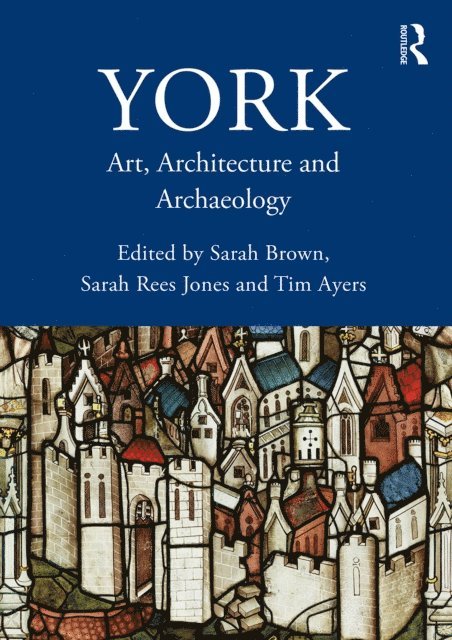
York explores the archaeology, art, architecture and cultural heritage of the city in the late Middle Ages.In the years since the resurrection of the British Archaeological Association conference in 1976, the association has met in the city only once (in 1988), for a conference that celebrated Yorkshire Monasticism. As a consequence, the secular and vernacular architecture as well as the architecture, art and imagery of York Minster were excluded from its scope, something redressed in the meeting that took place in 2017. As many recent publications have focused on York in the earlier medieval period, this book shines a much-needed light on the city in the later medieval ages. Starting with a range of essays on York Minster by authors directly involved in major conservation projects undertaken in the last ten years, the book also includes information on the vernacular architecture and transport infrastructure of York, as well as the parochial and material culture of the period. Illuminating the extensive resources for the study of the late Middle Ages in England’s second capital, this book provides new research on this important city and will be suitable for researchers in medieval archaeology, art history, literature and material culture.
2 150 kr
Skickas inom 10-15 vardagar
York explores the archaeology, art, architecture and cultural heritage of the city in the late Middle Ages.In the years since the resurrection of the British Archaeological Association conference in 1976, the association has met in the city only once (in 1988), for a conference that celebrated Yorkshire Monasticism. As a consequence, the secular and vernacular architecture as well as the architecture, art and imagery of York Minster were excluded from its scope, something redressed in the meeting that took place in 2017. As many recent publications have focused on York in the earlier medieval period, this book shines a much-needed light on the city in the later medieval ages. Starting with a range of essays on York Minster by authors directly involved in major conservation projects undertaken in the last ten years, the book also includes information on the vernacular architecture and transport infrastructure of York, as well as the parochial and material culture of the period. Illuminating the extensive resources for the study of the late Middle Ages in England’s second capital, this book provides new research on this important city and will be suitable for researchers in medieval archaeology, art history, literature and material culture.
2 421 kr
Skickas inom 7-10 vardagar
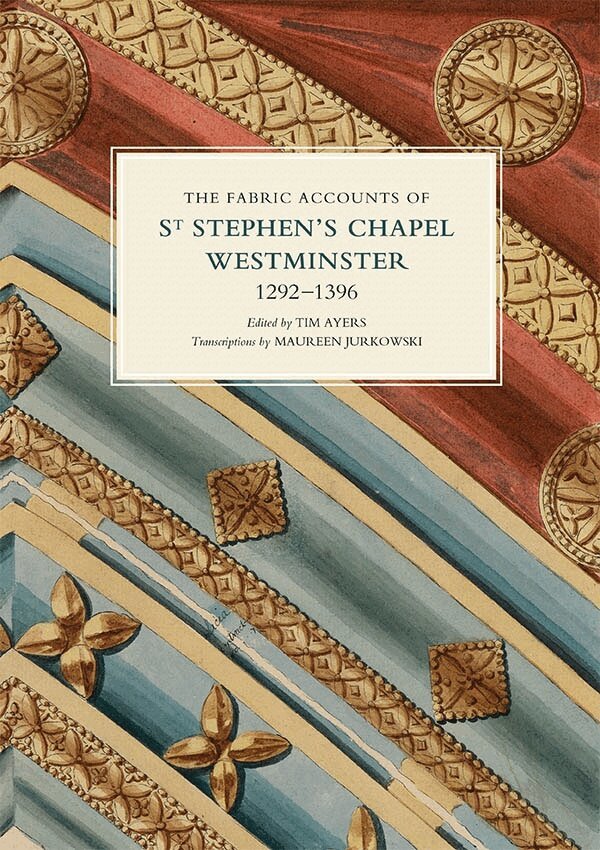
First publication, with English translation, of the accounts of the building of St Stephen's Chapel.Begun by Edward I in 1292 and finished by Edward III, the rebuilding and decoration of St Stephen's chapel took three reigns and over 60 years to complete (accommodation for the associated college of secular clergy was still underconstruction in the 1390s). The chapel stood at the heart of the palace of Westminster, the pre-eminent centre of English royal government and ceremonial. Produced by the royal Exchequer and now in The National Archives, the fabric accounts for St Stephen's are exceptionally rich, but have not been fully published until now.This edition comprises over sixty rolls, from between 1292 and 1396, documenting in meticulous detail a building of spectacularmagnificence. They are of international importance as evidence for medieval crafts, especially masonry, carpentry, painting and glass-painting, recording many hundreds of people, their organisation and working practices, and their materials and sources of supply. As primary sources for a major project in the king's works, the accounts also have a special significance for the study of English royal patronage and political culture.An extensive introduction sets out their history, structure and context; the Latin text is presented with a facing translation, critical apparatus and indices.
1 445 kr
Skickas inom 7-10 vardagar
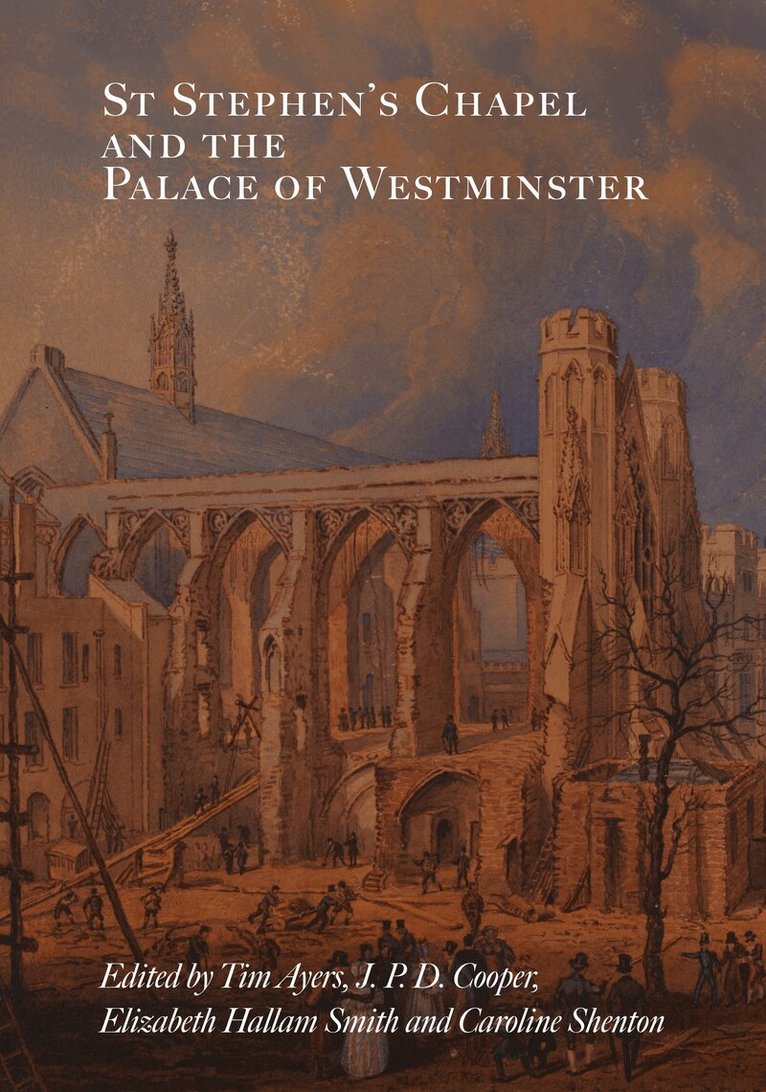
Traces the history of a magnificent landmark in the history of late medieval art and architecture.As the principal royal chapel in the medieval Palace of Westminster, St Stephen's was at the centre of worship for the Plantagenets, a major collegiate foundation of a new kind for the mid-fourteenth century, and a community of national significance in the development of sacred polyphony. During the Reformation, the Chapel was converted into a meeting place for the House of Commons, which it remained for 300 years, shaping the development of British political culture. Its influence continues to be felt today in the design of the Commons chamber. Following the disastrous Palace fire of 1834, the site of the upper chapel was rebuilt as St Stephen's Hall, a gallery of national history, leading to the Central Lobby of the Houses of Parliament.This book tells the story of St Stephen's Chapel, from the thirteenth century to the present day. Sixteen chapters explain the building and its religious life, its political significance, and the antiquarian rediscovery of its former magnificence. Contributors highlight the interaction between visual and political culture; the contexts of kingship and international rivalry that informed the foundation and construction of chapel and college; the effect of medieval St Stephen's on the development of the House of Commons; the adaptation and re-use of St Mary Undercroft; and the creation of St Stephen's Hall in the 1840s. The hall would become a site of Suffragette activism in the campaign for Votes for Women, marked today by a monumental artwork New Dawn, which is the focus of the final chapter.
424 kr
Skickas inom 7-10 vardagar
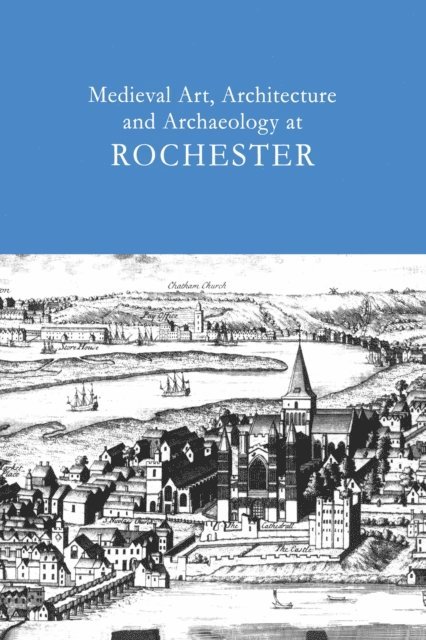
This collection of papers, first delivered at the BAA's annual conference in 2002, celebrates medieval Rochester, including both cathedral and castle, an outstanding pair of surviving monuments to the power of contemporary church and state. The contributions demonstrate the great interest of these understudied buildings, their furnishings, and historical and archaeological contexts: from the rich documentary evidence for the Anglo-Saxon town to the substantial surviving fabric of the 11th, 12th and 13th centuries. Shrines, monuments, woodwork and seals are all fully covered, as well as the medieval monks themselves. There is also a piece on Archbishop Courtenay's foundation of the nearby collegiate church at Maidstone, Kent.
1 064 kr
Skickas inom 5-8 vardagar
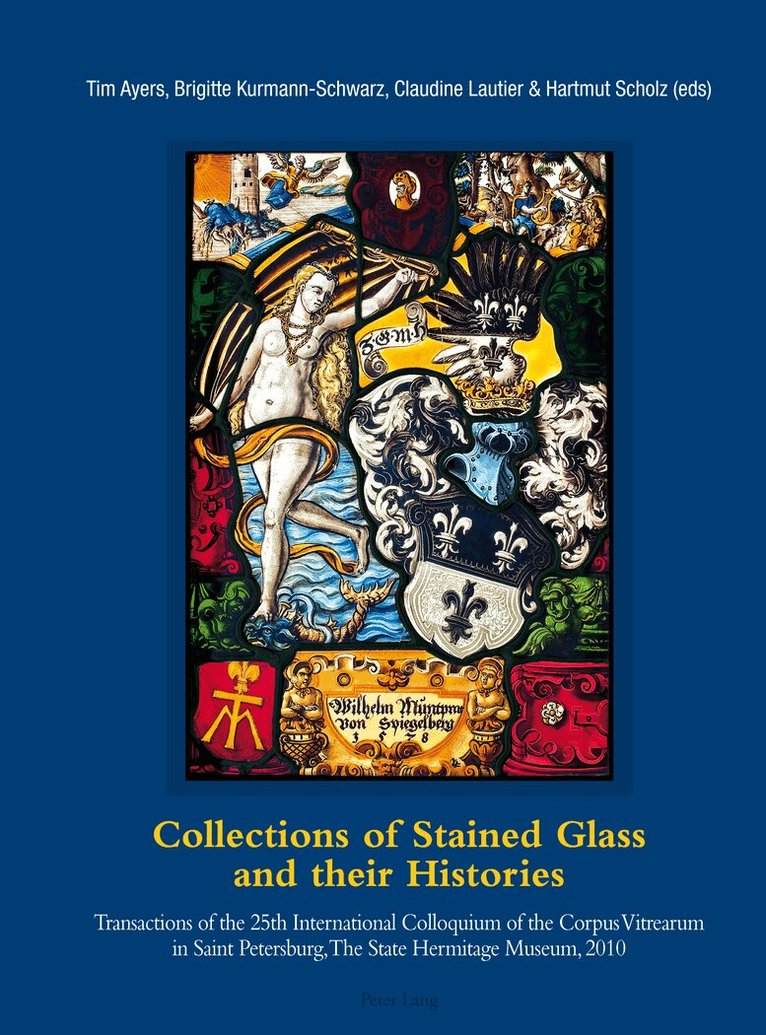
At the 25th International Colloquium of the Corpus Vitrearum, which took place in one of the greatest of all museums, The Hermitage in St. Petersburg, the researchers of many countries discussed stained glass collections for the first time. The present conference transactions, published in the three official languages of the international Corpus Vitrearum, are dedicated to the reawakening of interest in ancient stained glass from the late eighteenth century. The contributions are concerned partly with the creation of collections and the motives of their collectors, but also with the odyssey of various panels and groups of windows. Other studies address wider aspects of the history of collections and the museum display of stained glass.Anlässlich des 25. Internationalen Kolloquiums des Corpus Vitrearum, das in einem der größten und bedeutendsten Museen der Welt, der Staatlichen Eremitage in Sankt Petersburg, stattfand, wurden Glasmalereisammlungen erstmals von einer internationalen Autorengruppe des Corpus Vitrearum breit diskutiert. Die Beiträge in den drei offiziellen Sprachen des Corpus Vitrearum behandeln das wiedererwachte Interesse an alter Glasmalerei. Die Autoren widmen sich der Entstehung bestimmter Sammlungen, der Motivation der Sammler, oder aber der Odyssee ausgewählter Denkmäler sowie sammlungsgeschichtlichen Aspekten bis hin zu Fragen der musealen Präsentation von Glasmalereien.Lors du 25e Colloque international du Corpus Vitrearum qui a eu lieu à l’Ermitage de Saint-Pétersbourg, un des plus grands et des plus prestigieux musées, les chercheurs venus de nombreux pays ont discuté pour la première fois des collections de vitraux. Les contributions aux actes du colloque, publiées dans les trois langues officielles du Corpus Vitrearum international, sont consacrées au réveil de l’intérêt pour le vitrail ancien. Les articles sont consacrés à la création de plusieurs collections et aux motivations des collectionneurs, ou bien encore à l’odyssée que des panneaux ou des groupes de vitraux ont vécue. Certaines études traitent de l’histoire des collections, des aspects plus généraux du collectionnisme ou de la muséographie du vitrail.