Tony Atkinson - Böcker
Visar alla böcker från författaren Tony Atkinson. Handla med fri frakt och snabb leverans.
6 produkter
6 produkter
2 106 kr
Skickas inom 5-8 vardagar
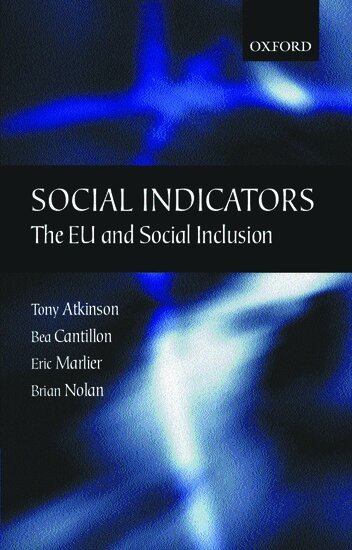
Social indicators are an important tool for evaluating a country's level of social development and for assessing the impact of policy. Such indicators are already in use in investigating poverty and social exclusion in several European countries and have begun to play a significant role in advancing the social dimension of the European Union as a whole. The purpose of this book is to make a scientific contribution to the development of social indicators for the purposes of European policy-making. It considers the principles underlying the construction of policy-relevant indicators, the definition of indicators, and the issues that arise in their implementation, including that of the statistical data required. It seeks to bring together theoretical and methodological methods in the measurement of poverty/social exclusion with the empirical practice of social policy. The experience of Member States is reviewed, including an assessment of the National Action Plans on Social Inclusion submitted for the first time in June 2001 by the fifteen EU governments. The key areas covered by the book are poverty, including its intensity and persistence, income inequality, non-monetary deprivation, low educational attainment, unemployment, joblessness, poor health, poor housing and homelessness, functional illiteracy and innumeracy, and restricted social participation. In each case, the book assesses the strengths and weaknesses of different indicators relevant to social inclusion in the European Union, and makes recommendations for the indicators to be employed.Indicators for Social Inclusion in the European Union is being published at a critical stage in the evolution of the social agenda of the European Union. It is hoped that the report will play a role in widening public debate about the social dimension of Europe and that it will be of value to the social partners, to non-governmental and grass roots organizations, and to those living in poverty and social exclusion. It seeks to provide both a constructive background document at a crucial juncture in the evolution of the social dimension of the European Union and a reference work of continuing value.
1 043 kr
Skickas inom 5-8 vardagar
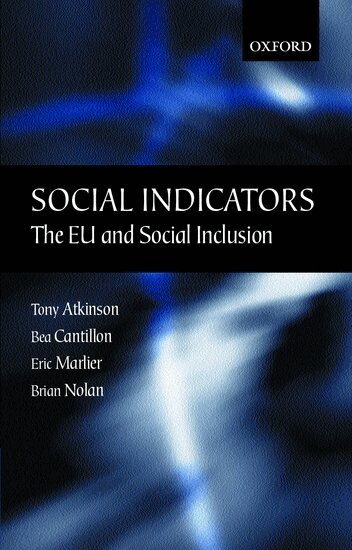
Social indicators are an important tool for evaluating a country's level of social development and for assessing the impact of policy. Such indicators are already in use in investigating poverty and social exclusion in several European countries and have begun to play a significant role in advancing the social dimension of the European Union as a whole. The purpose of this book is to make a scientific contribution to the development of social indicators for the purposes of European policy-making. It considers the principles underlying the construction of policy-relevant indicators, the definition of indicators, and the issues that arise in their implementation, including that of the statistical data required. It seeks to bring together theoretical and methodological methods in the measurement of poverty/social exclusion with the empirical practice of social policy. The experience of Member States is reviewed, including an assessment of the National Action Plans on Social Inclusion submitted for the first time in June 2001 by the fifteen EU governments. The key areas covered by the book are poverty, including its intensity and persistence, income inequality, non-monetary deprivation, low educational attainment, unemployment, joblessness, poor health, poor housing and homelessness, functional illiteracy and innumeracy, and restricted social participation. In each case, the book assesses the strengths and weaknesses of different indicators relevant to social inclusion in the European Union, and makes recommendations for the indicators to be employed.Social Indicators is being published at a critical stage in the evolution of the social agenda of the European Union. It will play a role in widening public debate about the social dimension of Europe and it will be of value to the social partners, to non-governmental and grass roots organizations, and to those living in poverty and social exclusion. It seeks to provide both a constructive background document at a crucial juncture in the evolution of the social dimension of the European Union and a reference work of continuing value.
2 305 kr
Skickas inom 10-15 vardagar
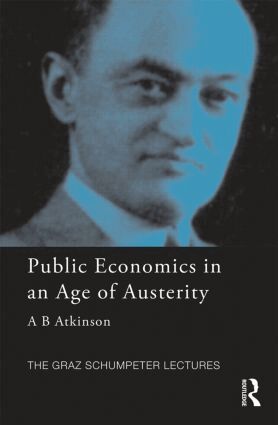
Governments all round the world are facing problems with their public finances. At a time of austerity, how much should spending be cut and how much should taxes be raised? Does the national debt represent a burden for future generations? Should taxes on the rich be raised? This book examines how the tools of public economics can be applied to answer such key questions and to suggest alternatives to the austerity policies currently being pursued.The fiscal problems faced are not simply the result of the post-2008 economic crisis but reflect a deep-seated fault line in modern economies. There has to be fiscal consolidation to provide for an ageing population, increased investment in education, and climate change. The book describes how public economics can help us think about alternative ways of meeting this challenge. It casts doubt on conventionally held views, such as those concerned with top tax rates, the undesirability of taxing capital income, the targeting of child benefits, and the merging of income tax and social security contributions. The final part goes beyond national boundaries and considers global public economics, focusing on the pressing problem of financing development.The conclusion of the book is that there are significant choices to be made. Not all austerity packages are the same: there are alternatives. It would be possible to raise taxes more and to cut spending less. It is important to consider the full range of possible policies. In considering these alternatives, modern public economics provides a useful framework, but it has major limitations. Economists are too often prisoners within the theoretical walls they have erected and fail to see that important considerations are missing. Economists have paid too little attention to the ethical basis underlying their policy recommendations.
696 kr
Skickas inom 10-15 vardagar
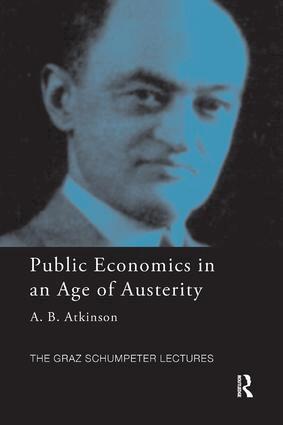
Governments all round the world are facing problems with their public finances. At a time of austerity, how much should spending be cut and how much should taxes be raised? Does the national debt represent a burden for future generations? Should taxes on the rich be raised? This book examines how the tools of public economics can be applied to answer such key questions and to suggest alternatives to the austerity policies currently being pursued.The fiscal problems faced are not simply the result of the post-2008 economic crisis but reflect a deep-seated fault line in modern economies. There has to be fiscal consolidation to provide for an ageing population, increased investment in education, and climate change. The book describes how public economics can help us think about alternative ways of meeting this challenge. It casts doubt on conventionally held views, such as those concerned with top tax rates, the undesirability of taxing capital income, the targeting of child benefits, and the merging of income tax and social security contributions. The final part goes beyond national boundaries and considers global public economics, focusing on the pressing problem of financing development. The conclusion of the book is that there are significant choices to be made. Not all austerity packages are the same: there are alternatives. It would be possible to raise taxes more and to cut spending less. It is important to consider the full range of possible policies. In considering these alternatives, modern public economics provides a useful framework, but it has major limitations. Economists are too often prisoners within the theoretical walls they have erected and fail to see that important considerations are missing. Economists have paid too little attention to the ethical basis underlying their policy recommendations.
444 kr
Skickas inom 7-10 vardagar
Social cohesion is one of the declared objectives of the European Union and, with some 16% of EU citizens at risk of poverty, the need to fight poverty and social exclusion continues as a major challenge. This book provides an in-depth analysis of the EU Social Inclusion Process, the means by which it hopes to meet this objective, and explores the challenges ahead at local, regional, national and EU levels. It sets out concrete proposals for taking the Process forward.The book provides a unique analysis of policy formulation and assessment. Setting out the evolution and current state of EU cooperation in social policy, it examines what can be learned about poverty and social exclusion from the EU commonly agreed indicators. Taking the position of outside, but informed, observers, the authors explore the further development of the common indicators, including the implications of Enlargement, and consider the challenges of advancing the Social Inclusion Process - strengthening policy analysis, embedding the Process in domestic policies and making it more effective. Proposing the setting of targets and restructuring of National Action Plans and their implementation, they emphasise the need for widespread "ownership" of the Process at domestic and EU level and for it to demonstrate significant progress in reducing poverty and social exclusion.The book will be invaluable to academics, students and policy-makers at sub-national, national and EU levels as well as to social partners, and NGOs working towards a more inclusive society.
1 199 kr
Skickas inom 7-10 vardagar
Social cohesion is one of the declared objectives of the European Union and, with some 16% of EU citizens at risk of poverty, the need to fight poverty and social exclusion continues as a major challenge. This book provides an in-depth analysis of the EU Social Inclusion Process, the means by which it hopes to meet this objective, and explores the challenges ahead at local, regional, national and EU levels. It sets out concrete proposals for taking the Process forward.The book provides a unique analysis of policy formulation and assessment. Setting out the evolution and current state of EU cooperation in social policy, it examines what can be learned about poverty and social exclusion from the EU commonly agreed indicators. Taking the position of outside, but informed, observers, the authors explore the further development of the common indicators, including the implications of Enlargement, and consider the challenges of advancing the Social Inclusion Process - strengthening policy analysis, embedding the Process in domestic policies and making it more effective. Proposing the setting of targets and restructuring of National Action Plans and their implementation, they emphasise the need for widespread "ownership" of the Process at domestic and EU level and for it to demonstrate significant progress in reducing poverty and social exclusion.The book will be invaluable to academics, students and policy-makers at sub-national, national and EU levels as well as to social partners, and NGOs working towards a more inclusive society.