Bea Cantillon - Böcker
Visar alla böcker från författaren Bea Cantillon. Handla med fri frakt och snabb leverans.
10 produkter
10 produkter
956 kr
Skickas inom 5-8 vardagar
In 2000, the first social agenda in the history of the European Union was launched, and the endeavor to combat poverty came increasingly to the forefront as a specific area for EU policy cooperation and coordination. Regrettably, however, little progress has been achieved so far, either at the national or European level. On the contrary, the EU's social fabric is under major stress: convergence in national living standards has halted or reversed while progress in terms of poverty reduction in the last decades has been disappointing in most EU Member States. In Europe, despite high social spending and work-related welfare reforms, poverty often remains a largely intractable problem for policymakers and a persistent reality for many European citizens. In Decent Incomes for All, the authors shed new light on recent poverty trends in the European Union and the corresponding responses by European welfare states. They analyze the effect of social and fiscal policies before, during, and after the recent economic crisis and study the impact of alternative policy packages on poverty and inequality. The volume also explores how social investment and local initiatives of social innovation can contribute to tackling poverty, while recognizing that there are indeed structural constraints on the increase of the social floor and difficult trade-offs involved in reconciling work and poverty reduction. Academics and graduate students in comparative social policy, inclusion and anti-poverty policy, sociology, and public economics will find the book to be a particularly helpful resource in their work.
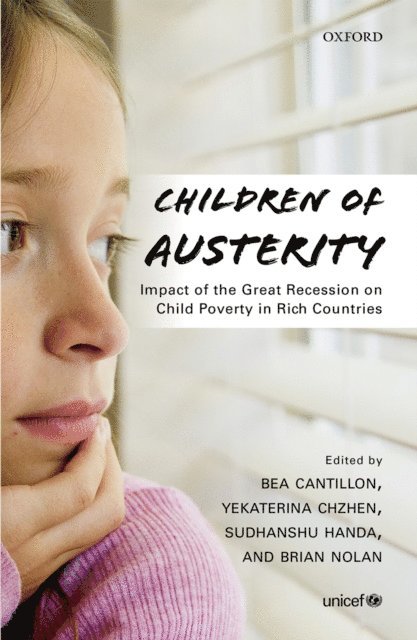
Children of Austerity
Impact of the Great Recession on Child Poverty in Rich Countries
Inbunden, Engelska, 2017
1 792 kr
Skickas inom 5-8 vardagar
The 2008 financial crisis triggered the worst global recession since the Great Depression. Many OECD countries responded to the crisis by reducing social spending. Through 11 diverse country case studies (Belgium, Germany, Greece, Hungary, Ireland, Italy, Japan, Spain, Sweden, United Kingdom, and the United States), this volume describes the evolution of child poverty and material well-being during the crisis, and links these outcomes with the responses by governments. The analysis underlines that countries with fragmented social protection systems were less able to protect the incomes of households with children at the time when unemployment soared. In contrast, countries with more comprehensive social protection cushioned the impact of the crisis on households with children, especially if they had implemented fiscal stimulus packages at the onset of the crisis. Although the macroeconomic 'shock' itself and the starting positions differed greatly across countries, while the responses by governments covered a very wide range of policy levers and varied with their circumstances, cuts in social spending and tax increases often played a major role in the impact that the crisis had on the living standards of families and children.
2 106 kr
Skickas inom 5-8 vardagar
Social indicators are an important tool for evaluating a country's level of social development and for assessing the impact of policy. Such indicators are already in use in investigating poverty and social exclusion in several European countries and have begun to play a significant role in advancing the social dimension of the European Union as a whole. The purpose of this book is to make a scientific contribution to the development of social indicators for the purposes of European policy-making. It considers the principles underlying the construction of policy-relevant indicators, the definition of indicators, and the issues that arise in their implementation, including that of the statistical data required. It seeks to bring together theoretical and methodological methods in the measurement of poverty/social exclusion with the empirical practice of social policy. The experience of Member States is reviewed, including an assessment of the National Action Plans on Social Inclusion submitted for the first time in June 2001 by the fifteen EU governments. The key areas covered by the book are poverty, including its intensity and persistence, income inequality, non-monetary deprivation, low educational attainment, unemployment, joblessness, poor health, poor housing and homelessness, functional illiteracy and innumeracy, and restricted social participation. In each case, the book assesses the strengths and weaknesses of different indicators relevant to social inclusion in the European Union, and makes recommendations for the indicators to be employed.Indicators for Social Inclusion in the European Union is being published at a critical stage in the evolution of the social agenda of the European Union. It is hoped that the report will play a role in widening public debate about the social dimension of Europe and that it will be of value to the social partners, to non-governmental and grass roots organizations, and to those living in poverty and social exclusion. It seeks to provide both a constructive background document at a crucial juncture in the evolution of the social dimension of the European Union and a reference work of continuing value.
1 043 kr
Skickas inom 5-8 vardagar
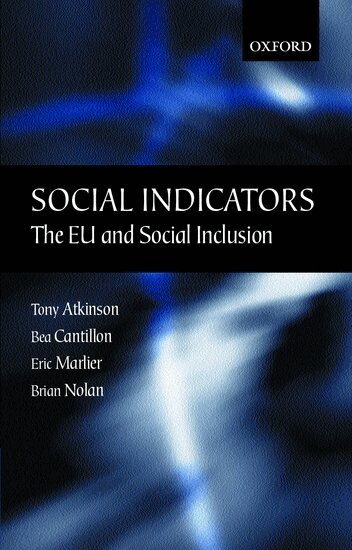
Social indicators are an important tool for evaluating a country's level of social development and for assessing the impact of policy. Such indicators are already in use in investigating poverty and social exclusion in several European countries and have begun to play a significant role in advancing the social dimension of the European Union as a whole. The purpose of this book is to make a scientific contribution to the development of social indicators for the purposes of European policy-making. It considers the principles underlying the construction of policy-relevant indicators, the definition of indicators, and the issues that arise in their implementation, including that of the statistical data required. It seeks to bring together theoretical and methodological methods in the measurement of poverty/social exclusion with the empirical practice of social policy. The experience of Member States is reviewed, including an assessment of the National Action Plans on Social Inclusion submitted for the first time in June 2001 by the fifteen EU governments. The key areas covered by the book are poverty, including its intensity and persistence, income inequality, non-monetary deprivation, low educational attainment, unemployment, joblessness, poor health, poor housing and homelessness, functional illiteracy and innumeracy, and restricted social participation. In each case, the book assesses the strengths and weaknesses of different indicators relevant to social inclusion in the European Union, and makes recommendations for the indicators to be employed.Social Indicators is being published at a critical stage in the evolution of the social agenda of the European Union. It will play a role in widening public debate about the social dimension of Europe and it will be of value to the social partners, to non-governmental and grass roots organizations, and to those living in poverty and social exclusion. It seeks to provide both a constructive background document at a crucial juncture in the evolution of the social dimension of the European Union and a reference work of continuing value.
Reconciling Work and Poverty Reduction
How Successful Are European Welfare States?
Inbunden, Engelska, 2014
1 043 kr
Skickas inom 5-8 vardagar
This book examines the link between poverty on the one hand and labour market participation and the distributive capacity of welfare states on the other hand. It focuses on the working-age population and the evolutions in Europe during the 'good economic years' before the financial crisis. The book provides social research in an accessible way. It introduces the reader into the various concepts of measuring poverty and exclusion and discusses data limitations. Obviously, we are not the first to observe worrying trends in poverty or inequality. The specific approach in this book may be summarized as follows. First, to gain a better understanding of the nexus of labour market participation, social redistribution and poverty, we focus on the distinction between work-poor and work-rich households. Second, we augment a traditional 'pre-post approach' of the impact of social transfers with regression analysis and policy indicators. Third, we refine the common method of measuring the redistributive effect of social expenditure, particularly for in-kind benefits . Fourth, we give due consideration to concepts and data. Most of the analyses are based on the European Statistics on Income and Living Conditions (SILC), but when relevant and feasible, we include alternative surveys (in the case of Germany, SILC and SOEP data) and additional data, i.e. administrative expenditure data and indicators that inform directly on policy. Finally, we discuss our observations with reference to the employment-centred welfare reforms that were prominent in European countries since the mid-1990s, and link the analysis with a broader perspective on the socio-economic, demographic and paradigmatic evolutions in contemporary welfare states.
820 kr
Skickas inom 5-8 vardagar
Issues of social inclusion and social protection were brought to the fore of political and academic discussions once again by the Treaty of Lisbon. The fight against social exclusion, the promotion of social justice and protection, as well as social cohesion are confirmed to be among the aims of the Union (Article 3 TEU). Moreover, requirements linked to the guarantee of adequate social protection and the fight against social exclusion should be considered both at the levels of design and implementation of EU policies and activities (Article 9 TFEU). The interaction between legal instruments and policy coordination in the field of social inclusion and social protection constitutes the theme of this book. The contributions essentially inquire whether there is any interaction at all, or if the two realms of law and policy of the EU function in parallel. If there is any sort of interchange between the two, in what areas is it taking place, and what does it result into? Legal and political scholars were invited to address these questions and analyse the involvement of the European Union in promoting social inclusion and protection.The book opens with two introductory chapters on the political and legal contexts, and then focuses on the specific cases of health care, pension systems, and means of combating poverty. Each subject matter has been addressed in a complementary fashion through the lenses of juridical and political sciences, which lends the book a cross-disciplinary approach.
442 kr
Skickas inom 7-10 vardagar
Social cohesion is one of the declared objectives of the European Union and, with some 16% of EU citizens at risk of poverty, the need to fight poverty and social exclusion continues as a major challenge. This book provides an in-depth analysis of the EU Social Inclusion Process, the means by which it hopes to meet this objective, and explores the challenges ahead at local, regional, national and EU levels. It sets out concrete proposals for taking the Process forward.The book provides a unique analysis of policy formulation and assessment. Setting out the evolution and current state of EU cooperation in social policy, it examines what can be learned about poverty and social exclusion from the EU commonly agreed indicators. Taking the position of outside, but informed, observers, the authors explore the further development of the common indicators, including the implications of Enlargement, and consider the challenges of advancing the Social Inclusion Process - strengthening policy analysis, embedding the Process in domestic policies and making it more effective. Proposing the setting of targets and restructuring of National Action Plans and their implementation, they emphasise the need for widespread "ownership" of the Process at domestic and EU level and for it to demonstrate significant progress in reducing poverty and social exclusion.The book will be invaluable to academics, students and policy-makers at sub-national, national and EU levels as well as to social partners, and NGOs working towards a more inclusive society.
1 192 kr
Skickas inom 7-10 vardagar
Social cohesion is one of the declared objectives of the European Union and, with some 16% of EU citizens at risk of poverty, the need to fight poverty and social exclusion continues as a major challenge. This book provides an in-depth analysis of the EU Social Inclusion Process, the means by which it hopes to meet this objective, and explores the challenges ahead at local, regional, national and EU levels. It sets out concrete proposals for taking the Process forward.The book provides a unique analysis of policy formulation and assessment. Setting out the evolution and current state of EU cooperation in social policy, it examines what can be learned about poverty and social exclusion from the EU commonly agreed indicators. Taking the position of outside, but informed, observers, the authors explore the further development of the common indicators, including the implications of Enlargement, and consider the challenges of advancing the Social Inclusion Process - strengthening policy analysis, embedding the Process in domestic policies and making it more effective. Proposing the setting of targets and restructuring of National Action Plans and their implementation, they emphasise the need for widespread "ownership" of the Process at domestic and EU level and for it to demonstrate significant progress in reducing poverty and social exclusion.The book will be invaluable to academics, students and policy-makers at sub-national, national and EU levels as well as to social partners, and NGOs working towards a more inclusive society.
Del 11 - International Studies on Social Security
International Cooperation in Social Security
How to Cope with Globalisation
Inbunden, Engelska, 2005
866 kr
Tillfälligt slut
Del 27 - Social Europe Series
Social Federalism: The Creation of a Layered Welfare State
The Belgian Case
Häftad, Engelska, 2011
899 kr
Tillfälligt slut