Ulf Lagerkvist – författare
Visar alla böcker från författaren Ulf Lagerkvist. Handla med fri frakt och snabb leverans.
6 produkter
6 produkter
751 kr
Skickas inom 5-8 vardagar
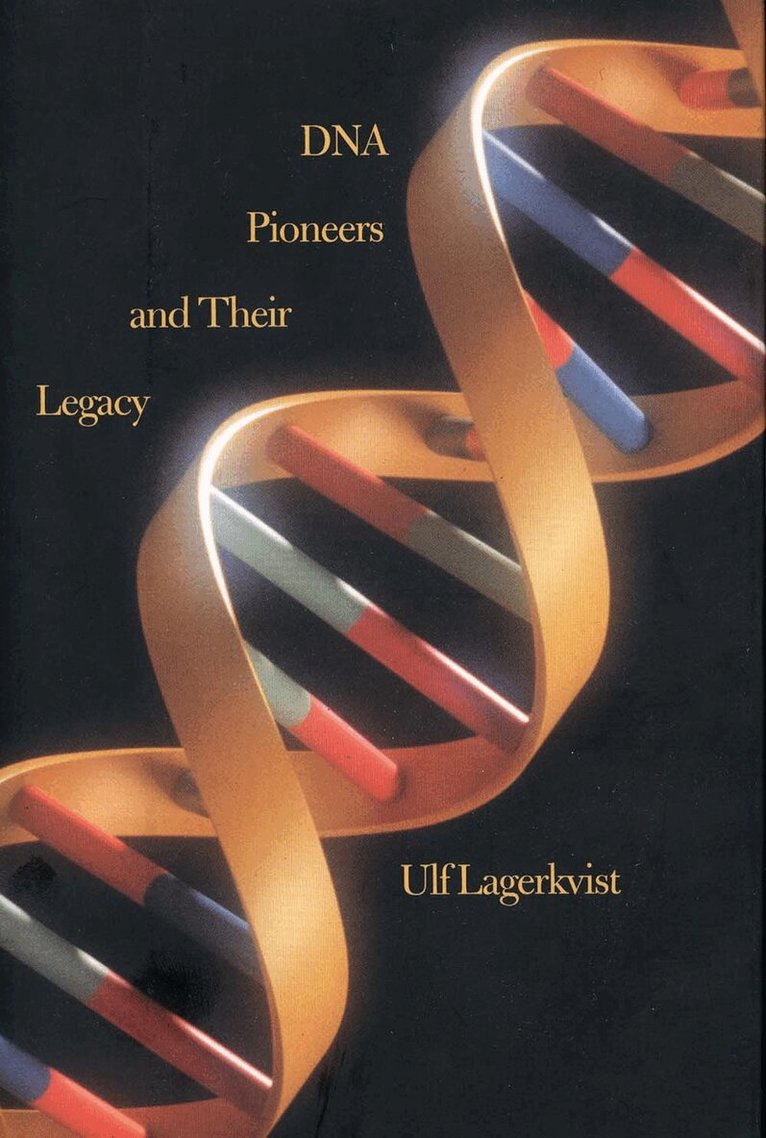
In this entertaining account of the origins of modern molecular biology, the lives of pioneering scientists in the field of nucleic acid research, and the discovery of DNA, Ulf Lagerkvist speaks not only to scientists but to all students and general readers with an interest in science. The author, whose career in the nucleic acid field began in the late 1940s, recreates historical episodes from the nineteenth and early twentieth centuries and introduces for a modern audience the scientists whose discoveries revolutionized the field of biology. Knowledge of these pioneers as professionals and as human beings, Lagerkvist believes, may help us see modern problems in a new light and appreciate the greatness of the researchers who contributed to the foundations of molecular biology and biochemistry. Among these scientific pioneers was nineteenth-century biochemist Friedrich Miescher, discoverer of nuclein, the material now known as DNA. The book also explores early research into general problems of the chemistry of biological materials. Lagerkvist vividly describes the research of such influential scientists as Albrecht Kossel, another early leading figure; Emil Fischer, who received the Nobel Prize in 1902 for his work on carbohydrates and purines and was regarded as the foremost chemist of his time; P. A. Levene, known for his discoveries concerning the structure of nucleotides and the way these nucleic acid building blocks are linked to one another; and Oswald T. Avery, often considered the grandfather of molecular genetics.
569 kr
Skickas inom 10-15 vardagar
1 442 kr
Skickas inom 5-8 vardagar
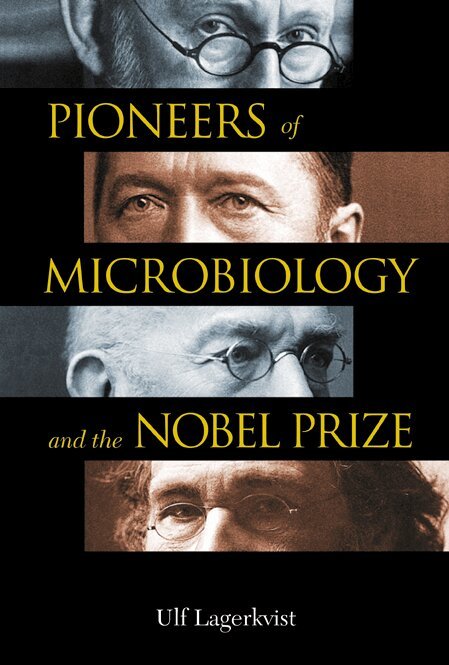
We are swamped with information and each day seems to bring new discoveries that must be considered. Never before in the history of science have so many scientists been as active as today. It has become a major problem for the expert just to keep up with the literature in his or her own field of research. Why, then, should experts and their poor students worry about the pioneers of microbiology, those half-forgotten scientists who a century ago devoted their lives to a new science that was on its way to revolutionizing medicine?With so many new facts and problems screaming for our attention, it is easy to lose sight of the long road that we have travelled in order to get to the point where we are now. Tracing the path of those who have gone before us will help us to see our own scientific goals and efforts in a more revealing perspective.The great figures who are at the center of interest in this book — Robert Koch, Emil von Behring, Paul Ehrlich and Elie Metchnikoff — were far from uncontroversial during their lifetimes. It is interesting to see how they were judged by their peers at the Karolinska Institutet when they were considered for the Nobel Prize.Pioneers of Microbiology and the Nobel Prize has been written in such a way that it can be enjoyed even without an extensive knowledge of microbiology and medicine. In fact, a considerable part of the book portrays the state of medicine during the middle of the 19th century, when bacteriology can be said to have made its debut on the medical scene.
369 kr
Skickas inom 5-8 vardagar
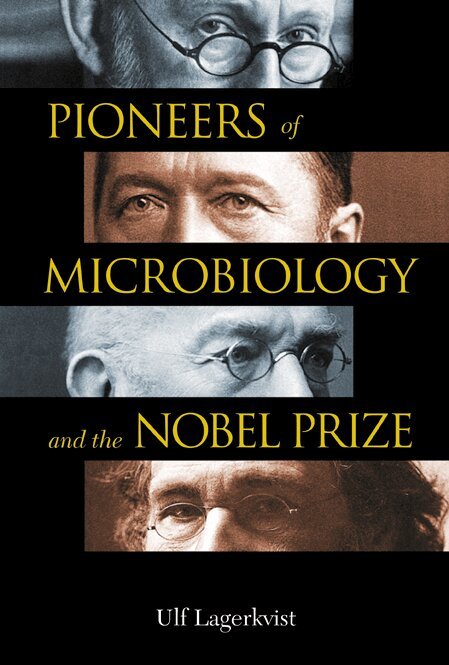
We are swamped with information and each day seems to bring new discoveries that must be considered. Never before in the history of science have so many scientists been as active as today. It has become a major problem for the expert just to keep up with the literature in his or her own field of research. Why, then, should experts and their poor students worry about the pioneers of microbiology, those half-forgotten scientists who a century ago devoted their lives to a new science that was on its way to revolutionizing medicine?With so many new facts and problems screaming for our attention, it is easy to lose sight of the long road that we have travelled in order to get to the point where we are now. Tracing the path of those who have gone before us will help us to see our own scientific goals and efforts in a more revealing perspective.The great figures who are at the center of interest in this book — Robert Koch, Emil von Behring, Paul Ehrlich and Elie Metchnikoff — were far from uncontroversial during their lifetimes. It is interesting to see how they were judged by their peers at the Karolinska Institutet when they were considered for the Nobel Prize.Pioneers of Microbiology and the Nobel Prize has been written in such a way that it can be enjoyed even without an extensive knowledge of microbiology and medicine. In fact, a considerable part of the book portrays the state of medicine during the middle of the 19th century, when bacteriology can be said to have made its debut on the medical scene.
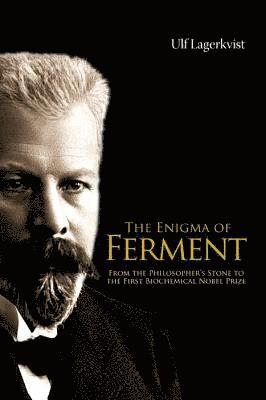
Enigma Of Ferment, The: From The Philosopher's Stone To The First Biochemical Nobel Prize
Häftad, Engelska, 2005
269 kr
Tillfälligt slut
This popular account of the history of ferment takes the reader on a fascinating journey from its obscure origins in medieval medicine and alchemy to the modern concept of the enzyme. During the 19th century, the question of the nature of the ferment led to a long and bitter conflict between those that believed in a vital force peculiar to the living cell and those that looked for a more chemical explanation. The book takes an in-depth look at the events of 1897 when Eduard Buchner demonstrated that cell-free extracts of yeast could catalyze alcoholic fermentation, putting an end to “vitalism” and at the same time earning him a Nobel Prize, the first to be awarded for purely biochemical work.
294 kr
Skickas inom 5-8 vardagar
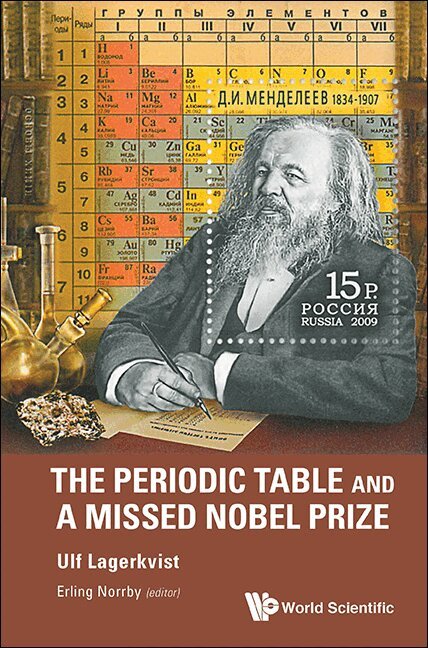
In a relatively brief but masterful recounting, Professor Ulf Lagerkvist traces the origins and seminal developments in the field of chemistry, highlighting the discoveries and personalities of the individuals who transformed the ancient myths of the Greeks, the musings of the alchemists, the mystique of phlogiston into the realities and the laws governing the properties and behavior of the elements; in short, how chemistry became a true science. A centerpiece of this historical journey was the triumph by Dmitri Mendeleev who conceived the Periodic Law of the Elements, the relation between the properties of the elements and their atomic weights but more precisely their atomic number. Aside from providing order to the elements known at the time, the law predicted the existence and atomic order of elements not then known but were discovered soon after.An underlying but explicit intent of Lagerkvist's survey is to address what he believes was a gross injustice in denying Mendeleev the Nobel Prize in Chemistry in 1905 and again in 1906. Delving into the Royal Swedish Academy of Sciences' detailed records concerning the nominations, Lagerkvist reveals the judging criteria and the often heated and prejudicial arguments favoring and demeaning the contributions of the competing contenders of those years. Lagerkvist, who was a member of the Swedish Academy of Sciences and has participated in judging nominations for the chemistry prize, concludes “It is in the nature of the Nobel Prize that there will always be a number candidates who obviously deserve to be rewarded but never get the accolade” — Mendeleev was one of those.