• Fri frakt över 249 kr
  • •
  • Snabba leveranser
  • •
  • Billiga böcker
Kundservice

Du är på sajten för privatpersoner.

Företag, bibliotek eller offentlig verksamhet?

Du handlar på classic.bokus.com, där alla dina funktioner finns intakta.
Till classic.bokus.com
Bokus logotyp. Gå till startsidan.
  • Erbjudanden
  • Nyheter
  • Student
  • Topplistor
  • Barn & ungdom
  • Bokus Play
  • E-böcker
  • Pocketböcker
  • Spel & pussel

10% studentrabatt med kod TERM26

Sidfot

Mina sidor

    Hjälp

    • Kundservice
    • Vanliga frågor och svar
    • Frakt och leverans
    • Retur vid ångerrätt
    • Reklamera vara
    • Betalning
    • Köpvillkor
    • Allmänna villkor
    • Information om webbplatsens tillgänglighet

    Om Bokus

    • Om oss
    • Pressrum
    • För studenter
    • För företag
    • För bibliotek och offentlig verksamhet
    • För leverantörer
    • Hållbarhet

    Populärt

    • Aktuella erbjudanden
    • Presentkort
    • Studentlitteratur
    • Nya böcker
    • Topplistor
    • Signerade böcker
    • Engelska böcker

    Inspiration

    • Boktips
    • BookTok
    • Populära bokserier
    • Barnbokskaraktärer
    • Populära författare
    Logotyp för Bokus
    Följ oss på Facebook (extern länk)Följ oss på Instagram (extern länk)Följ oss på YouTube (extern länk)Följ oss på TikTok (extern länk)
    bokus @ CookiesAnpassa cookiesIntegritetspolicyKöpvillkor
    Till Citymail hemsida (extern länk)Till Budbee hemsida (extern länk)Till Postnord hemsida (extern länk)Till Schenker hemsida (extern länk)Till Early Bird hemsida (extern länk)Till Walleys hemsida (extern länk)
    1. Naturvetenskap och teknik
    2. Matematik och naturvetenskap
    3. Naturvetenskap:allmänt
    4. Naturvetenskapens historia

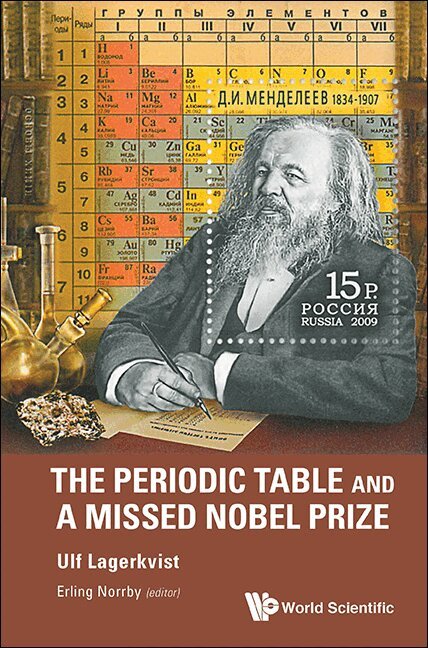
    PERIODIC TABLE AND A MISSED NOBEL PRIZE, THE

    AvUlf Lagerkvist,Erling Norrby

    Häftad, Engelska, 2012

    299 kr

    Beställningsvara. Skickas inom 5-8 vardagar. Fri frakt över 249 kr.

    Beskrivning

    In a relatively brief but masterful recounting, Professor Ulf Lagerkvist traces the origins and seminal developments in the field of chemistry, highlighting the discoveries and personalities of the individuals who transformed the ancient myths of the Greeks, the musings of the alchemists, the mystique of phlogiston into the realities and the laws governing the properties and behavior of the elements; in short, how chemistry became a true science. A centerpiece of this historical journey was the triumph by Dmitri Mendeleev who conceived the Periodic Law of the Elements, the relation between the properties of the elements and their atomic weights but more precisely their atomic number. Aside from providing order to the elements known at the time, the law predicted the existence and atomic order of elements not then known but were discovered soon after.An underlying but explicit intent of Lagerkvist's survey is to address what he believes was a gross injustice in denying Mendeleev the Nobel Prize in Chemistry in 1905 and again in 1906. Delving into the Royal Swedish Academy of Sciences' detailed records concerning the nominations, Lagerkvist reveals the judging criteria and the often heated and prejudicial arguments favoring and demeaning the contributions of the competing contenders of those years. Lagerkvist, who was a member of the Swedish Academy of Sciences and has participated in judging nominations for the chemistry prize, concludes “It is in the nature of the Nobel Prize that there will always be a number candidates who obviously deserve to be rewarded but never get the accolade” — Mendeleev was one of those.

    Produktinformation

    • Utgivningsdatum:2012-10-11
    • Mått:152 x 229 x 8 mm
    • Vikt:212 g
    • Format:Häftad
    • Språk:Engelska
    • Antal sidor:136
    • Förlag:World Scientific Publishing Co Pte Ltd
    • ISBN:9789814295956

    Utforska kategorier

    • Naturvetenskapens historia inom Naturvetenskap och teknik
    • Oorganisk kemi inom Naturvetenskap och teknik

    Innehållsförteckning

    • Elements; Atoms and Molecules; Atoms as a Philosophical Concept; The Cardinal and the Heretic Monk; The Dawn of Chemistry; Atoms and Corpuscles; A Chemical Revolution; An Atomic Theory in the Romantic Era; Gases and the Concept of the Molecule; Important Results of a Congress; Atomic Weights and Their Relation to Chemical Properties of Elements; The Road from Tobolsk to St. Petersburg; From the Physiology of Blood Gases to the Mass of Atoms and Molecules; Competing for Recognition; Unexpected Support of the Periodic Law; Straightening Out Some Irregularities; Life After the Periodic Law; The Elusive Nobel Prize; The Birth of an Academy; The King of Flowers; The Advent of Chemistry in Sweden; Two Outstanding Chemists in the Era of Neoclassicism; Berzelius Takes Charge; An Unexpected Responsibility; The Advent of Ions; Alfred Nobel and His Prizes; An Electric Oven or the Periodic Law.