Ulrike Müßig - Böcker
Visar alla böcker från författaren Ulrike Müßig. Handla med fri frakt och snabb leverans.
9 produkter
9 produkter
Del 12 - Studies in the History of Law and Justice
Reconsidering Constitutional Formation II Decisive Constitutional Normativity
From Old Liberties to New Precedence
Häftad, Engelska, 2018
493 kr
Skickas inom 10-15 vardagar
This second volume of ReConFort, published open access, addresses the decisive role of constitutional normativity, and focuses on discourses concerning the legal role of constitutional norms.
Del 6 - Grundlagen der Rechtswissenschaft
Konstitutionalismus und Verfassungskonflikt
Symposion für Dietmar Willoweit
Häftad, Tyska, 2006
993 kr
Tillfälligt slut
Der Konstitutionalismus des 19. Jahrhunderts war geprägt von der Inkompatibilität des Festhaltens an der monarchischen Machtvollkommenheit und der Mitwirkung der Untertanen am Gesetzgebungsverfahren und an der Etatgestaltung. Verweigerte die Volksvertretung ihre Zustimmung zum Budget, fehlten der monarchischen Exekutive die Mittel, die Staatsaufgaben zu erfüllen und die Gesetze durchzuführen. Sowohl in Kurhessen 1850 als auch in Preußen 1862 entstand daraus ein Verfassungskonflikt, der einen verfassungsrechtlichen und politisch-praktischen Ausnahmezustand schuf. Durchsetzen konnte sich in der systemimmanenten Pattsituation derjenige, welcher auch im Ausnahmezustand den Zugriff auf die Machtmittel der Exekutive, namentlich auf das Militär, hatte, also der Monarch. Die Rechtfertigung der machtpolitischen Konfliktlösung durch den Monarchen mit seiner Position als nicht verantwortlicher Träger der einheitlichen Staatsgewalt hat eine zentrale Bedeutung für das Verständnis der deutschen Verfassungsgeschichte zwischen Konstitutionalismus und Parlamentarismus.
1 112 kr
Tillfälligt slut
Die Entstehung des modernen Verfassungsbegriffs ist mit den Revolutionen von 1776 und 1789 verbunden. Der Verfassungsdiskurs reflektiert nicht nur die revolutionäre Überwindung der altständischen Gesellschaft, sondern den allgemeinen Verrechtlichungsprozeß staatlicher Herrschaft im Zeichen der Aufklärung.In der Monarchiekonzentration der europäischen Verfassungswelt nach 1800 spiegelt sich der napoleonische Staatsautoritarismus. Ulrike Müßig veranschaulicht in ihrem Ausblick auf den europäischen Konstitutionalismus, daß das Erstarken der Parlamente nach der französischen Julirevolution 1830/31 zu einem fließenden Übergang vom konstitutionellen zum parlamentarischen System bei gleichbleibendem Normenbestand geführt hat: Die Regierung des Monarchen war zwar formal nicht an die parlamentarischen Mehrheitsverhältnisse gebunden, ihre Berücksichtigung war jedoch politische Normalität. Dadurch kam es in Frankreich, Belgien und England zu einem erheblichen Parlamentarisierungsschub, während in der deutschen Verfassungspraxis der repressive bundespolitische Rahmen einen dauerhaften Einfluß der Kammern auf die monarchisch bestimmten Regierungen verhindert hat.Gerade diese Offenheit des Konstitutionalismus im Verhältnis zwischen Monarch und Parlament zeigt, daß es Verfassungsgeschichte nicht mit statischen Ordnungszusammenhängen der Herrschaftsbegründung und -begrenzung zu tun hat. Das Kräfteverhältnis der Verfassungsgrößen ist vielmehr in Bewegung. Dieses evolutionäre Verständnis der Verfassungsgeschichte beherrscht die Studie zur europäischen Verfassungsdiskussion.
917 kr
Tillfälligt slut
Alles Nachdenken über das Recht ist von der Gerechtigkeitsfrage begleitet, die sich einer Lösung durch rein formale Kategorien der Logik oder der verfahrensmäßigen Betrachtung entzieht. Die inhaltlichen Wertungen der Gerechtigkeit werden im Diskurs über Rechtsethik und soziale Verantwortung geprägt. Misslingt dieser Diskurs oder wird er von einer autoritären Staatsgewalt diktiert, geht der Rechtscharakter der vom Staat erlassenen Normen nicht per se verloren. Recht ist inhaltlich neutral und bestimmt sich allein als Willensakt des Gesetzgebers, gegebenenfalls innerhalb verbindlicher verfassungsrechtlicher Grenzen. Die Prominenz der "Reinen Rechtslehre" Hans Kelsens, die das Recht als Norm nach deren Logik analysiert, ist nicht zufällig. Schon aus methodischen Gründen bildet das rechtspositivistische Credo die Grundlage der modernen Jurisprudenz ebenso wie der rechtshistorischen Forschung. Den Rechtspositivismus stellen Erfahrungen ungerechten Rechts in Frage - die es bei striktem Beharren auf dieser Position gar nicht geben dürfte. Doch nicht zuletzt die totalitären Systeme des 20. Jahrhunderts fordern die Frage nach den Grenzen des Rechts heraus, die sich auch für andere Epochen stellt. Dabei betritt der vorgelegte Band "Ungerechtes Recht" insoweit Neuland als er über die auf die Gesetzgebung fokusierte rechtsphilosophische Diskussion der Kelsenschen Normlogik hinaus die Frage nach den Grenzen des Rechts auch für die richterliche Urteilstätigkeit und das exekutive Verwaltungshandeln stellt.
Del 6 - Studies in the History of Law and Justice
Reconsidering Constitutional Formation I National Sovereignty
A Comparative Analysis of the Juridification by Constitution
Inbunden, Engelska, 2016
493 kr
Skickas inom 10-15 vardagar
This open access book can be downloaded from link.springer.comLegal studies and consequently legal history focus on constitutional documents, believing in a nominalist autonomy of constitutional semantics. Reconsidering Constitutional Formation in the late 18th and 19th century, kept historic constitutions from being simply log-books for political experts through a functional approach to the interdependencies between constitution and public discourse. Sovereignty had to be ‘believed’ by the subjects and the political élites. Such a communicative orientation of constitutional processes became palpable in the ‘religious’ affinities of the constitutional preambles. They were held as ‘creeds’ of a new order, not only due to their occasional recourse to divine authority, but rather due to the claim for eternal validity contexts of constitutional guarantees. The communication dependency of constitutions was of less concern in terms of the preamble than the constituents’ big worries about government organisation. Their indecisiveness between monarchical and popular sovereignty was established through the discrediting of the Republic in the Jacobean reign of terror and the ‘renaissance’ of the monarchy in the military resistance against the French revolutionary and later Napoleonic campaigns. The constitutional formation as a legal act of constituting could therefore defend the monarchy from the threat of the people (Albertine Statute 1848), could be a legal decision of a national constituent assembly (Belgian Constitution 1831), could borrow from the old liberties (Polish May Constitution 1791) or try to remain in between by referring to the Nation as sovereign (French September Constitution 1791, Cádiz Constitution 1812). Common to all contexts is the use of national sovereignty as a legal starting point. The consequent differentiation between constituent and constituted power manages to justify the self-commitmentof political power in legal terms. National sovereignty is the synonym for the juridification of sovereignty by means of the constitution. The novelty of the constitutions of the late 18th and 19th century is the normativity, the positivity of the constitutional law as one unified law, to be the measure for the legality of all other law. Therefore ReConFort will continue with the precedence of constitution. (www.reconfort.eu)
Del 12 - Studies in the History of Law and Justice
Reconsidering Constitutional Formation II Decisive Constitutional Normativity
From Old Liberties to New Precedence
Inbunden, Engelska, 2018
493 kr
Skickas inom 10-15 vardagar
This second volume of ReConFort, published open access, addresses the decisive role of constitutional normativity, and focuses on discourses concerning the legal role of constitutional norms.
Del 6 - Studies in the History of Law and Justice
Reconsidering Constitutional Formation I National Sovereignty
A Comparative Analysis of the Juridification by Constitution
Häftad, Engelska, 2018
493 kr
Skickas inom 10-15 vardagar
This open access book can be downloaded from link.springer.comLegal studies and consequently legal history focus on constitutional documents, believing in a nominalist autonomy of constitutional semantics. Reconsidering Constitutional Formation in the late 18th and 19th century, kept historic constitutions from being simply log-books for political experts through a functional approach to the interdependencies between constitution and public discourse. Sovereignty had to be ‘believed’ by the subjects and the political élites. Such a communicative orientation of constitutional processes became palpable in the ‘religious’ affinities of the constitutional preambles. They were held as ‘creeds’ of a new order, not only due to their occasional recourse to divine authority, but rather due to the claim for eternal validity contexts of constitutional guarantees. The communication dependency of constitutions was of less concern in terms of the preamble than the constituents’ big worries about government organisation. Their indecisiveness between monarchical and popular sovereignty was established through the discrediting of the Republic in the Jacobean reign of terror and the ‘renaissance’ of the monarchy in the military resistance against the French revolutionary and later Napoleonic campaigns. The constitutional formation as a legal act of constituting could therefore defend the monarchy from the threat of the people (Albertine Statute 1848), could be a legal decision of a national constituent assembly (Belgian Constitution 1831), could borrow from the old liberties (Polish May Constitution 1791) or try to remain in between by referring to the Nation as sovereign (French September Constitution 1791, Cádiz Constitution 1812). Common to all contexts is the use of national sovereignty as a legal starting point. The consequent differentiation between constituent and constituted power manages to justify the self-commitmentof political power in legal terms. National sovereignty is the synonym for the juridification of sovereignty by means of the constitution. The novelty of the constitutions of the late 18th and 19th century is the normativity, the positivity of the constitutional law as one unified law, to be the measure for the legality of all other law. Therefore ReConFort will continue with the precedence of constitution. (www.reconfort.eu)
Del 182 - Schriftenreihe der Juristischen Gesellschaft Zu Berlin
Gesetzlicher Richter ohne Rechtsstaat?
Inbunden, Tyska, 2007
238 kr
Skickas inom 5-8 vardagar
Del 27 - Legal History Library
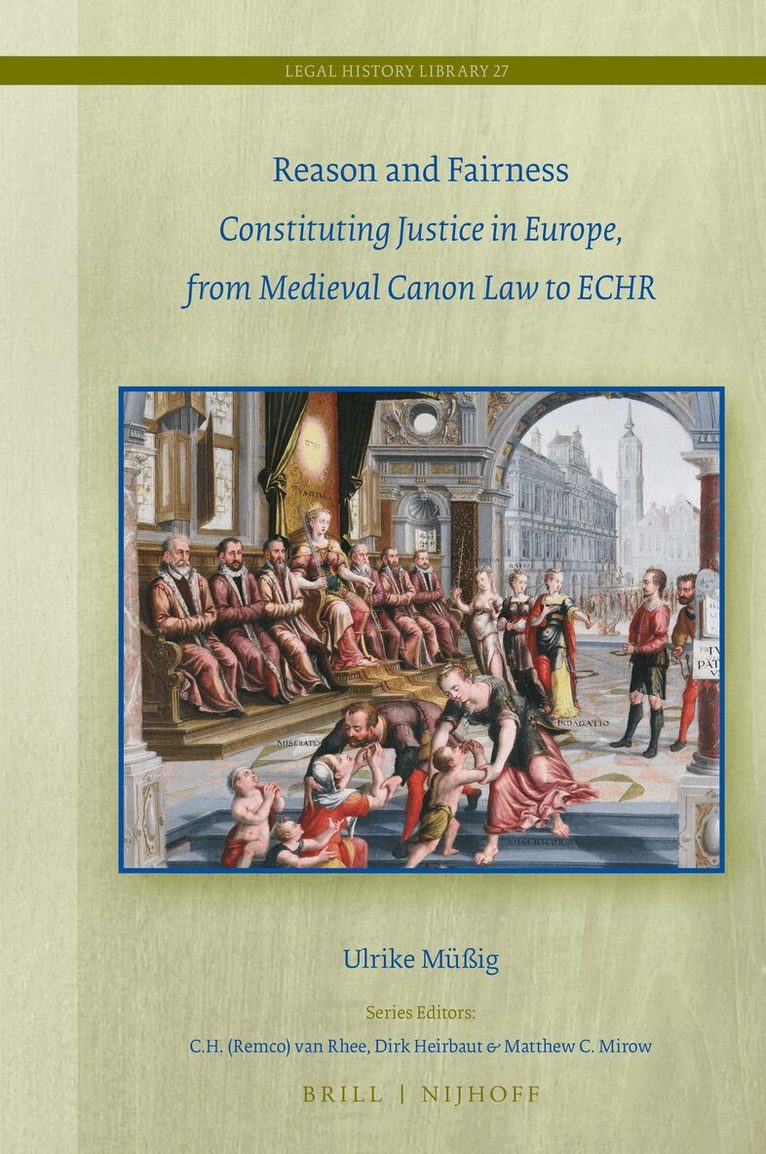
Reason and Fairness
Constituting Justice in Europe, from Medieval Canon Law to ECHR
Inbunden, Engelska, 2019
2 921 kr
Skickas inom 5-8 vardagar
Throughout Europe, the exercise of justice rests on judicial independence by impartiality. In Reason and Fairness Ulrike Müßig reveals the combination of ordinary judicial competences with procedural rationality, together with the complementarity of procedural and substantive justice, as the foundation for the ‘rule of law’ in court constitution, far earlier than the advent of liberal constitutionalism. The ECHR fair trial guarantee reads as the historically-grown consensus of the functional judicial independence. Both before historical and contemporary courts, justice is done and seen to be done by means of judgements, whose legal requirements combine the equation of ‘fair’ and ‘legal’ with that of ‘legal’ and ‘rational.’ This legal determinability of the judge’s fair attitude amounts to the specific (rational) European idea of justice.