Uskali Maki – författare
702 kr
Läs direkt efter köp
This edited volume provides an in-depth exploration into the influential work of Wade Hands, examining the changing relationship between methodology and the history of economics in connection with contemporary developments in economics.
The papers in this volume fall into four parts, each devoted to an important theme in Wade Hands’ work. The first part explores the influence and scope of Reflection without Rules, capturing the rich debate that the book generated about what guides methodological and philosophical thinking in economics. The second part examines Hands’ research on Paul Samuelson’s economics and the methodological dimensions of Samuelson’s thinking. Part three looks to Hands’ long-standing interest in the philosophical foundations of pragmatist thinking. The final part addresses his more recent research in the methodological import of the emergence of behavioural economics. Together, the contributors show how Hands’ insights in complexity theory, identity, and stratification are key to understanding a reconfigured economic methodology. They also reveal how his willingness to draw from multiple academic disciplines gives us a platform for interrogating mainstream economics and provides the basis for a humane yet scientific alternative.
This unique volume will be essential reading for advanced students and researchers across social economics, history of economic thought, economic methodology, political economy, and philosophy of social science.
708 kr
Läs direkt efter köp
This edited volume provides an in-depth exploration into the influential work of Wade Hands, examining the changing relationship between methodology and the history of economics in connection with contemporary developments in economics.
The papers in this volume fall into four parts, each devoted to an important theme in Wade Hands’ work. The first part explores the influence and scope of Reflection without Rules, capturing the rich debate that the book generated about what guides methodological and philosophical thinking in economics. The second part examines Hands’ research on Paul Samuelson’s economics and the methodological dimensions of Samuelson’s thinking. Part three looks to Hands’ long-standing interest in the philosophical foundations of pragmatist thinking. The final part addresses his more recent research in the methodological import of the emergence of behavioural economics. Together, the contributors show how Hands’ insights in complexity theory, identity, and stratification are key to understanding a reconfigured economic methodology. They also reveal how his willingness to draw from multiple academic disciplines gives us a platform for interrogating mainstream economics and provides the basis for a humane yet scientific alternative.
This unique volume will be essential reading for advanced students and researchers across social economics, history of economic thought, economic methodology, political economy, and philosophy of social science.
1 103 kr
Läs direkt efter köp
752 kr
Läs direkt efter köp
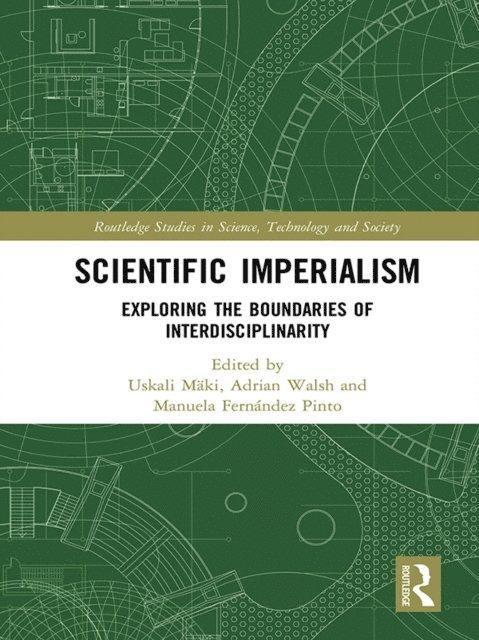
The growing body of research on interdisciplinarity has encouraged a more in depth analysis of the relations that hold among academic disciplines. In particular, the incursion of one scientific discipline into another discipline’s traditional domain, also known as scientific imperialism, has been a matter of increasing debate.
Following this trend, Scientific Imperialism aims to bring together philosophers of science and historians of science interested in the topic of scientific imperialism and, in particular, interested in the conceptual clarification, empirical identification, and normative assessment of the idea of scientific imperialism. Thus, this innovative volume has two main goals. Indeed, the authors first seek to understand interdisciplinary relations emerging from the incursion of one scientific discipline into one or more other disciplines, such as in cases in which the conventions and procedures of one discipline or field are imposed on other fields; or more weakly when a scientific discipline seeks to explain phenomena that are traditionally considered proper of another discipline’s domain. Secondly, the authors explore ways of distinguishing imperialistic from non-imperialistic interactions between disciplines and research fields.
The first sustained study of scientific imperialism, this volume will appeal to postgraduate students and postdoctoral researchers interested in fields such as Science and Technology Studies, Sociology of Science & Technology, Philosophy of Science, and History of Science.
752 kr
Läs direkt efter köp
The growing body of research on interdisciplinarity has encouraged a more in depth analysis of the relations that hold among academic disciplines. In particular, the incursion of one scientific discipline into another discipline’s traditional domain, also known as scientific imperialism, has been a matter of increasing debate.
Following this trend, Scientific Imperialism aims to bring together philosophers of science and historians of science interested in the topic of scientific imperialism and, in particular, interested in the conceptual clarification, empirical identification, and normative assessment of the idea of scientific imperialism. Thus, this innovative volume has two main goals. Indeed, the authors first seek to understand interdisciplinary relations emerging from the incursion of one scientific discipline into one or more other disciplines, such as in cases in which the conventions and procedures of one discipline or field are imposed on other fields; or more weakly when a scientific discipline seeks to explain phenomena that are traditionally considered proper of another discipline’s domain. Secondly, the authors explore ways of distinguishing imperialistic from non-imperialistic interactions between disciplines and research fields.
The first sustained study of scientific imperialism, this volume will appeal to postgraduate students and postdoctoral researchers interested in fields such as Science and Technology Studies, Sociology of Science & Technology, Philosophy of Science, and History of Science.
1 367 kr
Läs direkt efter köp
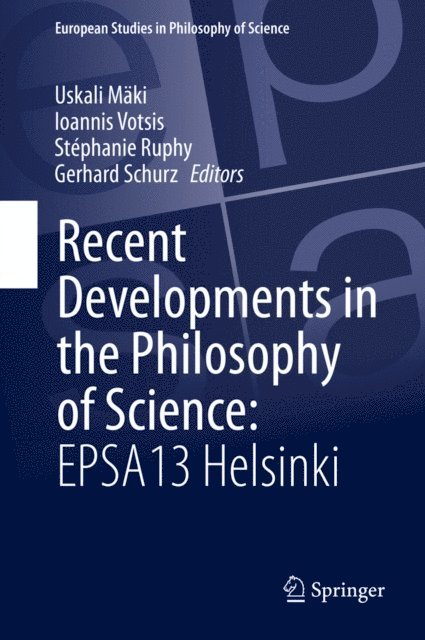
This volume showcases the best of recent research in the philosophy of science. A compilation of papers presented at the EPSA 13, it explores a broad distribution of topics such as causation, truthlikeness, scientific representation, gender-specific medicine, laws of nature, science funding and the wisdom of crowds.
Papers are organised into headings which form the structure of the book. Readers will find that it covers several major fields within the philosophy of science, from general philosophy of science to the more specific philosophy of physics, philosophy of chemistry, philosophy of the life sciences, philosophy of psychology, and philosophy of the social sciences and humanities, amongst others.
This volume provides an excellent overview of the state of the art in the philosophy of science, as practiced in different European countries and beyond. It will appeal to researchers with an interest in the philosophical underpinnings of their own discipline, and to philosophers who wish to explore the latest work on the themes explored.
1 696 kr
Läs direkt efter köp
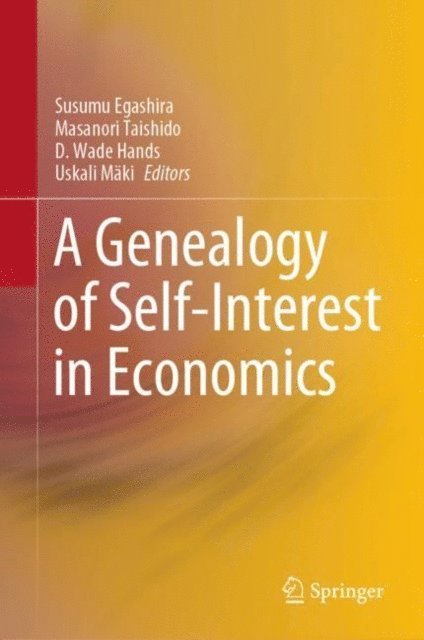
This is the first book to describe the entire developmental history of the human aspects of economics. The issue of “self-interest” is discussed throughout, from pre-Adam Smith to contemporary neuroeconomics, representing a unique contribution to economics. Though the notion of self-interest has been interpreted in several ways by various schools of economics and economists since Smith first placed it at the heart of the field, this is the first book to focus on this important but overlooked topic.
Traditionally, economic theory has presupposed that the core of human behavior is self-interest. Nevertheless, some economists, e.g. recent behavioral economists, have cast doubt on this “self-interested” explanation. Further, though many economists have agreed on the central role of self-interest in economic behavior, each economist’s positioning of self-interest in economic theory differs to some degree. This book helps to elucidate the position of self-interest in economic theory.
Given its focus, it is a must-read companion, not only on the history of economic thought but also on economic theory. Furthermore, as today’s capitalism is increasingly causing people to wonder just where self-interest lies, it also appeals to general readers.