Varun Pratap Singh - Böcker
Visar alla böcker från författaren Varun Pratap Singh. Handla med fri frakt och snabb leverans.
8 produkter
8 produkter
1 954 kr
Skickas inom 10-15 vardagar
The text provides in-depth knowledge about recent advances in solar collector systems, photovoltaic systems, the role of thermal energy systems in buildings, phase change materials, geothermal energy, biofuels, and thermal management systems for EVs in social and industrial applications. It further aims toward the inclusion of innovation and implementation of strategies for CO2 emission reduction through the reduction of energy consumption using conventional sources.This book:Presents the latest advances in the field of thermal energy storage, solar energy development, geothermal energy, and hybrid energy applications for green developmentHighlights the importance of innovation and implementation of strategies for CO2 emission reduction through the reduction of energy consumption using sustainable technologies and methodsDiscusses design development, life cycle assessment, modelling and simulation of thermal energy systems in detailSynergize exploration related to the various properties and functionalities through extensive theoretical and numerical modelling present in the energy sectorExplores opportunities, challenges, future perspectives and approaches toward gaining sustainability through renewable energy resourcesThe text discusses the fundamentals of thermal energy and its applications in a comprehensive manner. It further covers advancements in solar thermal and photovoltaic systems. The text highlights the contribution of geothermal energy conversion systems to sustainable development. It showcases the design and optimization of ground source heat pumps for space conditioning and presents modelling and simulation of the thermal energy systems for design optimization. It will serve as an ideal reference text for senior undergraduate, graduate students and academic researchers in the fields of mechanical engineering, environmental engineering and energy engineering.
733 kr
Skickas inom 10-15 vardagar
The text provides in-depth knowledge about recent advances in solar collector systems, photovoltaic systems, the role of thermal energy systems in buildings, phase change materials, geothermal energy, biofuels, and thermal management systems for EVs in social and industrial applications. It further aims toward the inclusion of innovation and implementation of strategies for CO2 emission reduction through the reduction of energy consumption using conventional sources.This book:Presents the latest advances in the field of thermal energy storage, solar energy development, geothermal energy, and hybrid energy applications for green developmentHighlights the importance of innovation and implementation of strategies for CO2 emission reduction through the reduction of energy consumption using sustainable technologies and methodsDiscusses design development, life cycle assessment, modelling and simulation of thermal energy systems in detailSynergize exploration related to the various properties and functionalities through extensive theoretical and numerical modelling present in the energy sectorExplores opportunities, challenges, future perspectives and approaches toward gaining sustainability through renewable energy resourcesThe text discusses the fundamentals of thermal energy and its applications in a comprehensive manner. It further covers advancements in solar thermal and photovoltaic systems. The text highlights the contribution of geothermal energy conversion systems to sustainable development. It showcases the design and optimization of ground source heat pumps for space conditioning and presents modelling and simulation of the thermal energy systems for design optimization. It will serve as an ideal reference text for senior undergraduate, graduate students and academic researchers in the fields of mechanical engineering, environmental engineering and energy engineering.
2 357 kr
Skickas inom 10-15 vardagar
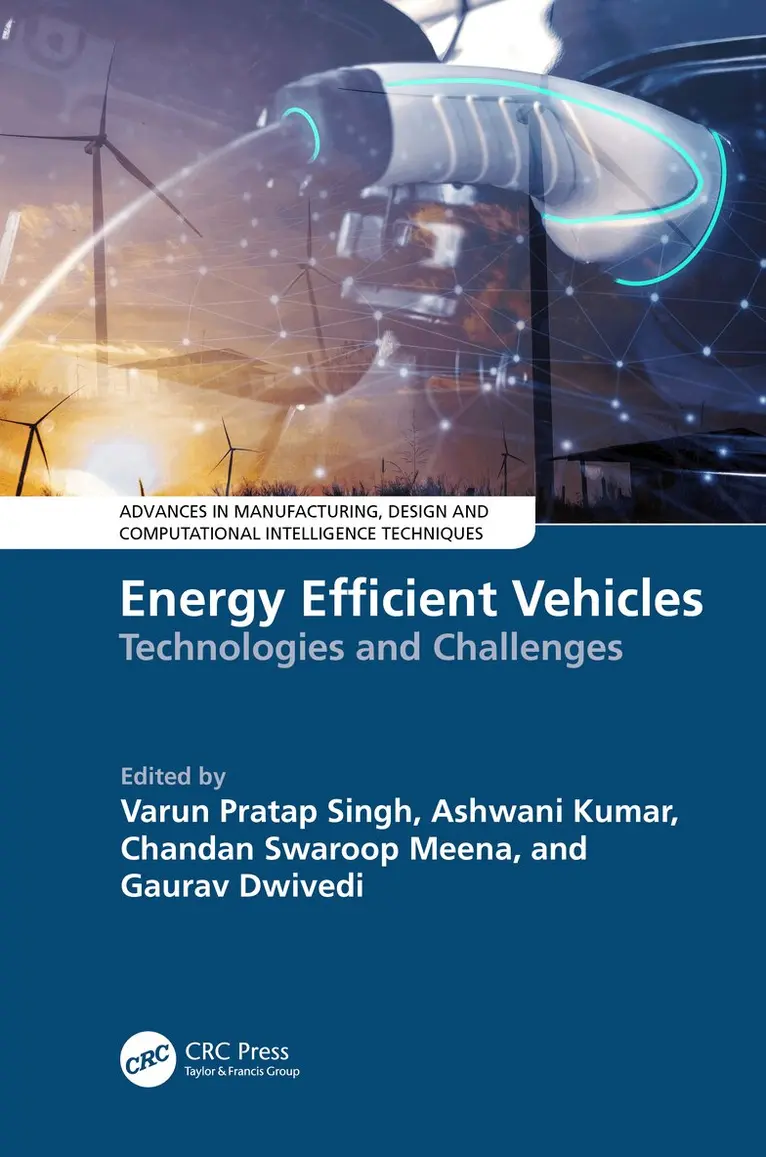
The text discusses energy-efficient vehicles as an essential element of sustainable transportation. The text highlights the social, economic, and environmental benefits associated with energy-efficient automobiles, which effectively solve the issue of greenhouse gas emissions, improve air quality, boost energy security, and promote zero-emission. The energy-efficient technologies for transportation, accessibility and safety of the transport system, environmental footprint, health impact, economic development, and social growth are the central theme of the book. It further presents future integrated mobility-energy systems and sustainability indicators.This book:Examines policies, challenges, and the latest developments in the field of sustainable mobility.Discusses the latest advances in the field of energy storage systems, batteries, image processing, obstacle identification, and automatic gear trains.Highlights the safety, security, and risk management related to sustainable transportation, covering zero emissions and sustainability indicators.Presents electric vehicle grid integration and infrastructure for e-vehicle charging.Aims to provide an overview of various aspects of EV, HEV, ITS, and vehicular network deployment design, encompassing the technological advancements, challenges, and opportunities associated with this rapidly evolving field.Understanding the transportation needs and preferences of youth populations in shaping transportation policy and promoting sustainable urban development to design transportation systems that are efficient, equitable, and environmentally sustainable.Synergize exploration related to the various properties and functionalities through extensive theoretical and numerical modeling present in the energy sector.This book is primarily written for senior undergraduate, graduate students, and academic researchers in fields including mechanical engineering, industrial engineering, automotive engineering, manufacturing engineering, and environmental engineering.
949 kr
Skickas inom 10-15 vardagar
The text discusses energy-efficient vehicles as an essential element of sustainable transportation. The text highlights the social, economic, and environmental benefits associated with energy-efficient automobiles, which effectively solve the issue of greenhouse gas emissions, improve air quality, boost energy security, and promote zero-emission. The energy-efficient technologies for transportation, accessibility and safety of the transport system, environmental footprint, health impact, economic development, and social growth are the central theme of the book. It further presents future integrated mobility-energy systems and sustainability indicators.This book:Examines policies, challenges, and the latest developments in the field of sustainable mobility.Discusses the latest advances in the field of energy storage systems, batteries, image processing, obstacle identification, and automatic gear trains.Highlights the safety, security, and risk management related to sustainable transportation, covering zero emissions and sustainability indicators.Presents electric vehicle grid integration and infrastructure for e-vehicle charging.Aims to provide an overview of various aspects of EV, HEV, ITS, and vehicular network deployment design, encompassing the technological advancements, challenges, and opportunities associated with this rapidly evolving field.Understanding the transportation needs and preferences of youth populations in shaping transportation policy and promoting sustainable urban development to design transportation systems that are efficient, equitable, and environmentally sustainable.Synergize exploration related to the various properties and functionalities through extensive theoretical and numerical modeling present in the energy sector.This book is primarily written for senior undergraduate, graduate students, and academic researchers in fields including mechanical engineering, industrial engineering, automotive engineering, manufacturing engineering, and environmental engineering.
2 373 kr
Skickas inom 10-15 vardagar
The text begins by discussing the sustainable buildings, energy efficient technologies, advanced materials, advances in renewable energy for building sector, green intelligent infrastructure, policies on sustainable infrastructure, and life cycle assessment. It further presents design considerations, challenges, and applications of net zero energy buildings with a global perspective. The book covers renewable energy technologies for energy-efficient buildings.This book:Discusses the importance of developing new materials for Energy and Heat Transfer Optimization in sustainable buildings and Life Cycle Assessment of Sustainable Building Materials.Investigates the city gas system, sustainable smart cities infrastructure, and Data Mining Techniques in Green Building for Evaluation of energy Cost, Grades and Adoption. Highlights the development and application Net Zero Energy Buildings, Energy Policies and Infrastructure Requirements, Building Performance Prediction & Optimization, and Energy Planning and Thermal Comfort in Buildings Presents renewable energy policies, Social, Economic, and Environmental Issues Associated with Sustainable Buildings, and Emerging Trends in Smart Green Building Technologies.Covers Energy-Efficient Urban Infrastructure, Earth-Air Heat Exchanger, and Retrofitting of existing buildings to achieve energy efficient buildings.It is primarily written for senior undergraduates, graduate students, and academic researchers in the fields of energy engineering, environmental science and engineering, materials science, mechanical engineering, and civil engineering.
951 kr
Kommande
The text begins by discussing the sustainable buildings, energy efficient technologies, advanced materials, advances in renewable energy for building sector, green intelligent infrastructure, policies on sustainable infrastructure, and life cycle assessment. It further presents design considerations, challenges, and applications of net zero energy buildings with a global perspective. The book covers renewable energy technologies for energy-efficient buildings.This book:Discusses the importance of developing new materials for Energy and Heat Transfer Optimization in sustainable buildings and Life Cycle Assessment of Sustainable Building Materials.Investigates the city gas system, sustainable smart cities infrastructure, and Data Mining Techniques in Green Building for Evaluation of energy Cost, Grades and Adoption. Highlights the development and application Net Zero Energy Buildings, Energy Policies and Infrastructure Requirements, Building Performance Prediction & Optimization, and Energy Planning and Thermal Comfort in Buildings Presents renewable energy policies, Social, Economic, and Environmental Issues Associated with Sustainable Buildings, and Emerging Trends in Smart Green Building Technologies.Covers Energy-Efficient Urban Infrastructure, Earth-Air Heat Exchanger, and Retrofitting of existing buildings to achieve energy efficient buildings.It is primarily written for senior undergraduates, graduate students, and academic researchers in the fields of energy engineering, environmental science and engineering, materials science, mechanical engineering, and civil engineering.
Computational Intelligence, and Smart Technologies in Solar Thermal Systems
Principles and Applications
Inbunden, Engelska, 2025
1 630 kr
Skickas inom 10-15 vardagar
The text covers emerging technologies and innovations in the field, such as hybrid solar thermal systems, advanced materials for collectors, novel heat storage solutions, and advancements in concentrating solar power (CSP) technologies. It presents artificial intelligence and machine learning techniques for solar thermal system optimization.Key Features:Discusses the use of smart technologies such as artificial intelligence and machine learning in transforming solar thermal systems by enhancing their efficiency, reliability, and cost-effectivenessProvides insights into optimization techniques for online testing of parameters for solar dryers, AI-based predictive modeling for accurate solar power generation, dual-axis solar panel tracking and monitoring systems, IoT in solar dryer design, and greenhouse-type solar dryer systemsCovers state-of-the-art computational models used in optimizing solar thermal systems, such as neural networks, genetic algorithms for predictive modeling, control strategies, and system optimizationPresents case studies and examples of implementations of computational intelligence and smart technologies in solar thermal applications, having real-time applications in a 4kW hybrid solar EV charging station, of five-level inverter for solar photovoltaic systems, agrivoltaic systems, and wind-solar-hydrogen hybrid energy generationIntroduces simulation and modeling tools used in the design, analysis, and performance evaluation of solar thermal collectors for decentralized cooking, next-generation solar power plants, and hybrid energy generation systemsThis book is primarily written for senior undergraduates, graduate students, and academic researchers in mechanical engineering, energy engineering, computer science and engineering, renewable energy, solar energy, and clean technologies.
High-Temperature Solar Thermal Systems
Volume 1—Fundamentals, Innovations, and Advances
Inbunden, Engelska, 2026
2 435 kr
Skickas inom 10-15 vardagar
This book explores the recent technological development and advancement in high-temperature solar thermal technologies, offering a comprehensive guide to harnessing solar energy for industrial processes, power generation, and energy storage in the 21st century. This book delves into the science and engineering behind systems that capture and concentrate sunlight to generate heat above 400°C, providing a clean, renewable solution to global energy needs. Readers are able to understand how different technologies are integrating with the solar thermal domain to make it more predictive, accurate, efficient, and reliable.The book, the first volume in a sequence of volumes, covers both foundational principles and the latest innovations, encompassing advanced materials, heat transfer fluids, artificial intelligence, and algorithm applications, as well as applications of solar thermal technologies in various cutting-edge domains such as solar thermochemical green hydrogen production. With practical case studies and in-depth analysis, this book helps solar thermal application engineers, researchers, policymakers, and anyone interested in understanding solar thermal energy future pathways. Whether the reader is exploring solar thermal systems for the first time or looking for cutting-edge insights into this rapidly evolving field, the proposed book offers the knowledge and tools to drive sustainable energy solutions forward.