Bharti Sharma – författare
942 kr
Läs direkt efter köp
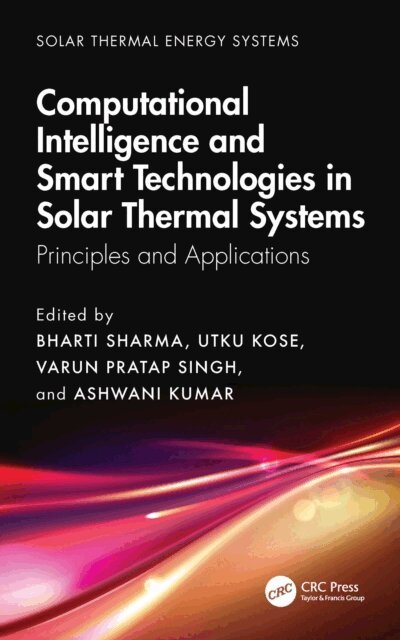
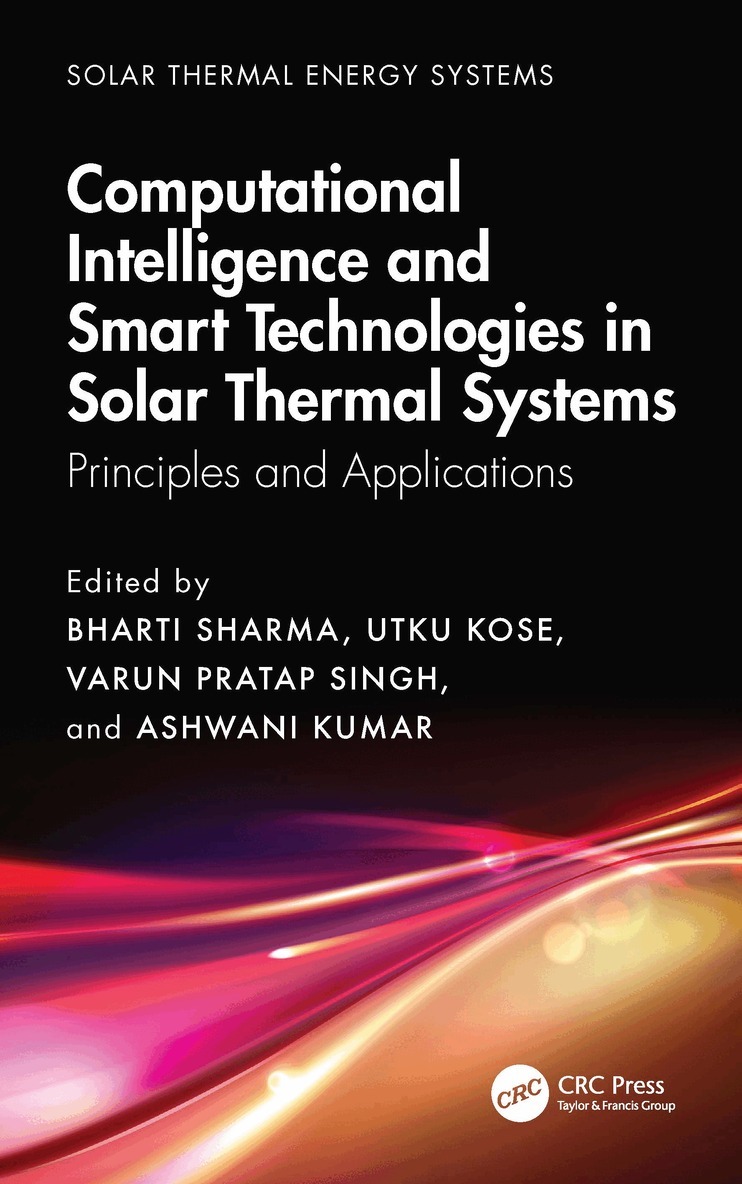
The text covers emerging technologies and innovations in the field, such as hybrid solar thermal systems, advanced materials for collectors, novel heat storage solutions, and advancements in concentrating solar power (CSP) technologies. It presents artificial intelligence and machine learning techniques for solar thermal system optimization.
This book:
Discusses the use of smart technologies such as artificial intelligence and machine learning in transforming solar thermal systems by enhancing their efficiency, reliability, and cost-effectiveness. Provides insights into optimization techniques for online testing of parameters for solar dryers, AI-based Predictive Modelling for Accurate Solar Power Generation, Dual Axis Solar Panel Tracking and Monitoring System, IoT in Solar Dryer Design, and Greenhouse-Type Solar Dryer Systems. Covers state-of-the-art computational models used in optimizing solar thermal systems, such as neural networks, and genetic algorithms for predictive modeling, control strategies, and system optimization. Presents case studies and examples of implementations of computational intelligence and smart technologies in solar thermal applications, having real time applications in 4KW Hybrid Solar EV Charging Station, of 5-Level Inverter for Solar Photovoltaic Systems, Agrivoltaic system, and Wind Solar Hydrogen Hybrid Energy Generation. Introduce simulation and modeling tools used in the design, analysis, and performance evaluation of solar thermal collectors for Decentralized Cooking, Next Generation Solar Power Plants and Hybrid Energy Generation System.It is primarily written for senior undergraduates, graduate students, and academic researchers in mechanical engineering, energy engineering, computer science and engineering, renewable energy, solar energy, and clean technologies.
909 kr
Läs direkt efter köp
The text covers emerging technologies and innovations in the field, such as hybrid solar thermal systems, advanced materials for collectors, novel heat storage solutions, and advancements in concentrating solar power (CSP) technologies. It presents artificial intelligence and machine learning techniques for solar thermal system optimization.
This book:
Discusses the use of smart technologies such as artificial intelligence and machine learning in transforming solar thermal systems by enhancing their efficiency, reliability, and cost-effectiveness. Provides insights into optimization techniques for online testing of parameters for solar dryers, AI-based Predictive Modelling for Accurate Solar Power Generation, Dual Axis Solar Panel Tracking and Monitoring System, IoT in Solar Dryer Design, and Greenhouse-Type Solar Dryer Systems. Covers state-of-the-art computational models used in optimizing solar thermal systems, such as neural networks, and genetic algorithms for predictive modeling, control strategies, and system optimization. Presents case studies and examples of implementations of computational intelligence and smart technologies in solar thermal applications, having real time applications in 4KW Hybrid Solar EV Charging Station, of 5-Level Inverter for Solar Photovoltaic Systems, Agrivoltaic system, and Wind Solar Hydrogen Hybrid Energy Generation. Introduce simulation and modeling tools used in the design, analysis, and performance evaluation of solar thermal collectors for Decentralized Cooking, Next Generation Solar Power Plants and Hybrid Energy Generation System.It is primarily written for senior undergraduates, graduate students, and academic researchers in mechanical engineering, energy engineering, computer science and engineering, renewable energy, solar energy, and clean technologies.
1 762 kr
Skickas inom 10-15 vardagar
2 693 kr
Skickas inom 5-8 vardagar
3 193 kr
Läs direkt efter köp
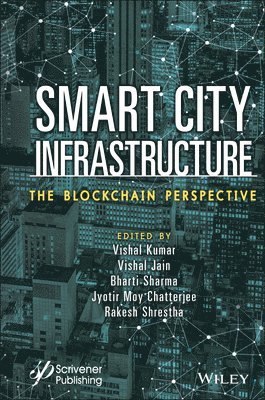
The wide range of topics presented in this book have been chosen to provide the reader with a better understanding of smart cities integrated with AI and blockchain and related security issues.
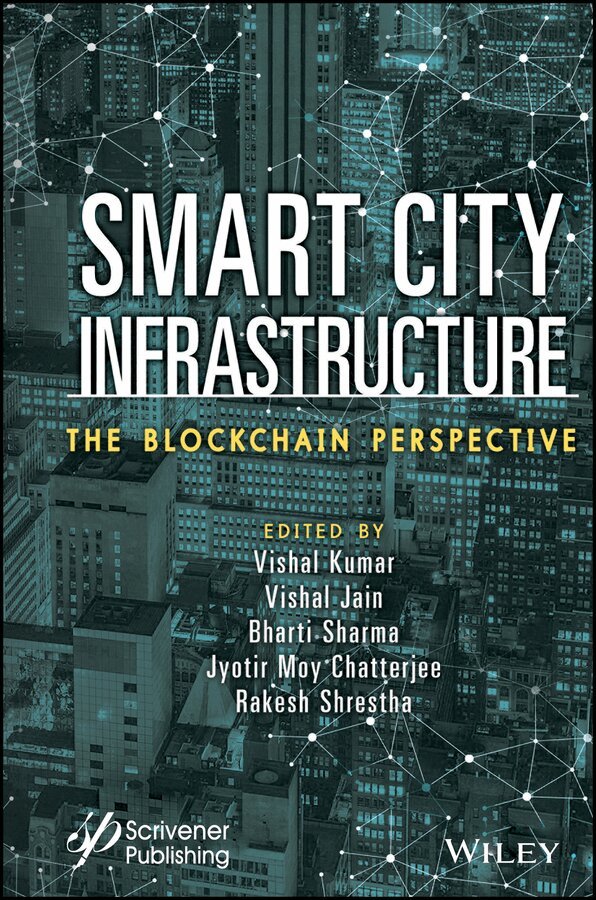
The goal of this book is to provide detailed, in-depth information on the state-of-the-art architecture and infrastructure used to develop smart cities using the Internet of Things (IoT), artificial intelligence (AI), and blockchain security—the key technologies of the fourth industrial revolution. The book outlines the theoretical concepts, experimental studies, and various smart city applications that create value for inhabitants of urban areas. Several issues that have arisen with the advent of smart cities and novel solutions to resolve these issues are presented. The IoT along with the integration of blockchain and AI provides efficient, safe, secure, and transparent ways to solve different types of social, governmental, and demographic issues in the dynamic urban environment. A top-down strategy is adopted to introduce the architecture, infrastructure, features, and security.
Audience
The core audience is researchers in artificial intelligence, information technology, electronic and electrical engineering, systems engineering, industrial engineering as well as government and city planners.
3 193 kr
Läs direkt efter köp
The wide range of topics presented in this book have been chosen to provide the reader with a better understanding of smart cities integrated with AI and blockchain and related security issues.
The goal of this book is to provide detailed, in-depth information on the state-of-the-art architecture and infrastructure used to develop smart cities using the Internet of Things (IoT), artificial intelligence (AI), and blockchain security—the key technologies of the fourth industrial revolution. The book outlines the theoretical concepts, experimental studies, and various smart city applications that create value for inhabitants of urban areas. Several issues that have arisen with the advent of smart cities and novel solutions to resolve these issues are presented. The IoT along with the integration of blockchain and AI provides efficient, safe, secure, and transparent ways to solve different types of social, governmental, and demographic issues in the dynamic urban environment. A top-down strategy is adopted to introduce the architecture, infrastructure, features, and security.
Audience
The core audience is researchers in artificial intelligence, information technology, electronic and electrical engineering, systems engineering, industrial engineering as well as government and city planners.
195 kr
Skickas inom 5-8 vardagar