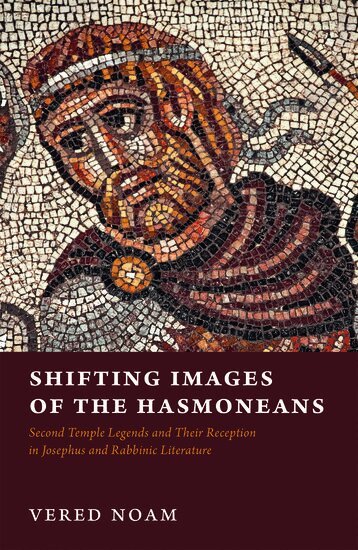
The shifting image of the Hasmoneans in the eyes of their contemporaries and later generations is a compelling issue in the history of the Maccabean revolt and the Hasmonean commonwealth. Based on a series of six Jewish folktales from the Second Temple period that describe the Hasmonean dynasty and its history from its legendary founders, through achievement of full sovereignty, to downfall, this volume examines the Hasmoneans through the lens of reception history.On the one hand, these brief, colorful legends are embedded in the narrative of the historian of the age, Flavius Josephus; on the other hand, they are scattered throughout the extensive halakhic-exegetical compositions known as rabbinic literature, redacted and compiled centuries later.Each set of parallel stories is examined for the motivation underlying its creation, its original message, language, and the historical context. This analysis is followed by exploration of the nature of the relationship between the Josephan and the rabbinic versions, in an attempt to reconstruct the adaptation of the putative original traditions in the two corpora, and to decipher the disparities, different emphases, reworking, and unique orientations typical of each. These adaptations reflectthe reception of the pristine tales and thus disclose the shifting images of the Hasmoneans in later generations and within distinct contexts. The compilation and characterization of these sources which were preserved by means of two such different conduits of transmission brings us closer toreconstruction of a lost literary continent, a hidden Jewish "Atlantis" of early pseudo-historical legends and facilitates examination of the relationship between the substantially different libraries and worlds of Josephus and rabbinic literature.
The shifting image of the Hasmoneans in the eyes of their contemporaries and later generations is a compelling issue in the history of the Maccabean revolt and the Hasmonean commonwealth. Based on a series of six Jewish folktales from the Second Temple period that describe the Hasmonean dynasty and its history from its legendary founders, through achievement of full sovereignty, to downfall, this volume examines the Hasmoneans through the lens of reception history. On the one hand, these brief, colorful legends are embedded in the narrative of the historian of the age, Flavius Josephus; on the other hand, they are scattered throughout the extensive halakhic-exegetical compositions known as rabbinic literature, redacted and compiled centuries later.Each set of parallel stories is examined for the motivation underlying its creation, its original message, language, and the historical context. This analysis is followed by exploration of the nature of the relationship between the Josephan and the rabbinic versions, in an attempt to reconstruct the adaptation of the putative original traditions in the two corpora, and to decipher the disparities, different emphases, reworking, and unique orientations typical of each. These adaptations reflect the reception of the pristine tales and thus disclose the shifting images of the Hasmoneans in later generations and within distinct contexts. The compilation and characterization of these sources which were preserved by means of two such different conduits of transmission brings us closer to reconstruction of a lost literary continent, a hidden Jewish "Atlantis" of early pseudo-historical legends and facilitates examination of the relationship between the substantially different libraries and worlds of Josephus and rabbinic literature.
Der Text Miqṣat Ma῾aśe Ha-Torah, Einiges von den Werken der Tora (4QMMT), ist eine der interessantesten Schriften unter den berühmten Texten vom Toten Meer, die um die Mitte des 20. Jahrhunderts in den Höhlen nahe der Siedlung Khirbet Qumran gefunden wurden und mittlerweile vollständig publiziert sind. Es handelt sich um ein Lehrschreiben in der Form eines Briefes, das von einem unbekannten Autor verfasst ist und sich an einen - im Singular und Plural angesprochenen - unbekannten Adressaten richtet. Das Lehrschreiben ist der älteste Zeuge aus vorchristlicher, hellenistischer Zeit für die explizite Auslegung des jüdischen Gesetzes, die sogenannte Halakha, wie sie in der späteren rabbinischen Überlieferung üblich geworden und breit bezeugt ist. Der vorliegende Band bietet nach einer Einführung in die Funde vom Toten Meer im Allgemeinen und den Text Miqṣat Ma῾aśe Ha-Torah im Speziellen eine Neuedition und Übersetzung sowie Beiträge ausgewiesener Spezialisten zu der handschriftlichen Überlieferung, der Sprache, den Inhalten sowie den literatur- und zeitgeschichtlichen Kontexten der Schrift.