Vikas Choudhary – författare
1 246 kr
Skickas inom 10-15 vardagar
1 454 kr
Läs direkt efter köp
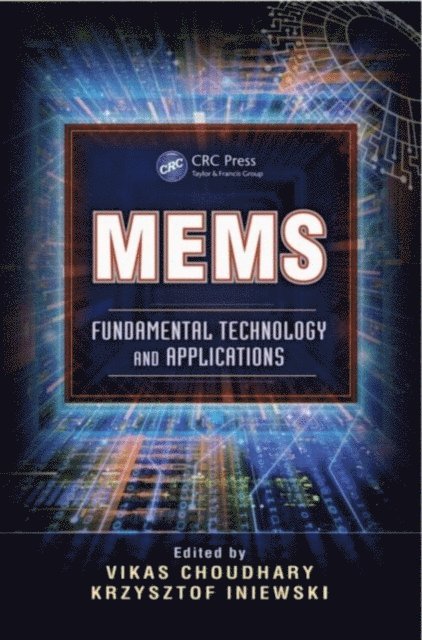
The microelectromechanical systems (MEMS) industry has experienced explosive growth over the last decade. Applications range from accelerometers and gyroscopes used in automotive safety to high-precision on-chip integrated oscillators for reference generation and mobile phones. MEMS: Fundamental Technology and Applications brings together groundbreaking research in MEMS technology and explores an eclectic set of novel applications enabled by the technology. The book features contributions by top experts from industry and academia from around the world.
The contributors explain the theoretical background and supply practical insights on applying the technology. From the historical evolution of nano micro systems to recent trends, they delve into topics including:
Thin-film integrated passives as an alternative to discrete passives The possibility of piezoelectric MEMS Solutions for MEMS gyroscopes Advanced interconnect technologies Ambient energy harvesting Bulk acoustic wave resonators Ultrasonic receiver arrays using MEMS sensors Optical MEMS-based spectrometers The integration of MEMS resonators with conventional circuitry A wearable inertial and magnetic MEMS sensor assembly to estimate rigid body movement patterns Wireless microactuators to enable implantable MEMS devices for drug delivery MEMS technologies for tactile sensing and actuation in robotics MEMS-based micro hot-plate devices Inertial measurement units with integrated wireless circuitry to enable convenient, continuous monitoring Sensors using passive acousto-electric devices in wired and wireless systemsThroughout, the contributors identify challenges and pose questions that need to be resolved, paving the way for new applications. Offering a wide view of the MEMS landscape, this is an invaluable resource for anyone working to develop and commercialize MEMS applications.
3 141 kr
Skickas inom 10-15 vardagar
1 454 kr
Läs direkt efter köp
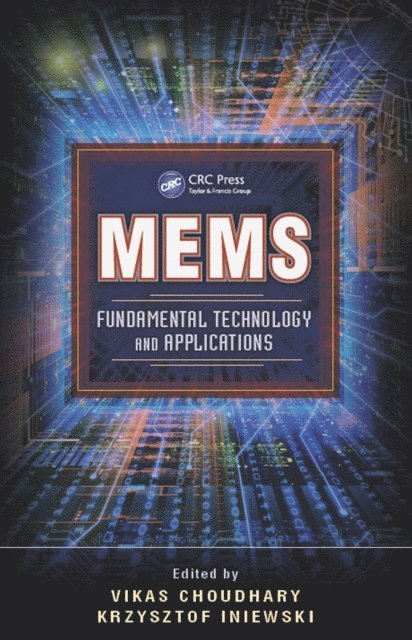
The microelectromechanical systems (MEMS) industry has experienced explosive growth over the last decade. Applications range from accelerometers and gyroscopes used in automotive safety to high-precision on-chip integrated oscillators for reference generation and mobile phones. MEMS: Fundamental Technology and Applications brings together groundbreaking research in MEMS technology and explores an eclectic set of novel applications enabled by the technology. The book features contributions by top experts from industry and academia from around the world.
The contributors explain the theoretical background and supply practical insights on applying the technology. From the historical evolution of nano micro systems to recent trends, they delve into topics including:
Thin-film integrated passives as an alternative to discrete passives The possibility of piezoelectric MEMS Solutions for MEMS gyroscopes Advanced interconnect technologies Ambient energy harvesting Bulk acoustic wave resonators Ultrasonic receiver arrays using MEMS sensors Optical MEMS-based spectrometers The integration of MEMS resonators with conventional circuitry A wearable inertial and magnetic MEMS sensor assembly to estimate rigid body movement patterns Wireless microactuators to enable implantable MEMS devices for drug delivery MEMS technologies for tactile sensing and actuation in robotics MEMS-based micro hot-plate devices Inertial measurement units with integrated wireless circuitry to enable convenient, continuous monitoring Sensors using passive acousto-electric devices in wired and wireless systemsThroughout, the contributors identify challenges and pose questions that need to be resolved, paving the way for new applications. Offering a wide view of the MEMS landscape, this is an invaluable resource for anyone working to develop and commercialize MEMS applications.
672 kr
Skickas inom 5-8 vardagar
672 kr
Skickas inom 5-8 vardagar
672 kr
Skickas inom 5-8 vardagar
672 kr
Skickas inom 5-8 vardagar
672 kr
Skickas inom 5-8 vardagar
2 693 kr
Läs direkt efter köp
The food industry is a complex, global collective of diverse businesses that supply much of the food energy consumed by the world population. Only subsistence farmers, those who survive on what they grow, can be considered outside of the scope of the modern food industry. During the industrialisation era in the 19th century, food manufacturing arose. This development took advantage of new mass markets and emerging new technology, such as milling, preservation, packaging and labelling and transportation. At the start of the 21st century, a two-tier structure has arisen, with a few international food processing giants controlling a wide range of well-known food brands, and a populous number of small local or national food processing companies. Food processing includes the methods and techniques used to transform raw ingredients into food for human consumption. Food processing takes clean, harvested or slaughtered and butchered components and uses them to produce marketable food products. There are several different ways in which food can be produced. Food packaging is packaging for food. A package provides protection, tampering resistance, and special physical, chemical, or biological needs. It may bear a nutrition facts label and other information about food being offered for sale. Modernization of nutrition and health information on food labels is an essential weapon in the fight against obesity and diet-related diseases. Cost-benefit analyses of previous food labelling reforms show that the costs of changing food labels is greatly outweighed by the health benefits of providing consumers with better label information. Food marketing brings together the producer and the consumer. Fundamentals of Food Processing, Packaging, Labelling and Marketing: assembles the most recent information available for the efficient design and development of processes used in the manufacturing of food products, along with traditional background and fundamental information. In keeping with the comprehensive and informative style of the original, this second edition focuses on the thermophysical properties of food and the rate constants of change in food components during processing. It highlights the use of these properties and constants in process design.
2 211 kr
Läs direkt efter köp
4 332 kr
Läs direkt efter köp
6 338 kr
Läs direkt efter köp
2 653 kr
Läs direkt efter köp
Customer relationship management (CRM) is a model for managing a company’s interactions with current and future customers. It involves using technology to organize, automate, and synchronize sales, marketing, customer service, and technical support. A customer is the recipient of a good, service, product, or idea, obtained from a seller, vendor, or supplier for a monetary or other valuable consideration. Once a company has collected information about a customer, the next step is training its salespeople and other employees in using that information to keep the customer relationship strong. Because salespeople are often the ‘face’ of the company, theirs is an important role in any CRM program. Frequently a customer who runs into a technical problem will phone her salesperson instead of calling up the customer service team. She already knows her salesperson and probably has good feelings about him, or she wouldn’t have bought the product from him. It’s safer and easier to reach out to someone she knows than to try to explain her problems to a stranger. So even after the sale is complete, salespeople often continue to speak with customers on a regular basis.
2 653 kr
Läs direkt efter köp
The hotel and tourism industry is one of the fastest growing industries. The hotel industry is a service oriented industry run by the people and for the people. As this industry basically deals with the service of food provided to the people, so this industry includes lots of methods of service of food. Hospitality refers to the relationship process between a guest and a host, and it also refers to the act or practice of being hospitable, that is, the reception and entertainment of guests, visitors, or strangers, with liberality and goodwill. Hospitality frequently refers to the hospitality industry jobs for hotels, restaurants, casinos, catering, resorts, clubs and any other service position that deals with tourists. Catering is the business of providing food service at a remote site or a site such as a hotel, public house, or other location. The increase in tourism in India has created many jobs in a variety of related sectors, both directly and indirectly. An approximate 20 million people now work in India’s tourism industry. Indian Tourism is thriving, owing to a huge surge in both business and leisure travel by foreign and domestic tourists and is expected to generate approximately US$ 275.5 billion by 2018. This important book provides a thorough understanding, and solid preparation for a career in hospitality and travel marketing.
2 600 kr
Läs direkt efter köp
This current book on subject is written for all those in hospitality careers with finance. The text explains and demonstrates the importance of financial management within the hospitality organization. This clear and concise book provides many examples and is primarily based on practical applications and less on theoretical foundations—keeping hospitality professionals tuned into finance without intimidating them with a typical finance book.
2 677 kr
Läs direkt efter köp
For Hotel Management courses, and internships, this text introduces concepts of organization, communication, ethics and policy within a hotel. An introduction of basic analyses, techniques and trends both in policy and technology are reviewed as they relate to management and the guest. The text gives students a “real world” understanding of the hotel industry balancing its past, present and future. This text portrays the nature and operation of hotels as they exist today. It reveals the inner workings of a hotel in a way that both promotes learning and interest for the students, preparing them for what to expect in the current and future hotel market.