Virendra Bahadur Singh – författare
1 486 kr
Skickas inom 10-15 vardagar
Ecological Significance of Riparian Ecosystems: Challenges and Management Strategies examines the current issues related to river ecosystems, their environmental importance, pollution issues and potential management strategies. The book is divided into 4 key themes: Basics of river ecosystem, Natural phenomenon of river ecosystem, Human-induced problems of river ecosystem, and Management measures for the river ecosystem. Through these four themes, the contributors present both practical and theoretical aspects of river ecosystem in changing climate. An emphasis has been made on the recent research of climate change and its impact on the river ecosystem.
River ecosystems have tremendous potential to store CO2, however, with changing climatic and anthropogenic activities, these habitats are under threat, and river ecosystems are losing the very vital service of storing carbon. Unlike well documented terrestrial biodiversity, the biodiversity in aquatic ecosystems is still unrecognized to some extent.
Presents an understanding of the biogeochemical processes of river ecosystems achieved by food webs and diverse biogeochemical processes Covers sediment dynamics and nutrient chemistry - hot topics in river ecosystems Includes environmental pollution issues in river ecosystems from various anthropogenic activities2 113 kr
Läs direkt efter köp
1 918 kr
Skickas inom 5-8 vardagar
2 244 kr
Läs direkt efter köp
Discover the geological foundation of global water supply, focusing on resource conservation and restoration
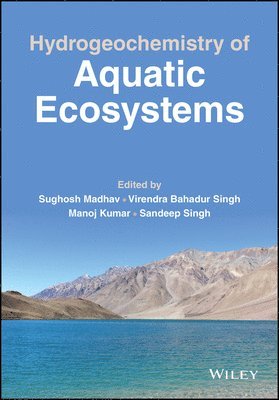
Hydrogeochemistry explores the connections between the geology of a region and the chemical characteristics and quality of its water sources, including such factors as erosion, evaporation, and, increasingly, man-made activities. With the emergence of climate change as a major factor reshaping water quality and availability, the need to understand interactions between hydrochemistry and geology has never been greater.
Hydrogeochemistry of Aquatic Ecosystems meets this need by offering foundational knowledge about the hydrochemistry of different types of aquatic systems, the nature of their interactions with various pollutants and geological processes, and the possibilities and dangers of human intervention. With a particular focus on aqueous resource conservation and restoration, this is a vital, timely guide to a potentially life-saving subject.
Hydrogeochemistry of Aquatic Ecosystems readers will also find:
Detailed treatment of water-sediment interactions, arsenic and fluoride enrichment, sand mining, and many other subjects Coverage throughout of solute acquisition processes, the carbon cycle, and nutrient geochemistry Case studies from Asia and Africa demonstrating both natural and anthropogenic hydrogeochemical interactionsHydrogeochemistry of Aquatic Ecosystems is indispensable for professionals and researchers in environmental science and environmental engineering, as well as scholars and advanced graduate students working on aquatic ecosystems or effects of climate change.
2 244 kr
Läs direkt efter köp
Discover the geological foundation of global water supply, focusing on resource conservation and restoration
Hydrogeochemistry explores the connections between the geology of a region and the chemical characteristics and quality of its water sources, including such factors as erosion, evaporation, and, increasingly, man-made activities. With the emergence of climate change as a major factor reshaping water quality and availability, the need to understand interactions between hydrochemistry and geology has never been greater.
Hydrogeochemistry of Aquatic Ecosystems meets this need by offering foundational knowledge about the hydrochemistry of different types of aquatic systems, the nature of their interactions with various pollutants and geological processes, and the possibilities and dangers of human intervention. With a particular focus on aqueous resource conservation and restoration, this is a vital, timely guide to a potentially life-saving subject.
Hydrogeochemistry of Aquatic Ecosystems readers will also find:
Detailed treatment of water-sediment interactions, arsenic and fluoride enrichment, sand mining, and many other subjects Coverage throughout of solute acquisition processes, the carbon cycle, and nutrient geochemistry Case studies from Asia and Africa demonstrating both natural and anthropogenic hydrogeochemical interactionsHydrogeochemistry of Aquatic Ecosystems is indispensable for professionals and researchers in environmental science and environmental engineering, as well as scholars and advanced graduate students working on aquatic ecosystems or effects of climate change.
1 896 kr
Skickas inom 5-8 vardagar
2 122 kr
Läs direkt efter köp
An indispensable introduction to the key environmental processes of weathering and erosion
Natural and human-induced weathering processes can have a great impact on soil and groundwater quality. With climate change and other environmental challenges placing increased emphasis on these resources, it has never been more important for researchers and environmental professionals to attain detailed knowledge of weathering and erosion processes.
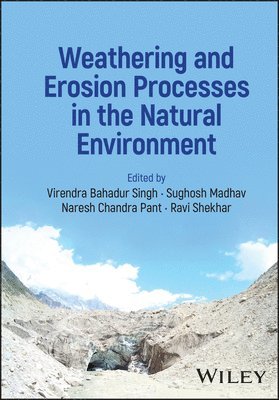
Weathering and Erosion Processes in the Natural Environment meets this need with a rigorous, systematic overview. Beginning with a description of different forces and processes that contribute to weathering, it then discusses the different kinds of landforms that can be produced by weathering and erosion processes, as well as the potential impacts of hydrogeological processes on both surface water and groundwater. The result is a volume that balances qualitative and quantitative understanding of this crucial subject.
Weathering and Erosion Processes in the Natural Environment readers will also find:
Documented examples in which weathering and erosion processes have led to heavy metals and other trace elements in groundwater Detailed discussion of climate change impacts, including extreme weather events and rising carbon dioxide levels Modeling approaches throughout to enable quantitative assessment and predictions of future impactWeathering and Erosion Processes in the Natural Environment is ideal for researchers and advanced students in geology, geochemistry, hydrogeochemistry and environmental science, as well as professionals dealing with water and soil management.
2 122 kr
Läs direkt efter köp
An indispensable introduction to the key environmental processes of weathering and erosion
Natural and human-induced weathering processes can have a great impact on soil and groundwater quality. With climate change and other environmental challenges placing increased emphasis on these resources, it has never been more important for researchers and environmental professionals to attain detailed knowledge of weathering and erosion processes.
Weathering and Erosion Processes in the Natural Environment meets this need with a rigorous, systematic overview. Beginning with a description of different forces and processes that contribute to weathering, it then discusses the different kinds of landforms that can be produced by weathering and erosion processes, as well as the potential impacts of hydrogeological processes on both surface water and groundwater. The result is a volume that balances qualitative and quantitative understanding of this crucial subject.
Weathering and Erosion Processes in the Natural Environment readers will also find:
Documented examples in which weathering and erosion processes have led to heavy metals and other trace elements in groundwater Detailed discussion of climate change impacts, including extreme weather events and rising carbon dioxide levels Modeling approaches throughout to enable quantitative assessment and predictions of future impactWeathering and Erosion Processes in the Natural Environment is ideal for researchers and advanced students in geology, geochemistry, hydrogeochemistry and environmental science, as well as professionals dealing with water and soil management.
1 964 kr
Skickas inom 5-8 vardagar
2 198 kr
Läs direkt efter köp
An up-to-date and comprehensive analysis of mountainous region water resource management
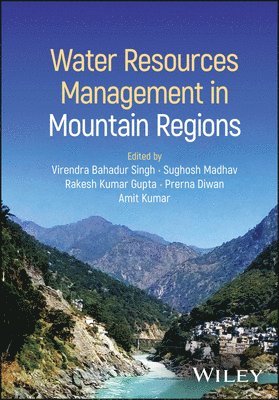
In Water Resources Management in Mountain Regions, a team of distinguished researchers delivers an up-to-date survey of mountain region hydrology, including the assessment, dynamics, and modeling of glaciers, rivers, and lakes, as well as coverage of the impact of climate change and anthropogenic activities on mountain ecosystems. The authors discuss the challenges posed for those attempting to sustainably manage water resources and explain the impacts of those challenges on water yield, water quality, and the risk of flash flooding.
The book includes several case studies from the Himalayan mountain range, which serves as a model region for both medium-high and very high-altitude water resources. It also examines traditional methods of water resource management and conservation and their relevance for 21st century strategies.
Readers will also find:
A thorough introduction to the management challenges of water resources in the Sikkim Mountain regionsComprehensive explorations of the microbial dynamics, ecological resilience, and sustainable management strategies of mountainous water resourcesPractical discussions of the application of Geographic Information Systems and Remote Sensing in Satpuda mountainous terrainComplete examinations of water resource vulnerability to climate change in the mountain regions of IndiaPerfect for scientists and other professionals working in surface and subsurface hydrology, environmental management, and climate science, Water Resources Management in Mountain Regions will also prove invaluable to professionals working in companies and governmental institutions involved in water resource exploitation and conservation, hydroelectric power generation, and disaster prevention.
2 198 kr
Läs direkt efter köp
An up-to-date and comprehensive analysis of mountainous region water resource management
In Water Resources Management in Mountain Regions, a team of distinguished researchers delivers an up-to-date survey of mountain region hydrology, including the assessment, dynamics, and modeling of glaciers, rivers, and lakes, as well as coverage of the impact of climate change and anthropogenic activities on mountain ecosystems. The authors discuss the challenges posed for those attempting to sustainably manage water resources and explain the impacts of those challenges on water yield, water quality, and the risk of flash flooding.
The book includes several case studies from the Himalayan mountain range, which serves as a model region for both medium-high and very high-altitude water resources. It also examines traditional methods of water resource management and conservation and their relevance for 21st century strategies.
Readers will also find:
A thorough introduction to the management challenges of water resources in the Sikkim Mountain regionsComprehensive explorations of the microbial dynamics, ecological resilience, and sustainable management strategies of mountainous water resourcesPractical discussions of the application of Geographic Information Systems and Remote Sensing in Satpuda mountainous terrainComplete examinations of water resource vulnerability to climate change in the mountain regions of IndiaPerfect for scientists and other professionals working in surface and subsurface hydrology, environmental management, and climate science, Water Resources Management in Mountain Regions will also prove invaluable to professionals working in companies and governmental institutions involved in water resource exploitation and conservation, hydroelectric power generation, and disaster prevention.
2 032 kr
Skickas inom 5-8 vardagar
2 274 kr
Läs direkt efter köp
2 274 kr
Läs direkt efter köp
1 797 kr
Kommande