Vy Nguyen – författare
Visar alla böcker från författaren . Handla med fri frakt och snabb leverans.
2 produkter
2 produkter
Häftad, Engelska, 2012
308 kr
Skickas inom 10-15 vardagar
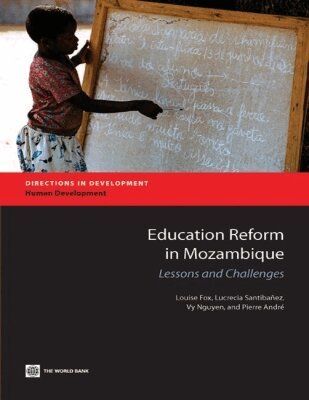
Coming out of civil war, Mozambique had an enormous education deficit. In 199, five years after the peace treaty, 80 percent of the labor force reported to have no education at all, and school enrollment outside the large cities was miserable. Since then, Mozambique has come a long way in improving access to lower and upper primary through sustained investments in education infrastructure and introduction of important reforms. The primary education reform programs implemented in 2004, combined with a continuing program of school construction and teacher training, resulted in a 70% increase in enrollment in EP1 over 4 years with the highest gains for the poorest and most vulnerable children. Yet there was only a slight increase in student/teacher ratios. How did Mozambique do this, and what are the lessons going foward? The most important part of the reform appears to be the removal of the national school fee for primary level and the provision of free textbooks. These reforms provided the boost that poorer households needed to get their children in school. Continued investments in school construction helped as well. However, despite these efforts, there is still an education deficit. In 2008, over 1 million children who should be attending primary school were not. Over half of the children who began grade 1 in 2000 did not complete grade 7 by 2008. One reason is that school costs remain high, especially for grades 6 and above (EP2+). And quality is still not adequate in many schools. As a result, the transformation of the labor force is slow, as over half of the females who entered the labor force in the decade since 1997 did not even complete EP1. Analysis of employment and livelihood opportunities indicates that the transition out of subsistence agriculture requires primary education. This means that to achieve inclusive growth, the key strategic objective of the education system needs to be ensuring that as many children as possible start and finish primary school with competency in the basic subjects, as well as the skills to allow them to find productive economic activities and make these activities pay This book is aimed at policy makers in the education field. .
E-bok
PDF, Engelska, 201716 kr
Läs direkt efter köp
Essay from the year 2017 in the subject Pedagogy - Theory of Science, Anthropology, grade: 2:1, London School of Economics, language: English, abstract: During the Cold War in the 1950s, the Inuit people were relocated by the Canadian government in the High Arctic part of the country in order to overcome the issue of overpopulated areas and poor hunting, to reduce their high dependence on welfare. Despite the lowered rate in illiteracy as Inuit children and adults were put to schools, there had been an importantly rising concern within the Inuit community of high suicides rates. In this essay, I discuss how Briggs's ethnography of life in a nomadic Inuit camp can explain the reasons behind the challenges that Eskimo people had to face and why young Eskimo people increasingly committed suicide. Primarily, I define previous and recent definition of suicides for the Inuit and explain the differences between these two concepts using a piece of evidence of an old Eskimo lady in an ethnographic film and Durkheim s own definition of egoistic suicide . Secondly, I draw a discussion about how Briggs s ethnographic work can be relevant when it comes to explain about the social detachment within Eskimo families once they are separated in terms of cross-generational teaching and mentoring, which have been dramatically altered due to government s schools and new jobs in society other than hunting. Next, I introduce two complimentary features ungayuq and naalaqtuq - in Inuit social relationships, which play important parts as they create a distinctive closeness among members in society. I also argue Briggs s work can assist the understanding of these two concepts, which reflected the difference in Eskimo people s mentality between the past and the days after the resettlement. Before the conclusion, I give my arguments regarding other unexplored causes of suicides, which are irrelevant if using Briggs s research to explain.