William J. Baumol – författare
476 kr
Skickas inom 5-8 vardagar
1 738 kr
Skickas inom 5-8 vardagar
1 336 kr
Läs direkt efter köp
467 kr
Skickas inom 5-8 vardagar
258 kr
Skickas inom 5-8 vardagar
1 116 kr
Skickas inom 10-15 vardagar
590 kr
Skickas inom 7-10 vardagar
1 448 kr
Skickas inom 7-10 vardagar
434 kr
Skickas inom 5-8 vardagar
1 261 kr
Skickas inom 5-8 vardagar
607 kr
Skickas inom 5-8 vardagar
1 592 kr
Läs direkt efter köp
How much credit can be given to entrepreneurship for the unprecedented innovation and growth of free-enterprise economies? In this book, some of the world''s leading economists tackle this difficult and understudied question, and their responses shed new light on how free-market economies work--and what policies most encourage their growth. The contributors take as their starting point William J. Baumol''s 2002 book The Free-Market Innovation Machine (Princeton), which argued that independent entrepreneurs are far more important to growth than economists have traditionally thought, and that an implicit partnership between such entrepreneurs and large corporations is critical to the success of market economies. The contributors include the editors and Robert M. Solow, Kenneth J. Arrow, Michael M. Weinstein, Douglass C. North, Barry R. Weingast, Ying Lowrey, Nathan Rosenberg, Melissa A. Schilling, Corey Phelps, Sylvia Nasar, Boyan Jovanovic, Peter L. Rousseau, Edward N. Wolff, Deepak Somaya, David J. Teece, Naomi R. Lamoreaux, Kenneth L. Sokoloff, Yochanan Shachmurove, Ralph E. Gomory, Jonathan Eaton, Samuel S. Kortum, Alan S. Blinder, Robert J. Shiller, Burton G. Malkiel, and Edmund S. Phelps.
187 kr
Läs direkt efter köp
188 kr
Skickas inom 10-15 vardagar
145 kr
Skickas inom 5-8 vardagar
698 kr
Läs direkt efter köp
698 kr
Läs direkt efter köp
1 408 kr
Läs direkt efter köp
1 116 kr
Skickas inom 10-15 vardagar
642 kr
Läs direkt efter köp
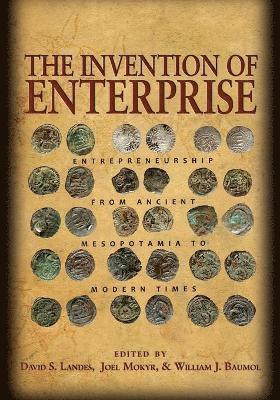
A sweeping global history of entrepreneurial innovationWhether hailed as heroes or cast as threats to social order, entrepreneurs—and their innovations—have had an enormous influence on the growth and prosperity of nations. The Invention of Enterprise gathers together, for the first time, leading economic historians to explore the entrepreneur''s role in society from antiquity to the present. Addressing social and institutional influences from a historical context, each chapter examines entrepreneurship during a particular period and in an important geographic location.The book chronicles the sweeping history of enterprise in Mesopotamia and Neo-Babylon; carries the reader through the Islamic Middle East; offers insights into the entrepreneurial history of China, Japan, and Colonial India; and describes the crucial role of the entrepreneur in innovative activity in Europe and the United States, from the medieval period to today. In considering the critical contributions of entrepreneurship, the authors discuss why entrepreneurial activities are not always productive and may even sabotage prosperity. They examine the institutions and restrictions that have enabled or impeded innovation, and the incentives for the adoption and dissemination of inventions. They also describe the wide variations in global entrepreneurial activity during different historical periods and the similarities in development, as well as entrepreneurship''s role in economic growth. The book is filled with past examples and events that provide lessons for promoting and successfully pursuing contemporary entrepreneurship as a means of contributing to the welfare of society.The Invention of Enterprise lays out a definitive picture for all who seek an understanding of innovation''s central place in our world.
827 kr
Läs direkt efter köp
An authoritative look at the microeconomics of entrepreneurshipEntrepreneurs are widely recognized for the vital contributions they make to economic growth and general welfare, yet until fairly recently entrepreneurship was not considered worthy of serious economic study. Today, progress has been made to integrate entrepreneurship into macroeconomics, but until now the entrepreneur has been almost completely excluded from microeconomics and standard theoretical models of the firm. The Microtheory of Innovative Entrepreneurship provides the framework for introducing entrepreneurship into mainstream microtheory and incorporating the activities of entrepreneurs, inventors, and managers into standard models of the firm.William Baumol distinguishes between the innovative entrepreneur, who comes up with new ideas and puts them into practice, and the replicative entrepreneur, which can be anyone who launches a new business venture, regardless of whether similar ventures already exist. Baumol puts forward a quasi-formal theoretical analysis of the innovative entrepreneur''s influential role in economic life. In doing so, he opens the way to bringing innovative entrepreneurship into the accepted body of mainstream microeconomics, and offers valuable insights that can be used to design more effective policies. The Microtheory of Innovative Entrepreneurship lays the foundation for a new kind of microtheory that reflects the innovative entrepreneur''s importance to economic growth and prosperity.
599 kr
Läs direkt efter köp
Why has capitalism produced economic growth that so vastly dwarfs the growth record of other economic systems, past and present? Why have living standards in countries from America to Germany to Japan risen exponentially over the past century? William Baumol rejects the conventional view that capitalism benefits society through price competition--that is, products and services become less costly as firms vie for consumers. Where most others have seen this as the driving force behind growth, he sees something different--a compound of systematic innovation activity within the firm, an arms race in which no firm in an innovating industry dares to fall behind the others in new products and processes, and inter-firm collaboration in the creation and use of innovations. While giving price competition due credit, Baumol stresses that large firms use innovation as a prime competitive weapon. However, as he explains it, firms do not wish to risk too much innovation, because it is costly, and can be made obsolete by rival innovation. So firms have split the difference through the sale of technology licenses and participation in technology-sharing compacts that pay huge dividends to the economy as a whole--and thereby made innovation a routine feature of economic life. This process, in Baumol''s view, accounts for the unparalleled growth of modern capitalist economies. Drawing on extensive research and years of consulting work for many large global firms, Baumol shows in this original work that the capitalist growth process, at least in societies where the rule of law prevails, comes far closer to the requirements of economic efficiency than is typically understood. Resounding with rare intellectual force, this book marks a milestone in the comprehension of the accomplishments of our free-market economic system--a new understanding that, suggests the author, promises to benefit many countries that lack the advantages of this immense innovation machine.
698 kr
Skickas inom 5-8 vardagar
2 125 kr
Skickas inom 5-8 vardagar
Welfare Economics
16 120 kr
Skickas inom 5-8 vardagar
Fronesis 31. Kultur och politik
117 kr
Skickas inom 5-8 vardagar
543 kr
Tillfälligt slut
221 kr
Tillfälligt slut