William Murphy - Böcker
Visar alla böcker från författaren William Murphy. Handla med fri frakt och snabb leverans.
15 produkter
15 produkter
545 kr
Skickas inom 7-10 vardagar
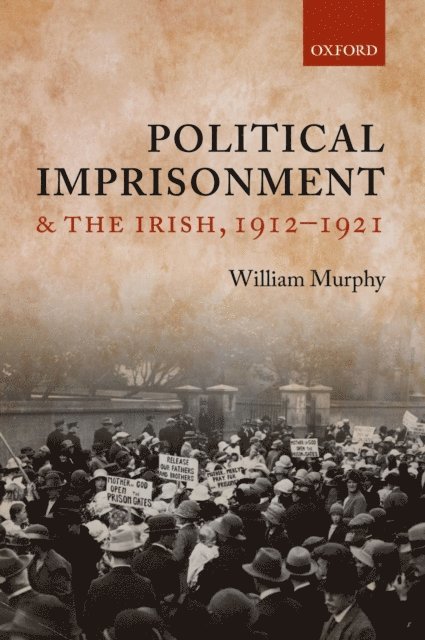
For a revolutionary generation of Irishmen and Irishwomen - including suffragettes, labour activists, and nationalists - imprisonment became a common experience. In the years 1912-1921, thousands were arrested and held in civil prisons or in internment camps in Ireland and Britain. The state's intent was to repress dissent, but instead, the prisons and camps became a focus of radical challenge to the legitimacy and durability of the state. Some of these prisons and prisoners are famous: Terence MacSwiney and Thomas Ashe occupy a central position in the prison martyrology of Irish republican culture, and Kilmainham Gaol has become one of the most popular tourist sites in Dublin. In spite of this, a comprehensive history of political imprisonment focused on these years does not exist. In Imprisonment and the Irish, 1912-1921, William Murphy attempts to provide such a history. He seeks to detail what it was like to be a political prisoner; how it smelled, tasted, and felt. More than that, the volume demonstrates that understanding political imprisonment of this period is one of the keys to understanding the Irish revolution. Murphy argues that the politics of imprisonment and the prison conflicts analysed here reflected and affected the rhythms of the revolution. In doing so, he not only reconstructs and assesses the various experiences and actions of the prisoners, but those of their families, communities, and political movements, as well as the attitudes and reactions of the state and those charged with managing the prisoners.
1 926 kr
Skickas inom 7-10 vardagar
For a revolutionary generation of Irishmen and Irishwomen - including suffragettes, labour activists, and nationalists - imprisonment became a common experience. In the years 1912-1921, thousands were arrested and held in civil prisons or in internment camps in Ireland and Britain. The state's intent was to repress dissent, but instead, the prisons and camps became a focus of radical challenge to the legitimacy and durability of the status quo.Some of these prisons and prisoners are famous: Terence MacSwiney and Thomas Ashe occupy a central position in the prison martyrology of Irish republican culture, and Kilmainham Gaol has become one of the most popular tourist sites in Dublin. In spite of this, a comprehensive history of political imprisonment focused on these years does not exist. In Imprisonment and the Irish, 1912-1921, William Murphy attempts to provide such a history. He seeks to detail what it was like to be a political prisoner; how it smelled, tasted, and felt. More than that, the volume demonstrates that understanding political imprisonment of this period is one of the keys to understanding the Irish revolution.Murphy argues that the politics of imprisonment and the prison conflicts analysed here reflected and affected the rhythms of the revolution, and this volume not only reconstructs and assesses the various experiences and actions of the prisoners, but those of their families, communities, and political movements, as well as the attitudes and reactions of the state and those charged with managing the prisoners.
1 039 kr
Skickas inom 10-15 vardagar
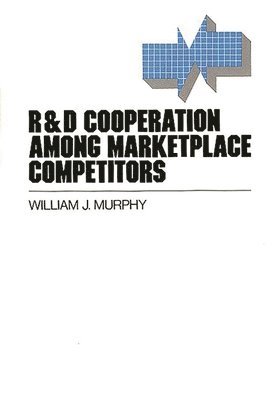
Cooperative activities, or joint ventures, are becoming increasingly popular as instruments of strategic action. But although more and more companies are entering into these alliances full of hope and enthusiasm, past experience shows that most will likely experience the disillusionment of having their ventures fall apart. William Murphy contends that our understanding of the strategic management of collective action needs improvement if the hoped for benefits of cooperation are to be realized. In this work, he examines the management of a specific type of cooperative action that has become critically important to company and national competitiveness: the cooperative research venture.Murphy thoroughly details this new class of inter-firm cooperation to produce knowledge, which has only recently been made possible by changes in the competitive and legal environments. He begins with an introduction and review of the prior literature on cooperative ventures, followed by an extensive survey of competition and cooperation. The management challenges of cooperative research, particularly the need to forge a consensus among participants, are examined in a brief chapter, which precedes four studies of specific cooperative ventures: the Chemical Industry Institute of Toxicology, the Microelectronics and Computer Technology Corporation, Sematech, and U.S. Memories. A final chapter draws conclusions and lessons from the examples, and three appendixes detail antitrust laws applicable to cooperative ventures, Japanese and European microelectronic and computer ventures, and cooperative ventures under NCRA. This work will be an important resource for executives and managers in companies involved in research and development, as well as for college courses in business and economics. Public and academic libraries will also find it to be a valuable addition to their collections.
Symbol Atlas, And Geographical Textbook
Containing Historical And Statistical Details Of The Hemispheres, Europe, And The British Isles (1843)
Häftad, Engelska, 2008
377 kr
Skickas inom 3-6 vardagar
2 725 kr
Skickas inom 10-15 vardagar
This book provides tabular and text data relating to normal and diseased tissue materials and materials used in medical devices.
2 646 kr
Skickas inom 10-15 vardagar
This book provides tabular and text data relating to normal and diseased tissue materials and materials used in medical devices.
409 kr
Skickas inom 3-6 vardagar
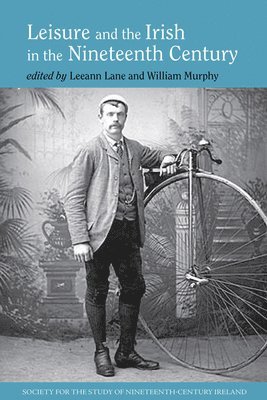
Del 1 - Society for the Study of Nineteenth Century Ireland
Leisure and the Irish in the Nineteenth Century
Inbunden, Engelska, 2016
729 kr
Skickas inom 7-10 vardagar
It has often been argued that ‘modern’ leisure was born in the period from the mid-nineteenth century to the outbreak of World War One. Then, it has been suggested, that if leisure was not ‘invented’ its forms and meanings changed.Despite the recent expansion of the literature on Irish popular cultures – perhaps most strikingly sport – the conceptions, purposes, and practical manifestations of leisure among the Irish during this critical period have yet to receive the attention they deserve. This collection represents an attempt to address this.In twelve essays that explore vibrant expressions of associational culture, the emergence of new leisure spaces, literary manifestations and representations of leisure, the pleasures and purposes of travel, and the leisure pursuits of elite women the collection offers a variety of perspectives on the volume’s theme. As becomes apparent in these studies, all manner of activity, from music to football, reading to dining, travel to photography, dancing to dining, visiting to cycling, child’s play to fighting and attitudes to these were shaped not just by the drive to pleasure but by ideas of class, respectability, improvement and social control as well as political, social, educational, medical and religious ideologies.List of contributors: Leeann Lane, William Murphy, John Borgonovo, Brendan Power, Vanessa Rutherford, Orla Fitzpatrick, Matthew Potter, James H. Murphy, Kevan O’Rourke, Patrick Maume, Philip McEvansoneya, Brian Griffin, Maeve O’Riordan and Rachel Murphy.
1 131 kr
Skickas inom 7-10 vardagar
Founded in 1961, Studia Hibernica is devoted to the study of the Irish language and its literature, Irish history and archaeology, Irish folklore and place names, and related subjects.Its aim is to present the research of scholars in these fields of Irish studies and so to bring them within easy reach of each other and the wider public. It endeavours to provide in each issue a proportion of articles, such as surveys of periods or theme in history or literature, which will be of general interest.A long review section is a special feature of the journal and all new publications within its scope are there reviewed by competent authorities.
1 131 kr
Skickas inom 7-10 vardagar
Founded in 1961, Studia Hibernica is devoted to the study of the Irish language and its literature, Irish history and archaeology, Irish folklore and place names, and related subjects.Its aim is to present the research of scholars in these fields of Irish studies and so to bring them within easy reach of each other and the wider public. It endeavours to provide in each issue a proportion of articles, such as surveys of periods or theme in history or literature, which will be of general interest.A long review section is a special feature of the journal and all new publications within its scope are there reviewed by competent authorities.
1 131 kr
Skickas inom 7-10 vardagar
Founded in 1961, Studia Hibernica is devoted to the study of the Irish language and its literature, Irish history and archaeology, Irish folklore and place names, and related subjects.Its aim is to present the research of scholars in these fields of Irish studies and so to bring them within easy reach of each other and the wider public. It endeavours to provide in each issue a proportion of articles, such as surveys of periods or theme in history or literature, which will be of general interest.A long review section is a special feature of the journal and all new publications within its scope are there reviewed by competent authorities.
267 kr
Tillfälligt slut
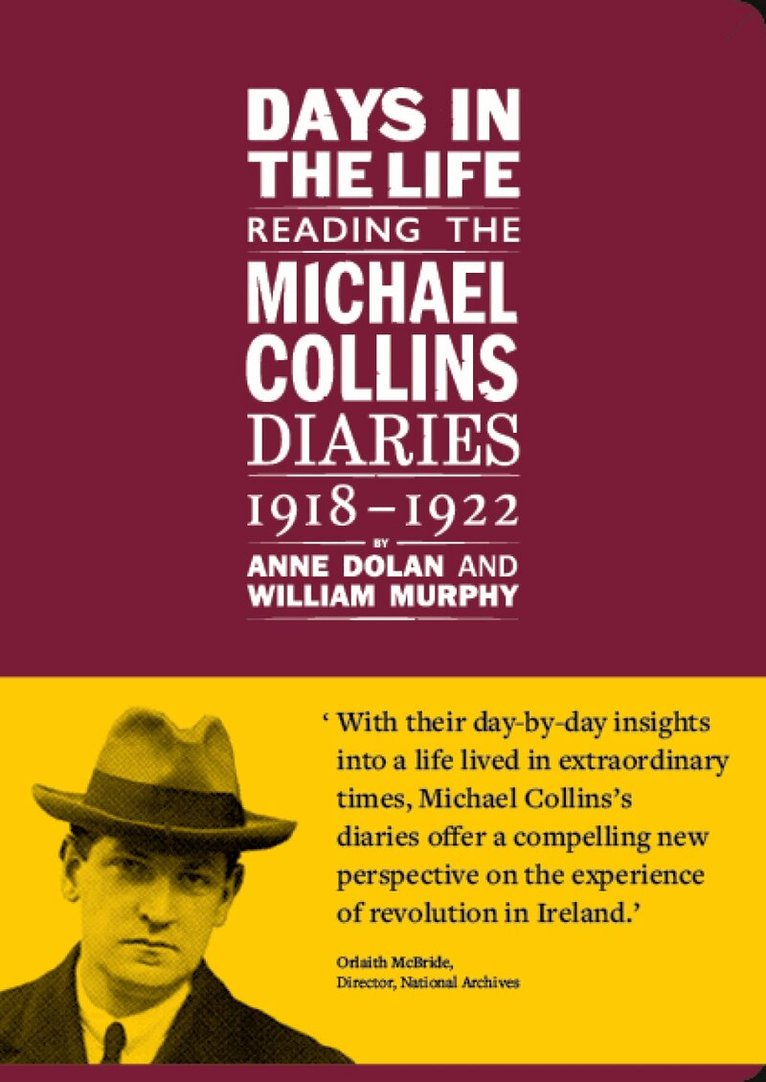
From 1918 to 1922 Michael Collins kept working diaries of his busy revolutionary life. They are a collection of hurried notes, necessary lists, names and appointments, things to do, and things not done. They are a record of his long working days, and they got him to where he needed to be on time. Though these diaries do not contain conventional lengthy entries in which Collins finally reveals his innermost thoughts, they still tell us much about this extraordinary man. In this book, Michael Collins’s biographers, Anne Dolan and William Murphy, capture the nature of this new Collins source. They reflect on how the diaries change what we know about him, and challenge us to think differently about his life. The diaries begin with Collins a revolutionary among many; they end in 1922 with Collins as the most powerful figure in Ireland. They begin with Collins a single man; they end with him about to be married. The authors present thematic reflections on what the diaries reveal of his transformed life. As they are also the diaries of his everyday life, the book examines very particular episodes, the curious and ordinary entries, which allow us to see Collins from new angles. Rather than offering the final piece that will solve the Collins puzzle, the diaries pose new questions to be asked. Michael Collins (1890–1922), was born in Co. Cork, he was a staff captain in the GPO in 1916, and emerged as a leading figure during his internment in Frongoch camp. As the Director of Organisation with the Irish Volunteers, he masterminded their campaign in the Anglo-Irish war (1919-21). Having signed the Anglo-Irish Treaty, in 1922 he became chairman of the Provisional Government and commander-in-chief of the National Army. He was killed in an ambush in Co. Cork on 22 August 1922.
349 kr
Skickas
`It was the most providential escape yet. It will probably have the effect of making them think that I am even more mysterious than they believe me to be, and that is saying a good deal.’ Michael Collins knew the power of his persona, and capitalised on what people wanted to believe. The image we have of him comes filtered through a sensational lens, exaggerated out of all proportion. We see what we have come to expect: `the man who won the war’, the centre of a web of intelligence that `brought the British Empire to its knees’. He comes to us as a mixture of truth and lies, propaganda and misunderstanding. The willingness to see him as the sum of the Irish revolution, and in turn reduce him to a caricature of his many parts, clouds our view of both the man and the revolution.Drawing on archives in Ireland, Britain and the United States, the authors question our traditional assumptions about Collins. Was he the man of his age, or was he just luckier, more brazen, more written about and more photographed than the rest? Despite the pictures of him in uniform during the last weeks of his life, Collins saw very little of the actual fight. He was chiefly an organiser and a strategist. Should we remember him as a master of the mundane rather than the romantic figure of the blockbuster film? The eight thematic, highly illustrated chapters scrutinise different aspects of Collins’ life: origins, work, war, politics, celebrity, beliefs, death and afterlives. Approaching him through the eyes of contemporaries and historians, friends and enemies, this provocative book reveals new insights, challenging what we think we know about him and, in turn, what we think we know about the Irish revolution.
207 kr
Skickas inom 5-8 vardagar
347 kr
Skickas inom 5-8 vardagar