Willy Tinner – författare
Visar alla böcker från författaren Willy Tinner. Handla med fri frakt och snabb leverans.
4 produkter
4 produkter
Inbunden, Engelska, 2024
565 kr
Skickas inom 10-15 vardagar
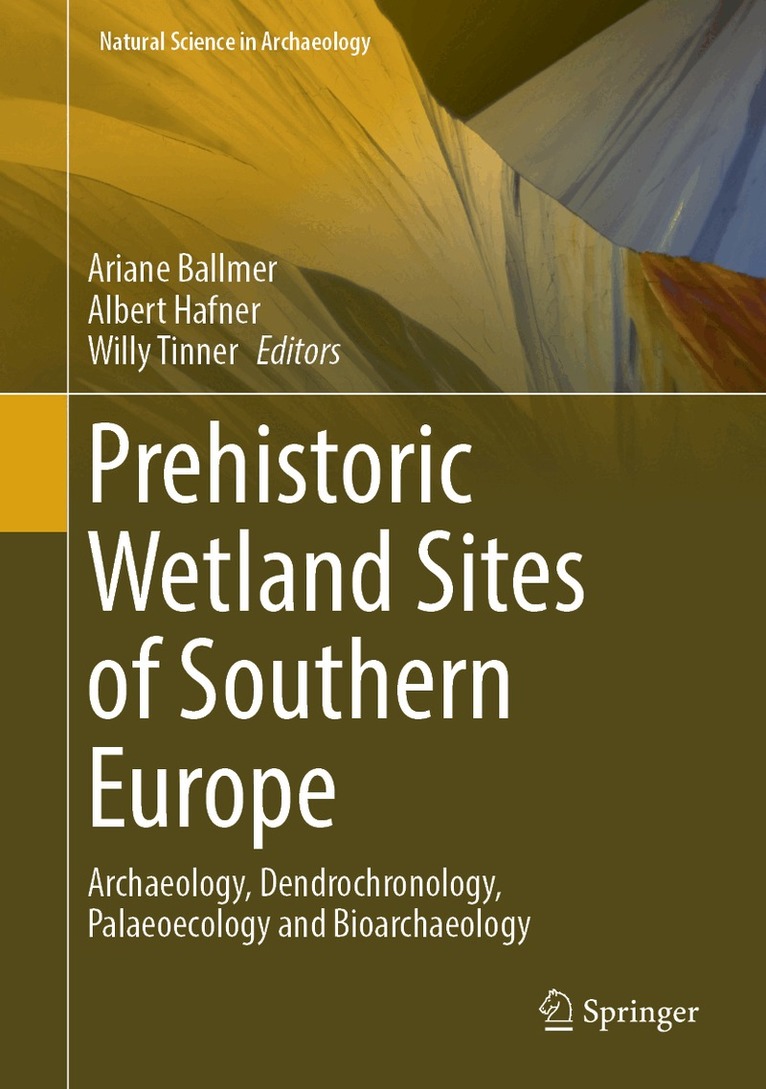
This is an open access book. Unique in its scope, this book provides for the first time a Southern European perspective on prehistoric wetland settlements and their natural environment. These are dwellings originally built in humid locations, i.e. on shores and in shallow water areas of lakes, bogs, marshes, rivers, estuaries and lagoons. The relevant archaeological remains are in most cases waterlogged and offer outstanding preservation conditions for organic materials and are moreover in close proximity to uninterrupted natural archives (e.g. lake or mire sediments), which allows for a broad range of transdisciplinary research approaches. The sites discussed in this book date from the Neolithic and the Bronze Age (c. 5500–1000 BC), and are located in nine countries of Southern Europe, i.e. Spain, France, Italy, Slovenia, Croatia, North Macedonia, Albania, Greece and Bulgaria. Four dimensions of prehistoric wetland settlements are explored in the book – the archaeological, the dendroarchaeological, the palaeoecological and the bioarchaeological: Part I is dedicated to archaeology, i.e. the excavation of settlement remains, their transdisciplinary exploration as well as their interpretation; Part II deals with dendroarchaeology and its contribution to the understanding of occupation sequences and regional chronologies; and Part III concerns uninterrupted off-site palaeoecological records of past ecosystem change, including human–environment interactions, as well as bioarchaeological on-site approaches to subsistence strategies and land use practices.Prehistoric Wetland sites of Southern Europe showcases how different disciplines and areas of expertise from the humanities and the natural sciences meet on an equal footing to elaborate coherent pictures of the past. Besides a cross-section of research statuses of different archaeological sites, currently ongoing research as well as novel, hitherto unpublished case studies and findings are made accessible to the international research community. Drawing on a wide range of expert contributions from both archaeology and the natural sciences, this book targets scholars, professionals, and students from the fields of prehistoric archaeology and palaeo-sciences, and is furthermore of interest to cultural-heritage stakeholders.
Häftad, Engelska, 2025
451 kr
Skickas inom 5-8 vardagar
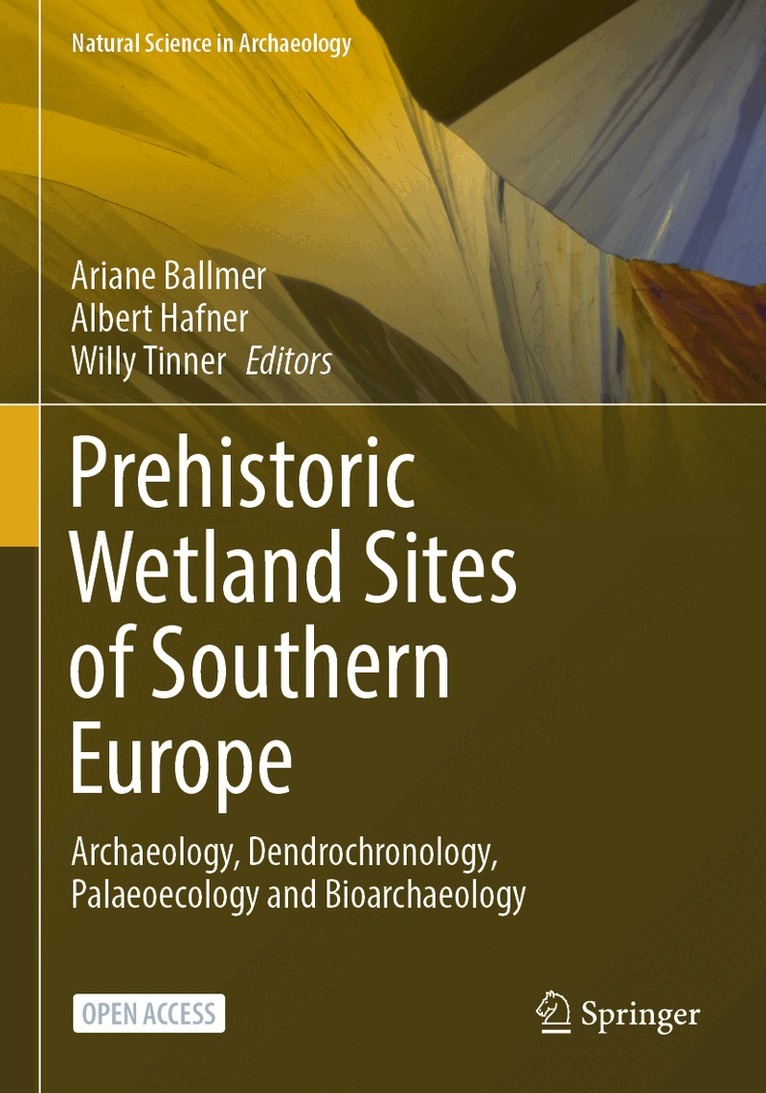
This is an open access book. Unique in its scope, this book provides for the first time a Southern European perspective on prehistoric wetland settlements and their natural environment. These are dwellings originally built in humid locations, i.e. on shores and in shallow water areas of lakes, bogs, marshes, rivers, estuaries and lagoons. The relevant archaeological remains are in most cases waterlogged and offer outstanding preservation conditions for organic materials and are moreover in close proximity to uninterrupted natural archives (e.g. lake or mire sediments), which allows for a broad range of transdisciplinary research approaches. The sites discussed in this book date from the Neolithic and the Bronze Age (c. 5500–1000 BC), and are located in nine countries of Southern Europe, i.e. Spain, France, Italy, Slovenia, Croatia, North Macedonia, Albania, Greece and Bulgaria. Four dimensions of prehistoric wetland settlements are explored in the book – the archaeological, the dendroarchaeological, the palaeoecological and the bioarchaeological: Part I is dedicated to archaeology, i.e. the excavation of settlement remains, their transdisciplinary exploration as well as their interpretation; Part II deals with dendroarchaeology and its contribution to the understanding of occupation sequences and regional chronologies; and Part III concerns uninterrupted off-site palaeoecological records of past ecosystem change, including human–environment interactions, as well as bioarchaeological on-site approaches to subsistence strategies and land use practices.Prehistoric Wetland sites of Southern Europe showcases how different disciplines and areas of expertise from the humanities and the natural sciences meet on an equal footing to elaborate coherent pictures of the past. Besides a cross-section of research statuses of different archaeological sites, currently ongoing research as well as novel, hitherto unpublished case studies and findings are made accessible to the international research community. Drawing on a wide range of expert contributions from both archaeology and the natural sciences, this book targets scholars, professionals, and students from the fields of prehistoric archaeology and palaeo-sciences, and is furthermore of interest to cultural-heritage stakeholders.
Inbunden, Engelska, 2023
595 kr
Skickas inom 3-6 vardagar
E-bok
PDF, Engelska, 20231 247 kr
Läs direkt efter köp
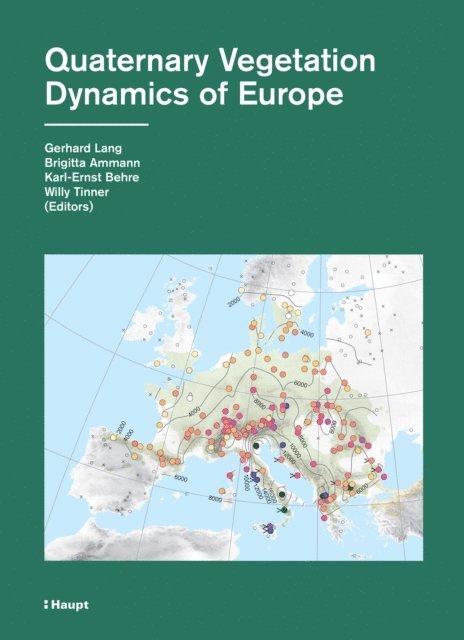
Based on palaeoecological studies by many authors, this book gives an overview of the changing history of the European plant cover during the past 2.6 million years, characterized by numerous cold and warm periods. The period of the last 20 000 years (from the Last Glacial Maximum to the present) is presented in detail, with special emphasis on the vegetation dynamics of Europe, the history of selected woody plants, the development of lakes and bogs and the emergence of European cultural landscapes under the influence of humans over thousands of years.In the analysis of the glacial and interglacial periods, the focus is on the different vegetation developments and the progressive impoverishment of the European flora. Further important topics are the spatio-temporal patterns and causes of long-term vegetation changes, the legacies of disturbances and land use on vegetation composition, the role of palaeoecology in nature conservation and its contribution to ecology and environmental sciences. In addition to recent research results, the book provides an overview of the main palaeoecological research methods. It concludes with a summary of the history of palaeoecology and Quaternary botany.For the first time, a detailed synthesis is presented of the many findings on European vegetation dynamics, which are complex and increasingly difficult to summarize. Numerous figures and tables, many of them original, accompany the text. The bibliography includes over 3000 publications. This book is primarily intended for students, researchers and practitioners in plant ecology, palaeoecology, palaeoclimatology, forestry, agronomy, Quaternary sciences, climate sciences, biogeography, geography and archaeology.