Wim Vandekerckhove – författare
1 495 kr
Skickas inom 10-15 vardagar
2 201 kr
Skickas inom 10-15 vardagar
2 206 kr
Skickas inom 10-15 vardagar
833 kr
Skickas inom 11-20 vardagar
743 kr
Läs direkt efter köp
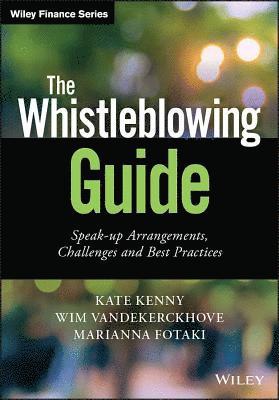
Choose the best speak-up arrangements for your organisation
The last five years have seen dramatic and fundamental changes in whistleblower procedures for organisations. Prompted by a spate of important public disclosures, organizations are now mandated by law to implement effective arrangements enabling employees to speak up about perceived wrongdoing. Currently few resources exist to help with this.
To help fill the gap, The Whistleblowing Guide examines the opportunities and challenges associated with different types of whistleblowing and speak-up arrangements, making recommendations based on best practices you can trust.
Identifies the major organisational, structural and cultural obstacles to speaking up through speak-up arrangements Proposes effective whistleblowing and speak-up arrangements Explains the specific policy and legislation requirements that can promote or impede the effective implementation of speak-up arrangements, and how these can be translated into commercial and public organizations across sectors and cultures Makes a clear distinction between internal and external reporting arrangementsThe Whistleblowing Guide offers conceptual clarification about these key issues, including a focus on internal and external speak-up procedures, organisational response and communication, impartiality and trust.
743 kr
Läs direkt efter köp
Choose the best speak-up arrangements for your organisation
The last five years have seen dramatic and fundamental changes in whistleblower procedures for organisations. Prompted by a spate of important public disclosures, organizations are now mandated by law to implement effective arrangements enabling employees to speak up about perceived wrongdoing. Currently few resources exist to help with this.
To help fill the gap, The Whistleblowing Guide examines the opportunities and challenges associated with different types of whistleblowing and speak-up arrangements, making recommendations based on best practices you can trust.
Identifies the major organisational, structural and cultural obstacles to speaking up through speak-up arrangements Proposes effective whistleblowing and speak-up arrangements Explains the specific policy and legislation requirements that can promote or impede the effective implementation of speak-up arrangements, and how these can be translated into commercial and public organizations across sectors and cultures Makes a clear distinction between internal and external reporting arrangementsThe Whistleblowing Guide offers conceptual clarification about these key issues, including a focus on internal and external speak-up procedures, organisational response and communication, impartiality and trust.
909 kr
Läs direkt efter köp
909 kr
Läs direkt efter köp
768 kr
Skickas inom 10-15 vardagar
892 kr
Läs direkt efter köp
892 kr
Läs direkt efter köp
687 kr
Skickas inom 10-15 vardagar
3 699 kr
Skickas inom 5-8 vardagar
759 kr
Läs direkt efter köp
Featuring contributions from scholars and policy practitioners in a number of diverse fields - including sociology, political science, psychology, information systems, media studies, business, management, criminology, public policy and several branches of law - the book provides a comprehensive guide to existing research and blueprints for how new research should be conducted in the future. It covers conceptual and definitional fundamentals of whistleblowing and strategies for researching whistleblowing in an organizational context, as well as law reform, regulation, management practicalities and research ethics. It also charts the lessons of 30 years of empirical research and maps out new questions and projects for future decades.
This Handbook, with its unique perspective on the complex, multi-faceted and often controversial nature of whistleblowing research, will be a vital resource for researchers, policymakers and organizations around the world.
Contributors: B. Bjørkelo, R. Bosua, A.J. Brown, H.H. Bye, K. Crow, T. Devine, S. Dreyfus, T. Morehead Dworkin, B. Edwards, B. Fasterling, T. Faunce, P. Harpur, R. Lederman, D. Lewis, J. Leys, K. Loyens, J. Maesschalck, B. Martin, D.P. Meyer, M.P. Miceli, S. Milton, R. Moberly, F.M. Morgan Jr, J.P. Near, T. Nikolic, J. Olsen, M.T. Rehg, P. Roberts, M. Skivenes, R. Smith, J. Spencer, M. Spencer, S.C. Trygstad, E. Tsahuridu, T. Uys, W. Vandekerckhove, S. Walden, C. Wheeler, J. Zuckerman
Whistleblowing and Freedom of Expression in Working Life
Comparative Perspectives
293 kr
Skickas
303 kr
Skickas inom 10-15 vardagar
1 073 kr
Skickas inom 10-15 vardagar
1 367 kr
Läs direkt efter köp
1 605 kr
Skickas inom 10-15 vardagar
1 937 kr
Läs direkt efter köp
The SRI phenomenon is said to be entering the mainstream of financial intermediation. From a fairly marginal practice promoted or campaigned for by NGO’s and at odds with financial practice and orthodoxy it grew into well formulated policy adopted by a wide range of investors. Academic literature on SRI has also boomed on the assumption that mainstreaming is taking place. However, little thinking has been carried out on questions specifically arising from this alleged ‘mainstreaming’. This book, addressed to those with a scholarly or practitioner’s interest in SRI, starts filling this neglected dimension.
Today, one cannot ignore the difficulties of main stream financing. The financial spheres are trembling globally in one of the worst crises since the 1930’s. As a response to the crisis, the intermediation of ‘financial responsibility’ will undoubtedly be the subject of new regulation and scrutinizing. This book looks into what these turbulences will imply for SRI.
In view of these circumstances, one might or even should, ask oneself whether the phenomenon was not an empty fad during the exuberant high of financial euphoria that came abruptly to an end with current financial crises. To put it rather sec: are financial intermediaries that promote ‘sustainability’ credible, while it is obvious that some developments in financial intermediation -predictably, as some say- were unsustainable?
Is this an opportunity for enhancing SRI because of the strength and superiority it has developed or will it disappear due to a return to financial myopia? This book is the first to question the future of SRI in such a radical way.
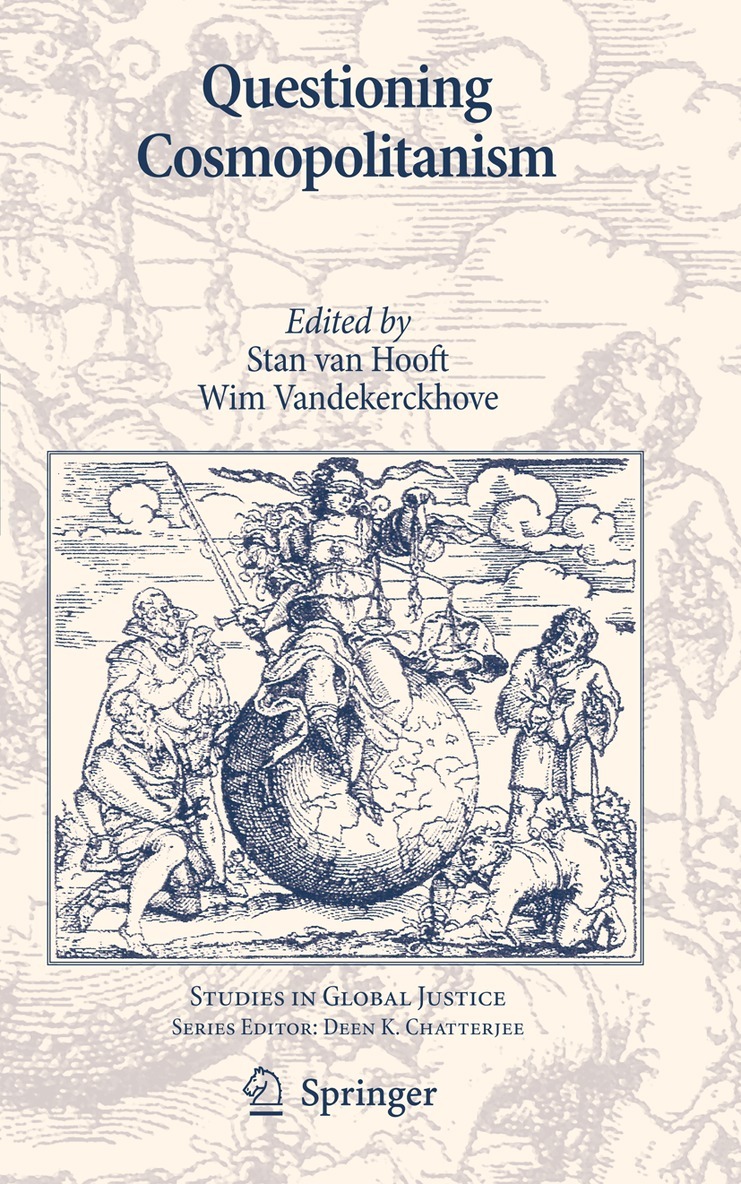
Questioning Cosmopolitanism
1 073 kr
Skickas inom 10-15 vardagar
Responsible Investment in Times of Turmoil
1 183 kr
Skickas inom 5-8 vardagar