Yannis Hadjinicolaou - Böcker
Visar alla böcker från författaren Yannis Hadjinicolaou. Handla med fri frakt och snabb leverans.
6 produkter
6 produkter
177 kr
Skickas
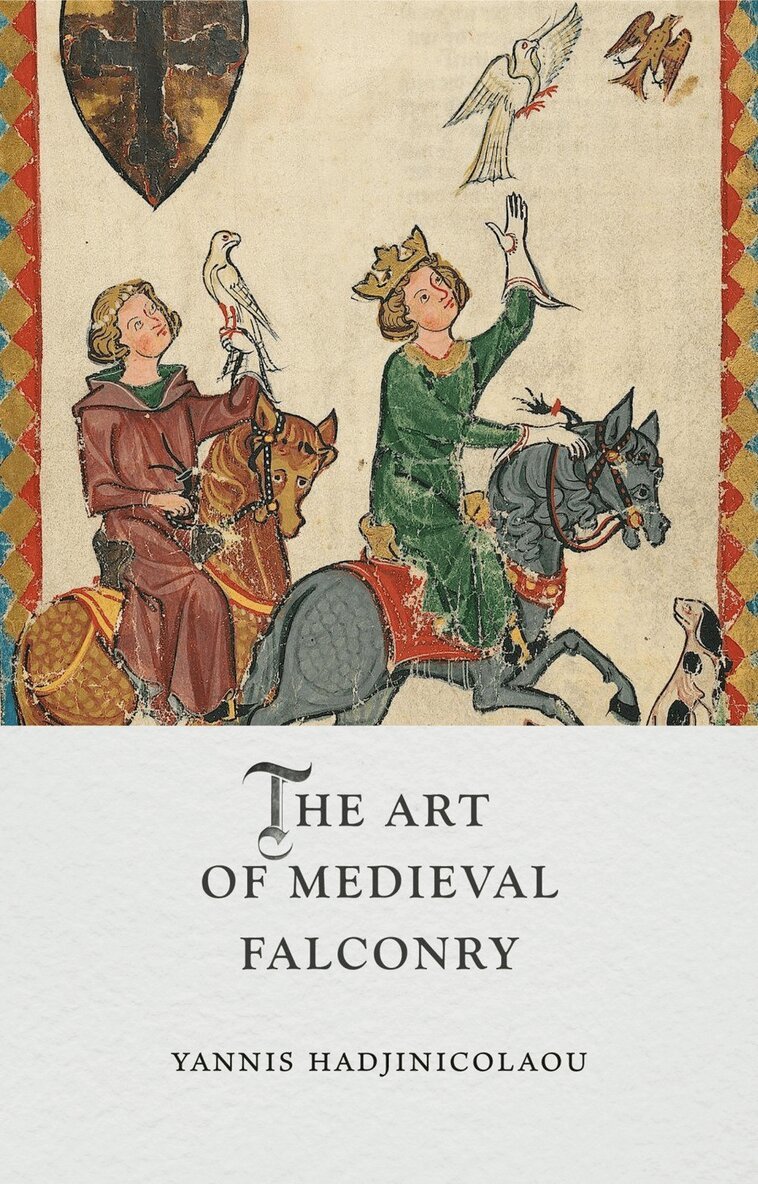
The art of falconry was one of the most fascinating aspects of medieval society. For medieval people falconry was not just about hunting, it encapsulated sovereignty, power and diplomacy. This book describes and assesses the visual culture of falconry, tracking how images, traditions and the birds of prey themselves spread throughout the medieval world, along with equipment such as hoods and lures. It shows how falconry was global from its very beginning: Holy Roman Emperor Frederick II hired falconers from far and wide to carry out his ‘art of hunting with birds’. This beautifully illustrated account shows how different cultures impacted the visual sphere of medieval falconry, both in the East and West.
1 013 kr
Tillfälligt slut
Der Band eröffnet einen neuen Zugang zur Paragone-Debatte der Frühen Neuzeit im Sinne eines produktiven Mitstreitens. Dies betrifft im Speziellen die Rolle zwischen Malerei und Skulptur, im Allgemeinen das Verhältnis zwischen Natur und Kunst. Deren Beziehung soll als eine osmotische verstanden werden, wie sie sich etwa in der Kunstkammer verkörpert. Wenn sich in visuellen Bildformen körperlich-haptische Eigenschaften einschreiben, Farbe als bildhauerisches Mittel verwendet oder Skulptur zum Bild wird, ikonographische und stilistische Zitate eingesetzt oder künstlerische Stile weiterentwickelt werden, beschreibt dies immer auch ein Ringen um die adäquate Ausdrucksform. Die Ergänzungserscheinungen der Gattungen verweisen auf eine Praxis, die Bilder stets plurimedial versteht.
Del 27 - Studien aus dem Warburg-Haus
Die Kunst der Falknerei
Kulturtechnik und politische Ikonologie
Inbunden, Tyska, 2025
842 kr
Skickas inom 3-6 vardagar
Falconry, the cultural technique of hunting using falcons, hawks or even eagles, is more than a form of hunting or sport: it is also a visual practice with immense aesthetic appeal. Since its inception, falconry has been associated with political representation worldwide. Yannis Hadjinicolaou explores the ways in which falconry’s political iconology and its practice as a cultural technique are connected. He traces the art of falconry worldwide, from late antiquity to the present day, focusing his study on the early modern period. He demonstrates how the transfer of functions, motifs and meanings, and the (physical) movement of artistically designed objects, but also of the falcons themselves or the instruments of falconry, still connect countries and continents today. First visual history of falconry A case study of a global art history New research on a complex human-animal interaction.
Spontaneität
Unmittelbarkeit, Schnelligkeit, Authentizität in westlicher und ostasiatischer Kunst
Häftad, Tyska, 2024
586 kr
Skickas inom 5-8 vardagar
This volume is the first to address the concept of spontaneity from an art-historical perspective. The term, located in the creative field today, became more frequent in the visual arts during the 19th century, when 'spontaneous images' emerged with photography. But notions of the artistic act of creation associated with spontaneity - its speed, immediacy, and freedom, up to and including a rather autonomous genesis of the work, had existed for a long time. How the respective attributions relate to the production process is discussed on the basis of exemplary works since the early modern period. Separate contributions are devoted to the much older discourses on the spontaneous image in China and Japan, the reception of which is little-known in the West. Look inside First examination of the concept of spontaneity from an art-theoretical perspective Spontaneity in western and Eastern Asian art Critical examination of the attributions of immediacy, speed, freedom and the autonomous genesis of works
253 kr
Skickas inom 3-6 vardagar
Why did an unknown Dutch artist paint a portrait of a Moluccan ruler with an amputated arm in the 17th century? Yannis Hadjinicolaou uncovers the fascinating story behind this unusual depiction of Sultan Sayfoedin, who ruled Tidore, one of the Moluccas islands in northeastern Indonesia, from 1657 to 1687. He examines the reasons for portraying Sayfoedin’s amputation, interprets the significance of his attire, and traces the provenance of the painting, now housed in the Czartoryski Museum in Krakow. Hadjinicolaou highlights the importance of Sayfoedin’s partnership with the Dutch East India Company and the carnation trade, showing how the portrait reflects the complex interplay between colonial power and local authority.New perspectives on topics such as political iconography, transculturality, materiality and disabilityCritical global art history
2 146 kr
Skickas inom 5-8 vardagar
This book explores for the first time the concept of synagonism (from “σύν”, “together” and “ἀγών”, "struggle”) for an analysis of the productive exchanges between early modern painting, sculpture, architecture, and other art forms in theory and practice. In doing so, it builds on current insights regarding the so-called paragone debate, seeing this, however, as only one, too narrow perspective on early modern artistic production. Synagonism, rather, implies a breaking up of the schematic connections between art forms and individual senses, drawing attention to the multimediality and intersensoriality of art, as well as the relationship between image and body.