Yves Citton - Böcker
Visar alla böcker från författaren Yves Citton. Handla med fri frakt och snabb leverans.
10 produkter
10 produkter
2 021 kr
Skickas inom 5-8 vardagar
The most famous name in French literary circles from the late 1950s till his death in 1981, Roland Barthes maintained a contradictory rapport with the cinema. As a cultural critic, he warned of its surreptitious ability to lead the enthralled spectator toward an acceptance of a pre-given world. As a leftist, he understood that spectacle could be turned against itself and provoke deep questioning of that pre-given world. And as an extraordinarily sensitive human being, he relished the beauty of images and the community they could bring together.
488 kr
Skickas inom 5-8 vardagar
The most famous name in French literary circles from the late 1950s till his death in 1981, Roland Barthes maintained a contradictory rapport with the cinema. As a cultural critic, he warned of its surreptitious ability to lead the enthralled spectator toward an acceptance of a pre-given world. As a leftist, he understood that spectacle could be turned against itself and provoke deep questioning of that pre-given world. And as an extraordinarily sensitive human being, he relished the beauty of images and the community they could bring together.
2 045 kr
Skickas inom 10-15 vardagar
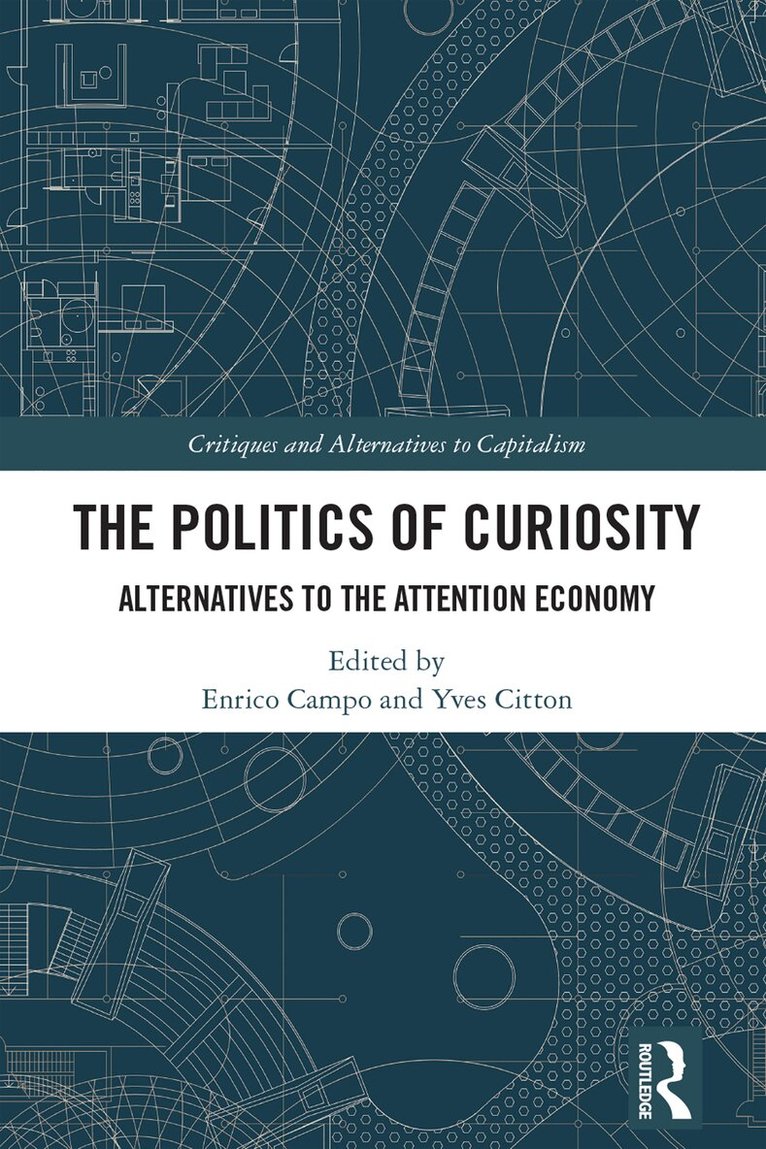
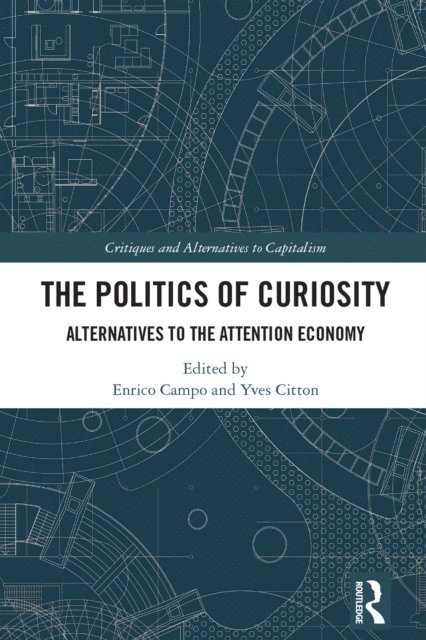
Through a variety of studies in the emerging field of attentional studies, this book examines and seeks alternatives to the current attention economy. Bringing together the work of leading scholars of ‘critical attention studies’ to reflect on issues such as techno-politics, socio-politics, and the politics of distraction, it offers a new and multi-disciplinary conceptualization of attention that emphasizes the connections between attention and curiosity, distraction, decoloniality and care. Above all, The Politics of Curiosity asks us to consider the nature and ambivalence of the curious forms of politics that might be taking shape in the shadow of our current attention economy.The “attention economy” has become a household name: we all know our attention is being harvested, commodified and packaged to be sold to advertisers by capitalist platforms. We all complain about it; some of us dream of disconnection; others call to fight back. By focusing on attentional deficits, and by reducing attention to being focused, however, the common view may miss wider stakes, and more promising opportunities. This collective volume provides a new frame of analysis based on three displacements. First, it relocates attentional issues within a triangulation that explores a continuum between attention, distraction and curiosity. Second, it invites us to investigate into the mental infrastructures that socially condition our perceptions and understandings of the world. Third, it points towards emancipatory politics of curiosity to provide alternatives to the attention economy. Contributions range from pedagogy to media theory, via digital studies, epistemology, sociology, political philosophy, literary history, aesthetics, film and dance studies. They gather some of the leading scholars who shaped the study of attention, questioned the values of distraction and explored the potentials of curiosity over the recent years. They extend across nine countries, four continents and seven languages, to provide a multicultural approach to these debates. Together, they help us understand how our current mental infrastructures have taken shape, under specific regimes of power and authority, in a world dominated by capital, colonialism and patriarchy. But they also sketch what can be done to redeploy them around imperatives of respect and care – from a better awareness of our mental biases, online behaviors and bodily movements, to our collective capacity to restructure classroom interactions, to launch alternative digital platforms, to build democratic movements.The first platform for discussion of the politics of attention and curiosity – and an essential point of reference for future debate – this book will appeal to scholars of sociology, politics and psychology.
612 kr
Skickas inom 10-15 vardagar
Through a variety of studies in the emerging field of attentional studies, this book examines and seeks alternatives to the current attention economy. Bringing together the work of leading scholars of ‘critical attention studies’ to reflect on issues such as techno-politics, socio-politics, and the politics of distraction, it offers a new and multi-disciplinary conceptualization of attention that emphasizes the connections between attention and curiosity, distraction, decoloniality and care. Above all, The Politics of Curiosity asks us to consider the nature and ambivalence of the curious forms of politics that might be taking shape in the shadow of our current attention economy.The “attention economy” has become a household name: we all know our attention is being harvested, commodified and packaged to be sold to advertisers by capitalist platforms. We all complain about it; some of us dream of disconnection; others call to fight back. By focusing on attentional deficits, and by reducing attention to being focused, however, the common view may miss wider stakes, and more promising opportunities. This collective volume provides a new frame of analysis based on three displacements. First, it relocates attentional issues within a triangulation that explores a continuum between attention, distraction and curiosity. Second, it invites us to investigate into the mental infrastructures that socially condition our perceptions and understandings of the world. Third, it points towards emancipatory politics of curiosity to provide alternatives to the attention economy. Contributions range from pedagogy to media theory, via digital studies, epistemology, sociology, political philosophy, literary history, aesthetics, film and dance studies. They gather some of the leading scholars who shaped the study of attention, questioned the values of distraction and explored the potentials of curiosity over the recent years. They extend across nine countries, four continents and seven languages, to provide a multicultural approach to these debates. Together, they help us understand how our current mental infrastructures have taken shape, under specific regimes of power and authority, in a world dominated by capital, colonialism and patriarchy. But they also sketch what can be done to redeploy them around imperatives of respect and care – from a better awareness of our mental biases, online behaviors and bodily movements, to our collective capacity to restructure classroom interactions, to launch alternative digital platforms, to build democratic movements.The first platform for discussion of the politics of attention and curiosity – and an essential point of reference for future debate – this book will appeal to scholars of sociology, politics and psychology.
717 kr
Skickas inom 7-10 vardagar
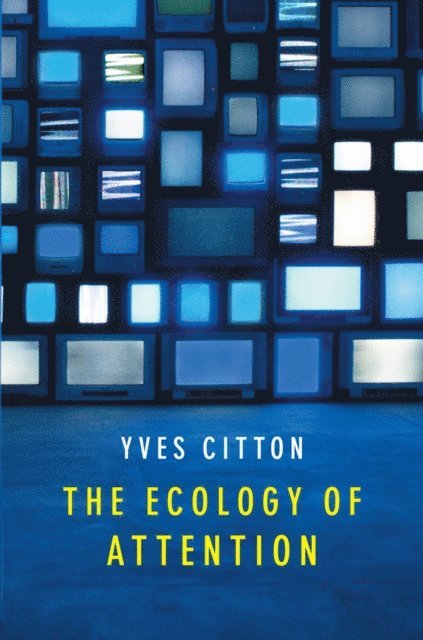
Information overload, the shallows, weapons of mass distraction, the googlization of minds: countless commentators condemn the flood of images and information that dooms us to a pathological attention deficit.In this new book, cultural theorist Yves Citton goes against the tide of these standard laments to offer a new perspective on the problem of attention in the digital age. Phrases like �paying attention� and �investing one�s attention� attest to our mistaken belief that attention can be conceptualized in narrow economic terms. We are constantly drawn towards attempts to quantify and commodify attention, even down to counting the number of 'likes' a picture receives on Facebook or a video on YouTube. By contrast, Citton argues that we should conceptualize attention as a kind of ecology and examine how the many different environments to which we are exposed from advertising to literature, search engines to performance art condition our attention in different ways. In a world where the demands on our attention are ever-increasing, this timely and original book will be of great interest to students and scholars in media and communications and in literary and cultural studies, and to anyone concerned about the long-term consequences of the profusion of images as well as digital content in the age of the internet.
243 kr
Skickas inom 7-10 vardagar
Information overload, the shallows, weapons of mass distraction, the googlization of minds: countless commentators condemn the flood of images and information that dooms us to a pathological attention deficit.In this new book, cultural theorist Yves Citton goes against the tide of these standard laments to offer a new perspective on the problem of attention in the digital age. Phrases like �paying attention� and �investing one�s attention� attest to our mistaken belief that attention can be conceptualized in narrow economic terms. We are constantly drawn towards attempts to quantify and commodify attention, even down to counting the number of 'likes' a picture receives on Facebook or a video on YouTube. By contrast, Citton argues that we should conceptualize attention as a kind of ecology and examine how the many different environments to which we are exposed from advertising to literature, search engines to performance art condition our attention in different ways. In a world where the demands on our attention are ever-increasing, this timely and original book will be of great interest to students and scholars in media and communications and in literary and cultural studies, and to anyone concerned about the long-term consequences of the profusion of images as well as digital content in the age of the internet.
689 kr
Skickas inom 7-10 vardagar
We think that we live in democracies: in fact, we live in mediarchies. Our political regimes are based less on nations or citizens than on audiences shaped by the media. We assume that our social and political destinies are shaped by the will of the people without realizing that ‘the people’ are always produced, both as individuals and as aggregates, by the media: we are all embedded in mediated publics, ‘intra-structured’ by the apparatuses of communication that govern our interactions. In this major book, Yves Citton maps out the new regime of experience, media and power that he designates by the term ‘mediarchy’. To understand mediarchy, we need to look both at the effects that the media have on us and also at the new forms of being and experience that they induce in us. We can never entirely escape from the effects of the mediarchies that operate through us but by becoming more aware of their conditioning, we can develop the new forms of political analysis and practice which are essential if we are to rise to the unprecedented challenges of our time. This comprehensive and far-reaching book will be essential reading for students and scholars in media and communications, politics and sociology, and it will be of great interest to anyone concerned about the multiple and complex ways that the media – from newspapers and TV to social media and the internet – shape our social, political and personal lives today.
256 kr
Skickas inom 7-10 vardagar
We think that we live in democracies: in fact, we live in mediarchies. Our political regimes are based less on nations or citizens than on audiences shaped by the media. We assume that our social and political destinies are shaped by the will of the people without realizing that ‘the people’ are always produced, both as individuals and as aggregates, by the media: we are all embedded in mediated publics, ‘intra-structured’ by the apparatuses of communication that govern our interactions. In this major book, Yves Citton maps out the new regime of experience, media and power that he designates by the term ‘mediarchy’. To understand mediarchy, we need to look both at the effects that the media have on us and also at the new forms of being and experience that they induce in us. We can never entirely escape from the effects of the mediarchies that operate through us but by becoming more aware of their conditioning, we can develop the new forms of political analysis and practice which are essential if we are to rise to the unprecedented challenges of our time. This comprehensive and far-reaching book will be essential reading for students and scholars in media and communications, politics and sociology, and it will be of great interest to anyone concerned about the multiple and complex ways that the media – from newspapers and TV to social media and the internet – shape our social, political and personal lives today.
224 kr
Skickas inom 7-10 vardagar
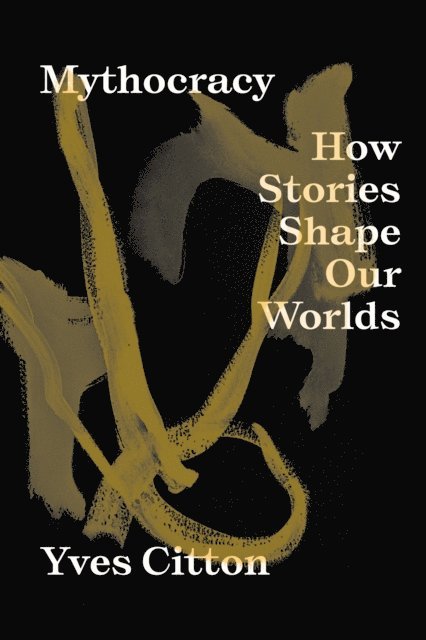
Mythocracy examines the narrative mechanisms that script our lives through the stories we tell one another. Digging beneath common anxieties about fake news, Yves Citton looks at the attention economy, which organises our political perceptions around affective attractors. These are much more powerful than the truth value of any given narrative. The time has come for the left to reclaim the power of myth from reactionary populism.
85 kr
Skickas inom 5-8 vardagar
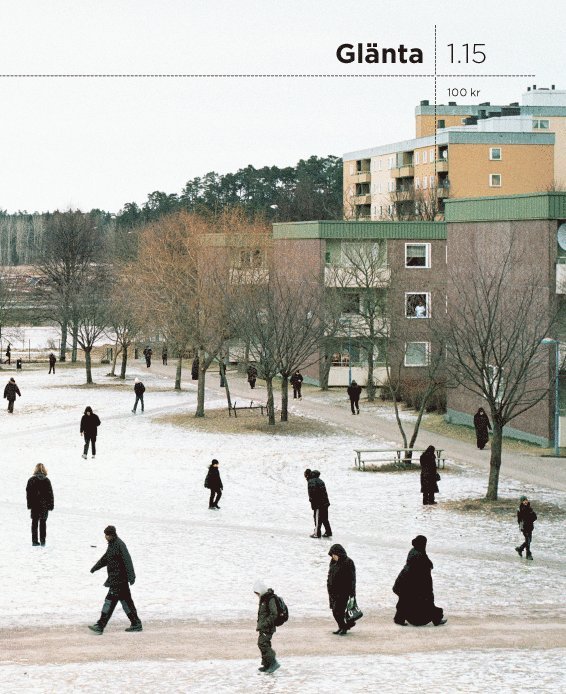
Glänta 1.15 består av texter som inte förhåller sig till ett på förhand uttänkt tema. Det börjar med Elnathan Johns novell om Boko Haram och slutar med att Gayatri Chakravorty Spivak manar oss att öva föreställningsförmågan. Däremellan finner Tormod Otter Johansen att den svenska självbilden sitter i väggarna, medan Felicia Mulinari skriver från ett Malmö som brinner och Lydia Davis sätter ut gammelmormödrar på verandan. Och Alexandru Vakulovski blir ihjälslagen av sin far; Ulrika Dahl spinner trådar mellan mostrar och monster; Elis Burrau uppmanar oss att torka oss om munnen, performativt; Mårten Björk & Göran Larsson tecknar Islamiska statens historia; Adriana Cavarero ställer terrorism & horrorism bredvid varandra; Tobias Hübinette & Lennart E H Räterlinck finner en vit rasmelankoli bland utklädda västerlänningar; Yves Citton introducerar rytmologin; Ulf Karl Olov Nilsson analyserar nya och gamla skadade och Judith Kiros får allt att börja om.