Zheng Yongnian – författare
2 158 kr
Skickas inom 10-15 vardagar
659 kr
Skickas inom 10-15 vardagar
2 227 kr
Skickas inom 10-15 vardagar
1 464 kr
Skickas inom 10-15 vardagar
659 kr
Skickas inom 10-15 vardagar
687 kr
Skickas inom 10-15 vardagar
340 kr
Skickas inom 10-15 vardagar
534 kr
Skickas inom 10-15 vardagar
2 366 kr
Skickas inom 10-15 vardagar
770 kr
Skickas inom 10-15 vardagar
2 227 kr
Skickas inom 10-15 vardagar
687 kr
Skickas inom 10-15 vardagar
2 294 kr
Skickas inom 10-15 vardagar
2 227 kr
Skickas inom 10-15 vardagar
2 366 kr
Skickas inom 10-15 vardagar
763 kr
Läs direkt efter köp
763 kr
Läs direkt efter köp
742 kr
Skickas inom 10-15 vardagar
390 kr
Läs direkt efter köp
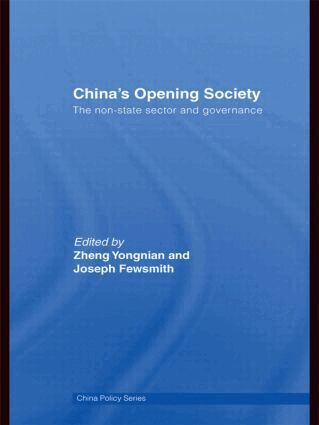
Despite its recent rapid economic growth, China’s political system has remained resolutely authoritarian. However, an increasingly open economy is creating the infrastructure for an open society, with the rise of a non-state sector in which a private economy, non-governmental organizations (NGOs) and different forms of social forces are playing an increasingly powerful role in facilitating political change and promoting good governance. This book examines the development of the non-state sector and NGOs in China since the onset of reform in the late 1970s. It explores the major issues facing the non-state sector in China today, assesses the institutional barriers that are faced by its developing civil society, and compares China’s example with wider international experience. It shows how the ‘get-rich-quick’ ethos of the Deng Xiaoping and Jiang Zemin years, that prioritised rapid GDP growth above all else, has given way under the Jiantao Hu regime to a renewed concern with social reforms, in areas such as welfare, medical care, education, and public transportation. It demonstrates how this change has led to encouragement by the Hu government of the development of the non-state sector as a means to perform regulatory functions and to achieve effective provision of public and social services. It explores the tension between the government’s desire to keep the NGOs as "helping hands’ rather than as autonomous, independent organizations, and their ability to perform these roles successfully.
390 kr
Läs direkt efter köp
Despite its recent rapid economic growth, China’s political system has remained resolutely authoritarian. However, an increasingly open economy is creating the infrastructure for an open society, with the rise of a non-state sector in which a private economy, non-governmental organizations (NGOs) and different forms of social forces are playing an increasingly powerful role in facilitating political change and promoting good governance. This book examines the development of the non-state sector and NGOs in China since the onset of reform in the late 1970s. It explores the major issues facing the non-state sector in China today, assesses the institutional barriers that are faced by its developing civil society, and compares China’s example with wider international experience. It shows how the ‘get-rich-quick’ ethos of the Deng Xiaoping and Jiang Zemin years, that prioritised rapid GDP growth above all else, has given way under the Jiantao Hu regime to a renewed concern with social reforms, in areas such as welfare, medical care, education, and public transportation. It demonstrates how this change has led to encouragement by the Hu government of the development of the non-state sector as a means to perform regulatory functions and to achieve effective provision of public and social services. It explores the tension between the government’s desire to keep the NGOs as "helping hands’ rather than as autonomous, independent organizations, and their ability to perform these roles successfully.
617 kr
Läs direkt efter köp
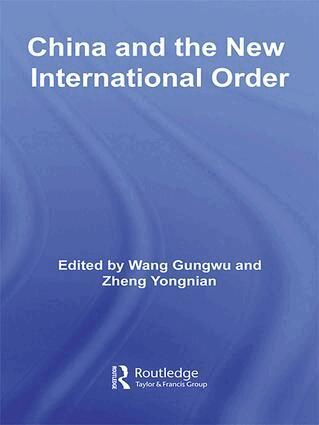
This book explores China''s place in the ‘new international order’, from both the international perspective and from the perspective within China.
It discusses how far the new international order, as outlined by George Bush in 1991 after the collapse of the Soviet Union and the liberation of Kuwait in the Gulf War, with its notions of ‘international order’, as viewed by the United States, and with the United States seeing itself as the single dominant power, applies to China. The contributors offer the implications, both positive and negative, of China''s growing economic power, and the possibility that China will increase its military power. They also examine the idea that the Chinese leadership is being carried along itself by events in China, which it does not fully control, and that other growing forces within China, such as nationalism, increasing social grievances, structural instability, and rivalry between the centre and the regions potentially work against China''s growing strength in the international arena. Considering traditional Chinese notions of ‘international’ power, where the world is seen as sino-centric, with neighbouring countries subservient to China in varying degrees, the book argues that this represents a fundamentally different view of the international order, one where the equal sovereignty of every state does not apply, where there is an acknowledged hierarchy of power, and where domestic and international issues are highly interdependent.
617 kr
Läs direkt efter köp
This book explores China''s place in the ‘new international order’, from both the international perspective and from the perspective within China.
It discusses how far the new international order, as outlined by George Bush in 1991 after the collapse of the Soviet Union and the liberation of Kuwait in the Gulf War, with its notions of ‘international order’, as viewed by the United States, and with the United States seeing itself as the single dominant power, applies to China. The contributors offer the implications, both positive and negative, of China''s growing economic power, and the possibility that China will increase its military power. They also examine the idea that the Chinese leadership is being carried along itself by events in China, which it does not fully control, and that other growing forces within China, such as nationalism, increasing social grievances, structural instability, and rivalry between the centre and the regions potentially work against China''s growing strength in the international arena. Considering traditional Chinese notions of ‘international’ power, where the world is seen as sino-centric, with neighbouring countries subservient to China in varying degrees, the book argues that this represents a fundamentally different view of the international order, one where the equal sovereignty of every state does not apply, where there is an acknowledged hierarchy of power, and where domestic and international issues are highly interdependent.
795 kr
Läs direkt efter köp
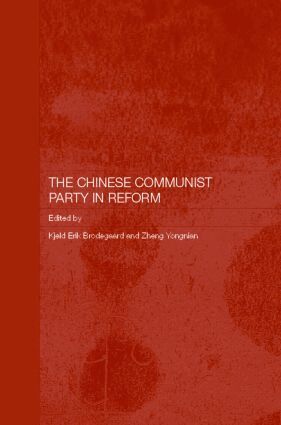
Contrary to the expectations of many people, China''s recent economic growth has not led to the collapse of the Chinese Communist Party. In fact, the Party has recently carried out a peaceful and orderly transition to the so-called fourth generation of leadership, has revitalised itself, and created a new, younger and better trained cadre corps. Despite this successful transformation, there continue to be many problems that the Party will need to overcome if it is to remain in power, including pressures for democratization in both urban and rural areas, widespread corruption, the emergence of new social groups, and increasing dissatisfaction among workers who seem to be losing out in the present transition process.
The Chinese Communist Party in Reform explores the current state of the Chinese Communist Party and the many challenges that it faces. It considers the dynamics of development in China, the Party organization, recruitment and management, and the Party''s role in society more widely. It concludes by examining the prospects for the future of the Party, including whether it will continue to be able to accommodate socio-economic changes within China and pressures from abroad, and the likely nature of its evolution. Overall, this book provides a comprehensive assessment of the internal dynamics of the Chinese Communist Party and its role in Chinese society.
795 kr
Läs direkt efter köp
Contrary to the expectations of many people, China''s recent economic growth has not led to the collapse of the Chinese Communist Party. In fact, the Party has recently carried out a peaceful and orderly transition to the so-called fourth generation of leadership, has revitalised itself, and created a new, younger and better trained cadre corps. Despite this successful transformation, there continue to be many problems that the Party will need to overcome if it is to remain in power, including pressures for democratization in both urban and rural areas, widespread corruption, the emergence of new social groups, and increasing dissatisfaction among workers who seem to be losing out in the present transition process.
The Chinese Communist Party in Reform explores the current state of the Chinese Communist Party and the many challenges that it faces. It considers the dynamics of development in China, the Party organization, recruitment and management, and the Party''s role in society more widely. It concludes by examining the prospects for the future of the Party, including whether it will continue to be able to accommodate socio-economic changes within China and pressures from abroad, and the likely nature of its evolution. Overall, this book provides a comprehensive assessment of the internal dynamics of the Chinese Communist Party and its role in Chinese society.
811 kr
Läs direkt efter köp
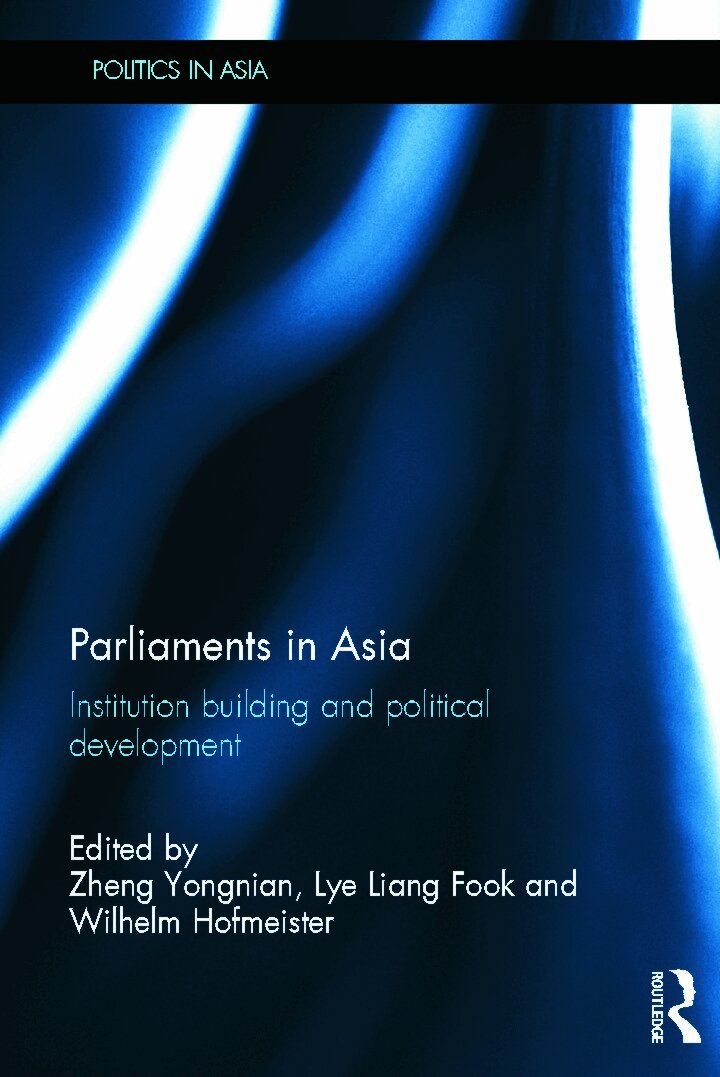
Much writing on politics in Asia revolves around the themes of democracy and democratisation with a particular focus on political systems and political parties. This book, on the other hand, examines the role that parliaments – a key institution of democracy – play in East, Southeast and South Asia including Taiwan and Hong Kong. Parliaments in these locations function in a variety of historical, political and socio-economic circumstances with different implications for institution building and political development. This book examines questions like how accessible, representative, transparent, accountable and effective are parliaments? To what extent are parliaments able to hold other political actors to account or how far are they constrained by the political environment in which they operate? Going further, this book considers how new media such as the Internet and other social platforms, through providing avenues for individuals to articulate their views separate from official channels, are influencing the ways parliaments work. To stay relevant, parliamentarians need to reach out and engage these individuals in formulating, deciding and fine-tuning policies. In the information age, being a parliamentarian has become more challenging and how a parliamentarian copes with this change will shape the nature and pace of political development.
811 kr
Läs direkt efter köp
Much writing on politics in Asia revolves around the themes of democracy and democratisation with a particular focus on political systems and political parties. This book, on the other hand, examines the role that parliaments – a key institution of democracy – play in East, Southeast and South Asia including Taiwan and Hong Kong. Parliaments in these locations function in a variety of historical, political and socio-economic circumstances with different implications for institution building and political development. This book examines questions like how accessible, representative, transparent, accountable and effective are parliaments? To what extent are parliaments able to hold other political actors to account or how far are they constrained by the political environment in which they operate? Going further, this book considers how new media such as the Internet and other social platforms, through providing avenues for individuals to articulate their views separate from official channels, are influencing the ways parliaments work. To stay relevant, parliamentarians need to reach out and engage these individuals in formulating, deciding and fine-tuning policies. In the information age, being a parliamentarian has become more challenging and how a parliamentarian copes with this change will shape the nature and pace of political development.
892 kr
Läs direkt efter köp
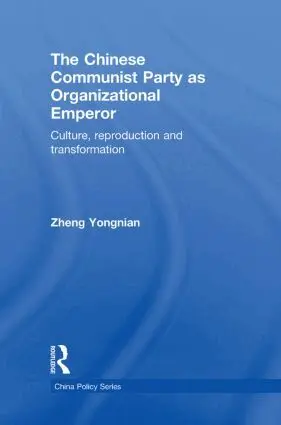
The Chinese Communist Party (CCP) is the largest and one of the most powerful, political organizations in the world today, which has played a crucial role in initiating most of the major reforms of the past three decades in China. China’s rapid rise has enabled the CCP to extend its influence throughout the globe, but the West remains uncertain whether the CCP will survive China’s ongoing socio-economic transformation and become a democratic country.
With rapid socio-economic transformation, the CCP has itself experienced drastic changes. Zheng Yongnian argues that whilst the concept of political party in China was imported, the CCP is a Chinese cultural product: it is an entirely different breed of political party from those in the West - an organizational emperor, wielding its power in a similar way to Chinese emperors of the past. Using social and political theory, this book examines the CCP’s transformation in the reform era, and how it is now struggling to maintain the continuing domination of its imperial power. The author argues that the CCP has managed these changes as a proactive player throughout, and that the nature of the CCP implies that as long as the party is transforming itself in accordance to socio-economic changes, the structure of party dominion over the state and society will not be allowed to change.
892 kr
Läs direkt efter köp
The Chinese Communist Party (CCP) is the largest and one of the most powerful, political organizations in the world today, which has played a crucial role in initiating most of the major reforms of the past three decades in China. China’s rapid rise has enabled the CCP to extend its influence throughout the globe, but the West remains uncertain whether the CCP will survive China’s ongoing socio-economic transformation and become a democratic country.
With rapid socio-economic transformation, the CCP has itself experienced drastic changes. Zheng Yongnian argues that whilst the concept of political party in China was imported, the CCP is a Chinese cultural product: it is an entirely different breed of political party from those in the West - an organizational emperor, wielding its power in a similar way to Chinese emperors of the past. Using social and political theory, this book examines the CCP’s transformation in the reform era, and how it is now struggling to maintain the continuing domination of its imperial power. The author argues that the CCP has managed these changes as a proactive player throughout, and that the nature of the CCP implies that as long as the party is transforming itself in accordance to socio-economic changes, the structure of party dominion over the state and society will not be allowed to change.
795 kr
Läs direkt efter köp
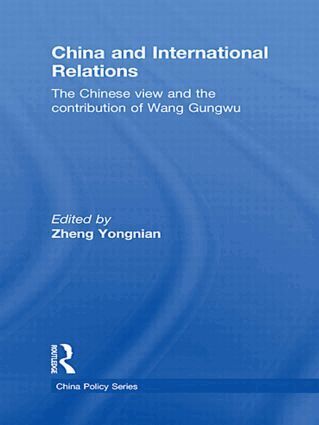
Despite Beijing’s repeated assurance that China’s rise will be "peaceful", the United States, Japan and the European Union as well as many of China''s Asian neighbours feel uneasy about the rise of China. Although China’s rise could be seen as inevitable, it remains uncertain as to how a politically and economically powerful China will behave, and how it will conduct its relations with the outside world. One major problem with understanding China’s international relations is that western concepts of international relations only partially explain China’s approach. China’s own flourishing, indigeneous community of international relations scholars have borrowed many concepts from the west, but their application has not been entirely successful, so the work of conceptualizing and theorizing China’s approach to international relations remains incomplete.
Written by some of the foremost scholars in the field of China studies, this book focuses on the work of Wang Gungwu - one of the most influential scholars writing on international relations - including topics such as empire, nation-state, nationalism, state ideology, and the Chinese view of world order. Besides honouring Wang Gungwu as a great scholar, the book explores how China can be integrated more fully into international relations studies and theories; discusses the extent to which existing IR theory succeeds or fails to explain Chinese IR behaviour, and demonstrates how the study of Chinese experiences can enrich the IR field.
795 kr
Läs direkt efter köp
Despite Beijing’s repeated assurance that China’s rise will be "peaceful", the United States, Japan and the European Union as well as many of China''s Asian neighbours feel uneasy about the rise of China. Although China’s rise could be seen as inevitable, it remains uncertain as to how a politically and economically powerful China will behave, and how it will conduct its relations with the outside world. One major problem with understanding China’s international relations is that western concepts of international relations only partially explain China’s approach. China’s own flourishing, indigeneous community of international relations scholars have borrowed many concepts from the west, but their application has not been entirely successful, so the work of conceptualizing and theorizing China’s approach to international relations remains incomplete.
Written by some of the foremost scholars in the field of China studies, this book focuses on the work of Wang Gungwu - one of the most influential scholars writing on international relations - including topics such as empire, nation-state, nationalism, state ideology, and the Chinese view of world order. Besides honouring Wang Gungwu as a great scholar, the book explores how China can be integrated more fully into international relations studies and theories; discusses the extent to which existing IR theory succeeds or fails to explain Chinese IR behaviour, and demonstrates how the study of Chinese experiences can enrich the IR field.