

Häftad, Engelska, 2021
227 kr
Skickas inom 5-8 vardagar
227 kr
Skickas inom 5-8 vardagar
38 kr
Skickas
Ford Madox Ford was born Ford Hermann Hueffer on 17th December 1873 in Wimbledon, London, England.
Today he is best known for one book, ‘The Good Soldier’, which is regularly held to be one of the 100 greatest novels of all time. But, rather unfairly, the breadth of his career has been overshadowed. He wrote novels as well as essays, poetry, memoirs and literary criticism. Today he is well-regarded but known only for a few works rather than the grand arc of his career.
Ford collaborated with Joseph Conrad on three novels but would later complain that, as with all his collaborators, and those he so readily championed, his contribution was overshadowed by theirs.
He founded The English Review and The Transatlantic Review which were instrumental in publishing and promoting the works of so many authors and movements.
During WWI he initially worked on propaganda books before enlisting. Ford was invalided back to Britain in 1917, remaining in the army and giving lectures until the War’s end. After a spell recuperating in the Sussex countryside he lived mostly in France during the 1920s.
He published the series of four novels known as Parade’s End, between 1924 and 1928. These were particularly well-received in America, where Ford spent much of his time from the later 1920s to his death in 1939.
His last years were spent teaching at Olivet College in Olivet, Michigan.
Ford Madox Ford died on 26th June 1939 at Deauville, France at the age of 65.
40 kr
Skickas
Agatha Mary Clarissa Miller was born on 15 September 1890 in Torquay, Devon, South West England into a comfortably well off middle class family to an American father and storyteller mother with two older siblings. Agatha was home schooled by her father and although her mother didn’t want her to learn to read until she was 8, Agatha taught herself by the age of 5. By 18 she was writing stories which were published in the 1930s, albeit heavily revised. Although she met her first husband, aviator Archie Christie in 1912 and married him in 1914, the war meant they met infrequently and in her autobiography she states that married life didn’t really begin until 1918. In 1920 she wrote her first novel, The Mysterious Affair at Styles which introduced the character of detective Hercule Poirot. He was to feature in 33 of her novels and 54 short stories. The Guinness Book of Records cites Christie as the world’s best selling novelist with her novels selling approx 4 billion copies and translated into over 103 languages, making her also the most translated author. Nicknamed the Queen of Crime or Mystery and master of the classic mystery structure, she had an incredible talent for plotting, characterisation and suspense which came very naturally to her : ”I may spend three weeks to nine months in thinking up a plot - the actual time of writing and typing it would be approximately three months”. Agatha Christie died on 12 January 1976 at the age of 85 from natural causes at her Winterbrook House near Wallingford in Oxfordshire and buried in the nearby churchyard of St Mary''s, Cholsey.
57 kr
Skickas
Joseph Thomas Sheridan Le Fanu was born on August 28th, 1814, at 45 Lower Dominick Street, Dublin, into a literary family with Huguenot, Irish and English roots. The children were tutored but, according to his brother William, the tutor taught them little if anything. Le Fanu was eager to learn and used his father''s library to educate himself about the world. He was a creative child and by fifteen had taken to writing poetry. Accepted into Trinity College, Dublin to study law he also benefited from the system used in Ireland that he did not have to live in Dublin to attend lectures, but could study at home and take examinations at the university as and when necessary. This enabled him to also write and by 1838 Le Fanu''s first story The Ghost and the Bonesetter was published in the Dublin University Magazine. Many of the short stories he wrote at the time were to form the basis for his future novels. Indeed, throughout his career Le Fanu would constantly revise, cannabilise, embellish and re-publish his earlier works to use in his later efforts. Between 1838 and 1840 Le Fanu had written and published twelve stories which purported to be the literary remains of an 18th-century Catholic priest called Father Purcell. Set mostly in Ireland they include classic stories of gothic horror, with grim, shadowed castles, as well as supernatural visitations from beyond the grave, together with madness and suicide. One of the themes running through them is a sad nostalgia for the dispossessed Catholic aristocracy of Ireland, whose ruined castles stand in mute salute and testament to this history. On 18 December 1844 Le Fanu married Susanna Bennett, the daughter of a leading Dublin barrister. The union would produce four children. Le Fanu was now stretching his talents across the length of a novel and his first was The Cock and Anchor published in 1845. A succession of works followed and his reputation grew as well as his income. Unfortunately, a decade after his marriage it became an increasing source of difficultly. Susanna was prone to suffer from a range of neurotic symptoms including great anxiety after the deaths of several close relatives, including her father two years before. In April 1858 she suffered an "hysterical attack" and died in circumstances that are still unclear. The anguish, profound guilt as well as overwhelming loss were channeled into Le Fanu’s work. Working only by the light of two candles he would write through the night and burnish his reputation as a major figure of 19th Century supernaturalism. His work challenged the focus on the external source of horror and instead he wrote about it from the perspective of the inward psychological potential to strike fear in the hearts of men. A series of books now came forth: Wylder''s Hand (1864), Guy Deverell (1865), The Tenants of Malory (1867), The Green Tea (1869), The Haunted Baronet (1870), Mr. Justice Harbottle (1872), The Room in the Dragon Volant (1872) and In a Glass Darkly. (1872). But his life was drawing to a close. Joseph Thomas Sheridan Le Fanu died in Merrion Square in his native Dublin on February 7th, 1873, at the age of 58.
64 kr
Skickas
The great author of Vanity Fair and The Luck Of Barry Lyndon was born in India in 1811. At age 5 his father died and his mother sent him back to England. His education was of the best but he himself seemed unable to apply his talents to a rigorous work ethic. However, once he harnessed his talents the works flowed in novels, articles, short stories, sketches and lectures. Sadly, his personal life was rather more difficult. After a few years of marriage his wife began to suffer from depression and over the years became detached from reality. Thackeray himself suffered from ill health later in his life and the one pursuit that kept him moving forward was that of writing. In his life time, he was placed second only to Dickens. High praise indeed.
21 kr
Skickas
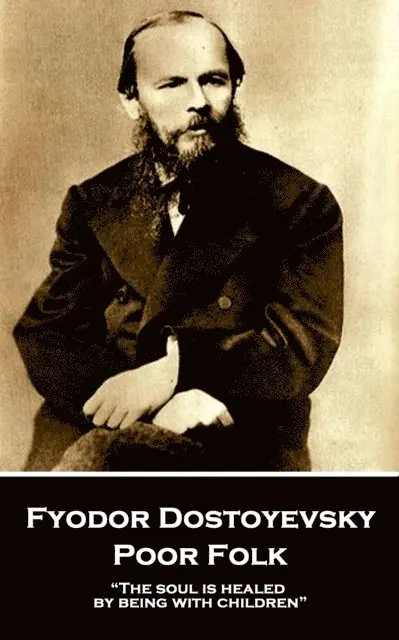
Fyodor Dostoyevsky was born on 11th November 1821.
He was introduced to literature very early. At age three, it was heroic sagas, fairy tales and legends. At four his mother used the Bible to teach him to read and write. His immersion in literature was wide and varied. His imagination, he later recalled, was brought to life by his parents’ nightly readings.
On 27th September 1837 tragedy struck. Dostoyevsky''s mother died of tuberculosis.
Dostoyevsky and his brother were now enrolled at the Nikolayev Military Engineering Institute, their academic studies abandoned for military careers. Dostoyevsky disliked the academy, his interests were drawing and architecture.
His father died on 16th June 1839 and perhaps triggered Dostoyevsky’s epilepsy. However, he continued his studies, passed his exams and obtained the rank of engineer cadet.
Dostoyevsky''s first completed work was a translation of Honoré de Balzac''s novel Eugénie Grandet, published in 1843. It was not successful. He believed his financial difficulties could be overcome by writing his own novel. The result was ‘Poor Folk’, published in 1846, and a commercial success.
His next novel, ‘The Double’, appeared in January 1846. Dostoyevsky now became immersed in socialism. However, ‘The Double’ received bad reviews and he now had more frequent seizures. With debts mounting he joined the utopian socialist Betekov circle, which helped him to survive. When that dissolved he joined the Petrashevsky Circle, which proposed social reforms. The Petrashevsky Circle was then denounced and Dostoyevsky accused of reading and distributing banned works. Arrests took place in late April 1849 and its members sentenced to death by firing squad. The Tsar commuted the sentence to four years of exile with hard labour in Siberia.
His writings on these prison experiences, ‘The House of the Dead’ were published in 1861.
In Saint Petersburg that September he promised his editor he would deliver ‘The Gambler’, a novella on gambling addiction, by November, although work had yet to begin. It was completed in a mere 26 days.
Other works followed but a different approach helped immensely. In 1873 ‘Demons’ was published by the "Dostoyevsky Publishing Company". Only payment in cash was accepted and the bookshop was the family apartment. It sold around 3,000 copies.
However, Dostoyevsky''s health continued to decline, and in March 1877 he had four epileptic seizures. In August 1879 he was diagnosed with early-stage pulmonary emphysema. He was told it could be managed, but not cured.
On 26th January 1881 Dostoyevsky suffered a pulmonary haemorrhage. After the second the doctors gave a poor prognosis. A third haemorrhage followed shortly afterwards.
Fyodor Dostoyevsky died on 9th February, 1881.
43 kr
Skickas
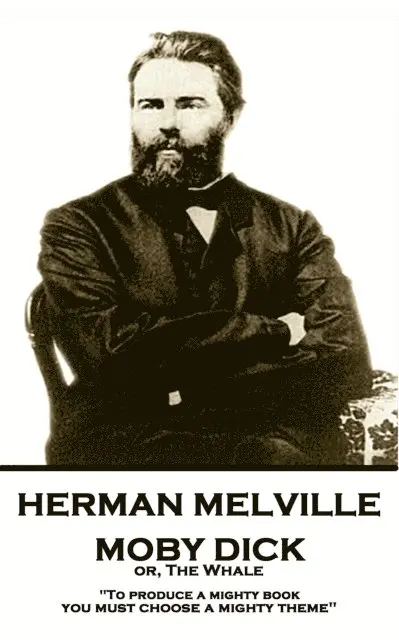
Herman Melville was born in New York City on August 1st, 1819, the third of eight children.
At the age of 7 Melville contracted scarlet fever which was to permanently diminish his eyesight.
At this time Melville was described as being "very backwards in speech and somewhat slow in comprehension."
His father died when he was 12 leaving the family in very straitened times. Just 14 Melville took a job in a bank paying $150 a year that he obtained via his uncle, Peter Gansevoort, who was one of the directors of the New York State Bank.
After a failed stint as a surveyor he signed on to go to sea and travelled across the Atlantic to Liverpool and then on further voyages to the Pacific on adventures which would soon become the architecture of his novels. Whilst travelling he joined a mutiny, was jailed, fell in love with a South Pacific beauty and became known as a figure of opposition to the coercion of native Hawaiians to the Christian religion.
He drew from these experiences in his books Typee, Omoo, and White-Jacket. These were published as novels, the first initially in London in 1846.
By 1851 his masterpiece, Moby Dick, was ready to be published. It is perhaps, and certainly at the time, one of the most ambitious novels ever written. However, it never sold out its initial print run of 3,000 and Melville’s earnings on this masterpiece were a mere $556.37.
In succeeding years his reputation waned and he found life increasingly difficult. His family was growing, now four children, and a stable income was essential.
With his finances in a disappointing state Melville took the advice of friends that a change in career was called for. For many others public lecturing had proved very rewarding. From late 1857 to 1860, Melville embarked upon three lecture tours, where he spoke mainly on Roman statuary and sightseeing in Rome.
In 1876 he was at last able to publish privately his 16,000 line epic poem Clarel. It was to no avail. The book had an initial printing of 350 copies, but sales failed miserably.
On December 31st, 1885 Melville was at last able to retire. His wife had inherited several small legacies and provide them with a reasonable income.
Herman Melville, novelist, poet, short story writer and essayist, died at his home on September 28rh 1891 from cardiovascular disease.<
35 kr
Skickas
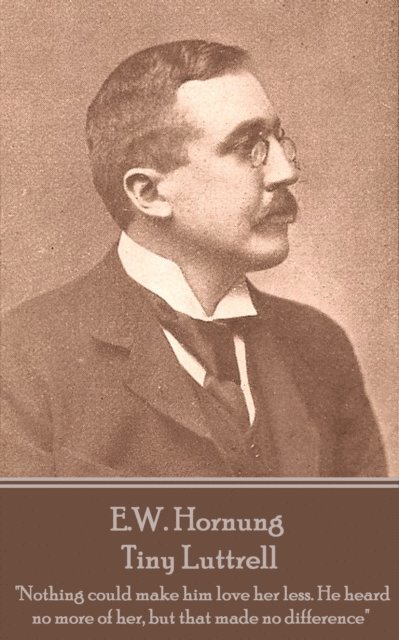
Ernest William Hornung was born in Middlesbrough, England on 7th June 1866, the third son and youngest of eight children.
Although spending most of his life in England and France he spent two years in Australia from 1884 and that experience was to colour and influence much of his written works.
His most famous character A. J. Raffles, ‘the gentleman thief’, was published first in Cassell''s Magazine during 1898 and was to make him famous across the world as the new century dawned.
Hornung also wrote several stage plays and was a gifted poet.
Spending time with the troops in WWI he published Notes of a Camp-Follower on the Western Front during 1919, a detailed account of his time there. This was especially close to his heart as his son, and only child, was killed at the Second Battle of Ypres on 6th July 1915.
Ernest William Hornung died in Saint-Jean-de-Luz, in the south of France on 22nd March 1921.
35 kr
Skickas
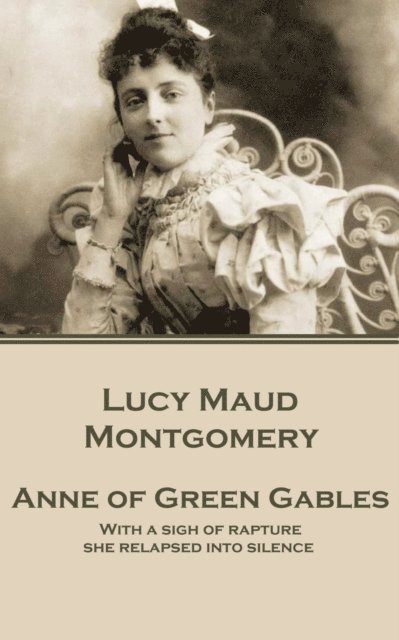
Lucy Maud Montgomery was born in Clifton, Prince Edward Island, Canada, on November 30, 1874. Her mother died when she was a toddler and her devastated father asked her grandparents to raise her. Her childhood years in Cavendish were very lonely. Lucy’s solution at this early age was to create imaginary worlds and people them with imaginary friends. Her creativity was beginning to establish itself in her life. With her studying days over Lucy began a career as a teacher and worked at various Prince Edward Island schools. It was soon obvious to her that she did not enjoy teaching but the benefit was that it gave her time to write. That was now her real passion. Much of her early career was spent writing short stories. Indeed in the decade from 1897 magazines and newspapers published over 100 stories from the prolific young writer. In 1908, Lucy published her first book, the classic, Anne of Green Gables. It was an immediate success and quickly established her career. During her lifetime, Lucy published 20 novels, 530 short stories, 500 poems, and 30 essays. Aware of her fame, by 1920 Lucy began editing and recopying her journals, reframing her life as she wanted it remembered. Lucy Maud Montgomery died on April 24, 1942 in Toronto. A note was found beside her bed, "I have lost my mind by spells and I do not dare think what I may do in those spells. May God forgive me and I hope everyone else will forgive me even if they cannot understand. My position is too awful to endure and nobody realizes it. What an end to a life in which I tried always to do my best." The official cause of death was a coronary thrombosis.
23 kr
Skickas
Anna Katharine Green was born in Brooklyn, New York on November 11th, 1846.
Anna’s initial ambition was to be a poet. However that path failed to ignite any significant interest and she turned to fiction writing. She published her first―and most famous work in 1878―‘The Leavenworth Case’. Wilkie Collins praised it and it sold extremely well.
It led to Anna writing 40 novels and to becoming known as ‘the mother of the detective novel.’
In helping to shape the genre she brought many other innovations including a series detective: her main character was detective Ebenezer Gryce of the New York Metropolitan Police Force, but in three novels he is assisted by the nosy society spinster Amelia Butterworth, another innovation and a prototype for Miss Marple, Miss Silver and others.
She also invented the ''girl detective'': in the character of Violet Strange, a debutante with a secret life as a sleuth. Anna’s other innovations included the now familiar dead bodies in libraries, newspaper clippings as "clews," the coroner''s inquest, and expert witnesses. Yale Law School once used her books to demonstrate how damaging it can be to rely on circumstantial evidence.
Her career was now well advanced and she was much admired.
On November 25, 1884, Green married the actor and stove designer, and later noted furniture maker, Charles Rohlfs, who was seven years her junior. They had three children; Rosamund, Roland and Sterling.
Although Anna was a progressive she did not approve of many of her feminist contemporaries, and was opposed to women''s suffrage.
On November 25, 1884, Anna married the actor and noted furniture maker, Charles Rohlfs, who was seven years her junior. They had three children; Rosamund, Roland and Sterling.
Anna Katharine Green died on April 11, 1935 in Buffalo, New York, at the age of 88.
43 kr
Skickas
Herman Melville was born in New York City on August 1st, 1819, the third of eight children.
At the age of 7 Melville contracted scarlet fever which was to permanently diminish his eyesight.
At this time Melville was described as being "very backwards in speech and somewhat slow in comprehension."
His father died when he was 12 leaving the family in very straitened times. Just 14 Melville took a job in a bank paying $150 a year that he obtained via his uncle, Peter Gansevoort, who was one of the directors of the New York State Bank.
After a failed stint as a surveyor he signed on to go to sea and travelled across the Atlantic to Liverpool and then on further voyages to the Pacific on adventures which would soon become the architecture of his novels. Whilst travelling he joined a mutiny, was jailed, fell in love with a South Pacific beauty and became known as a figure of opposition to the coercion of native Hawaiians to the Christian religion.
He drew from these experiences in his books Typee, Omoo, and White-Jacket. These were published as novels, the first initially in London in 1846.
By 1851 his masterpiece, Moby Dick, was ready to be published. It is perhaps, and certainly at the time, one of the most ambitious novels ever written. However, it never sold out its initial print run of 3,000 and Melville’s earnings on this masterpiece were a mere $556.37.
In succeeding years his reputation waned and he found life increasingly difficult. His family was growing, now four children, and a stable income was essential.
With his finances in a disappointing state Melville took the advice of friends that a change in career was called for. For many others public lecturing had proved very rewarding. From late 1857 to 1860, Melville embarked upon three lecture tours, where he spoke mainly on Roman statuary and sightseeing in Rome.
In 1876 he was at last able to publish privately his 16,000 line epic poem Clarel. It was to no avail. The book had an initial printing of 350 copies, but sales failed miserably.
On December 31st, 1885 Melville was at last able to retire. His wife had inherited several small legacies and provide them with a reasonable income.
Herman Melville, novelist, poet, short story writer and essayist, died at his home on September 28rh 1891 from cardiovascular disease.<
38 kr
Skickas
Sir James Matthew Barrie, 1st Baronet, OM, was born in Kirriemuir, Angus the ninth of ten children on May 9th, 1860. From early formative experiences, Barrie knew that he wished to follow a career as an author. His family wished otherwise and sought to persuade him to choose a profession, such as the ministry. The compromise was that he would attend university to study literature at the University of Edinburgh. He graduated with an M.A. on April 21st, 1882. His first job was as a staff journalist for the Nottingham Journal. The London editor of the St. James''s Gazette "liked that Scotch thing" in Barrie’s short stories about his mother’s early life. They also served as the basis for his first novels. Barrie though was increasingly drawn to working in the theatre. His first play, a biography of Richard Savage, was only performed once and critically panned. Undaunted he immediately followed this with Ibsen''s Ghost in 1891, a parody of Ibsen''s plays Hedda Gabler and Ghosts. Barrie''s third play, Walker, London, in 1892 led to an introduction to his future wife, a young actress by the name of Mary Ansell. The two became friends, and she helped his family to care for him when he fell very ill in 1893 and 1894. Barrie proposed and they were married, in Kirriemuir, on July 9th, 1894. By some accounts the relationship was unconsummated and indeed the couple had no children. The story of Peter Pan had begun to formulate when Barrie became acquainted with the Llewelyn Davis family in 1897, meeting George, Jack and baby Peter with their nanny in London''s Kensington Gardens. In 1901 and 1902, Barrie had back-to-back theatre successes with Quality Street and The Admirable Crichton. The character of "Peter Pan" first appeared in The Little White Bird in 1902. This most famous and enduring of his works; Peter Pan, or The Boy Who Wouldn''t Grow Up had its first stage performance on December 27th, 1904. Peter Pan would overshadow everything written during his career. He continued to write for the rest of his life contributing many other fine and important works. Sir James Matthew Barrie, 1st Baronet, OM, died of pneumonia on June 19th,1937 and was buried at Kirriemuir next to his parents and two of his siblings.
40 kr
Skickas
Sir Henry Rider Haggard, KBE was born on June 22nd, 1856 at Bradenham in Norfolk, England. After his education he was pushed towards an Army career but failed the entrance exam. Next Haggard was positioned to work for the British Foreign Office but he seems not to have sat that exam. Using family connections, he was sent to Southern Africa by his father in search of a further opportunity of a career. Haggard spent six years there before a return to England and marriage. He had begun to write and publish some non-fiction in Africa but it was only after studying Law in the hope it might prove to be the proper career his father wanted for him that Haggard began to write fiction, using his African experiences as the basis. His first fiction was published in 1885 and the following year King Solomon’s Mines was published. It was a phenomenal success. His career was set. Haggard wrote well and wrote often. He managed to sympathise with the local populations even though they were exploited and manipulated by Europeans intent on amassing fortunes in money, people and resources. His writing career covered the great sprint to Empire of several European powers and both reflects and criticizes these events through his well-loved characters including Allan Quatermain and Ayesha. In his later years Haggard pursued much in the way social reform as well as standing for Parliament and writing a great many letters to The Times. Henry Rider Haggard died on May 14th, 1925 at the age of 68. His ashes were buried at Ditchingham Church.
31 kr
Skickas
Joseph Thomas Sheridan Le Fanu was born on August 28th, 1814, at 45 Lower Dominick Street, Dublin, into a literary family with Huguenot, Irish and English roots. The children were tutored but, according to his brother William, the tutor taught them little if anything. Le Fanu was eager to learn and used his father''s library to educate himself about the world. He was a creative child and by fifteen had taken to writing poetry. Accepted into Trinity College, Dublin to study law he also benefited from the system used in Ireland that he did not have to live in Dublin to attend lectures, but could study at home and take examinations at the university as and when necessary. This enabled him to also write and by 1838 Le Fanu''s first story The Ghost and the Bonesetter was published in the Dublin University Magazine. Many of the short stories he wrote at the time were to form the basis for his future novels. Indeed, throughout his career Le Fanu would constantly revise, cannabilise, embellish and re-publish his earlier works to use in his later efforts. Between 1838 and 1840 Le Fanu had written and published twelve stories which purported to be the literary remains of an 18th-century Catholic priest called Father Purcell. Set mostly in Ireland they include classic stories of gothic horror, with grim, shadowed castles, as well as supernatural visitations from beyond the grave, together with madness and suicide. One of the themes running through them is a sad nostalgia for the dispossessed Catholic aristocracy of Ireland, whose ruined castles stand in mute salute and testament to this history. On 18 December 1844 Le Fanu married Susanna Bennett, the daughter of a leading Dublin barrister. The union would produce four children. Le Fanu was now stretching his talents across the length of a novel and his first was The Cock and Anchor published in 1845. A succession of works followed and his reputation grew as well as his income. Unfortunately, a decade after his marriage it became an increasing source of difficultly. Susanna was prone to suffer from a range of neurotic symptoms including great anxiety after the deaths of several close relatives, including her father two years before. In April 1858 she suffered an "hysterical attack" and died in circumstances that are still unclear. The anguish, profound guilt as well as overwhelming loss were channeled into Le Fanu’s work. Working only by the light of two candles he would write through the night and burnish his reputation as a major figure of 19th Century supernaturalism. His work challenged the focus on the external source of horror and instead he wrote about it from the perspective of the inward psychological potential to strike fear in the hearts of men. A series of books now came forth: Wylder''s Hand (1864), Guy Deverell (1865), The Tenants of Malory (1867), The Green Tea (1869), The Haunted Baronet (1870), Mr. Justice Harbottle (1872), The Room in the Dragon Volant (1872) and In a Glass Darkly. (1872). But his life was drawing to a close. Joseph Thomas Sheridan Le Fanu died in Merrion Square in his native Dublin on February 7th, 1873, at the age of 58.
43 kr
Skickas
John Galsworthy was born at Kingston Upon Thames in Surrey, England, on August 14th 1867 to a wealthy and well established family. His schooling was at Harrow and New College, Oxford before training as a barrister and being called to the bar in 1890. However, Law was not attractive to him and he travelled abroad becoming great friends with the novelist Joseph Conrad, then a first mate on a sailing ship. In 1895 Galsworthy began an affair with Ada Nemesis Pearson Cooper, the wife of his cousin Major Arthur Galsworthy. The affair was kept a secret for 10 years till she at last divorced and they married on 23rd September 1905. Galsworthy first published in 1897 with a collection of short stories entitled “The Four Winds”. For the next 7 years he published these and all works under his pen name John Sinjohn. It was only upon the death of his father and the publication of “The Island Pharisees” in 1904 that he published as John Galsworthy. His first play, The Silver Box in 1906 was a success and was followed by “The Man of Property" later that same year and was the first in the Forsyte trilogy. Whilst today he is far more well know as a Nobel Prize winning novelist then he was considered a playwright dealing with social issues and the class system. Here we publish Villa Rubein, a very fine story that captures Galsworthy’s unique narrative and take on life of the time. He is now far better known for his novels, particularly The Forsyte Saga, his trilogy about the eponymous family of the same name. These books, as with many of his other works, deal with social class, upper-middle class lives in particular. Although always sympathetic to his characters, he reveals their insular, snobbish, and somewhat greedy attitudes and suffocating moral codes. He is now viewed as one of the first from the Edwardian era to challenge some of the ideals of society depicted in the literature of Victorian England. In his writings he campaigns for a variety of causes, including prison reform, women''s rights, animal welfare, and the opposition of censorship as well as a recurring theme of an unhappy marriage from the women’s side. During World War I he worked in a hospital in France as an orderly after being passed over for military service. He was appointed to the Order of Merit in 1929, after earlier turning down a knighthood, and awarded the Nobel Prize in 1932 though he was too ill to attend. John Galsworthy died from a brain tumour at his London home, Grove Lodge, Hampstead on January 31st 1933. In accordance with his will he was cremated at Woking with his ashes then being scattered over the South Downs from an aeroplane.
57 kr
Skickas
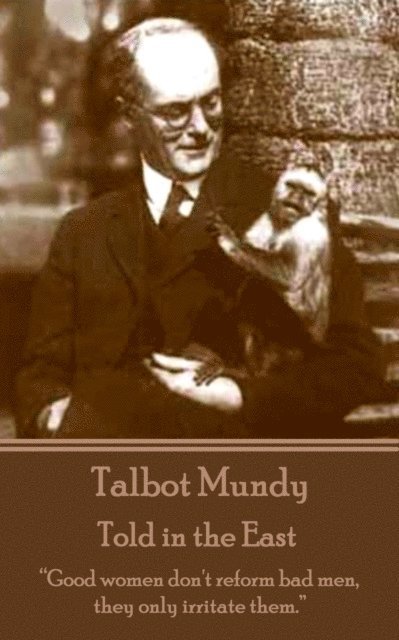
Talbot Mundy was born William Lancaster Gribbon on April 23rd 1879 in London. After a particularly undistinguished record at Rugby School, he ran off to Germany and joined a circus. After his return, from Germany, he left Britain to work as a relief worker in Baroda in India, followed by further adventures in Africa, the Near East and the Far East. His initial inclination was to be a con artist, a confidence trickster and exploit other areas of petty criminality. However with a change of location to the United States and a near fatal mugging he decided that life as an upright citizen was now more to his liking. At age 29 he had decided on Talbot Mundy as a name and three years later in 1911 he began his writing career. Obviously late but it was still to be prodigious none the less. Many of his novels including his first ‘Rung Ho!’ and his most famous ‘King - Of the Khyber Rifles are set during the British Raj in India. In early 1922, Mundy moved to San Diego, California and in late 1923 began writing perhaps his finest novel, Om, the Secret of Ahbor Valley. Whilst much of Talbot’s early life was used in his work it seems he was not particularly proud to return to these places or indeed say to much more about his earlier escapades. Although his writing was to prove very popular over the years and has been revived on many occasions since his death it is fair to say that both his writing and his life were colourful. He married a number of times and still believed that his business dealings would make him very rich. However much of his life would not go as planned and it took several marriages in the hope of finding true happiness. His sixth wife, Dawn, gave birth to a girl on 26 February 1933 shortly after their return to England. Unfortunately the child died shortly after birth. Thereafter he wrote little but much of his work was republished and his name kept in print. On 5 August 1940 Talbot Mundy died from complications associated with diabetes.
69 kr
Skickas
Talbot Mundy was born William Lancaster Gribbon on April 23rd 1879 in London. After a particularly undistinguished record at Rugby School, he ran off to Germany and joined a circus. After his return, from Germany, he left Britain to work as a relief worker in Baroda in India, followed by further adventures in Africa, the Near East and the Far East. His initial inclination was to be a con artist, a confidence trickster and exploit other areas of petty criminality. However with a change of location to the United States and a near fatal mugging he decided that life as an upright citizen was now more to his liking. At age 29 he had decided on Talbot Mundy as a name and three years later in 1911 he began his writing career. Obviously late but it was still to be prodigious none the less. Many of his novels including his first ‘Rung Ho!’ and his most famous ‘King - Of the Khyber Rifles are set during the British Raj in India. In early 1922, Mundy moved to San Diego, California and in late 1923 began writing perhaps his finest novel, Om, the Secret of Ahbor Valley. Whilst much of Talbot’s early life was used in his work it seems he was not particularly proud to return to these places or indeed say to much more about his earlier escapades. Although his writing was to prove very popular over the years and has been revived on many occasions since his death it is fair to say that both his writing and his life were colourful. He married a number of times and still believed that his business dealings would make him very rich. However much of his life would not go as planned and it took several marriages in the hope of finding true happiness. His sixth wife, Dawn, gave birth to a girl on 26 February 1933 shortly after their return to England. Unfortunately the child died shortly after birth. Thereafter he wrote little but much of his work was republished and his name kept in print. On 5 August 1940 Talbot Mundy died from complications associated with diabetes.
69 kr
Skickas
Talbot Mundy was born William Lancaster Gribbon on April 23rd 1879 in London. After a particularly undistinguished record at Rugby School, he ran off to Germany and joined a circus. After his return, from Germany, he left Britain to work as a relief worker in Baroda in India, followed by further adventures in Africa, the Near East and the Far East. His initial inclination was to be a con artist, a confidence trickster and exploit other areas of petty criminality. However with a change of location to the United States and a near fatal mugging he decided that life as an upright citizen was now more to his liking. At age 29 he had decided on Talbot Mundy as a name and three years later in 1911 he began his writing career. Obviously late but it was still to be prodigious none the less. Many of his novels including his first ‘Rung Ho!’ and his most famous ‘King - Of the Khyber Rifles are set during the British Raj in India. In early 1922, Mundy moved to San Diego, California and in late 1923 began writing perhaps his finest novel, Om, the Secret of Ahbor Valley. Whilst much of Talbot’s early life was used in his work it seems he was not particularly proud to return to these places or indeed say to much more about his earlier escapades. Although his writing was to prove very popular over the years and has been revived on many occasions since his death it is fair to say that both his writing and his life were colourful. He married a number of times and still believed that his business dealings would make him very rich. However much of his life would not go as planned and it took several marriages in the hope of finding true happiness. His sixth wife, Dawn, gave birth to a girl on 26 February 1933 shortly after their return to England. Unfortunately the child died shortly after birth. Thereafter he wrote little but much of his work was republished and his name kept in print. On 5 August 1940 Talbot Mundy died from complications associated with diabetes.
69 kr
Skickas
Talbot Mundy was born William Lancaster Gribbon on April 23rd 1879 in London. After a particularly undistinguished record at Rugby School, he ran off to Germany and joined a circus. After his return, from Germany, he left Britain to work as a relief worker in Baroda in India, followed by further adventures in Africa, the Near East and the Far East. His initial inclination was to be a con artist, a confidence trickster and exploit other areas of petty criminality. However with a change of location to the United States and a near fatal mugging he decided that life as an upright citizen was now more to his liking. At age 29 he had decided on Talbot Mundy as a name and three years later in 1911 he began his writing career. Obviously late but it was still to be prodigious none the less. Many of his novels including his first ‘Rung Ho!’ and his most famous ‘King - Of the Khyber Rifles are set during the British Raj in India. In early 1922, Mundy moved to San Diego, California and in late 1923 began writing perhaps his finest novel, Om, the Secret of Ahbor Valley. Whilst much of Talbot’s early life was used in his work it seems he was not particularly proud to return to these places or indeed say to much more about his earlier escapades. Although his writing was to prove very popular over the years and has been revived on many occasions since his death it is fair to say that both his writing and his life were colourful. He married a number of times and still believed that his business dealings would make him very rich. However much of his life would not go as planned and it took several marriages in the hope of finding true happiness. His sixth wife, Dawn, gave birth to a girl on 26 February 1933 shortly after their return to England. Unfortunately the child died shortly after birth. Thereafter he wrote little but much of his work was republished and his name kept in print. On 5 August 1940 Talbot Mundy died from complications associated with diabetes.
67 kr
Skickas
Talbot Mundy was born William Lancaster Gribbon on April 23rd 1879 in London. After a particularly undistinguished record at Rugby School, he ran off to Germany and joined a circus. After his return, from Germany, he left Britain to work as a relief worker in Baroda in India, followed by further adventures in Africa, the Near East and the Far East. His initial inclination was to be a con artist, a confidence trickster and exploit other areas of petty criminality. However with a change of location to the United States and a near fatal mugging he decided that life as an upright citizen was now more to his liking. At age 29 he had decided on Talbot Mundy as a name and three years later in 1911 he began his writing career. Obviously late but it was still to be prodigious none the less. Many of his novels including his first ‘Rung Ho!’ and his most famous ‘King - Of the Khyber Rifles are set during the British Raj in India. In early 1922, Mundy moved to San Diego, California and in late 1923 began writing perhaps his finest novel, Om, the Secret of Ahbor Valley. Whilst much of Talbot’s early life was used in his work it seems he was not particularly proud to return to these places or indeed say to much more about his earlier escapades. Although his writing was to prove very popular over the years and has been revived on many occasions since his death it is fair to say that both his writing and his life were colourful. He married a number of times and still believed that his business dealings would make him very rich. However much of his life would not go as planned and it took several marriages in the hope of finding true happiness. His sixth wife, Dawn, gave birth to a girl on 26 February 1933 shortly after their return to England. Unfortunately the child died shortly after birth. Thereafter he wrote little but much of his work was republished and his name kept in print. On 5 August 1940 Talbot Mundy died from complications associated with diabetes.
241 kr
Skickas inom 3-6 vardagar
Talbot Mundy was born William Lancaster Gribbon on April 23rd 1879 in London. After a particularly undistinguished record at Rugby School, he ran off to Germany and joined a circus. After his return, from Germany, he left Britain to work as a relief worker in Baroda in India, followed by further adventures in Africa, the Near East and the Far East. His initial inclination was to be a con artist, a confidence trickster and exploit other areas of petty criminality. However with a change of location to the United States and a near fatal mugging he decided that life as an upright citizen was now more to his liking. At age 29 he had decided on Talbot Mundy as a name and three years later in 1911 he began his writing career. Obviously late but it was still to be prodigious none the less. Many of his novels including his first ‘Rung Ho!’ and his most famous ‘King - Of the Khyber Rifles are set during the British Raj in India. In early 1922, Mundy moved to San Diego, California and in late 1923 began writing perhaps his finest novel, Om, the Secret of Ahbor Valley. Whilst much of Talbot’s early life was used in his work it seems he was not particularly proud to return to these places or indeed say to much more about his earlier escapades. Although his writing was to prove very popular over the years and has been revived on many occasions since his death it is fair to say that both his writing and his life were colourful. He married a number of times and still believed that his business dealings would make him very rich. However much of his life would not go as planned and it took several marriages in the hope of finding true happiness. His sixth wife, Dawn, gave birth to a girl on 26 February 1933 shortly after their return to England. Unfortunately the child died shortly after birth. Thereafter he wrote little but much of his work was republished and his name kept in print. On 5 August 1940 Talbot Mundy died from complications associated with diabetes.
260 kr
Skickas inom 3-6 vardagar
Talbot Mundy was born William Lancaster Gribbon on April 23rd 1879 in London. After a particularly undistinguished record at Rugby School, he ran off to Germany and joined a circus. After his return, from Germany, he left Britain to work as a relief worker in Baroda in India, followed by further adventures in Africa, the Near East and the Far East. His initial inclination was to be a con artist, a confidence trickster and exploit other areas of petty criminality. However with a change of location to the United States and a near fatal mugging he decided that life as an upright citizen was now more to his liking. At age 29 he had decided on Talbot Mundy as a name and three years later in 1911 he began his writing career. Obviously late but it was still to be prodigious none the less. Many of his novels including his first ‘Rung Ho!’ and his most famous ‘King - Of the Khyber Rifles are set during the British Raj in India. In early 1922, Mundy moved to San Diego, California and in late 1923 began writing perhaps his finest novel, Om, the Secret of Ahbor Valley. Whilst much of Talbot’s early life was used in his work it seems he was not particularly proud to return to these places or indeed say to much more about his earlier escapades. Although his writing was to prove very popular over the years and has been revived on many occasions since his death it is fair to say that both his writing and his life were colourful. He married a number of times and still believed that his business dealings would make him very rich. However much of his life would not go as planned and it took several marriages in the hope of finding true happiness. His sixth wife, Dawn, gave birth to a girl on 26 February 1933 shortly after their return to England. Unfortunately the child died shortly after birth. Thereafter he wrote little but much of his work was republished and his name kept in print. On 5 August 1940 Talbot Mundy died from complications associated with diabetes.
42 kr
Skickas
Lucy Fitch Perkins was forty-eight when she was approached by a publisher friend who, impressed by her talents as both an illustrator and writer, which he knew through correspondence, urged her to write. He was so earnest that she thought of an idea for a children’s book the next morning, and she immediately set to work making sketches and preparing the idea for presentation. The publisher came to dinner at their house the next evening and she showed him the idea. His response was immediate “go ahead and write it, and I want it”. That book was The Dutch Twins, the first in what became a long running and wildly popular series. Here we publish another in the series ''The Belgian Twins''.
42 kr
Skickas
Lucy Fitch Perkins was forty-eight when she was approached by a publisher friend who, impressed by her talents as both an illustrator and writer, which he knew through correspondence, urged her to write. He was so earnest that she thought of an idea for a children’s book the next morning, and she immediately set to work making sketches and preparing the idea for presentation. The publisher came to dinner at their house the next evening and she showed him the idea. His response was immediate “go ahead and write it, and I want it”. That book was The Dutch Twins, the first in what became a long running and wildly popular series. Here we publish that very book.
42 kr
Skickas
Lucy Fitch Perkins was forty-eight when she was approached by a publisher friend who, impressed by her talents as both an illustrator and writer, which he knew through correspondence, urged her to write. He was so earnest that she thought of an idea for a children’s book the next morning, and she immediately set to work making sketches and preparing the idea for presentation. The publisher came to dinner at their house the next evening and she showed him the idea. His response was immediate “go ahead and write it, and I want it”. That book was The Dutch Twins, the first in what became a long running and wildly popular series. Here we publish another in the series ''The Eskimo Twins''.
42 kr
Skickas
Lucy Fitch Perkins was forty-eight when she was approached by a publisher friend who, impressed by her talents as both an illustrator and writer, which he knew through correspondence, urged her to write. He was so earnest that she thought of an idea for a children’s book the next morning, and she immediately set to work making sketches and preparing the idea for presentation. The publisher came to dinner at their house the next evening and she showed him the idea. His response was immediate “go ahead and write it, and I want it”. That book was The Dutch Twins, the first in what became a long running and wildly popular series. Here we publish another in that series ''The French Twins''.
42 kr
Skickas
Lucy Fitch Perkins was forty-eight when she was approached by a publisher friend who, impressed by her talents as both an illustrator and writer, which he knew through correspondence, urged her to write. He was so earnest that she thought of an idea for a children’s book the next morning, and she immediately set to work making sketches and preparing the idea for presentation. The publisher came to dinner at their house the next evening and she showed him the idea. His response was immediate “go ahead and write it, and I want it”. That book was The Dutch Twins, the first in what became a long running and wildly popular series. Here we publish another in that series ''The Irish Twins.
42 kr
Skickas
Lucy Fitch Perkins was forty-eight when she was approached by a publisher friend who, impressed by her talents as both an illustrator and writer, which he knew through correspondence, urged her to write. He was so earnest that she thought of an idea for a children’s book the next morning, and she immediately set to work making sketches and preparing the idea for presentation. The publisher came to dinner at their house the next evening and she showed him the idea. His response was immediate “go ahead and write it, and I want it”. That book was The Dutch Twins, the first in what became a long running and wildly popular series. Here we publish another in that series ''The Italian Twins''.
52 kr
Skickas
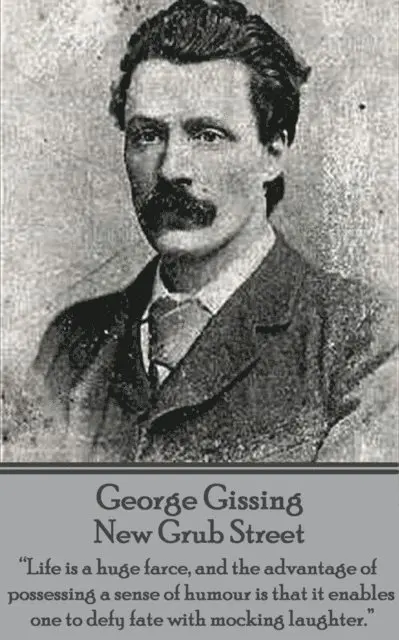
Born on November 22nd 1857 George Robert Gissing published 23 novels over his lifetime. Perhaps the one that creates most interest is New Grub Street. In the 18th Century Grub Street was the centre of cheap and despicable hack literature. Despite Grub Street itself no longer existing when Gissing wrote his novel hack literature certainly did and the story centres on two writers, Edwin Reardon, a shy novelist and Jasper Milvain a young journalist who encapsulates many of the striving ambitions of Victorian society but equally many of its flaws.
31 kr
Skickas
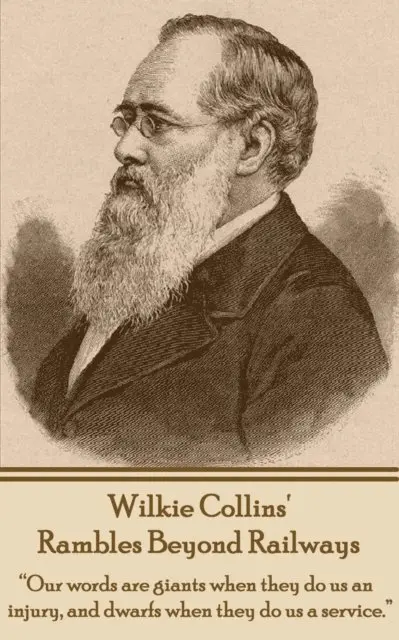
Wilkie Collins was born on January 8th, 1824 at 11 New Cavendish Street in Marylebone, London. A novelist, playwright and author of short stories, William Wilkie Collins was a popular figure in Victorian literature which was further enhanced by his charm and flamboyant lifestyle. He was a friend and collaborator of Charles Dickens. His own talents outshone most other literary figures and he is credited with the introduction of the modern detective story with ‘The Woman In White’. Other achievements were ‘The Moonstone’, ‘All Year Round’ and ‘Amadale’. In all Wilkie Collins wrote some 30 novels, 14 plays, over 60 short stories and at least 100 nonfiction essays. He died from a paralytic stroke on September 23rd, 1889, at 82 Wimpole Street, and was buried at Kensal Green Cemetery in West London. Catharine Graves is buried with him, following her death in 1895. Here we publish ‘Rambles Beyond Railways’. Also known as ''Notes In Cornwall Taken Afoot'' it shows yet another side of the talents of Mr Wilkie Collins