225 kr
Läs direkt efter köp
225 kr
Läs direkt efter köp
288 kr
Läs direkt efter köp
Thanks to smartphones, war is everywhere, all the time. Anyone can view, analyse and comment on photos, videos or other warzone media, far from the frontlines. Where did this technology come from? And what does it mean for the future of war?
This book explains why you see what you do on your phone. It asks how these devices shape our knowledge, conduct and representation of war in the 2020s. It shows why the smartphone is indispensable in peace and wartime, with a profound impact on modern conflict. Every smartphone is a potential weapon: lines blur between war and daily life, and conflict becomes a shared digital experience. Global tech giants orchestrate connectivity, displacing state-controlled narratives. Through social media, smartphones become powerful tools amplifying violence and shaping war’s legitimacy. Apps democratise conflict, enabling anyone to identify and attack perceived enemies. As the Ukraine war has shown, this new reality involves complex, unevenly distributed infrastructures, merging civilian communication with military targeting.
With war accelerating beyond our comprehension, militaries have raced to exploit and adapt to the smartphone age. As technology distorts our understanding of conflict, even while offering the hope of progress, Matthew Ford explores critical questions about today’s hyper-connected battlefield.
204 kr
Läs direkt efter köp
576 kr
Läs direkt efter köp
War in the 21st century will remain a chameleon that takes on different forms and guises. This book offers the first comprehensive update and revision of ideas about the future of war since Russia’s 2022 invasion of Ukraine. It argues that the war has fundamentally shifted our perspective on the nature and character of future war, but also cautions against marginalising many other parallel trends, types of war, and ways of waging them.
World-renowned international experts from the War Studies field consider the impact of the war in Ukraine on the broader social phenomenon of war: they analyse visions of future war; examine the impact of technological innovation on its conduct; assess our ability to anticipate its future; and consider lessons learned for leaders, soldiers, strategists, scholars and concerned citizens.
Beyond Ukraine features contributions from Azar Gat, Beatrice Heuser, Antulio Echevarria, Audrey Cronin, T.X. Hammes, Kenneth Payne, Frank Hoffman, David Betz, Jan Willem Honig, and many other pre-eminent thinkers on the past, present and future of war—including an afterword by the late Christopher Coker.
337 kr
Läs direkt efter köp
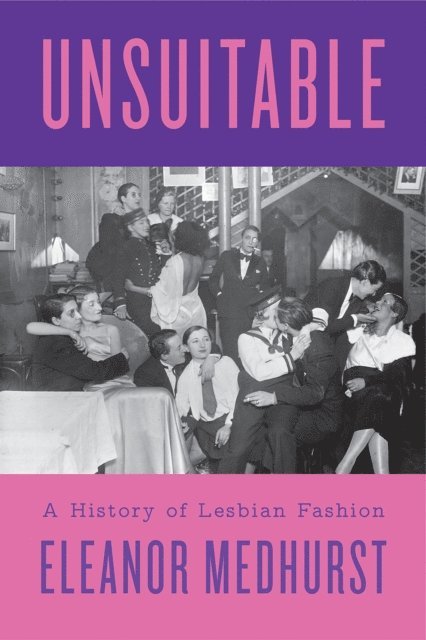
The way we dress can show or hide who we are; make us fit in, make us stand out, or make our own community. Yet ‘lesbian fashion’ has been strangely overlooked. What secrets can it reveal about the lives and status of queer women through the ages?
The lesbian past is slippery: often deliberately hidden, edited or left unrecorded. Unsuitable restores to history the dazzlingly varied clothes worn by women who love women, from top hats to violet tiaras. This story spans centuries and countries, from ‘Gentleman Jack’ in nineteenth-century Yorkshire and Queen Christina of seventeenth-century Sweden, to Paris modernism, genderqueer Berlin, butch/femme bar culture and gay rights activists—via drag kings, Vogue editors and the Harlem Renaissance.
This book is a kaleidoscope of the margins and the mainstream, celebrating trans lesbian style, Black lesbian style, and gender nonconformity. You don’t have to be queer or fashionable to be enthralled by this hidden history. Unsuitable lights it up for the world to see, in all its finery.
347 kr
Läs direkt efter köp
In September 2022, at a grandiose ceremony in the Kremlin, President Putin announced the incorporation into the Russian Federation of four provinces in southern and eastern Ukraine—the most significant attempted land seizure in Europe since World War II. Although Russia was not in control of large parts of these provinces, its military occupied more than 40,000 square miles, roughly the size of Denmark.
Occupation explains how Russia sought to subjugate these territories through a toxic mix of violence, political influence and economic coercion. Its security forces kidnapped, tortured and killed civilians and officials, seized businesses and properties from Ukrainian owners, erased physical evidence of Ukrainian culture, and subjected the population to a barrage of constant propaganda.
More than half of the pre-war population fled, to Europe, Russia or the rest of Ukraine, and most who remained were hostile to the occupiers. Yet Russia found local politicians to front its regime. A few people openly collaborated; most faced uncomfortable choices to survive under Russian rule.
In occupied Ukraine, Moscow attempted to create an ersatz ‘new Russia’, based on fantasy, ideology and violence. This regime was a microcosm of the contemporary Russian Federation, reflecting its deepening militarisation and authoritarianism.
339 kr
Läs direkt efter köp
Far and away the most popular sport in the world, football has a special place in Middle Eastern societies, and for Middle Eastern states. With Qatar hosting the 2022 FIFA World Cup, this region has been cast into the global footballing spotlight, raising issues of geopolitical competition, consumer culture and social justice.
Taking an interdisciplinary approach, this book examines the complex questions raised by the phenomenon of football as a significant cultural force in the Middle East, as well as its linkages to broader political and socioeconomic processes. The establishment of football as a national sport offers significant insight into the region’s historical experiences with colonialism and struggles for independence, as well as the sport’s vital role in local and regional politics today–whether at the forefront of popular mobilisations, or as an instrument of authoritarian control. Football has also served as an arena of contestation in the formation of national identity, the struggle for gender equality, and the development of the media landscape.
The twelve contributions to this volume draw on extensive engagement with the existing body of literature, and introduce original research questions that promise to open new directions for the study of football in the Middle East.
243 kr
Läs direkt efter köp
243 kr
Läs direkt efter köp
277 kr
Läs direkt efter köp
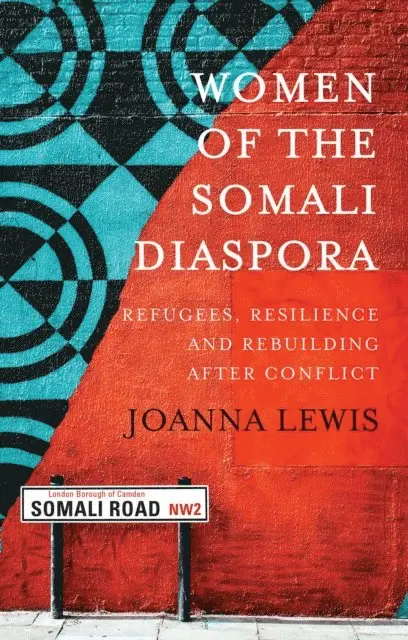
This book is about Somali mothers and daughters who came to Britain in the 1990s to escape civil war. Many had never left Somalia before, followed nomadic traditions, did not speak English, were bereaved and were suffering from PTSD.
Their stories begin with war and genocide in the north, followed by harrowing journeys via refugee camps, then their arrival and survival in London. Joanna Lewis exposes how they rapidly recovered, mobilising their networks, social capital and professional skills. Crucial to the recovery of the now breakaway state of (former British) Somaliland, these women bore a huge burden, but inspired the next generation, with many today caught between London and a humanitarian impulse to return home.
Lewis reveals three histories. Firstly, the women’s personal history, helping us to understand resilience as an individual, lived historical process that is both positive and negative, and both inter- and intra-generational. Secondly, a collective history of refugees as rebuilders, offering insight into the dynamism of the Somali diaspora. Finally, the forgotten history and hidden legacies of Britain’s colonial past, which have played a key role in shaping this dramatic, sometimes upsetting, but always inspiring story: the power of women to heal the scars of war.
225 kr
Läs direkt efter köp
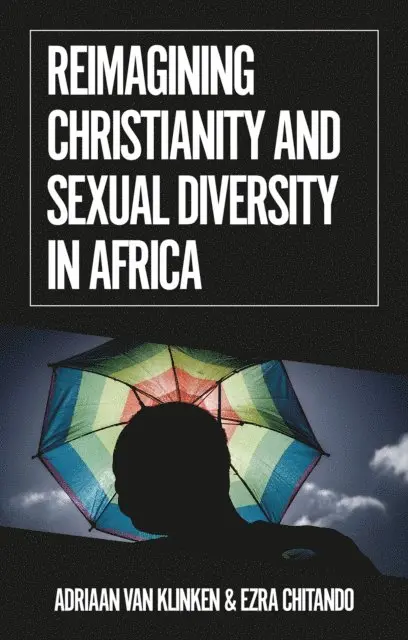
Religion is often seen as a conservative force in contemporary Africa. In particular, Christian beliefs and actors are usually depicted as driving the opposition to homosexuality and LGBTI rights in African societies. This book nuances that picture, by drawing attention to discourses emerging in Africa itself that engage with religion, specifically Christianity, in progressive and innovative ways—in support of sexual diversity and the quest for justice for LGBTI people.
The authors show not only that African Christian traditions harbour strong potential for countering conservative anti-LGBTI dynamics; but also that this potential has already begun to be realised, by various thinkers, activists and movements across the continent. Their ten case studies document how leading African writers are reimagining Christian thought; how several Christian-inspired groups are transforming religious practice; and how African cultural production creatively appropriates Christian beliefs and symbols. In short, the book explores Christianity as a major resource for a liberating imagination and politics of sexuality and social justice in Africa today.
Foregrounding African agency and progressive religious thought, this highly original intervention counterbalances our knowledge of secular approaches to LGBTI rights in Africa, and powerfully decolonises queer theory, theology and politics.
329 kr
Läs direkt efter köp
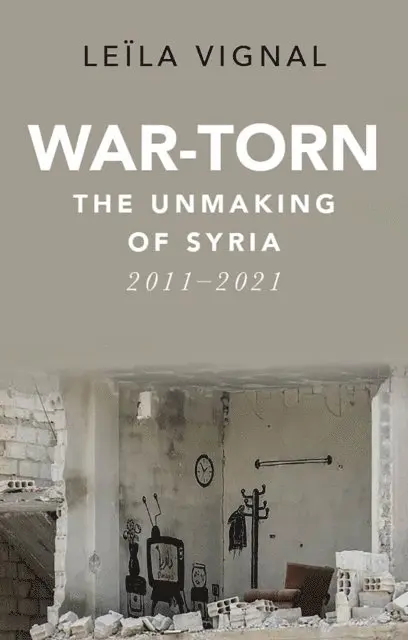
Syria as we knew it does not exist anymore. However, all conflicts change countries and their societies. Such an obvious statement needs to be unpacked in specific relation to Syria. What has happened, what does it mean, and what comes next?
In order to consider the future of Syria, it is crucial to assess not only what has been destroyed, but also how it was destroyed. It is equally vital to address the structural and possibly enduring results of large-scale destruction and displacement. These dynamics are not only at play in Syrian society, but are tearing at the economic fabric and very territorial integrity of the country. If war is a powerful process of human and material destruction, it is equally a powerful process of spatial, social and economic reconfiguration. Nor does it stop at national borders—the unravelling of Syria, and of the idea of Syria, has affected and will continue to affect the entire Middle East.
War-Torn explores these transformations and the processes that fuel them. It is an indispensable account throwing light on neglected aspects of the Syrian war, and a much-needed contribution to our understanding of conflicts in the twenty-first century.
347 kr
Läs direkt efter köp
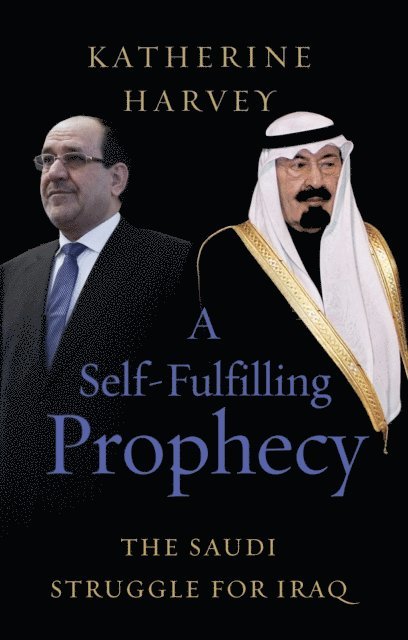
In recent years, the geopolitical rivalry between Saudi Arabia and Iran has dominated the headlines. Many have charted the polarisation between a Saudi-led Sunni camp and an Iranian-led Shia one, assuming that a predominantly Shia state like Iraq would automatically ally with Iran. In this compelling account, Katherine Harvey tells a different story: Iraq’s alignment with Iran was not a foregone conclusion. Rather, Saudi efforts to undermine Iran have paradoxically empowered it.
Harvey investigates why the Saudis refused to engage with Iraq’s post-2003 Shia-led government, despite continual outreach by Iraq’s new leaders and considerable pressure from the United States. She finds that certain deeply ingrained assumptions predisposed Saudi leaders to see a Shia-led Iraq as naturally beholden to Iran: the view that Iran is inherently expansionist, and the belief that Arab Shia tend to be loyal to it. This outlook was simplistic, even downright inaccurate; and, in refusing to engage, the Saudis created a self-fulfilling prophecy.
As Harvey demonstrates, members of Iraq’s new government initially sought to establish a positive relationship with Saudi Arabia, and to pursue a course independent from Iran. But, isolated and rejected by Saudi King Abdullah, Iraq ultimately had nowhere else to turn.
277 kr
Läs direkt efter köp
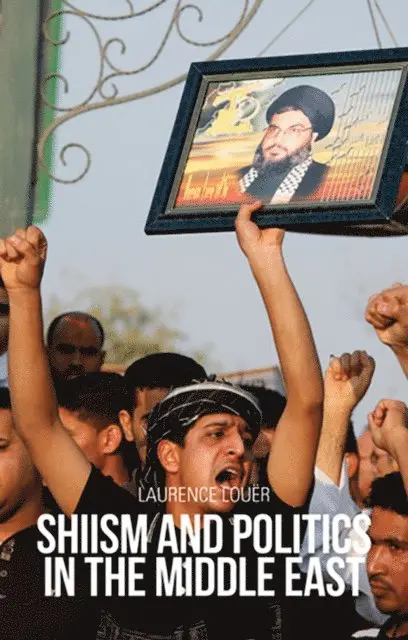
Although Iran’s Islamic Revolution had an electrifying effect on Shiite movements in Lebanon, Iraq, the Gulf and Saudi Arabia, there exists a tendency to explain away much of Shiite politics in the Middle East as inextricably linked to Iranian foreign policy. Laurence Louër challenges this view, arguing that, in the end, local political imperatives have been the crucial factor determining the direction of Shiite states in the Middle East.
In this timely book, completed before the current outbreak of unrest in Bahrain that has formed part of the Arab Spring, Laurence Louër explains, the background of the Bahraini conflict in the context of the wider issue of Shiism as a political force in the Arab Middle East, amongst other issues relating to the role of Shiite Islamist movements in regional politics. Her study shows how Bahrain’s troubles are a phenomenon based on local perceptions of injustice rather than on the foreign policy of Shiite Iran.
More generally, the book shows that, though Iran’s Islamic Revolution had an electrifying effect on Shiite movements in Lebanon, Iraq, the Gulf and Saudi Arabia, local political imperatives have in the end been the crucial factor in the direction they have taken. In addition, the overwhelming influence of the Shiite clerical institution has been diminished by the rise to prominence of lay activists within the Shiite movements across the Middle East and the emergence of Shiite anti-clericalism. This book contributes to dispelling the myth of the determining power of Iran in the politics of Iraq, Bahrain and other Arab states with significant Shiite populations.
268 kr
Läs direkt efter köp
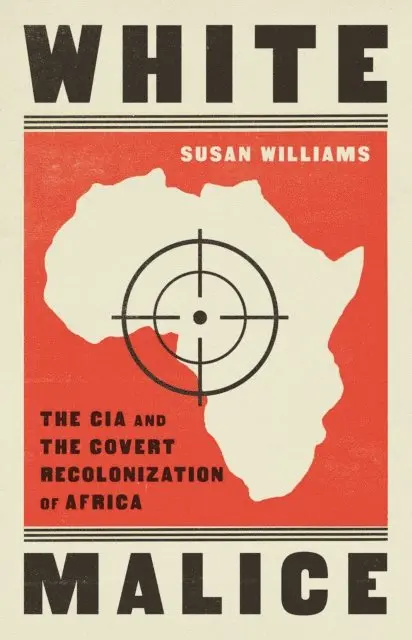
Accra, 1958. Africa’s liberation leaders have gathered for a conference, full of strength, purpose and vision. Newly independent Ghana’s Kwame Nkrumah and Congo’s Patrice Lumumba strike up a close partnership. Everything seems possible. But, within a few years, both men will have been targeted by the CIA, and their dream of true African autonomy undermined.
The United States, watching the Europeans withdraw from Africa, was determined to take control. Pan-Africanism was inspiring African Americans fighting for civil rights; the threat of Soviet influence over new African governments loomed; and the idea of an atomic reactor in black hands was unacceptable. The conclusion was simple: the US had to ‘recapture’ Africa, in the shadows, by any means necessary.
Renowned historian Susan Williams dives into the archives, revealing new, shocking details of America’s covert programme in Africa. The CIA crawled over the continent, poisoning the hopes of 1958 with secret agents and informants; surreptitious UN lobbying; cultural infiltration and bribery; assassinations and coups. As the colonisers moved out, the Americans swept in—with bitter consequences that reverberate in Africa to this day
204 kr
Läs direkt efter köp
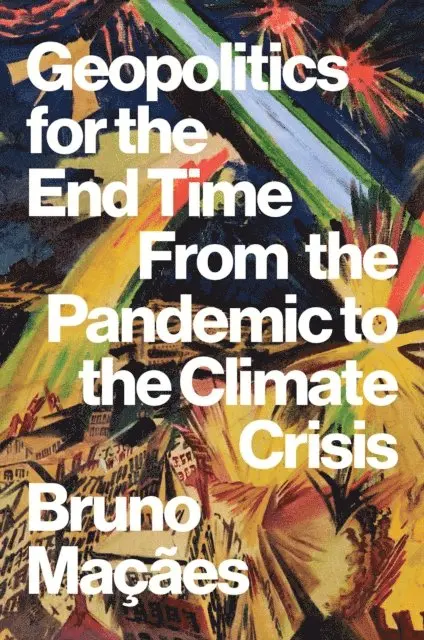
As we approach catastrophe, everything changes. What are the lessons from the pandemic? How well have different cultures and societies responded, and could this become a turning point in the flow of history?
Before Covid, a new competition was already arising between alternative geopolitical models–but the context of this clash wasn’t yet clear. What if it takes place on neutral ground? In a state of nature, with few or no political rules, amid quickly evolving chaos? When the greatest threat to national security is no longer other states, but the environment itself, which countries might rise to the top?
This book explores how Covid-19 has already transformed the global system, and how it serves as a prelude to a planet afflicted by climate change. Bruno Maçães is one of the first to see the pandemic as the dawn of a new strategic era, heralding a profoundly changed world-political landscape.
Cover image: Ludwig Meidner, ‘Apocalyptic City’, 1913. © Ludwig Meidner-Archiv, Jüdisches Museum der Stadt Frankfurt am Main
243 kr
Läs direkt efter köp
173 kr
Läs direkt efter köp
236 kr
Läs direkt efter köp
243 kr
Läs direkt efter köp
271 kr
Läs direkt efter köp
173 kr
Läs direkt efter köp
243 kr
Läs direkt efter köp
104 kr
Läs direkt efter köp
286 kr
Läs direkt efter köp
286 kr
Läs direkt efter köp
286 kr
Läs direkt efter köp
258 kr
Läs direkt efter köp
173 kr
Läs direkt efter köp
243 kr
Läs direkt efter köp