Ekologisk odling
316 kr
Skickas inom 5-8 vardagar
328 kr
Skickas inom 5-8 vardagar
121 kr
Skickas inom 5-8 vardagar
237 kr
Skickas
I Château vadå avslöjade Mats-Eric Nilsson hur lätt det är att bli lurad av vinbranschens vackra slott och fagra löften. Nu kommer den fristående uppföljaren Nyfiken på naturvin, om industrivinets raka motsats.
Här finns allt du behöver veta om de viner som framställs utan skadliga gifter och onödiga tillsatser: rött, vitt, rosé, bubbel och orange! Visste du att den första årgången gjordes redan för 8000 år sedan?
Tillsammans med fotografen Lena Granefelt får vi följa med till ett av de hetaste naturvinsområdena, sydfranska Languedoc, och även möta många eldsjälar från andra delar av denna spännande vinvärld.
För alla som blivit nyfikna på detta småskaligt framställda vin är detta den första riktiga guiden på svenska. Var kan man hitta det? Hur smakar det egentligen? Vad är ett rimligt pris att betala för en flaska? Och stämmer det att man blir mindre bakis? Boken, som är full av kloka tips och roliga fakta, innehåller även en unik förteckning över mer än 900 naturvinsproducenter.
266 kr
Skickas
282 kr
Skickas inom 5-8 vardagar
152 kr
Skickas
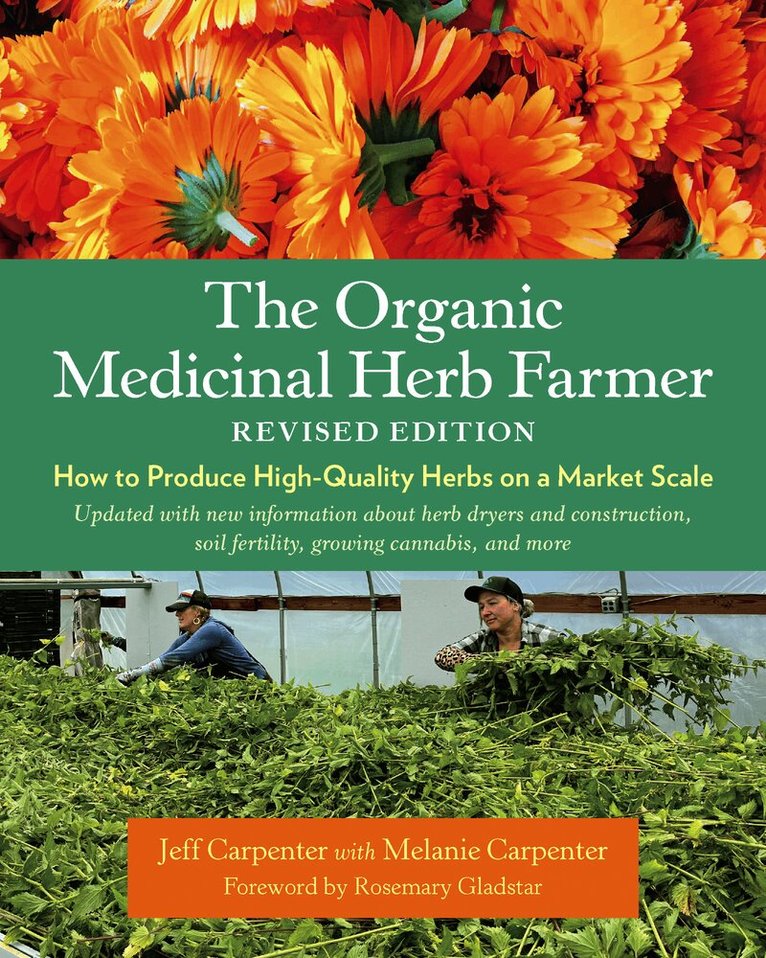
Organic Medicinal Herb Farmer, Revised Edition
How to Produce High-Quality Herbs on a Market Scale
375 kr
Skickas inom 5-8 vardagar
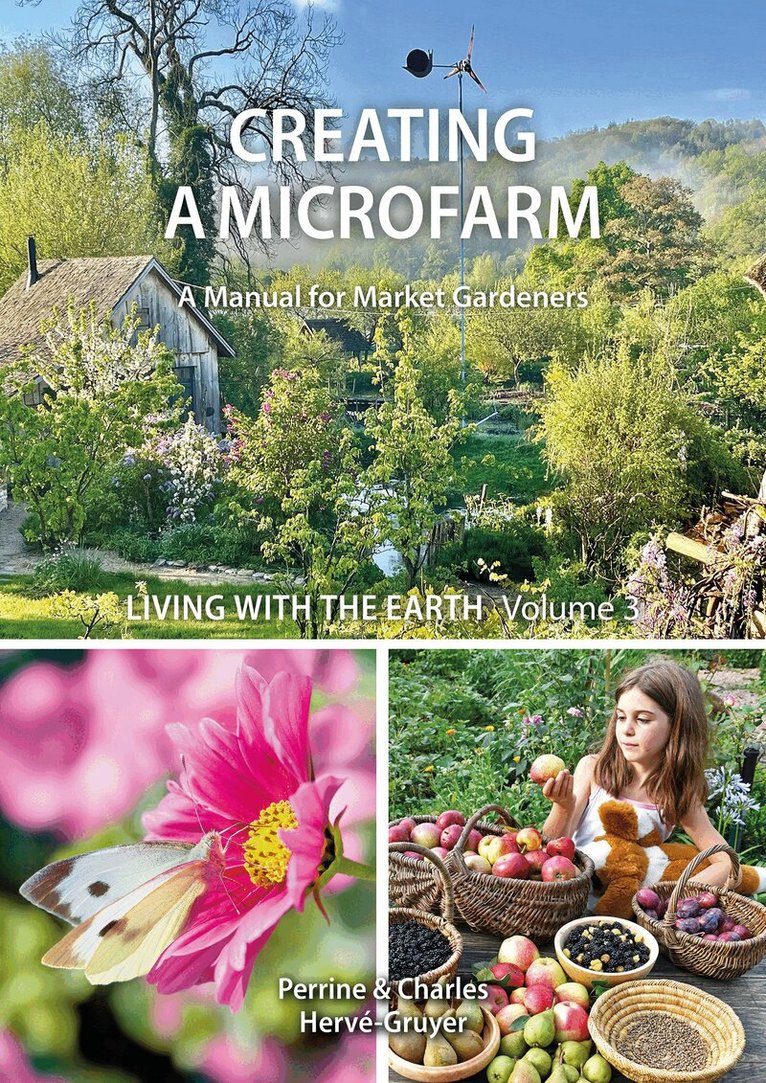
Living with the Earth: Volume 3
Creating a Microfarm
359 kr
Skickas
258 kr
Skickas
281 kr
Skickas inom 5-8 vardagar
221 kr
Skickas inom 7-10 vardagar
197 kr
Skickas inom 7-10 vardagar
208 kr
Skickas inom 3-6 vardagar
111 kr
Skickas inom 11-20 vardagar
1 410 kr
Skickas inom 7-10 vardagar
Safety and Practice for Organic Food covers current food safety issues and trends. It provides detailed information on all organic and pasture practices including produce-only, farm-animal-only or integrated crop-livestock farming, as well as the impact of these practices on food safety and foodborne infections. The book explores food products that organic, integrated and traditional farming systems are contributing to consumers. As the demand for organic food products grows faster than ever, this book discusses current and improved practices for safer products. Moreover, the book explores progressive directions, such as the application of next-generation sequencing and genomics to aid in the understanding of the microbial ecology of the agro-environment and how farmer education can contribute to sustainable and safe food. Safety and Practice for Organic Food is a unique source of organic agricultural practices and food production for researchers, academics and professionals at agriculture-based universities and colleges who are involved in food science, animal sciences including poultry science, food safety, food microbiology, plant science and agricultural extension. This book is also an excellent source of information for regulators and federal government officials (USDA, FDA, EPA) and the food processing industry.
Discusses limitations in pre-harvest and post-harvest level practices with specific information on risk and bio-security of existing organic production systems Explores policies and guidelines for organic food production and future directions for safer and more sustainable management Presents microbial and other biological hazards at pre-harvest and post-harvest levels2 386 kr
Skickas inom 7-10 vardagar
Organic Farming: Global Perspectives and Methods explores the core definition and concepts of organic farming in sustainability, its influence on the ecosystem, the significance of seed, soil management, water management, weed management, the significance of microorganisms in organic farming, livestock management, and waste management. The book provides readers with a basic idea of organic farming that presents advancements in the field and insights on the future. Written by a team of global experts, and with the aim of providing a current understanding of organic farming, this resource is valuable for researchers, graduate students, and post-doctoral fellows from academia and research institutions.
Presents the basic principles of organic farming and sustainable development Discusses the role of soil in organic agriculture Addresses various strategies in seed processing and seed storing, seed bed preparation, watering of seeds and seed quality improvement Includes updated information on organic fertilizers and their preparation techniques2 056 kr
Skickas inom 7-10 vardagar
Advances in Organic Farming: Agronomic Soil Management Practices focuses on the integrated interactions between soil-plant-microbe-environment elements in a functioning ecosystem. It explains sustainable nutrient management under organic farming and agriculture, with chapters focusing on the role of nutrient management in sustaining global ecosystems, the remediation of polluted soils, conservation practices, degradation of pollutants, biofertilizers and biopesticides, critical biogeochemical cycles, potential responses for current and impending environmental change, and other critical factors. Organic farming is both challenging and exciting, as its practice of "feeding the soil, not the plant� provides opportunity to better understand why some growing methods are preferred over others.
In the simplest terms, organic growing is based on maintaining a living soil with a diverse population of micro and macro soil organisms. Organic matter (OM) is maintained in the soil through the addition of compost, animal manure, green manures and the avoidance of excess mechanization.
Presents a comprehensive overview of recent advances and new developments in the field OF research within a relevant theoretical framework Highlights the scope of the inexpensive and improved management practices Focuses on the role of nutrient management in sustaining the ecosystems249 kr
Skickas inom 5-8 vardagar
970 kr
Skickas inom 3-6 vardagar
187 kr
Tillfälligt slut
1 740 kr
Skickas inom 7-10 vardagar
503 kr
Skickas inom 7-10 vardagar
The Composting Handbook
A how-to and why manual for farm, municipal, institutional and commercial composters
1 202 kr
Skickas inom 7-10 vardagar
The Composting Handbook provides a single guide to the science, principles and best practices of composting for large-scale composting operations facing a variety of opportunities and challenges converting raw organic materials into a useful and marketable product.
Composting is a well-established and increasingly important method to recycle and add value to organic by-products. Many, if not most, of the materials composting treats are discarded materials that would otherwise place a burden on communities, industries, farms and the environment. Composting converts these materials into a valuable material, compost, that regenerates soils improving soils for plant growth and environmental conservation.
The Composting Handbook expands on previously available resources by incorporating new information, new subjects and new practices, drawing its content from current scientific principles, research, engineering and industry experience. In both depth and breadth, it covers the knowledge that a compost producer needs to succeed. Topics include the composting process, methods of composting, equipment, site requirements, environmental issues and impacts, business knowledge, safety, and the qualities, uses and markets for the compost products.
The Composting Handbook is an invaluable reference for composting facility managers and operators, prospective managers and operators, regulators, policy makers, environmental advocates, educators, waste generators and managers and generally people interested in composting as a business or a solution. It is also appropriate as a textbook for college courses and a supplemental text for training courses about composting or organic waste management.
Created in conjunction with the Compost Research and Education Foundation (CREF) Includes the latest information on composting and compost, providing the first comprehensive resource in decades Written with focus on both academic and industrial insights and advances1 410 kr
Skickas inom 7-10 vardagar
2 386 kr
Skickas inom 7-10 vardagar
Organic Farming: Global Perspectives and Methods, Second Edition provides the core definition and concepts of organic farming, also addressing current challenges and goals. The book provides a comprehensive resource, from sustainability to influences on the ecosystem, including the significance of seed, soil, water and weed management, and other important aspects. In addition, it presents advancements in the field and insights on the future. This fully revised and updated edition expands coverage to include important economic considerations, understanding the influence of nanotechnology on organic farming, vertical farming, organic farming and livestock management, as well as the future of organic farming.
Written by a team of global experts to provide current concepts of organic farming, this resource is valuable for researchers, graduate students, and post-doctoral fellows from academia and research institutions.
Presents the latest insights, from basic principles to emerging practices and future prospects Includes new chapters on emerging organic farming practices and opportunities to address animal agriculture and vertical and indoor farming Includes coverage of standards, certification and accreditation, and presents insights on economics and marketing930 kr
Skickas inom 10-15 vardagar
1 297 kr
Skickas inom 10-15 vardagar
699 kr
Skickas inom 10-15 vardagar
1 582 kr
Skickas inom 10-15 vardagar