Addison-Wesley Data & Analytics Series - Böcker
366 kr
Skickas inom 7-10 vardagar
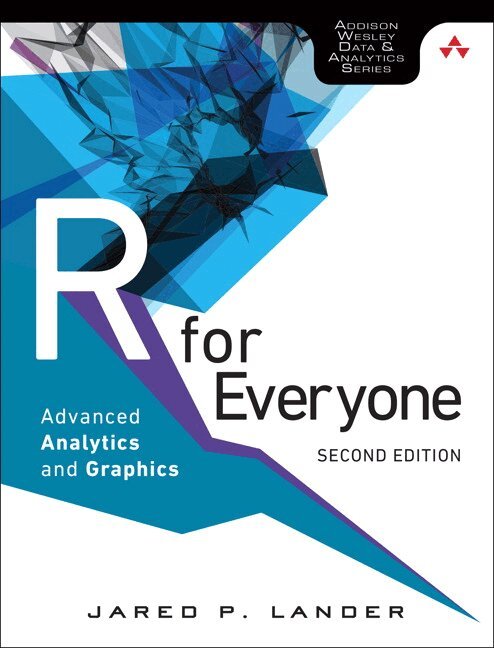
Using the open source R language, you can build powerful statistical models to answer many of your most challenging questions. R has traditionally been difficult for non-statisticians to learn, and most R books assume far too much knowledge to be of help. R for Everyone is the solution.
Drawing on his unsurpassed experience teaching new users, professional data scientist Jared P. Lander has written the perfect tutorial for anyone new to statistical programming and modeling. Organized to make learning easy and intuitive, this guide focuses on the 20 percent of R functionality you’ll need to accomplish 80 percent of modern data tasks. Lander’s self-contained chapters start with the absolute basics, offering extensive hands-on practice and sample code. You’ll download and install R; navigate and use the R environment; master basic program control, data import, and manipulation; and walk through several essential tests. Then, building on this foundation, you’ll construct several complete models, both linear and nonlinear, and use some data mining techniques.
By the time you’re done, you won’t just know how to write R programs, you’ll be ready to tackle the statistical problems you care about most.
Coverage Includes:
Exploring R, RStudio, and R packages Using R for math: variable types, vectors, calling functions, and more Exploiting data structures, including data.frames, matrices, and lists Creating attractive, intuitive statistical graphics Writing user-defined functions Controlling program flow with if, ifelse, and complex checks Improving program efficiency with group manipulations Combining and reshaping multiple datasets Manipulating strings using R’s facilities and regular expressions Creating normal, binomial, and Poisson probability distributions Programming basic statistics: mean, standard deviation, and t-tests Building linear, generalized linear, and nonlinear models Assessing the quality of models and variable selection Preventing overfitting, using the Elastic Net and Bayesian methods Analyzing univariate and multivariate time series data Grouping data via K-means and hierarchical clustering Preparing reports, slideshows, and web pages with knitr Building reusable R packages with devtools and Rcpp Getting involved with the R global community272 kr
Skickas inom 7-10 vardagar
The Hands-On, Example-Rich Introduction to Pandas Data Analysis in Python
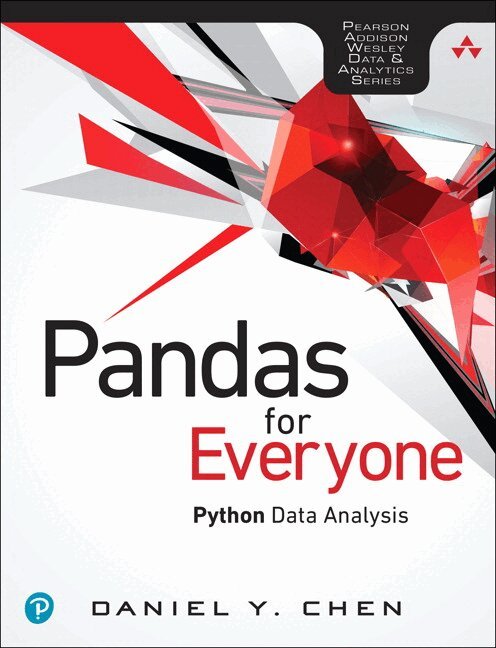
Today, analysts must manage data characterized by extraordinary variety, velocity, and volume. Using the open source Pandas library, you can use Python to rapidly automate and perform virtually any data analysis task, no matter how large or complex. Pandas can help you ensure the veracity of your data, visualize it for effective decision-making, and reliably reproduce analyses across multiple datasets.
Pandas for Everyone brings together practical knowledge and insight for solving real problems with Pandas, even if you’re new to Python data analysis. Daniel Y. Chen introduces key concepts through simple but practical examples, incrementally building on them to solve more difficult, real-world problems.
Chen gives you a jumpstart on using Pandas with a realistic dataset and covers combining datasets, handling missing data, and structuring datasets for easier analysis and visualization. He demonstrates powerful data cleaning techniques, from basic string manipulation to applying functions simultaneously across dataframes.
Once your data is ready, Chen guides you through fitting models for prediction, clustering, inference, and exploration. He provides tips on performance and scalability, and introduces you to the wider Python data analysis ecosystem.
Work with DataFrames and Series, and import or export data Create plots with matplotlib, seaborn, and pandas Combine datasets and handle missing data Reshape, tidy, and clean datasets so they’re easier to work with Convert data types and manipulate text strings Apply functions to scale data manipulations Aggregate, transform, and filter large datasets with groupby Leverage Pandas’ advanced date and time capabilities Fit linear models using statsmodels and scikit-learn libraries Use generalized linear modeling to fit models with different response variables Compare multiple models to select the “best” Regularize to overcome overfitting and improve performance Use clustering in unsupervised machine learningExpert Hadoop Administration
Managing, Tuning, and Securing Spark, YARN, and HDFS
339 kr
Skickas inom 7-10 vardagar
The Comprehensive, Up-to-Date Apache Hadoop Administration Handbook and Reference
“Sam Alapati has worked with production Hadoop clusters for six years. His unique depth of experience has enabled him to write the go-to resource for all administrators looking to spec, size, expand, and secure production Hadoop clusters of any size.”
–Paul Dix, Series Editor
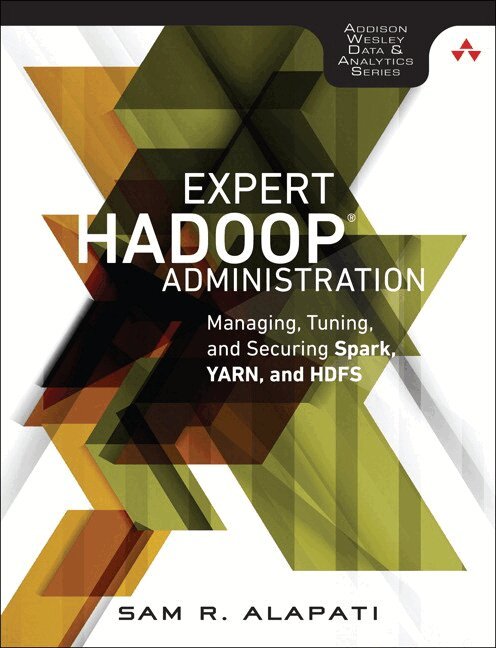
In Expert Hadoop® Administration, leading Hadoop administrator Sam R. Alapati brings together authoritative knowledge for creating, configuring, securing, managing, and optimizing production Hadoop clusters in any environment. Drawing on his experience with large-scale Hadoop administration, Alapati integrates action-oriented advice with carefully researched explanations of both problems and solutions. He covers an unmatched range of topics and offers an unparalleled collection of realistic examples.
Alapati demystifies complex Hadoop environments, helping you understand exactly what happens behind the scenes when you administer your cluster. You’ll gain unprecedented insight as you walk through building clusters from scratch and configuring high availability, performance, security, encryption, and other key attributes. The high-value administration skills you learn here will be indispensable no matter what Hadoop distribution you use or what Hadoop applications you run.
Understand Hadoop’s architecture from an administrator’s standpoint Create simple and fully distributed clusters Run MapReduce and Spark applications in a Hadoop cluster Manage and protect Hadoop data and high availability Work with HDFS commands, file permissions, and storage management Move data, and use YARN to allocate resources and schedule jobs Manage job workflows with Oozie and Hue Secure, monitor, log, and optimize Hadoop Benchmark and troubleshoot Hadoop468 kr
Skickas
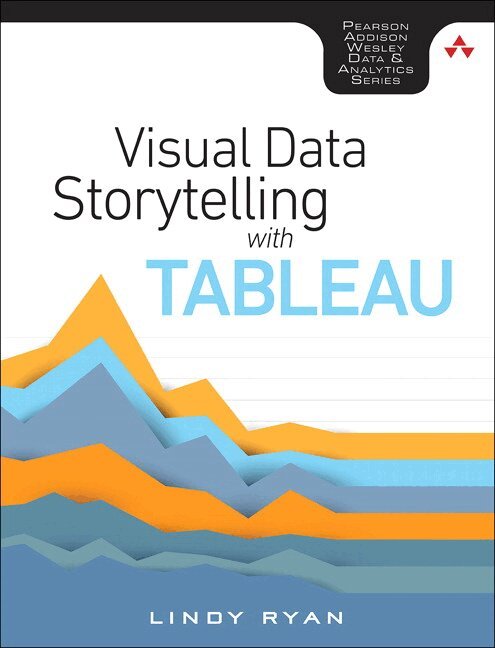
This is the first end-to-end, full-color guide to telling powerful, actionable data stories using Tableau, the world’s #1 visualization software. Renowned expert Lindy Ryan shows you how to communicate the full business implications of your data analyses by combining Tableau’s remarkable capabilities with a deep understanding of storytelling and design.
Each chapter illuminates key aspects of design practice and data visualization, and guides you step-by-step through applying them in Tableau. Ryan demonstrates how “data stories” resemble and differ from traditional storytelling, and helps you use Tableau to analyze, visualize, and communicate insights that are meaningful to any stakeholder, in any medium.
Information Visualization in Tableau presents exercises that give you hands-on practice with the most up-to-date capabilities available through Tableau 10 and the full Tableau software ecosystem. Ryan’s classroom-tested exercises won’t just help you master the software: they’ll show you to craft data stories that inspire action.
Coverage includes:
The visual data storytelling paradigm: moving beyond static charts to powerful visualizations that combine narrative with interactive graphics How to think like a data scientist, a storyteller, and a designer -- all in the same project Data storytelling case studies: the good, the bad, and the ugly Shaping data stories: blending data science, genre, and visual design Seven best practices for visual data storytelling -- and common pitfalls to avoid Tricks and hacks you can use with any toolset, not just Tableau348 kr
Skickas inom 7-10 vardagar
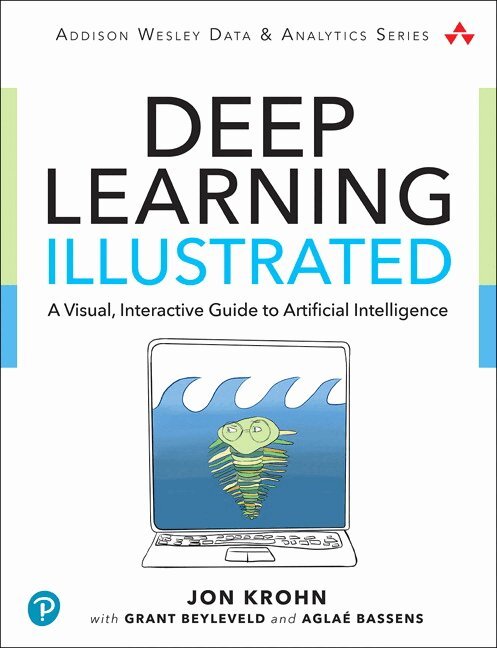
Deep Learning Illustrated
A Visual, Interactive Guide to Artificial Intelligence
402 kr
Skickas inom 7-10 vardagar
"The authors’ clear visual style provides a comprehensive look at what’s currently possible with artificial neural networks as well as a glimpse of the magic that’s to come."—Tim Urban, author of Wait But Why
Fully Practical, Insightful Guide to Modern Deep LearningDeep learning is transforming software, facilitating powerful new artificial intelligence capabilities, and driving unprecedented algorithm performance. Deep Learning Illustrated is uniquely intuitive and offers a complete introduction to the discipline’s techniques. Packed with full-color figures and easy-to-follow code, it sweeps away the complexity of building deep learning models, making the subject approachable and fun to learn.World-class instructor and practitioner Jon Krohn—with visionary content from Grant Beyleveld and beautiful illustrations by Aglaé Bassens—presents straightforward analogies to explain what deep learning is, why it has become so popular, and how it relates to other machine learning approaches. Krohn has created a practical reference and tutorial for developers, data scientists, researchers, analysts, and students who want to start applying it. He illuminates theory with hands-on Python code in accompanying Jupyter notebooks. To help you progress quickly, he focuses on the versatile deep learning library Keras to nimbly construct efficient TensorFlow models; PyTorch, the leading alternative library, is also covered.You’ll gain a pragmatic understanding of all major deep learning approaches and their uses in applications ranging from machine vision and natural language processing to image generation and game-playing algorithms.
Discover what makes deep learning systems unique, and the implications for practitioners Explore new tools that make deep learning models easier to build, use, and improve Master essential theory: artificial neurons, training, optimization, convolutional nets, recurrent nets, generative adversarial networks (GANs), deep reinforcement learning, and more Walk through building interactive deep learning applications, and move forward with your own artificial intelligence projects Register your book for convenient access to downloads, updates, and/or corrections as they become available. See inside book for details.Data Science Foundations Tools and Techniques
Core Skills for Quantitative Analysis with R and Git
339 kr
Skickas inom 7-10 vardagar
The Foundational Hands-On Skills You Need to Dive into Data Science
“Freeman and Ross have created the definitive resource for new and aspiring data scientists to learn foundational programming skills.”
–From the foreword by Jared Lander, series editor
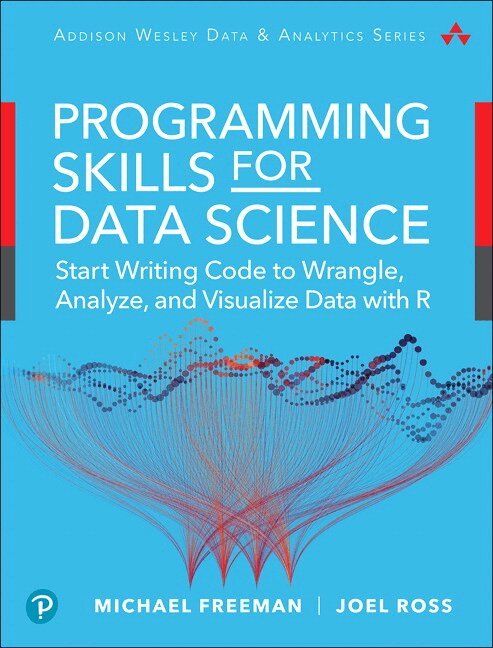
Using data science techniques, you can transform raw data into actionable insights for domains ranging from urban planning to precision medicine. Programming Skills for Data Science brings together all the foundational skills you need to get started, even if you have no programming or data science experience.
Leading instructors Michael Freeman and Joel Ross guide you through installing and configuring the tools you need to solve professional-level data science problems, including the widely used R language and Git version-control system. They explain how to wrangle your data into a form where it can be easily used, analyzed, and visualized so others can see the patterns you’ve uncovered. Step by step, you’ll master powerful R programming techniques and troubleshooting skills for probing data in new ways, and at larger scales.
Freeman and Ross teach through practical examples and exercises that can be combined into complete data science projects. Everything’s focused on real-world application, so you can quickly start analyzing your own data and getting answers you can act upon. Learn to
Install your complete data science environment, including R and RStudio Manage projects efficiently, from version tracking to documentation Host, manage, and collaborate on data science projects with GitHub Master R language fundamentals: syntax, programming concepts, and data structures Load, format, explore, and restructure data for successful analysis Interact with databases and web APIs Master key principles for visualizing data accurately and intuitively Produce engaging, interactive visualizations with ggplot and other R packages Transform analyses into sharable documents and sites with R Markdown Create interactive web data science applications with Shiny Collaborate smoothly as part of a data science teamRegister your book for convenient access to downloads, updates, and/or corrections as they become available. See inside book for details.
348 kr
Skickas inom 7-10 vardagar
366 kr
Kommande
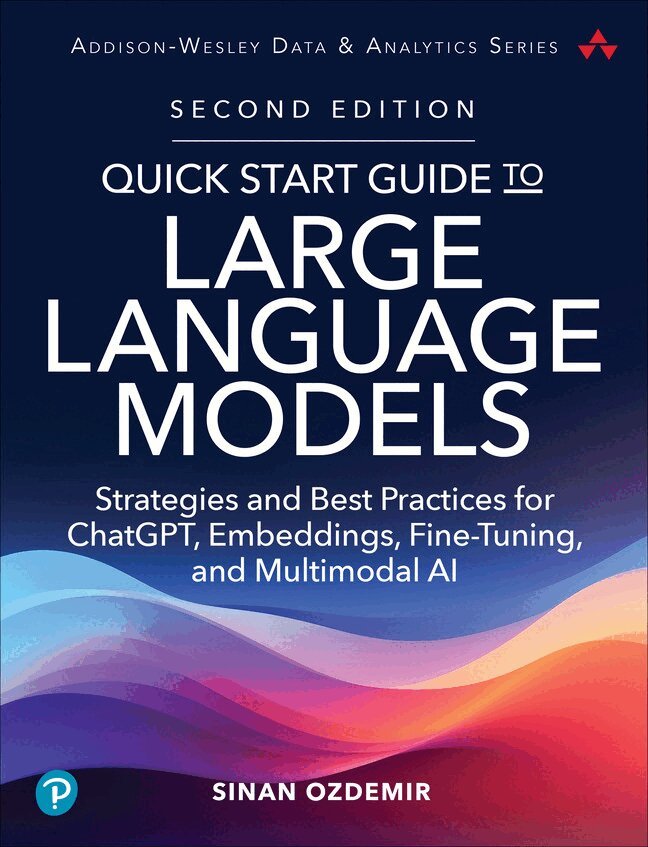
Quick Start Guide to Large Language Models
Strategies and Best Practices for ChatGPT, Embeddings, Fine-Tuning, and Multimodal AI
366 kr
Skickas inom 7-10 vardagar
The Practical, Step-by-Step Guide to Using LLMs at Scale in Projects and Products
Large Language Models (LLMs) like Llama 3, Claude 3, and the GPT family are demonstrating breathtaking capabilities, but their size and complexity have deterred many practitioners from applying them. In Quick Start Guide to Large Language Models, Second Edition, pioneering data scientist and AI entrepreneur Sinan Ozdemir clears away those obstacles and provides a guide to working with, integrating, and deploying LLMs to solve practical problems.
Ozdemir brings together all you need to get started, even if you have no direct experience with LLMs: step-by-step instructions, best practices, real-world case studies, and hands-on exercises. Along the way, he shares insights into LLMs' inner workings to help you optimize model choice, data formats, prompting, fine-tuning, performance, and much more. The resources on the companion website include sample datasets and up-to-date code for working with open- and closed-source LLMs such as those from OpenAI (GPT-4 and GPT-3.5), Google (BERT, T5, and Gemini), X (Grok), Anthropic (the Claude family), Cohere (the Command family), and Meta (BART and the LLaMA family).
Learn key concepts: pre-training, transfer learning, fine-tuning, attention, embeddings, tokenization, and more Use APIs and Python to fine-tune and customize LLMs for your requirements Build a complete neural/semantic information retrieval system and attach to conversational LLMs for building retrieval-augmented generation (RAG) chatbots and AI Agents Master advanced prompt engineering techniques like output structuring, chain-of-thought prompting, and semantic few-shot prompting Customize LLM embeddings to build a complete recommendation engine from scratch with user data that outperforms out-of-the-box embeddings from OpenAI Construct and fine-tune multimodal Transformer architectures from scratch using open-source LLMs and large visual datasets Align LLMs using Reinforcement Learning from Human and AI Feedback (RLHF/RLAIF) to build conversational agents from open models like Llama 3 and FLAN-T5 Deploy prompts and custom fine-tuned LLMs to the cloud with scalability and evaluation pipelines in mind Diagnose and optimize LLMs for speed, memory, and performance with quantization, probing, benchmarking, and evaluation frameworks"A refreshing and inspiring resource. Jam-packed with practical guidance and clear explanations that leave you smarter about this incredible new field."--Pete Huang, author of The Neuron
Register your book for convenient access to downloads, updates, and/or corrections as they become available. See inside book for details.
411 kr
Skickas inom 7-10 vardagar
348 kr
Kommande
348 kr
Skickas inom 7-10 vardagar
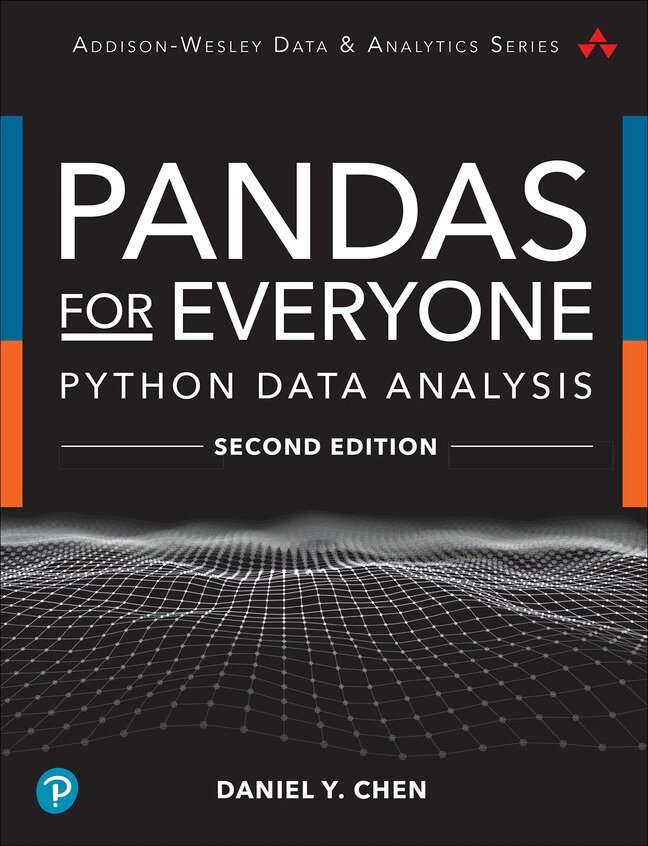
Manage and Automate Data Analysis with Pandas in Python
Today, analysts must manage data characterized by extraordinary variety, velocity, and volume. Using the open source Pandas library, you can use Python to rapidly automate and perform virtually any data analysis task, no matter how large or complex. Pandas can help you ensure the veracity of your data, visualize it for effective decision-making, and reliably reproduce analyses across multiple data sets.Pandas for Everyone, 2nd Edition, brings together practical knowledge and insight for solving real problems with Pandas, even if you’re new to Python data analysis. Daniel Y. Chen introduces key concepts through simple but practical examples, incrementally building on them to solve more difficult, real-world data science problems such as using regularization to prevent data overfitting, or when to use unsupervised machine learning methods to find the underlying structure in a data set.New features to the second edition include:
Extended coverage of plotting and the seaborn data visualization library Expanded examples and resources Updated Python 3.9 code and packages coverage, including statsmodels and scikit-learn libraries Online bonus material on geopandas, Dask, and creating interactive graphics with AltairChen gives you a jumpstart on using Pandas with a realistic data set and covers combining data sets, handling missing data, and structuring data sets for easier analysis and visualization. He demonstrates powerful data cleaning techniques, from basic string manipulation to applying functions simultaneously across dataframes.Once your data is ready, Chen guides you through fitting models for prediction, clustering, inference, and exploration. He provides tips on performance and scalability and introduces you to the wider Python data analysis ecosystem.
Work with DataFrames and Series, and import or export data Create plots with matplotlib, seaborn, and pandas Combine data sets and handle missing data Reshape, tidy, and clean data sets so they’re easier to work with Convert data types and manipulate text strings Apply functions to scale data manipulations Aggregate, transform, and filter large data sets with groupby Leverage Pandas’ advanced date and time capabilities Fit linear models using statsmodels and scikit-learn libraries Use generalized linear modeling to fit models with different response variables Compare multiple models to select the “best” one Regularize to overcome overfitting and improve performance Use clustering in unsupervised machine learning348 kr
Skickas inom 7-10 vardagar
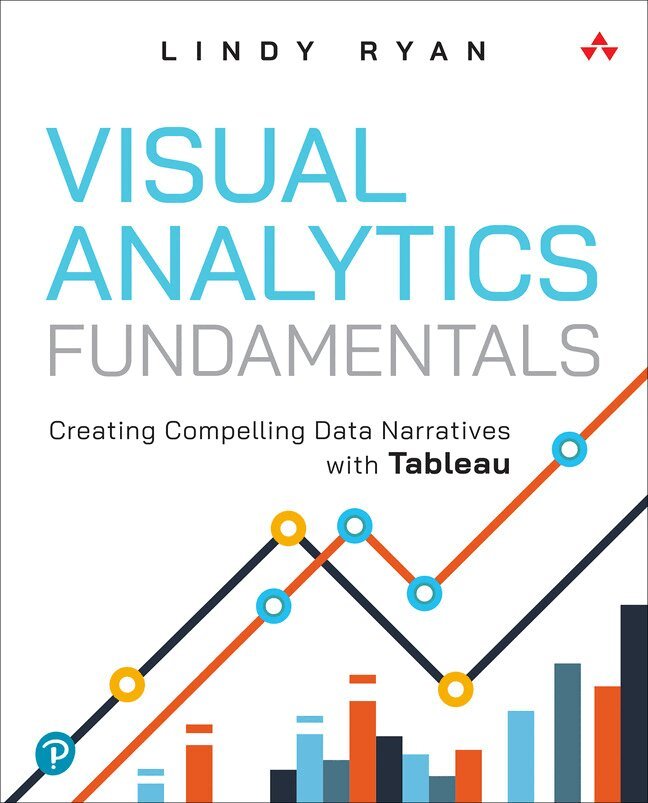
Master the Fundamentals of Modern Visual Analytics--and Craft Compelling Visual Narratives in Tableau!
Do you need to persuade or inform people? Do you have data? Then you need to master visual analytics and visual storytelling. Today, the #1 tool for telling visual stories with data is Tableau, and demand for Tableau skills is soaring. In Visual Analytics Fundamentals, renowned visual storyteller and analytics professor Lindy Ryan introduces all the fundamental visual analytics knowledge, cognitive and perceptual concepts, and hands-on Tableau techniques you'll need.
Ryan puts core analytics and visual concepts upfront, so you'll always know exactly what you're trying to accomplish and can apply this knowledge with any tool. Building on this foundation, she presents classroom-proven guided exercises for translating ideas into reality with Tableau 2022. You'll learn how to organize data and structure analysis with stories in mind, embrace exploration and visual discovery, and articulate your findings with rich data, well-curated visualizations, and skillfully crafted narrative frameworks. Ryan's insider tips take you far beyond the basics--and you'll rely on her expert checklists for years to come.
Communicate more powerfully by applying scientific knowledge of the human brain Get started with the Tableau platform and Tableau Desktop 2022 Connect data and quickly prepare it for analysis Ask questions that help you keep data firmly in context Choose the right charts, graphs, and maps for each project--and avoid the wrong ones Craft storyboards that reflect your message and audience Direct attention to what matters most Build data dashboards that guide people towards meaningful outcomes Master advanced visualizations, including timelines, Likert scales, and lollipop charts
This book has only one prerequisite: your desire to communicate insights from data in ways that are memorable and actionable. It's for executives and professionals sharing important results, students writing reports or presentations, teachers cultivating data literacy, journalists making sense of complex trends. . . . practically everyone! Don't even have Tableau? Download your free trial of Tableau Desktop and let's get started!
294 kr
Kommande
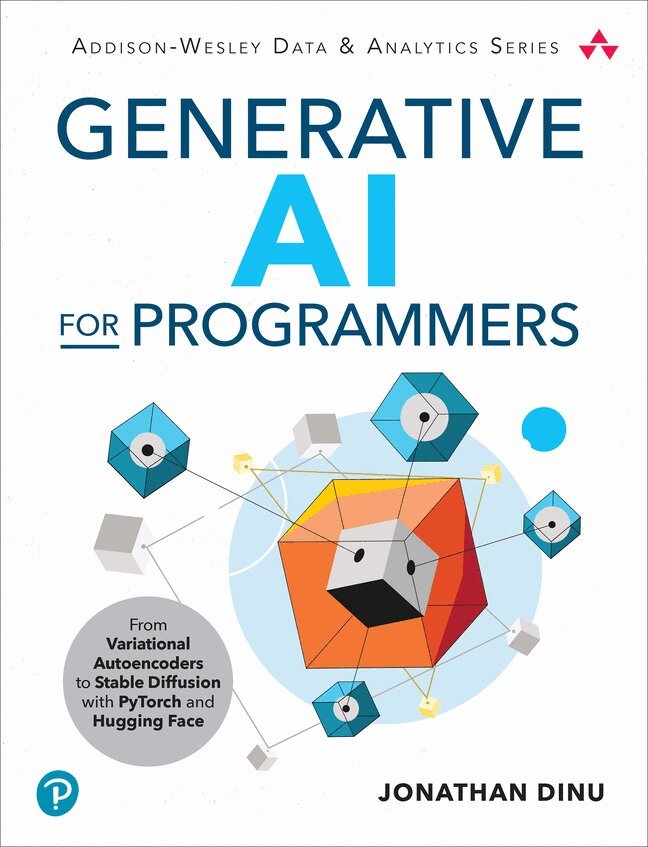
Programming Generative AI
Large Multimodal Models with PyTorch and Hugging Face
438 kr
Kommande
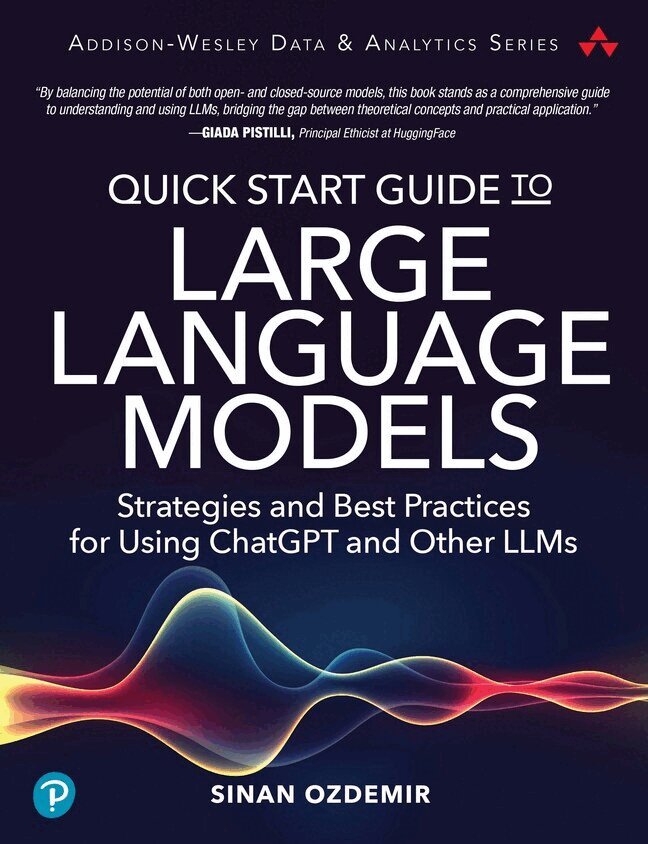
Quick Start Guide to Large Language Models
Strategies and Best Practices for Using ChatGPT and Other LLMs
348 kr
Skickas inom 7-10 vardagar
The Practical, Step-by-Step Guide to Using LLMs at Scale in Projects and Products
Large Language Models (LLMs) like ChatGPT are demonstrating breathtaking capabilities, but their size and complexity have deterred many practitioners from applying them. In Quick Start Guide to Large Language Models, pioneering data scientist and AI entrepreneur Sinan Ozdemir clears away those obstacles and provides a guide to working with, integrating, and deploying LLMs to solve practical problems.
Ozdemir brings together all you need to get started, even if you have no direct experience with LLMs: step-by-step instructions, best practices, real-world case studies, hands-on exercises, and more. Along the way, he shares insights into LLMs' inner workings to help you optimize model choice, data formats, parameters, and performance. You'll find even more resources on the companion website, including sample datasets and code for working with open- and closed-source LLMs such as those from OpenAI (GPT-4 and ChatGPT), Google (BERT, T5, and Bard), EleutherAI (GPT-J and GPT-Neo), Cohere (the Command family), and Meta (BART and the LLaMA family).
Learn key concepts: pre-training, transfer learning, fine-tuning, attention, embeddings, tokenization, and more Use APIs and Python to fine-tune and customize LLMs for your requirements Build a complete neural/semantic information retrieval system and attach to conversational LLMs for retrieval-augmented generation Master advanced prompt engineering techniques like output structuring, chain-ofthought, and semantic few-shot prompting Customize LLM embeddings to build a complete recommendation engine from scratch with user data Construct and fine-tune multimodal Transformer architectures using opensource LLMs Align LLMs using Reinforcement Learning from Human and AI Feedback (RLHF/RLAIF) Deploy prompts and custom fine-tuned LLMs to the cloud with scalability and evaluation pipelines in mind"By balancing the potential of both open- and closed-source models, Quick Start Guide to Large Language Models stands as a comprehensive guide to understanding and using LLMs, bridging the gap between theoretical concepts and practical application."--Giada Pistilli, Principal Ethicist at HuggingFace
"A refreshing and inspiring resource. Jam-packed with practical guidance and clear explanations that leave you smarter about this incredible new field."--Pete Huang, author of The Neuron
Register your book for convenient access to downloads, updates, and/or corrections as they become available. See inside book for details.