Advances in Systems Science and Engineering ASSE - Böcker
Visar alla böcker i serien Advances in Systems Science and Engineering ASSE. Handla med fri frakt och snabb leverans.
5 produkter
5 produkter
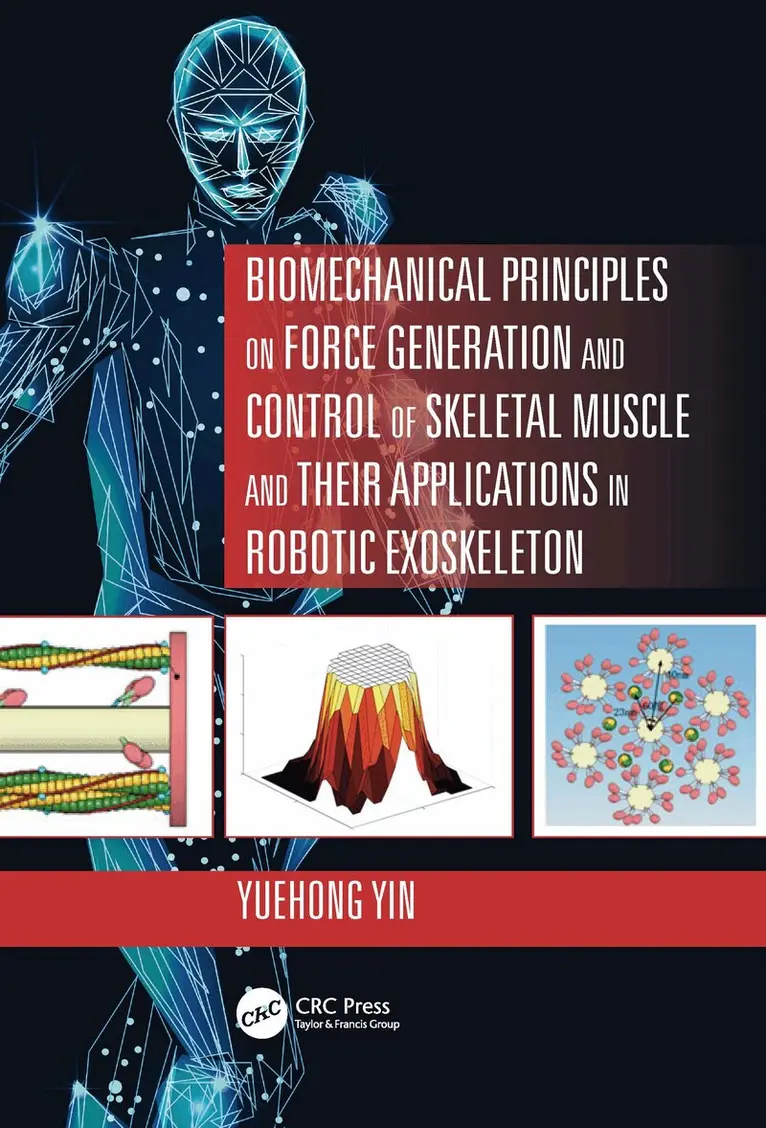
Biomechanical Principles on Force Generation and Control of Skeletal Muscle and their Applications in Robotic Exoskeleton
Inbunden, Engelska, 2019
2 027 kr
Skickas inom 10-15 vardagar
This book systematically introduces the bionic nature of force sensing and control, the biomechanical principle on mechanism of force generation and control of skeletal muscle, and related applications in robotic exoskeleton. The book focuses on three main aspects: muscle force generation principle and biomechanical model, exoskeleton robot technology based on skeletal muscle biomechanical model, and SMA-based bionic skeletal muscle technology. This comprehensive and in-depth book presents the author's research experience and achievements of many years to readers in an effort to promote academic exchanges in this field.About the AuthorYuehong Yin received his B.E. , M.S. and Ph.D. degrees from Nanjing University of Aeronautics and Astronautics, Nanjing, in 1990, 1995 and 1997, respectively, all in mechanical engineering. From December 1997 to December 1999, he was a Postdoctoral Fellow with Zhejiang University, Hangzhou, China, where he became an Associate Professor in July 1999. Since December 1999, he has been with the Robotics Institute, Shanghai Jiao Tong University, Shanghai, China, where he became a Professor and a Tenure Professor in December 2005 and January 2016, respectively. His research interests include robotics, force control, exoskeleton robot, molecular motor, artificial limb, robotic assembly, reconfigurable assembly system, and augmented reality. Dr. Yin is a fellow of the International Academy of Production Engineering (CIRP).
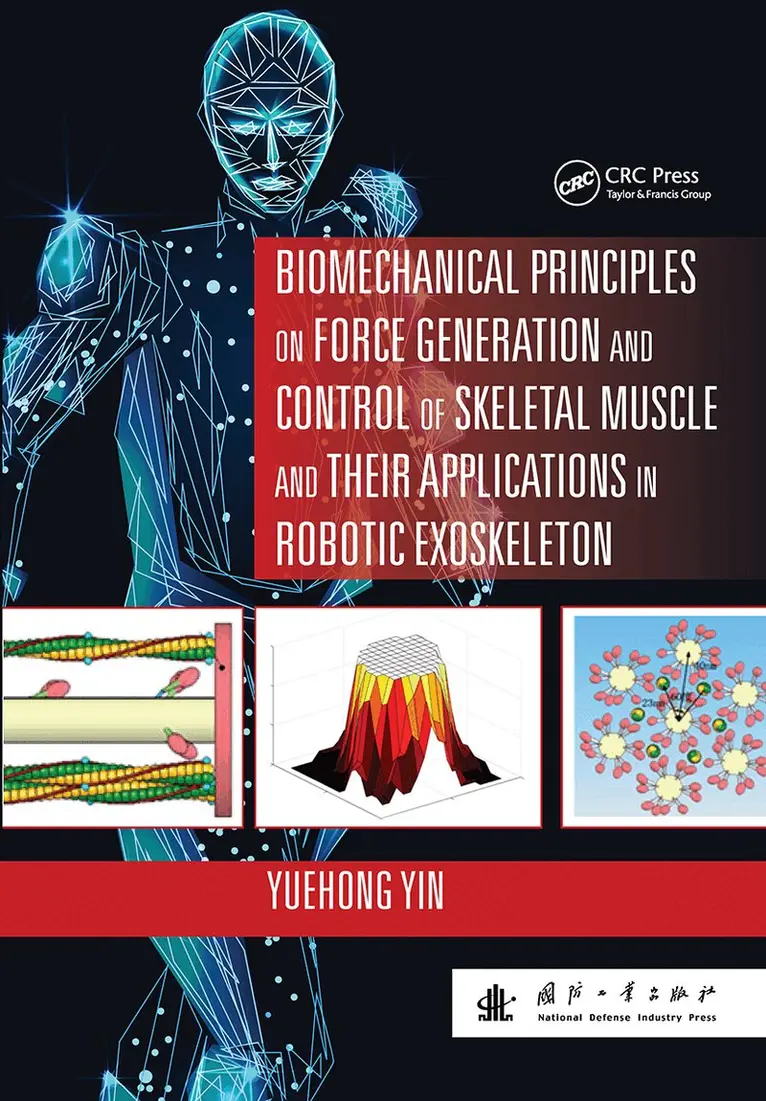
Biomechanical Principles on Force Generation and Control of Skeletal Muscle and their Applications in Robotic Exoskeleton
Häftad, Engelska, 2022
702 kr
Skickas inom 10-15 vardagar
This book systematically introduces the bionic nature of force sensing and control, the biomechanical principle on mechanism of force generation and control of skeletal muscle, and related applications in robotic exoskeleton. The book focuses on three main aspects: muscle force generation principle and biomechanical model, exoskeleton robot technology based on skeletal muscle biomechanical model, and SMA-based bionic skeletal muscle technology. This comprehensive and in-depth book presents the author's research experience and achievements of many years to readers in an effort to promote academic exchanges in this field.About the AuthorYuehong Yin received his B.E. , M.S. and Ph.D. degrees from Nanjing University of Aeronautics and Astronautics, Nanjing, in 1990, 1995 and 1997, respectively, all in mechanical engineering. From December 1997 to December 1999, he was a Postdoctoral Fellow with Zhejiang University, Hangzhou, China, where he became an Associate Professor in July 1999. Since December 1999, he has been with the Robotics Institute, Shanghai Jiao Tong University, Shanghai, China, where he became a Professor and a Tenure Professor in December 2005 and January 2016, respectively. His research interests include robotics, force control, exoskeleton robot, molecular motor, artificial limb, robotic assembly, reconfigurable assembly system, and augmented reality. Dr. Yin is a fellow of the International Academy of Production Engineering (CIRP).
722 kr
Skickas inom 10-15 vardagar
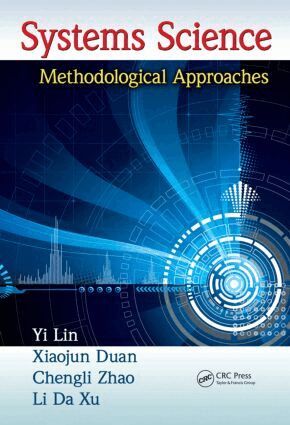
By making use of the principles of systems science, the scientific community can explain many complicated matters of the world and shed new light on unsettled problems. Each real science has its own particular methodology for not only qualitative but also quantitative analyses, so it is important to understand the organic whole of systems research with operable mathematical methods. Systems Science: Methodological Approaches presents a mathematical explanation of systems science, giving readers a complete technical formulation of different systemic laws. It enables them to use a unified methodology to attack different problems that are hard, if not impossible, for modern science to handle.Following a brief history of systems science, the book explores: Basic concepts, characteristics, properties, and classifications of general systemsNonlinear systems dynamics and the theory of catastropheDissipative structures and synergisticsStudies of chaos, including logistic mapping, phase space reconstruction, Lyapunov exponents, and chaos of general single relation systemsDifferent aspects and concepts of fractals, including a presentation of L systems analysis and designComplex systems and complexity, with a discussion of how the phenomena of "three" and complexity are related, and how various cellular automata can be constructed to generate useful simulations and figurative patternsComplex adaptive systems and open complex giant systems, with introduction of the yoyo model and practical applicationsComplex networks and related concepts and methods The book concludes with several case studies that demonstrate how various concepts and the logic of systems can be practically applied to resolve real-life problems, such as the prediction of natural disasters. The book will be useful in directing future research and applications of systems science on a commonly accepted platform and playground.
Enterprise Integration and Information Architecture
A Systems Perspective on Industrial Information Integration
Inbunden, Engelska, 2014
1 606 kr
Skickas inom 10-15 vardagar
Enterprise solutions have emerged as promising tools for integrating and extending business processes across business functions. Supplying a clear and comprehensive introduction to the field, this book provides a detailed description of enterprise information integration—from the development of enterprise systems to extended enterprise information integration in supply chain environments.Enterprise Integration and Information Architecture: A Systems Perspective on Industrial Information Integration explains how to improve industrial information integration through the application of a systems approach. Describing how systems science is impacting current research in industrial information integration, it covers enterprise architecture, information architecture for enterprises, business process/work flow modeling, and enterprise information integration. Covering the emergence, growth, and extension of integrated enterprise systems, the book provides you with various perspectives of modern enterprise solutions. It introduces the critical concepts of ERP, industry-oriented enterprise resource planning, and entire resource planning. It also provides guidance on how to transition from extended enterprise integration in a supply chain environment to systems-based enterprise architecture, enterprise modeling, and enterprise modeling in a supply chain environment.The book proposes a new information architecture for enterprise and supply chain management. It presents modeling and integration information flows for enterprise information integration, together with the Internet of Things (IoT). It also explores the theory and methods of industrial information integration including integration approaches and enterprise application integration.Complete with numerous examples of extended enterprise integration in actual supply chain environments, the book illustrates the critical issues that arise in professional practice and also explores emerging trends in enterprise integration and its information architecture
1 965 kr
Skickas inom 10-15 vardagar
By making use of the principles of systems science, the scientific community can explain many complicated matters of the world and shed new light on unsettled problems. Each real science has its own particular methodology for not only qualitative but also quantitative analyses, so it is important to understand the organic whole of systems research with operable mathematical methods. Systems Science: Methodological Approaches presents a mathematical explanation of systems science, giving readers a complete technical formulation of different systemic laws. It enables them to use a unified methodology to attack different problems that are hard, if not impossible, for modern science to handle.Following a brief history of systems science, the book explores: Basic concepts, characteristics, properties, and classifications of general systemsNonlinear systems dynamics and the theory of catastropheDissipative structures and synergisticsStudies of chaos, including logistic mapping, phase space reconstruction, Lyapunov exponents, and chaos of general single relation systemsDifferent aspects and concepts of fractals, including a presentation of L systems analysis and designComplex systems and complexity, with a discussion of how the phenomena of "three" and complexity are related, and how various cellular automata can be constructed to generate useful simulations and figurative patternsComplex adaptive systems and open complex giant systems, with introduction of the yoyo model and practical applicationsComplex networks and related concepts and methods The book concludes with several case studies that demonstrate how various concepts and the logic of systems can be practically applied to resolve real-life problems, such as the prediction of natural disasters. The book will be useful in directing future research and applications of systems science on a commonly accepted platform and playground.