AAR Religion, Culture, and History – serie
Visar alla böcker i serien AAR Religion, Culture, and History. Handla med fri frakt och snabb leverans.
20 produkter
20 produkter
Inbunden, Engelska, 2019
1 372 kr
Skickas inom 5-8 vardagar
How are religious educational institutions built? In histories of evangelical institution-building in the Victorian Indian colonial period (1858-1901), this question has mostly been addressed from the perspective of the religious ends that Christian missionaries sought to achieve and the ideological obstacles they encountered. This may be called the 'values' approach. Missionary Calculus sets this aside and examines, instead, the most routine transactions of missionaries in building an evangelical institution, the Sunday school. Missionaries daily struggled with and acted upon certain questions: How shall we acquire land and money to set up such schools? What methods shall we employ to attract students? What curriculum, books, and classroom materials shall we use? How shall we tune our hymns? Shall we employ non-Christians to teach in Christian Sunday schools? The makers of colonial Sunday schools focused obsessively on the means, the material and symbolic resources, with which they felt they could achieve certain immediate objectives. Such a transactional or 'instrumental' approach resulted in stated religious 'values' being insidiously compromised. Using insights from classical Weberian sociology, and through a close scrutiny of missionary means, this book shows how the success or failure of meeting evangelical ends may be assessed.With extensive archival research, chiefly on American missionaries in colonial India, this work examines the formation of Sunday schools at the point of transnational, intercultural contact. Readers interested in religion, education, and colonial history should find the matter, method, outcomes, and narration of Missionary Calculus new and thought-provoking.
Inbunden, Engelska, 2016
1 732 kr
Skickas inom 5-8 vardagar
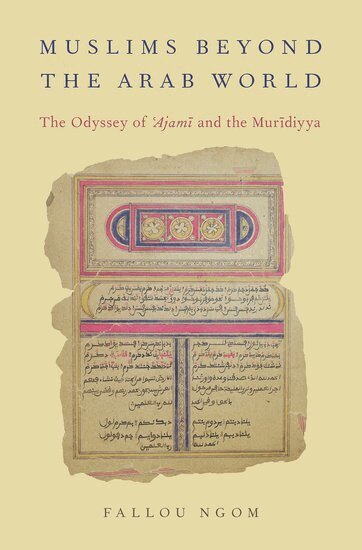
Muslims beyond the Arab World explores the tradition of writing African languages using the Arabic script 'Ajami and the rise of the Muridiyya order of Islamic Sufi in Senegal, founded by Shaykh Ahmadu Bamba Mbakke (1853-1927). The book demonstrates how the development of the 'Ajami literary tradition and the flourishing of the Muridiyya into one of sub-Saharan Africa's most powerful and dynamic Sufi organizations are entwined. It offers a close reading of the rich hagiographic and didactic written, recited, and chanted 'Ajami texts of the Muridiyya, works largely unknown to scholars. The texts describe the life and Sufi odyssey of the order's founder, his conflicts with local rulers and Muslim clerics and the French colonial administration, and the traditions and teachings he championed that shaped the identity and practices of his followers.In analyzing these Murid 'Ajami texts, Fallou Ngom evaluates prevailing representations of the movement and offers alternative perspectives. He demonstrates how, without the knowledge of the French colonial administration, the Murids were able to use their written, recited, and chanted 'Ajami materials as an effective means of mass communication to convey the personal journey of Shaykh Ahamadu Bamba, his doctrine, the virtues he stood for and cultivated among his followers: self-reliance, strong faith, the pursuit of excellence, nonviolence, and optimism in the face of adversity. This, according to Muslims beyond the Arab World, is the source of the surprising resilience, appeal, and expansion of Muridiyya.
Inbunden, Engelska, 2017
1 646 kr
Skickas inom 5-8 vardagar
The sway of Islam in political life is an unavoidable topic of debate in Turkey today. Secularists, Islamists, and liberals alike understand the Turkish state to be the primary arbiter of Islam's place in Turkey--as the coup attempt of July 2016 and its aftermath have dramatically illustrated. Yet this emphasis on the state ignores the influence of another field of political action in relation to Islam, that of civil society. Based on ethnographic research conducted in Istanbul and Ankara, Muslim Civil Society and the Politics of Religious Freedom in Turkey is Jeremy F. Walton's inquiry into the political and religious practices of contemporary Turkish-Muslim Nongovernmental Organizations. Since the mid-1980s, Turkey has witnessed an efflorescence of NGOs in tandem with a neoliberal turn in domestic economic policies and electoral politics. One major effect of this neoliberal turn has been the emergence of a vibrant Muslim civil society, which has decentered and transformed the Turkish state's relationship to Islam. Muslim NGOs champion religious freedom as a paramount political ideal and marshal a distinctive, nongovernmental politics of religious freedom to advocate this ideal. Walton's study offers an accomplished, fine-grained perspective on this nongovernmental politics of religious freedom and the institutions and communities from which it emerges.
Inbunden, Engelska, 2018
530 kr
Skickas inom 5-8 vardagar
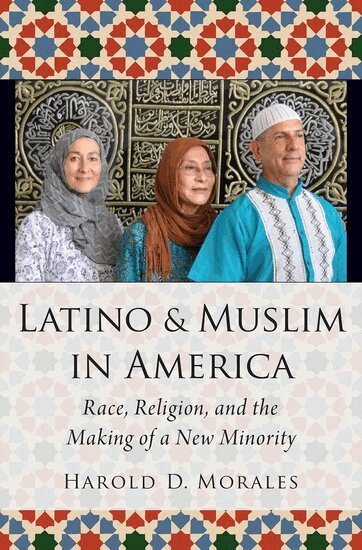
Latino and Muslim in America examines how so called "minority groups" are made, fragmented, and struggle for recognition in the U.S.A. The U.S. is currently poised to become the first nation whose collective minorities will outnumber the dominant population, and Latinos play no small role in this world changing demographic shift. Even as many people view Latinos and Muslims as growing threats, Latino Muslims celebrate their intersecting identities both in their daily lives and in their mediated representations online.In this book, Harold Morales follows the lives of several Latino Muslim leaders from the 1970's to the present, and their efforts to organize and unify nationally in order to solidify the new identity group's place within the public sphere. Based on four years of ethnography, media analysis and historical research, Morales demonstrates how the phenomenon of Latinos converting to Islam emerges from distinctive immigration patterns and laws, urban spaces, and new media technologies that have increasingly brought Latinos and Muslims in to contact with one another. He explains this growing community as part of the mass exodus out of the Catholic Church, the digitization of religion, and the growth of Islam. Latino and Muslim in America explores the racialization of religion, the framing of religious conversion experiences, the dissemination of post-colonial histories, and the development of Latino Muslim networks, to show that the categories of race, religion, and media are becoming inextricably entwined.
Inbunden, Engelska, 2020
1 290 kr
Skickas inom 5-8 vardagar
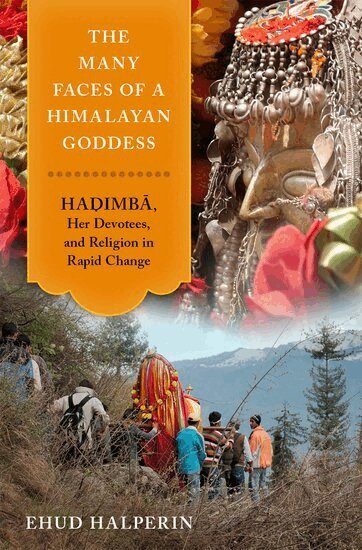
Hadimba is a primary village goddess in the Kullu Valley of the West Indian Himalayan state of Himachal Pradesh, a rural area known as the Land of Gods. As the book shows, Hadimba is a goddess whose vitality reveals itself in her devotees' rapidly changing encounters with local and far from local players, powers, and ideas. These include invading royal forces, colonial forms of knowledge, and more recently the onslaught of modernity, capitalism, tourism, and ecological change. Hadimba has provided her worshipers with discursive, ritual, and ideological arenas within which they reflect on, debate, give meaning to, and sometimes resist these changing realities, and she herself has been transformed in the process.Drawing on diverse ethnographic and textual materials gathered in the region from 2009 to 2017, The Many Faces of a Himalayan Goddess is rich with myths and tales, accounts of dramatic rituals and festivals, and descriptions of everyday life in the celebrated but remote Kullu Valley. The book employs an interdisciplinary approach to tell the story of Hadimba from the ground up, or rather, from the center out, portraying the goddess in varying contexts that radiate outward from her temple to local, regional, national, and indeed global spheres. The result is an important contribution to the study of Indian village goddesses, lived Hinduism, Himalayan Hinduism, and the rapidly growing field of religion and ecology.
Inbunden, Engelska, 2020
1 114 kr
Skickas inom 5-8 vardagar
Ecologies of Resonance in Christian Musicking^ Rexplores a diverse range of Christian musical activity through the conceptual lens of resonance, a concept rooted in the physical, vibrational, and sonic realm that carries with it an expansive ability to simultaneously describe personal, social, and spiritual realities. In this book, Mark Porter proposes that attention to patterns of back-and-forth interaction that exist in and alongside sonic activity can help to understand the dynamics of religious musicking in new ways and, at the same time, can provide a means for bringing diverse traditions into conversation. The book focuses on different questions arising out of human experience in the moment of worship. What happens if we take the entry point of a human being experiencing certain patterns of (more than) sonic interaction with the world around them as a focus for exploration? What different ecologies of interaction can be encountered? What kinds of patterns can be traced through different Christian worshiping environments? And how do these operate across multiple dimensions of experience? Chapters covering ascetic sounding, noisy congregations, and Internet live-streaming, among others, serve to highlight the diverse ecologies of resonance that surround Christian musicking, suggesting the potential to develop new perspectives on devotional musical activity that focus not primarily on compositions or theological ideals but on changing patterns of interaction across multiple dimensions between individuals, spaces, communities, and God.
Inbunden, Engelska, 2022
1 114 kr
Skickas inom 5-8 vardagar
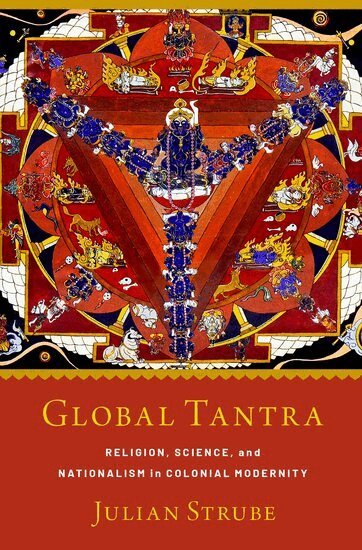
Tantra has formed an integral part of Asian religious history for centuries, but since "Arthur Avalon" introduced the concept to a global readership in the early twentieth century, Tantric traditions have exploded in popularity. While it was long believed that Sir John Woodroffe stood behind Avalon, it was in fact mainly a collaboration between learned South Asians. Julian Strube considers Tantra from the Indian perspective, offering rare insight into the active roles that Indians have played in its globalization and re-negotiation in local Indian contexts.In the early twentieth century, Avalon's publications were crucial to Tantra's visibility in academia and the recognition of Tantra's vital role in South Asian culture. South Asian religious, social, and political life is inexorably intertwined with various Tantric scriptures and traditions, especially in Shaiva and Shakta contexts. In Bengal, Tantra was central to cultural dynamics including Vaishnava and Muslim currents, as well as universalist tendencies incorporating Christianity and esoteric movements such as New Thought, Spiritualism, and Theosophy.Global Tantra contextualizes struggles about orthodoxy and reform in Bengal, and explores the global connections that shaped them. The study elides boundaries between academic disciplines as well as historical and regional contexts, providing insights into global debates about religion, science, esotericism, race, and national identity.
Inbunden, Engelska, 2023
769 kr
Skickas inom 5-8 vardagar
In World of Worldly Gods, Kelzang T. Tashi offers the first comprehensive examination of the tenacity of Shamanic Bon practices, as they are lived and contested in the presence of an invalidating force: Buddhism. Through a rich ethnography of Goleng and nearby villages in central Bhutan, Tashi investigates why people, despite shifting contexts, continue to practice and engage with Bon, a religious practice that has survived over a millennium of impatience from a dominant Buddhist ecclesiastical structure. Against the backdrop of long-standing debates around practices unsystematically identified as 'bon', this book reframes the often stale and scholastic debates by providing a clear and succinct statement on how these practices should be conceived in the region.Tashi argues that the reasons for the tenacity of Bon practices and beliefs amid censures by the Buddhist priests are manifold and complex. While a significant reason for the persistence of Bon is the recency of formal Buddhist institutions in Goleng, he demonstrates that Bon beliefs are so deeply embedded in village social life that some Buddhists paradoxically feel it necessary to reach some kind of accommodation with Bon priests. Through an analysis of the relationship between Shamanic Bon and Buddhism, and the contemporary dynamics of Bhutanese society, this book tackles the longstanding concern of anthropology: cultural persistence and change. It discusses the mutual accommodation and attempted amalgamation of Buddhism and Bon, and offers fresh perspectives on the central distinguishing features of Great and Little Traditions.
Inbunden, Engelska, 2024
1 135 kr
Skickas inom 5-8 vardagar
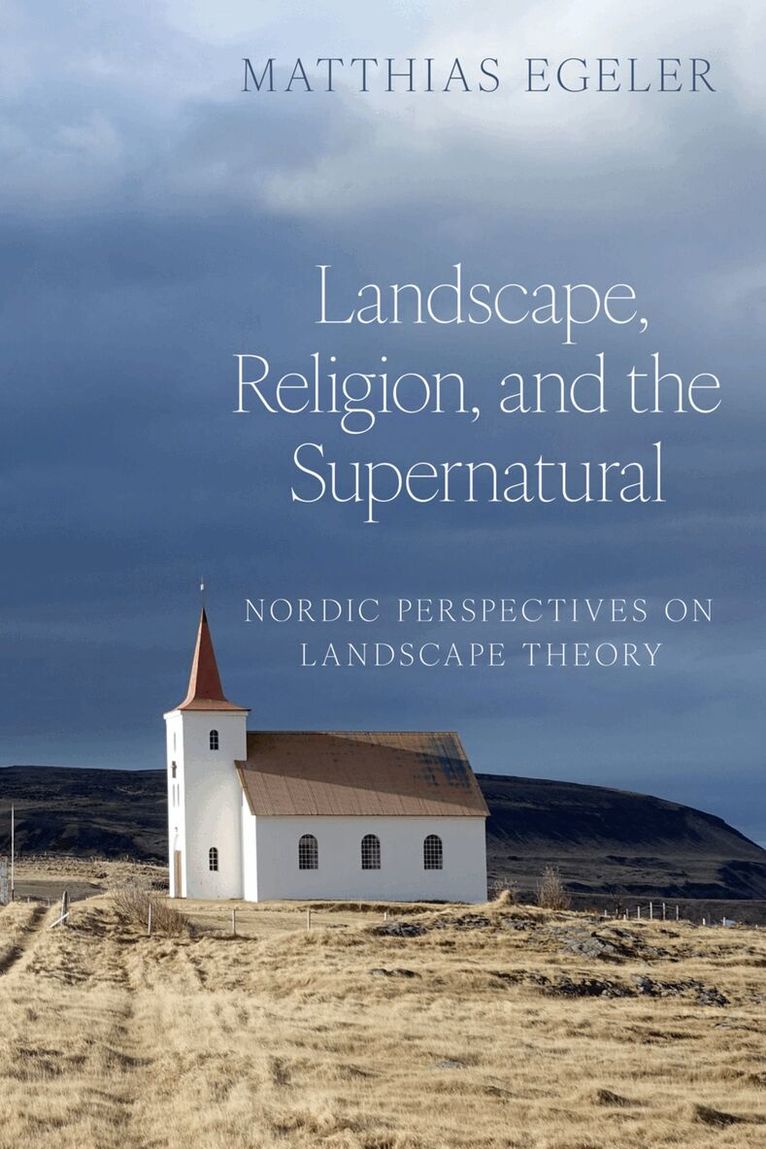
This is an open access title available under the terms of a CC BY-NC-ND 4.0 International licence. It is free to read on Oxford Academic and offered as a free PDF download from OUP and selected open access locations.All societies fill the geographical space in which they are living with the holy, the sacred, and the supernatural. A lively academic debate has developed in the last few decades about how human beings make the landscapes that they live in and how these landscapes work. This discussion has repeatedly referenced religion and the supernatural, but it has never engaged either in significant depth. Landscape, Religion, and the Supernatural: Nordic Perspectives on Landscape Theory presents a summa of current and classic theorizing on religion and the supernatural in relationship to the land and develops these theories further by bringing them into dialogue with a rich set of folkloristic and historical data.Focusing on many different themes, including time and memory, repeating patterns, identity formation, power and subversion, sound, home and unhomeliness, and nature and environment, author Matthias Egeler engages with a broad range of theoretical concepts and approaches from the interdisciplinary fields of landscape theory and the study of religions. He brings this theorizing into dialogue with the rich culture of local storytelling and landscape-related traditional beliefs of the Strandir district of the Icelandic Westfjords. In this rural region, landscape-related traditions have been documented since the early nineteenth century and continue to be important to this day. Confronting this vibrant heritage with the insights of landscape theory--both in and beyond the study of religions--allows important new contributions to both fields, especially through the inclusion of perspectives held by rural populations rather than the urban upper classes that have been the focus of research to date. The example of the Icelandic Westfjords shows the extreme richness of religious and supernatural approaches to the landscape that can be developed in rural communities and how they are significantly and characteristically different from the perspectives found in literature and the arts.
Inbunden, Engelska, 2026
916 kr
Kommande
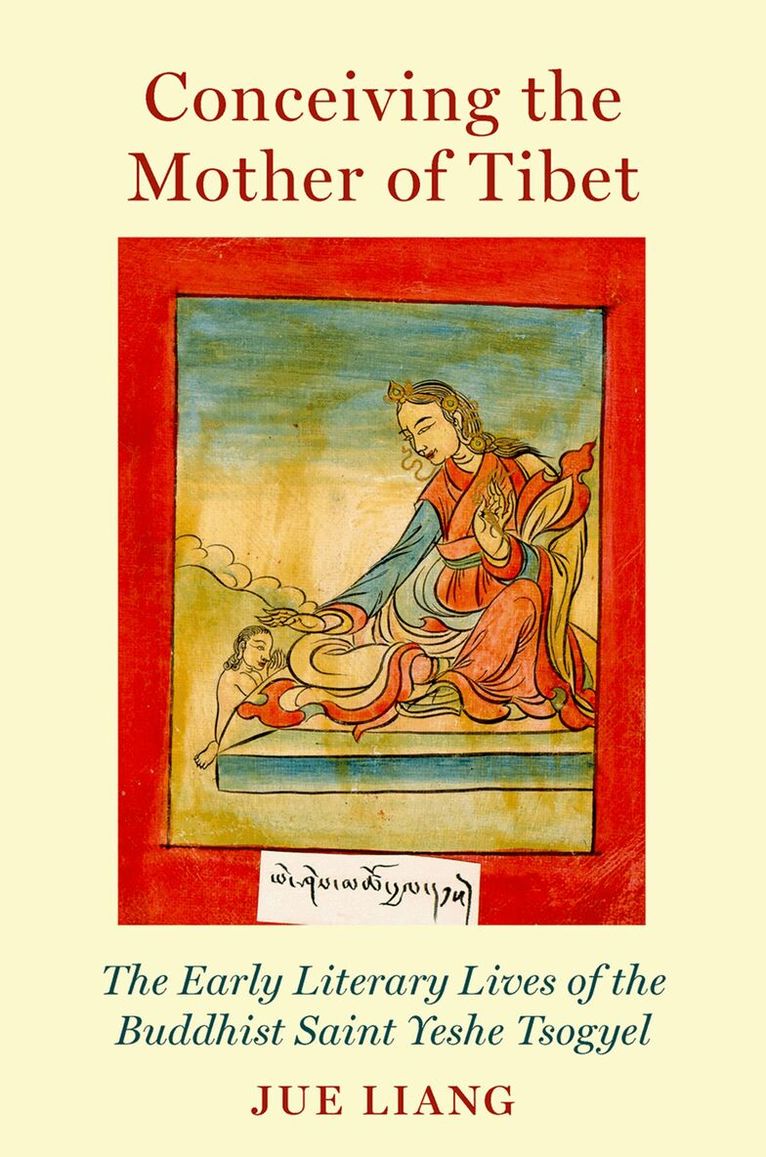
Conceiving the Mother of Tibet is the first comprehensive study dedicated to the literary tradition surrounding Yeshe Tsogyel, revered as the foremost matron saint of Tibetan Buddhism. It traces the emergence and development of a rich body of narratives about Yeshe Tsogyel during the fourteenth and fifteenth centuries, focusing on the Tibetan Nyingma Buddhist tradition. Through careful textual analysis, the book constructs an emic (insider) Tibetan Buddhist theory of gender and female religious eminence, examining how Yeshe Tsogyel's multifaceted identities--as a devoted disciple, tantric consort, sky-goer (dakini), and spiritual mother--embody a dialectic that shifts back and forth between Tibetan women's social and cultural marginalization and a Buddhist discourse of soteriological inclusivity.Jue Liang queries these texts for their social and religious functions, especially where ambivalence and contradictions abound. However, these ambivalences do not necessarily disadvantage women in Tibetan Buddhism. Operating with ambivalent, sometimes competing, discourses on womanhood, Nyingma Buddhist theorists in the fourteenth and fifteenth centuries created a space for a flexible treatment of gender, where they traverse between theological terms and embodied reality. Ultimately, Conceiving the Mother of Tibet not only illuminates the unique position of Yeshe Tsogyel within Tibetan Buddhist literature but also offers a methodological framework for understanding localized theories of gender. This approach highlights alternative ways of being and acting in the world as embodied agents, providing valuable insights for the broader field of Buddhist studies.
Inbunden, Engelska, 2026
916 kr
Skickas inom 5-8 vardagar
Given the theological significance of the state of Israel for many evangelicals worldwide, the existence of a population of Palestinian evangelicals seems counterintuitive at first. This small population shares with global evangelicals many common markers of evangelicalism, but due to their Palestinian identity, has a difficult relationship both to the Israeli state and to the powerful Christian Zionist populations in the United States and elsewhere.In an incisive ethnographic analysis of the encounter between Palestinian and Western evangelicals, Palestinian Evangelicals and Global Evangelicalism portrays what Christian Zionism looks like in practice, and what theological alternatives might be offered by Palestinian evangelicals intimately affected by this practice in their everyday lives. It argues that the complex processes of Palestinian evangelical positioning acutely highlight how the powers of evangelical orthodoxy interact with the economic, social, and political powers of the modern state, particularly as it controls and disciplines its populations in accordance with its desired national project. Palestinian evangelicals highlight critical fault lines of powerful geopolitical, national, and religious ideologies. While small in number, they offer a unique perspective to better understand the Israel-Palestine conflict. By developing a new conceptualization of global evangelicalism that recognises the unequal interactions between its constitutive parts, this book seeks to contribute to the emerging calls for the decolonization of the anthropology of global Christianity.
Inbunden, Engelska, 2026
916 kr
Kommande
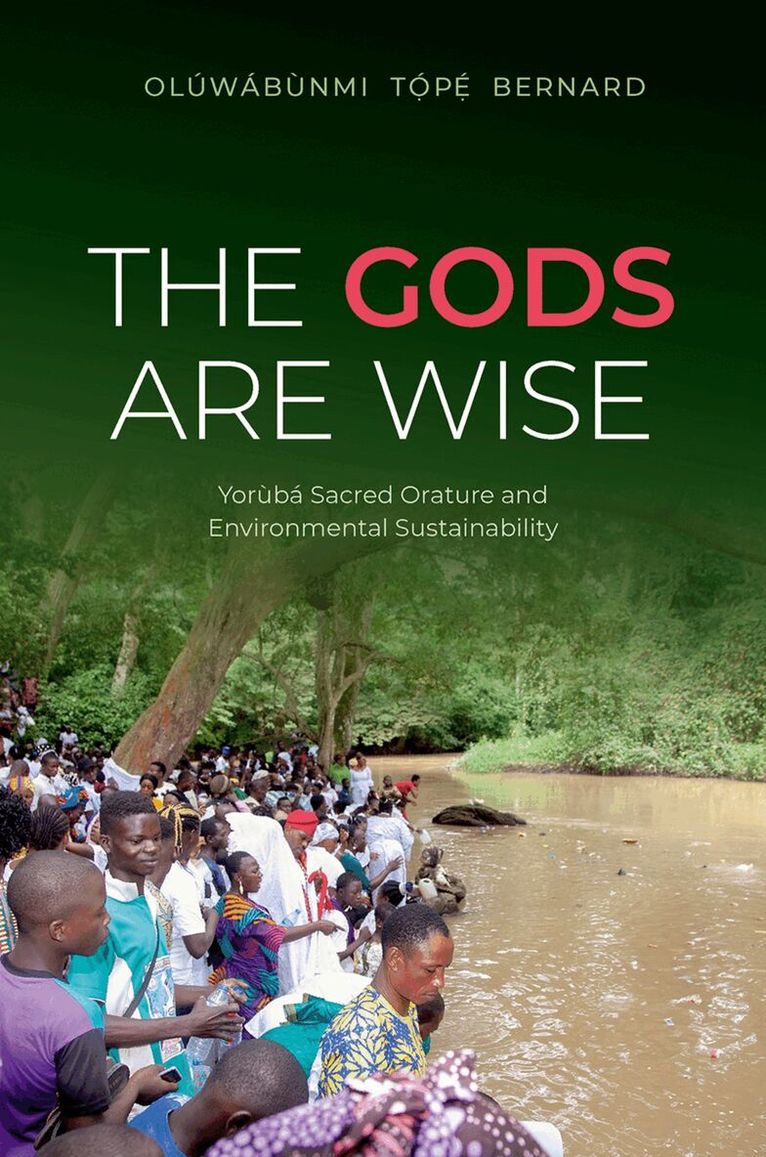
This book does not suggest the "ultimate solution" to global environmental problems or even imply that there is only one way of protecting the environment. Instead, Olúwábùnmi Tope Bernard presents a previously untapped exploration of the resources within the Yorùbá Òrìsà worship, sacred orature, ritual practices, and performances that promote environmental sustainability.Antifragility is a significant theme in this book. It refers to a system's capability to not only be resilient or able to withstand volatility, but also benefit from that which stresses it. Before a system becomes antifragile, it must have undergone attacks which would make it resilient. Bernard explores Yorùbá literature, worldview, philosophy, religion, and measures taken to preserve the environment and keep it antifragile. In doing so, The Gods Are Wise expresses an aspiration that these measures and practices may be adopted by other religions and societies looking to pursue environmental preservation.
Inbunden, Engelska, 2012
2 720 kr
Skickas inom 5-8 vardagar
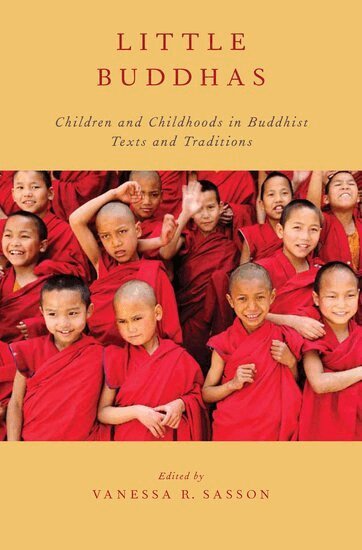
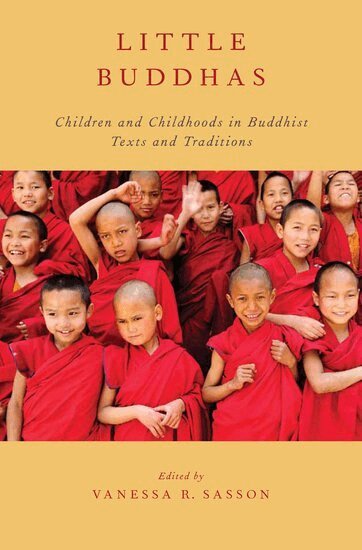
Consideration of children in the academic field of Religious Studies is taking root, but Buddhist Studies has yet to take notice. This collection is intended to open the question of children in Buddhism. It brings together a wide range of scholarship and expertise to address the question of what role children have played in the literature, in particular historical contexts, and what role they continue to play in specific Buddhist contexts today. Because the material is, in most cases, uncharted, all nineteen contributors involved in the project have exchanged chapters among themselves and thereby engaged in a kind of internal cohesion difficult to achieve in an edited project. The volume is divided into two parts. Part One addresses the representation of children in Buddhist texts and Part Two looks at children and childhoods in Buddhist cultures around the world. Little Buddhas will be an indispensable resource for students and scholars of Buddhism and Childhood Studies, and a catalyst for further research on the topic.
Inbunden, Engelska, 2013
1 921 kr
Skickas inom 5-8 vardagar
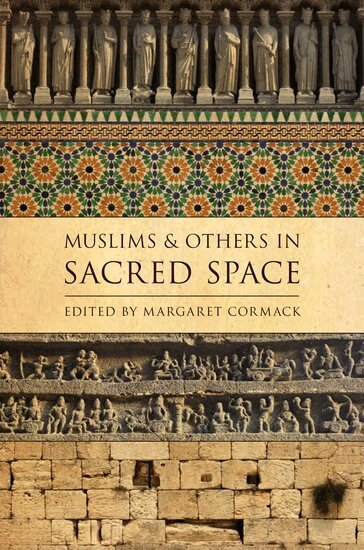
This collection of seven essays offers wide-ranging and in-depth studies of locations sacred to Muslims, of the histories of these sites (real or imagined), and of the ways in which Muslims and members of other religions have interacted peaceably in sacred times and spaces. The volume begins with a discussion by David Damrel of the official, hostile, Muslim attitude toward practices at shrines in South Asia. Lance Laird then presents a case study of a shrine holy to Palestinian Christians, who identify its patron as St. George, as well as to Palestinian Muslims, who believe that its patron is al Khadr. Ethel Sara Wolper illustrates how al Khadr's patronage was used also to show Muslim connections to Christian sites in Anatolia, and JoAnn Gross's essay explores oral and written traditions linking shrines in Tajikistan to traditional Muslim locations and figures. A chapter by the late Thomas Sizgorich examines how Christian and Muslim authors used monastic settings to reimagine the relationship between the two religions, and Alexandra Cuffel offers a study of attitudes towards the mixing of religious groups in religious festivals in eleventh- to sixteenth-century Egypt. Finally, Eric Ross shows how the Layenne Sufi order incorporates a singular combination of Christian and Muslim figures and festivals in its history and practices. Muslims and Others in Sacred Space will be an invaluable resource to anyone interested in the complex meanings of sacred sites in Muslim history.
Häftad, Engelska, 2013
511 kr
Skickas inom 5-8 vardagar
This collection of seven essays offers wide-ranging and in-depth studies of locations sacred to Muslims, of the histories of these sites (real or imagined), and of the ways in which Muslims and members of other religions have interacted peaceably in sacred times and spaces. The volume begins with a discussion by David Damrel of the official, hostile, Muslim attitude toward practices at shrines in South Asia. Lance Laird then presents a case study of a shrine holy to Palestinian Christians, who identify its patron as St. George, as well as to Palestinian Muslims, who believe that its patron is al Khadr. Ethel Sara Wolper illustrates how al Khadr's patronage was used also to show Muslim connections to Christian sites in Anatolia, and JoAnn Gross's essay explores oral and written traditions linking shrines in Tajikistan to traditional Muslim locations and figures. A chapter by the late Thomas Sizgorich examines how Christian and Muslim authors used monastic settings to reimagine the relationship between the two religions, and Alexandra Cuffel offers a study of attitudes towards the mixing of religious groups in religious festivals in eleventh- to sixteenth-century Egypt. Finally, Eric Ross shows how the Layenne Sufi order incorporates a singular combination of Christian and Muslim figures and festivals in its history and practices. Muslims and Others in Sacred Space will be an invaluable resource to anyone interested in the complex meanings of sacred sites in Muslim history.
Inbunden, Engelska, 2014
1 775 kr
Skickas inom 5-8 vardagar
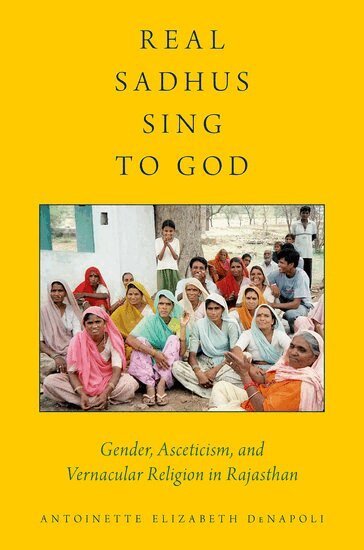
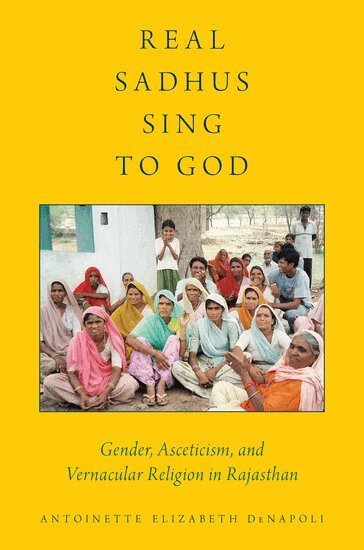
In this groundbreaking book, based on in-depth ethnographic research spanning ten years, Antoinette Elizabeth DeNapoli brings to light the little known, and often marginalized, lives of female Hindu ascetics (sadhus) in the North Indian state of Rajasthan. Her book offers a new perspective on the practice of asceticism in India today, exploring a phenomenon she terms vernacular asceticism. Examining the everyday religious worlds and practices of primarily "unlettered" female sadhus who come from a variety of castes, Real Sadhus Sing to God illustrates that the female sadhus whom DeNapoli knew experience asceticism in relational and celebratory ways and construct their lives as paths of singing to God. While the sadhus have combined ritual initiation with institutionalized and orthodox orders of asceticism, they also draw on the non-orthodox traditions of the medieval devotional poet-saints of North India to create a form of asceticism that synthesizes multiple and competing world views. DeNapoli suggests that in the vernacular asceticism of the sadhus, singing to God serves as the female way of being an ascetic. As women who have escaped the dominant societal expectations of marriage and housework, female sadhus are unusual because they devote themselves to a way of life traditionally reserved for men in Indian society. Female sadhus are simultaneously respected and distrusted for transgressing normative gender roles in order to dedicate themselves to a life of singing to the divine. Real Sadhus Sing to God is the first book-length study to explore the ways in which female sadhus perform and, thus, create gendered views of asceticism through their singing, storytelling, and sacred text practices, which DeNapoli characterizes as the sadhus' "rhetoric of renunciation." The book also examines the relationship between asceticism (sannyas) and devotion (bhakti) in contemporary contexts. It brings together two disparate fields of study in religious scholarship--yoga/asceticism and bhakti--through use of the orienting metaphor of singing bhajans (devotional songs) to understand vernacular asceticism in contemporary India.
Häftad, Engelska, 2014
488 kr
Skickas inom 5-8 vardagar
Drawing on ethnographic research spanning ten years, Antoinette Elizabeth DeNapoli offers a new perspective on the practice of asceticism in India today. Her work brings to light the little known and often marginalized lives of female Hindu ascetics (sadhus) in the North Indian state of Rajasthan. Examining the everyday religious worlds and practices of the mostly unlettered female sadhus, who come from a number of castes, Real Sadhus Sing to God illustrates that these women experience asceticism in relational and celebratory ways. They construct their lives as paths of singing to God, which, the author suggests, serves as the female way of being an ascetic. Examining the relationship between asceticism (sannyas) and devotion (bhakti) in contemporary contexts, the book brings together two disparate fields of studyyoga/asceticism and bhaktiusing the singing of bhajans (devotional songs) as an orienting metaphor. This is the first book-length study to explore the ways in which female sadhus perform and thus create gendered views of asceticism through their singing, storytelling, and sacred text practices, which DeNapoli characterizes as their "rhetoric of renunciation".
Häftad, Engelska, 2012
770 kr
Skickas inom 5-8 vardagar
Consideration of children in the academic field of Religious Studies is taking root, but Buddhist Studies has yet to take notice. This collection is intended to open the question of children in Buddhism. It brings together a wide range of scholarship and expertise to address the question of what role children have played in the literature, in particular historical contexts, and what role they continue to play in specific Buddhist contexts today. Because the material is, in most cases, uncharted, all nineteen contributors involved in the project have exchanged chapters among themselves and thereby engaged in a kind of internal cohesion difficult to achieve in an edited project. The volume is divided into two parts. Part One addresses the representation of children in Buddhist texts and Part Two looks at children and childhoods in Buddhist cultures around the world. Little Buddhas will be an indispensable resource for students and scholars of Buddhism and Childhood Studies, and a catalyst for further research on the topic.
Inbunden, Engelska, 2015
1 646 kr
Skickas inom 5-8 vardagar
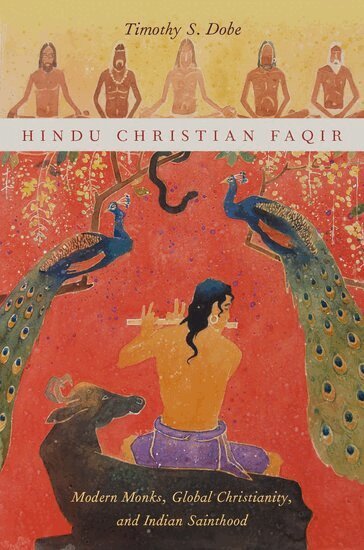
Hindu Christian Faqir compares two colonial Indian saints from Punjab, the neo-Vedantin Hindu Rama Tirtha (1873-1906) and the Christian convert Sundar Singh (1889-1929). Timothy S. Dobe shows that varied asceticisms, personal exemplary models, and material religion exuded their ambivalent and powerful public presence in Protestant metropolitan centers as much as in colonial peripheries. Challenging ideas of the invention of modern Hinduism, the transparent translation of Christianity, and the construction of saints by devotees, this book focuses on the long-standing, shared religious idioms on which these two men creatively drew to appeal to transnational audiences and to pursue religious perfection.Following both men's usage of Urdu, the book adopts the word "faqir" to examine the vernacular and performative dimensions of Indian holy man traditions, thereby calling special attention to missionary and Orientalist anti-ascetic accounts of the "fukeer" indigenous Islamic traditions and this-worldly religion. Exploring Rama Tirtha and Sundar Singh's global tours in Europe and America, self-conscious sartorial styles, and intimate autobiographical writings, Dobe demonstrates that the vernacular holy man traditions of Punjab provided resources that both men drew on to construct their forms of modern monkhood. The rise of heroic, anti-colonial sannyasis or sadhus of modern Hinduism like Swami Vivekananda is thus repositioned in relation to global Christianity, Sufi, bhakti, and Sikh regional practices, religious boundary-crossing, contestation and conversion. A comparative and contextualized story of two Punjabi holy men's particular performance of sainthood, Hindu Christian Faqir reveals much about the broad, interactional history of religious modernities.
Häftad, Engelska, 2015
625 kr
Skickas inom 5-8 vardagar
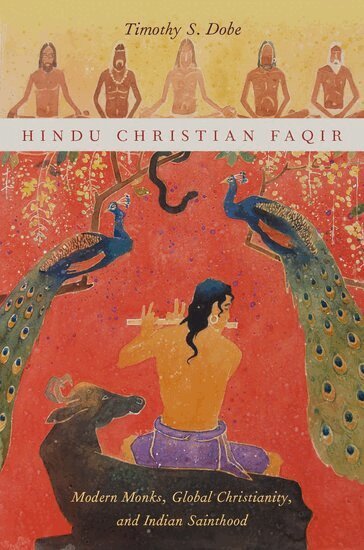
Hindu Christian Faqir compares two colonial Indian saints from Punjab, the neo-Vedantin Hindu Rama Tirtha (1873-1906) and the Christian convert Sundar Singh (1889-1929). Timothy S. Dobe shows that varied asceticisms, personal exemplary models, and material religion exuded their ambivalent and powerful public presence in Protestant metropolitan centers as much as in colonial peripheries. Challenging ideas of the invention of modern Hinduism, the transparent translation of Christianity, and the construction of saints by devotees, this book focuses on the long-standing, shared religious idioms on which these two men creatively drew to appeal to transnational audiences and to pursue religious perfection.Following both men's usage of Urdu, the book adopts the word "faqir" to examine the vernacular and performative dimensions of Indian holy man traditions, thereby calling special attention to missionary and Orientalist anti-ascetic accounts of the "fukeer" indigenous Islamic traditions and this-worldly religion. Exploring Rama Tirtha and Sundar Singh's global tours in Europe and America, self-conscious sartorial styles, and intimate autobiographical writings, Dobe demonstrates that the vernacular holy man traditions of Punjab provided resources that both men drew on to construct their forms of modern monkhood. The rise of heroic, anti-colonial sannyasis or sadhus of modern Hinduism like Swami Vivekananda is thus repositioned in relation to global Christianity, Sufi, bhakti, and Sikh regional practices, religious boundary-crossing, contestation and conversion. A comparative and contextualized story of two Punjabi holy men's particular performance of sainthood, Hindu Christian Faqir reveals much about the broad, interactional history of religious modernities.