Medicine, Science, and Religion in Historical Context – serie
Visar alla böcker i serien Medicine, Science, and Religion in Historical Context. Handla med fri frakt och snabb leverans.
16 produkter
16 produkter
Inbunden, Engelska, 2005
584 kr
Skickas inom 5-8 vardagar
This rich history chronicles the prominent role of Catholic women religious in establishing the hospitals at the core of New York City's extensive Catholic medical network. Beginning with the opening of St. Vincent's Hospital in 1849, Bernadette McCauley relates how determined and pragmatic women of faith worked over the next eighty years to place the Catholic Church in the mainstream of American medicine. Exploring the differences and similarities between Catholic hospitals and other hospitals, McCauley describes the particular cultural sensibility and management style that informed Catholic health care and gauges the ultimate success of Catholic efforts. Visionary sisters established, managed, and staffed the hospitals, and they sat on hospital boards and served as administrators at a time when women rarely occupied positions of leadership in business. McCauley illustrates how they at once embraced the world of God and the world of man, playing an unheralded role in the development of the modern hospital while serving the daily needs of New York's immigrant poor.Encompassing such issues as immigration, the education of nurses and doctors, hospital care and organization, and the role of women in the Catholic church, this extensive study is a valuable resource for scholars and students in the history of medicine, history of nursing, American religion, and women's history.
Inbunden, Engelska, 2008
464 kr
Skickas inom 5-8 vardagar
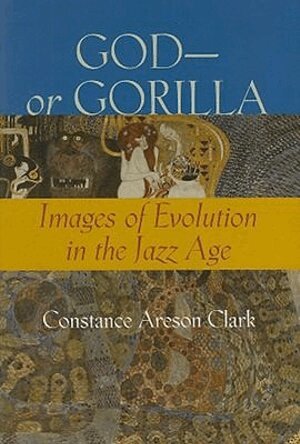
As scholars debate the most appropriate way to teach evolutionary theory, Constance Clark provides an intriguing reflection on similar debates in the not-too-distant past. Set against the backdrop of the Jazz Age, God-or Gorilla explores the efforts of biologists to explain evolution to a confused and conflicted public during the 1920s. Focusing on the use of images and popularization, Clark shows how scientists and anti-evolutionists deployed schematics, cartoons, photographs, sculptures, and paintings to win the battle for public acceptance. She uses representative illustrations and popular media accounts of the struggle to reveal how concepts of evolutionary theory changed as they were presented to, and absorbed into, popular culture. Engagingly written and deftly argued, God-or Gorilla offers original insights into the role of images in communicating-and miscommunicating-scientific ideas to the lay public.
Häftad, Engelska, 2011
381 kr
Skickas inom 5-8 vardagar
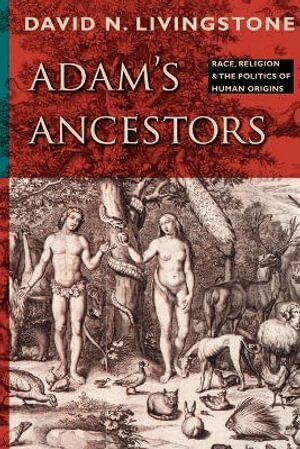
Although the idea that all human beings are descended from Adam is a long-standing conviction in the West, another version of this narrative exists: human beings inhabited the Earth before, or alongside, Adam, and their descendants still occupy the planet. In this engaging and provocative work, David N. Livingstone traces the history of the idea of non-adamic humanity, and the debates surrounding it, from the Middle Ages to the present day. From a multidisciplinary perspective, Livingstone examines how this alternative idea has been used for cultural, religious, and political purposes. He reveals how what began as biblical criticism became a theological apologetic to reconcile religion with science-evolution in particular-and was later used to support arguments for white supremacy and segregation. From heresy to orthodoxy, from radicalism to conservatism, from humanitarianism to racism, Adam's Ancestors tells an intriguing tale of twists and turns in the cultural politics surrounding the age-old question, "Where did we come from?"
Inbunden, Engelska, 2012
671 kr
Skickas inom 5-8 vardagar
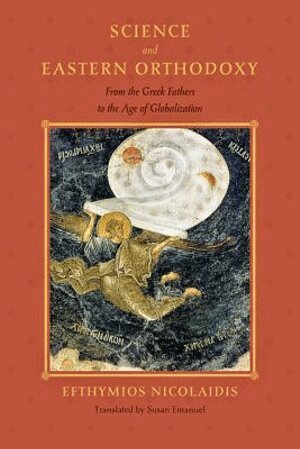
People have pondered conflicts between science and religion since at least the time of Christ. The millennia-long debate is well documented in the literature in the history and philosophy of science and religion in Western civilization. Science and Eastern Orthodoxy is a departure from that vast body of work, providing the first general overview of the relationship between science and Christian Orthodoxy, the official church of the Oriental Roman Empire. This pioneering study traces a rich history over an impressive span of time, from Saint Basil's Hexameron of the fourth century to the globalization of scientific debates in the twentieth century. Efthymios Nicolaidis argues that conflicts between science and Greek Orthodoxy-when they existed-were not science versus Christianity, but rather ecclesiastical debates that traversed the whole of society. Nicolaidis explains that during the Byzantine period, the Greek fathers of the church and their Byzantine followers wrestled passionately with how to reconcile their religious beliefs with the pagan science of their ancient ancestors. What, they repeatedly asked, should be the church's official attitude toward secular knowledge?From the rise of the Ottoman Empire in the fifteenth century to its dismantlement in the nineteenth century, the patriarchate of Constantinople attempted to control the scientific education of its Christian subjects, an effort complicated by the introduction of European science in the seventeenth and eighteenth centuries. Science and Eastern Orthodoxy provides a wealth of new information concerning Orthodoxy and secular knowledge-and the reactions of the Orthodox Church to modern sciences.
Häftad, Engelska, 2013
355 kr
Skickas inom 5-8 vardagar
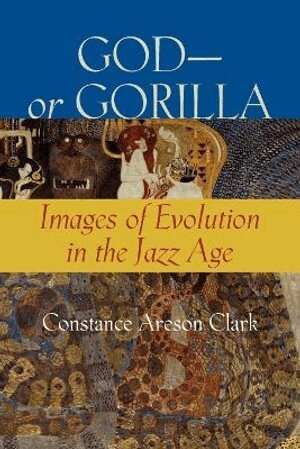
As scholars debate the most appropriate way to teach evolutionary theory, Constance Areson Clark provides an intriguing reflection on similar debates in the not-too-distant past. Set against the backdrop of the Jazz Age, God-or Gorilla explores the efforts of biologists to explain evolution to a confused and conflicted public during the 1920s. Focusing on the use of images and popularization, Clark shows how scientists and anti-evolutionists deployed schematics, cartoons, photographs, sculptures, and paintings to win the battle for public acceptance. She uses representative illustrations and popular media accounts of the struggle to reveal how concepts of evolutionary theory changed as they were presented to, and absorbed into, popular culture. Engagingly written and deftly argued, God-or Gorilla offers original insights into the role of images in communicating-and miscommunicating-scientific ideas to the lay public.
Inbunden, Engelska, 2014
475 kr
Skickas inom 5-8 vardagar
Using place, politics, and rhetoric as analytical tools, historical geographer David N. Livingstone investigates how religious communities sharing a Scots Presbyterian heritage engaged with Darwin and Darwinism at the turn of the twentieth century. His findings, presented as the prestigious Gifford Lectures, transform our understandings of the relationship between science and religion. The particulars of place-whether in Edinburgh, Belfast, Toronto, Princeton, or Columbia, South Carolina-shaped the response to Darwin's theories. Were they tolerated, repudiated, or welcomed? Livingstone shows how Darwin was read in different ways, with meaning distilled from Darwin's texts depending on readers' own histories-their literary genealogies and cultural preoccupations. That the theory of evolution fared differently in different places, Livingstone writes, is "exactly what Darwin might have predicted. As the theory diffused, it diverged."Dealing with Darwin shows the profound extent to which theological debates about evolution were rooted in such matters as anxieties over control of education, the politics of race relations, the nature of local scientific traditions, and challenges to traditional cultural identity. In some settings, conciliation with the new theory, even endorsement, was possible - demonstrating that attending to the specific nature of individual communities subverts an inclination to assume a single relationship between science and religion in general, evolution and Christianity in particular. Livingstone concludes with contemporary examples to remind us that what scientists can say and what others can hear in different venues differ today just as much as they did in the past.
Inbunden, Engelska, 2015
475 kr
Skickas inom 5-8 vardagar
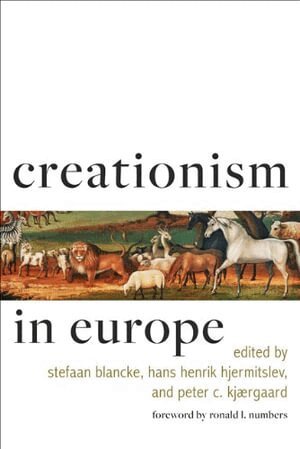
For decades, the creationist movement was primarily situated in the United States. Then, in the 1970s, American creationists found their ideas welcomed abroad, first in Australia and New Zealand, then in Korea, India, South Africa, Brazil, and elsewhere - including Europe, where creationism plays an expanding role in public debates about science policy and school curricula. In this, the first comprehensive history of creationism in Europe, leading historians, philosophers, and scientists narrate the rise of - and response to - scientific creationism, creation science, intelligent design, and organized antievolutionism in countries and religions throughout Europe. Providing a unique map of creationism in Europe, the authors chart the surprising history of creationist activities and strategies there. Over the past forty years, creationism has spread swiftly among European Catholics, Protestants, Jews, Hindus, and Muslims, even as anti-creationists sought to smother its flames.Antievolution messages gained such widespread approval, in fact, that in 2007 the Parliamentary Assembly of the Council of Europe passed a resolution advising member states to "defend and promote scientific knowledge" and "firmly oppose the teaching of creationism as a scientific discipline on an equal footing with the theory of evolution." Creationism in Europe offers a discerning introduction to the cultural history of modern Europe, the variety of worldviews in Europe, and the interplay of science and religion in a global context. It will be of interest to students and scholars in the history and philosophy of science, religious studies, and evolutionary theory, as well as policy makers and educators concerned about the spread of creationism in our time.
Inbunden, Engelska, 2016
341 kr
Skickas inom 5-8 vardagar
On May 28, 2007, the Creation Museum opened in Petersburg, Kentucky. Aimed at scientifically demonstrating that the universe was created less than ten thousand years ago by a Judeo-Christian god, the museum is hugely popular, attracting millions of visitors over the past eight years. Surrounded by themed topiary gardens and a petting zoo with camel rides, the site conjures up images of a religious Disneyland. Inside, visitors are met by dinosaurs at every turn and by a replica of the Garden of Eden that features the Tree of Life, the serpent, and Adam and Eve. In Righting America at the Creation Museum, Susan L. Trollinger and William Vance Trollinger, Jr., take readers on a fascinating tour of the museum. The Trollingers vividly describe and analyze its vast array of exhibits, placards, dioramas, and videos, from the Culture in Crisis Room, where videos depict sinful characters watching pornography or considering abortion, to the Natural Selection Room, where placards argue that natural selection doesn't lead to evolution. The book also traces the rise of creationism and the history of fundamentalism in America.This compelling book reveals that the Creation Museum is a remarkably complex phenomenon, at once a "natural history" museum at odds with contemporary science, an extended brief for the Bible as the literally true and errorless word of God, and a powerful and unflinching argument on behalf of the Christian right.
Inbunden, Engelska, 2020
638 kr
Skickas inom 5-8 vardagar
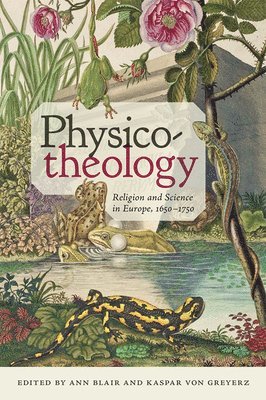
This first book-length study of physico-theology questions the widespread notion of a steadily advancing early modern separation of religion and science.Beginning around 1650, the emergence of a number of new scientific concepts, methods, and instruments challenged existing syntheses of science and religion. Physico-theology, which embraced the values of personal, empirical observation, was an international movement of the early Enlightenment that focused on the new science to make arguments about divine creation and providence. By reconciling the new science with Christianity across many denominations, physico-theology played a crucial role in diffusing new scientific ideas, assumptions, and interest in the study of nature to a broad public. In this book, sixteen leading scholars contribute a rich array of essays on the terms and scope of the movement, its scientific and religious arguments, and its aesthetic sensibilities.Contributors: Ann Blair, Simona Boscani Leoni, John Hedley Brooke, Nicolas Brucker, Katherine Calloway, Kathleen Crowther, Brendan Dooley, Peter Harrison, Barbara Hunfeld, Eric Jorink, Scott Mandelbrote, Brian W. Ogilvie, Martine Pécharman, Jonathan Sheehan, Anne-Charlott Trepp, Rienk Vermij, Kaspar von Greyerz
Inbunden, Engelska, 2020
638 kr
Skickas inom 5-8 vardagar
A path-breaking exploration of how space, place, and scale influenced the production and circulation of scientific knowledge in the nineteenth century.Over the past twenty years, scholars have increasingly questioned not just historical presumptions about the putative rise of modern science during the long nineteenth century but also the geographical contexts for and variability of science during the era. In Geographies of Knowledge, an internationally distinguished array of historians and geographers examine the spatialization of science in the period, tracing the ways in which scale and space are crucial to understanding the production, dissemination, and reception of scientific knowledge in the nineteenth century.Engaging with and extending the influential work of David Livingstone and others on science's spatial dimensions, the book touches on themes of empire, gender, religion, Darwinism, and much more. In exploring the practice of science across four continents, these essays illuminate the importance of geographical perspectives to the study of science and knowledge, and how these ideas made and contested locally could travel the globe.Dealing with everything from the local spaces of the Surrey countryside to the global negotiations that proposed a single prime meridian, from imperial knowledge creation and exploration in Burma, India, and Africa to studies of metropolitan scientific-cum-theological tussles in Belfast and in Confederate America, Geographies of Knowledge outlines an interdisciplinary agenda for the study of science as geographically situated sets of practices in the era of its modern disciplinary construction. More than that, it outlines new possibilities for all those interested in knowledge's spatial characteristics in other periods. Contributors: John A. Agnew, Vinita Damodaran, Diarmid A. Finnegan, Nuala C. Johnson, Dane Kennedy, Robert J. Mayhew, Mark Noll, Ronald L. Numbers, Nicolaas Rupke, Yvonne Sherratt, Charles W. J. Withers
Inbunden, Engelska, 2020
584 kr
Skickas inom 5-8 vardagar
The story of how prominent liberal intellectuals reshaped American religious and secular institutions to promote a more democratic, science-centered society.Winner of the Morris D. Forkosch Award for Best Book by the Center for InquiryRecent polls show that a quarter of Americans claim to have no religious affiliation, identifying instead as atheists, agnostics, or "nothing in particular." A century ago, a small group of American intellectuals who dubbed themselves humanists tread this same path, turning to science as a major source of spiritual sustenance. In The Scientific Spirit of American Humanism, Stephen P. Weldon tells the fascinating story of this group as it developed over the twentieth century, following the fortunes of a few generations of radical ministers, academic philosophers, and prominent scientists who sought to replace traditional religion with a modern, liberal, scientific outlook. Weldon explores humanism through the networks of friendships and institutional relationships that underlay it, from philosophers preaching in synagogues and ministers editing articles of Nobel laureates to magicians invoking the scientific method. Examining the development of an increasingly antagonistic engagement between religious conservatives and the secular culture of the academy, Weldon explains how this conflict has shaped the discussion of science and religion in American culture. He also uncovers a less known—but equally influential—story about the conflict within humanism itself between two very different visions of science: an aspirational, democratic outlook held by the followers of John Dewey on the one hand, and a skeptical, combative view influenced by logical positivism on the other. Putting America's distinctive science talk into historical perspective, Weldon shows how events such as the Pugwash movement for nuclear disarmament, the ongoing evolution controversies, the debunking of pseudo-science, and the selection of scientists and popularizers like Carl Sagan and Isaac Asimov as humanist figureheads all fit a distinctly American ethos. Weldon maintains that this secular ethos gained much of its influence by tapping into the idealism found in the American radical religious tradition that includes the deism of Thomas Paine, nineteenth-century rationalism and free thought, Protestant modernism, and most important, Unitarianism. Drawing on archival research, interviews, and a thorough study of the main humanist publications, The Scientific Spirit of American Humanism reveals a new level of detail about the personal and institutional forces that have shaped major trends in American secular culture. Significantly, the book shows why special attention to American liberal religiosity remains critical to a clear understanding of the scientific spirit in American culture.
Inbunden, Engelska, 2024
715 kr
Skickas inom 5-8 vardagar
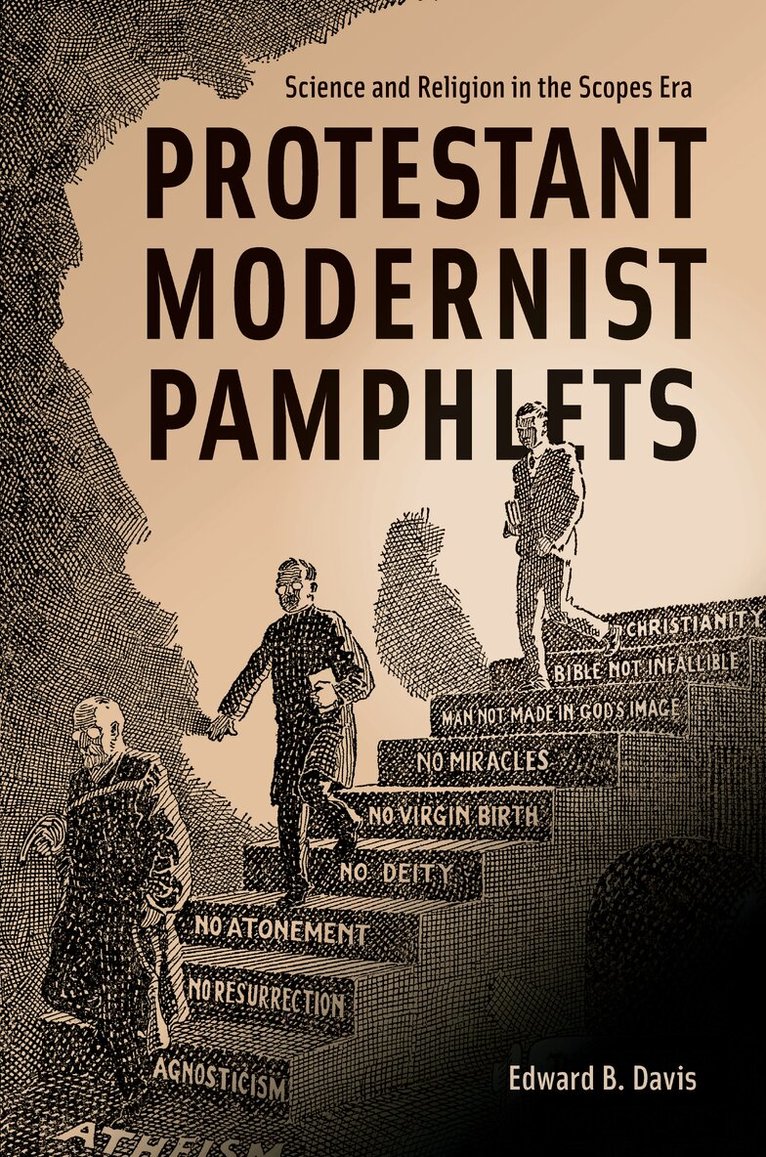
A critical edition of ten rare pamphlets on science and religion published from 1922–1931 by the University of Chicago Divinity School.In the years surrounding the Scopes trial in 1925, liberal Protestant scientists, theologians, and clergy sought to diminish opposition to evolution and to persuade American Christians to adopt more positive attitudes toward modern science. With funding from the Rockefeller Foundation and many leading scientists, the University of Chicago Divinity School published a series of ten pamphlets on science and religion to counter William Jennings Bryan's efforts to ban evolution in public schools. In Protestant Modernist Pamphlets, historian Edward B. Davis, who discovered these pamphlets, reprints them with extensive editorial comments, annotations, and introductions to each. Based on unpublished correspondence and internal Divinity School documents, these introductions narrate the origin of the pamphlets, as well as their funding sources and how readers reacted to them. Letters from dozens of top scientists at the time reveal their previously unknown views on God and the relationship between science and religion. Viewed together, the pamphlets and Davis's critical assessment of their historical importance provide an intriguing perspective on Protestant modernist encounters with science in the early twentieth century.
Inbunden, Engelska, 2003
489 kr
Tillfälligt slut
In Christian Science on Trial, historian Rennie B. Schoepflin shows how Christian Science healing became a viable alternative to medicine at the end of the nineteenth century. Christian Scientists did not simply evangelize for their religious beliefs; they engaged in a healing business that offered a therapeutic alternative to many patients for whom medicine had proven unsatisfactory. Tracing the evolution of Christian Science during the late nineteenth and early twentieth centuries, Christian Science on Trial illuminates the movement's struggle for existence against the efforts of organized American medicine to curtail its activities. Physicians exhibited an anxiety and tenacity to trivialize and control Christian Scientists which indicates a lack of confidence among the turn-of-the-century medical profession about who controlled American health care. The limited authority of the medical community becomes even clearer through Schoepflin's examination of the pitched battles fought by physicians and Christian Scientists in America's courtrooms and legislative halls over the legality of Christian Science healing.While the issues of medical licensing, the meaning of medical practice, and the supposed right of Americans to therapeutic choice dominated early debates, later confrontations saw the legal issues shift to matters of contagious disease, public safety, and children's rights. Throughout, Christian Scientists revealed their ambiguous status as medical practitioners and religious healers. The 1920s witnessed an unsteady truce between American medicine and Christian Science. The ambivalence of many Americans about the practice of religious healing persisted, however. In Christian Science on Trial we gain a helpful historical context for understanding late-twentieth-century public debates over children's rights, parental responsibility, and the authority of modern medicine.
Inbunden, Engelska, 2006
548 kr
Tillfälligt slut
Drawing on primary sources made available to scholars only after the archives of the Holy Office were unsealed in 1998, Negotiating Darwin chronicles how the Vatican reacted when six Catholics-five clerics and one layman-tried to integrate evolution and Christianity in the decades following the publication of Darwin's Origin of Species. As Mariano Artigas, Thomas F. Glick, and Rafael A. Martinez reconstruct these cases, we see who acted and why, how the events unfolded, and how decisions were put into practice. With the long shadow of Galileo's condemnation hanging over the Church as the Scientific Revolution ushered in new paradigms, the Church found it prudent to avoid publicly and directly condemning Darwinism and thus treated these cases carefully. The authors reveal the ideological and operational stance of the Vatican and describe its secret deliberations. In the process, they provide insight into current debates on evolution and religious belief.
Inbunden, Engelska, 2009
535 kr
Tillfälligt slut
This history of Protestant pastoral counseling in America examines the role of pastoral counselors in the construction and articulation of a liberal moral sensibility. Analyzing the relationship between religion and science in the twentieth century, Susan E. Myers-Shirk locates this sensibility in the counselors' intellectual engagement with the psychological sciences. Informed by the principles of psychology and psychoanalysis, pastoral counselors sought a middle ground between science and Christianity in advising anxious parishioners who sought their help for personal problems such as troubled children, violent spouses, and alcohol and drug abuse. Myers-Shirk finds that gender relations account in part for the great divide between the liberal and conservative moral sensibilities in pastoral counseling. She demonstrates that, as some pastoral counselors began to advocate women's equality, conservative Christian counselors emerged, denouncing more liberal pastoral counselors and secular psychologists for disregarding biblical teachings. From there, the two sides diverged dramatically.Helping the Good Shepherd will appeal to scholars of American religious history, the history of psychology, gender studies, and American history. For those practicing and teaching pastoral counseling, it offers historical insights into the field.
Inbunden, Engelska, 2014
267 kr
Tillfälligt slut
Scholars have struggled for decades to explain why Jews have succeeded extravagantly in modern science. A variety of controversial theories - from such intellects as C. P. Snow, Norbert Wiener, and Nathaniel Weyl - have been promoted. Snow hypothesized an evolved genetic predisposition to scientific success. Wiener suggested that the breeding habits of Jews sustained hereditary qualities conducive for learning. Economist and eugenicist Weyl attributed Jewish intellectual eminence to "seventeen centuries of breeding for scholars." Rejecting the idea that Jews have done well in science because of uniquely Jewish traits, Jewish brains, and Jewish habits of mind, historian of science Noah J. Efron approaches the Jewish affinity for science through the geographic and cultural circumstances of Jews who were compelled to settle in new worlds in the early twentieth century. Seeking relief from religious persecution, millions of Jews resettled in the United States, Palestine, and the Soviet Union, with large concentrations of settlers in New York, Tel Aviv, and Moscow.Science played a large role in the lives and livelihoods of these immigrants: it was a universal force that transcended the arbitrary Old World orders that had long ensured the exclusion of all but a few Jews from the seats of power, wealth, and public esteem. Although the three destinations were far apart geographically, the links among the communities were enduring and spirited. This shared experience-of facing the future in new worlds, both physical and conceptual - provided a generation of Jews with opportunities unlike any their parents and grandparents had known. The tumultuous recent century of Jewish history, which saw both a methodical campaign to blot out Europe's Jews and the inexorable absorption of Western Jews into the societies in which they now live, is illuminated by the place of honor science held in Jewish imaginations. Science was central to their dreams of creating new worlds-welcoming worlds - for a persecuted people. This provocative work will appeal to historians of science as well as scholars of religion, Jewish studies, and Zionism.