Microbial Biotechnology for Food, Health, and the Environment – Serie
Visar alla böcker i serien Microbial Biotechnology for Food, Health, and the Environment. Handla med fri frakt och snabb leverans.
10 produkter
10 produkter
1 705 kr
Skickas inom 10-15 vardagar
Considering the ever-increasing global population and finite arable land, technology and sustainable agricultural practices are required to improve crop yield. This book examines the interaction between plants and microbes and considers the use of advanced techniques such as genetic engineering, revolutionary gene editing technologies, and their applications to understand how plants and microbes help or harm each other at the molecular level. Understanding plant-microbe interactions and related gene editing technologies will provide new possibilities for sustainable agriculture. The book will be extremely useful for researchers working in the fields of plant science, molecular plant biology, plant-microbe interactions, plant engineering technology, agricultural microbiology, and related fields. It will be useful for upper-level students and instructors specifically in the field of biotechnology, microbiology, biochemistry, and agricultural science. Features: Examines the most advanced approaches for genetic engineering of agriculture (CRISPR, TALAN, ZFN, etc.). Discusses the microbiological control of various plant diseases. Explores future perspectives for research in microbiological plant science.Plant-Microbial Interactions and Smart Agricultural Biotechnology will serve as a useful source of cutting-edge information for researchers and innovative professionals, as well as upper-level undergraduate and graduate students taking related agriculture and environmental science courses.
673 kr
Skickas inom 10-15 vardagar
Considering the ever-increasing global population and finite arable land, technology and sustainable agricultural practices are required to improve crop yield. This book examines the interaction between plants and microbes and considers the use of advanced techniques such as genetic engineering, revolutionary gene editing technologies, and their applications to understand how plants and microbes help or harm each other at the molecular level. Understanding plant-microbe interactions and related gene editing technologies will provide new possibilities for sustainable agriculture. The book will be extremely useful for researchers working in the fields of plant science, molecular plant biology, plant-microbe interactions, plant engineering technology, agricultural microbiology, and related fields. It will be useful for upper-level students and instructors specifically in the field of biotechnology, microbiology, biochemistry, and agricultural science. Features: Examines the most advanced approaches for genetic engineering of agriculture (CRISPR, TALAN, ZFN, etc.). Discusses the microbiological control of various plant diseases. Explores future perspectives for research in microbiological plant science.Plant-Microbial Interactions and Smart Agricultural Biotechnology will serve as a useful source of cutting-edge information for researchers and innovative professionals, as well as upper-level undergraduate and graduate students taking related agriculture and environmental science courses.
1 773 kr
Skickas inom 10-15 vardagar
Microbial Products: Applications and Translational Trends offers complete coverage of the production of microbial products, including biopolymers, biofuels, bioactive compounds, and their applications in fields such as bioremediation, agriculture, medicine, and other industrial settings. This book focuses on multiple processes including upstream procedures and downstream processing, and the tools required for their production. Lab-scale development processes may not be as efficient when aiming for large-scale industrial production, so it is necessary to utilize in silico modeling tools for bioprocess design to ensure success at translational levels. Therefore, this book presents in silico and mathematical simulations and approaches used for such applications. Further, it examines microbial products produced from bacteria, fungi, and algae. These major microbial categories have the capacity to produce various, diverse secondary metabolites, bioactive compounds, enzymes, biopolymers, biofuels, probiotics, and more. The bioproducts examined in the book are of great social, medical, and agricultural benefit, and include examples of biodegradable polymers, biofuels, biofertilizers, and drug delivery agents. Presents approaches and tools that aid in the design of eco-friendly, efficient, and economic bioprocesses. Utilizes in silico and mathematical simulations for optimal bioprocess design. Examines approaches to be used for bioproducts from the lab scale to widely applied microbial biotechnologies. Presents the latest trends and technologies in the production approaches for microbial bio-products manufacture and application.This book is ideal for both researchers and academics, as it provides up-to-date knowledge of applied microbial biotechnology approaches for bio-products.
693 kr
Skickas inom 10-15 vardagar
Microbial Products: Applications and Translational Trends offers complete coverage of the production of microbial products, including biopolymers, biofuels, bioactive compounds, and their applications in fields such as bioremediation, agriculture, medicine, and other industrial settings. This book focuses on multiple processes including upstream procedures and downstream processing, and the tools required for their production. Lab-scale development processes may not be as efficient when aiming for large-scale industrial production, so it is necessary to utilize in silico modeling tools for bioprocess design to ensure success at translational levels. Therefore, this book presents in silico and mathematical simulations and approaches used for such applications. Further, it examines microbial products produced from bacteria, fungi, and algae. These major microbial categories have the capacity to produce various, diverse secondary metabolites, bioactive compounds, enzymes, biopolymers, biofuels, probiotics, and more. The bioproducts examined in the book are of great social, medical, and agricultural benefit, and include examples of biodegradable polymers, biofuels, biofertilizers, and drug delivery agents. Presents approaches and tools that aid in the design of eco-friendly, efficient, and economic bioprocesses. Utilizes in silico and mathematical simulations for optimal bioprocess design. Examines approaches to be used for bioproducts from the lab scale to widely applied microbial biotechnologies. Presents the latest trends and technologies in the production approaches for microbial bio-products manufacture and application.This book is ideal for both researchers and academics, as it provides up-to-date knowledge of applied microbial biotechnology approaches for bio-products.
1 841 kr
Skickas inom 10-15 vardagar
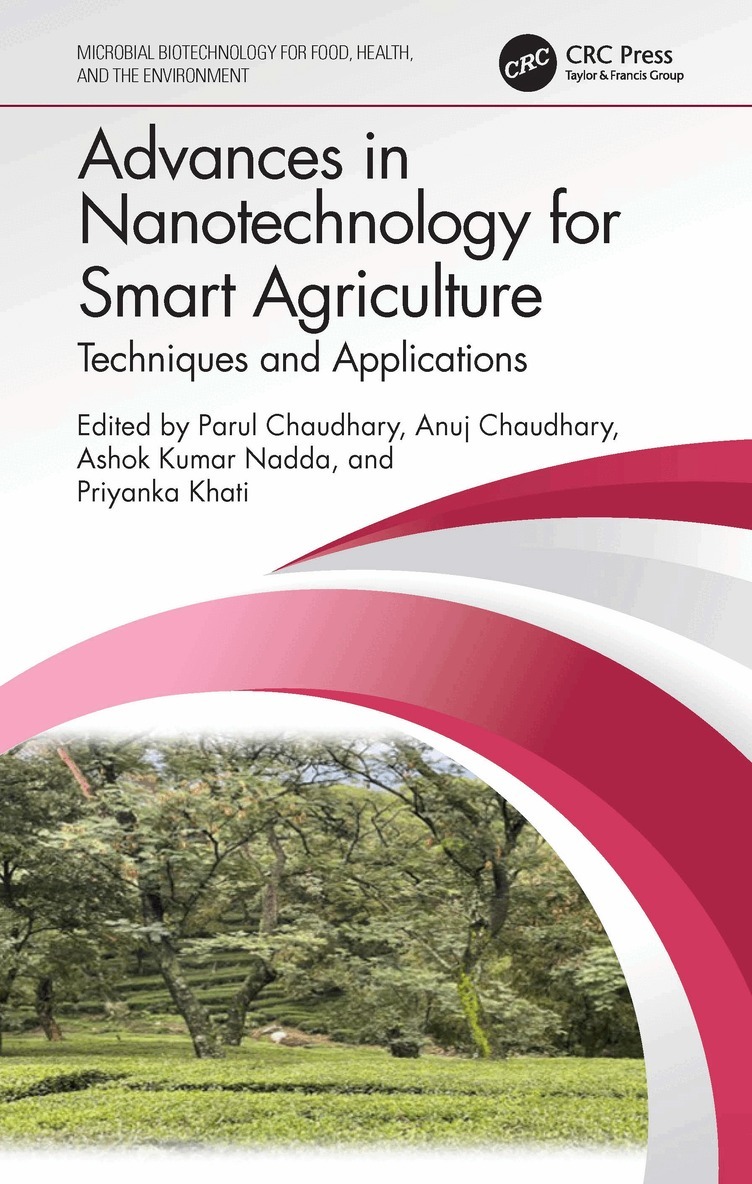
The yield of major agricultural crops can be severely decreased due to the inappropriate application of commonly used harmful chemicals. Excessive agrochemicals in field application can negatively affect microbial populations and their diversity, which in turn ultimately affects plant growth. Thus, it is necessary to turn toward more eco-friendly approaches which equally protect crops as well as the desirable microbial populations of complex soil systems. Nanoparticles are considered as potential agents for the production and development of sustainable agriculture. Green synthesis of nanoparticles has gained attention as a useful measure to diminish the harmful effects associated with the old methods of nanoparticle synthesis. Advances in Nanotechnology for Smart Agriculture: Techniques and Applications illustrates the science and practical applications of nanoparticles for sustainable agriculture.Features:Examines the role of nanotechnology in agricultural best practices, including sustainable development, precision farming, and long-term soil health
727 kr
Skickas inom 10-15 vardagar
The yield of major agricultural crops can be severely decreased due to the inappropriate application of commonly used harmful chemicals. Excessive agrochemicals in field application can negatively affect microbial populations and their diversity, which in turn ultimately affects plant growth. Thus, it is necessary to turn toward more eco-friendly approaches which equally protect crops as well as the desirable microbial populations of complex soil systems. Nanoparticles are considered as potential agents for the production and development of sustainable agriculture. Green synthesis of nanoparticles has gained attention as a useful measure to diminish the harmful effects associated with the old methods of nanoparticle synthesis. Advances in Nanotechnology for Smart Agriculture: Techniques and Applications illustrates the science and practical applications of nanoparticles for sustainable agriculture.Features:Examines the role of nanotechnology in agricultural best practices, including sustainable development, precision farming, and long-term soil health
1 434 kr
Skickas inom 10-15 vardagar
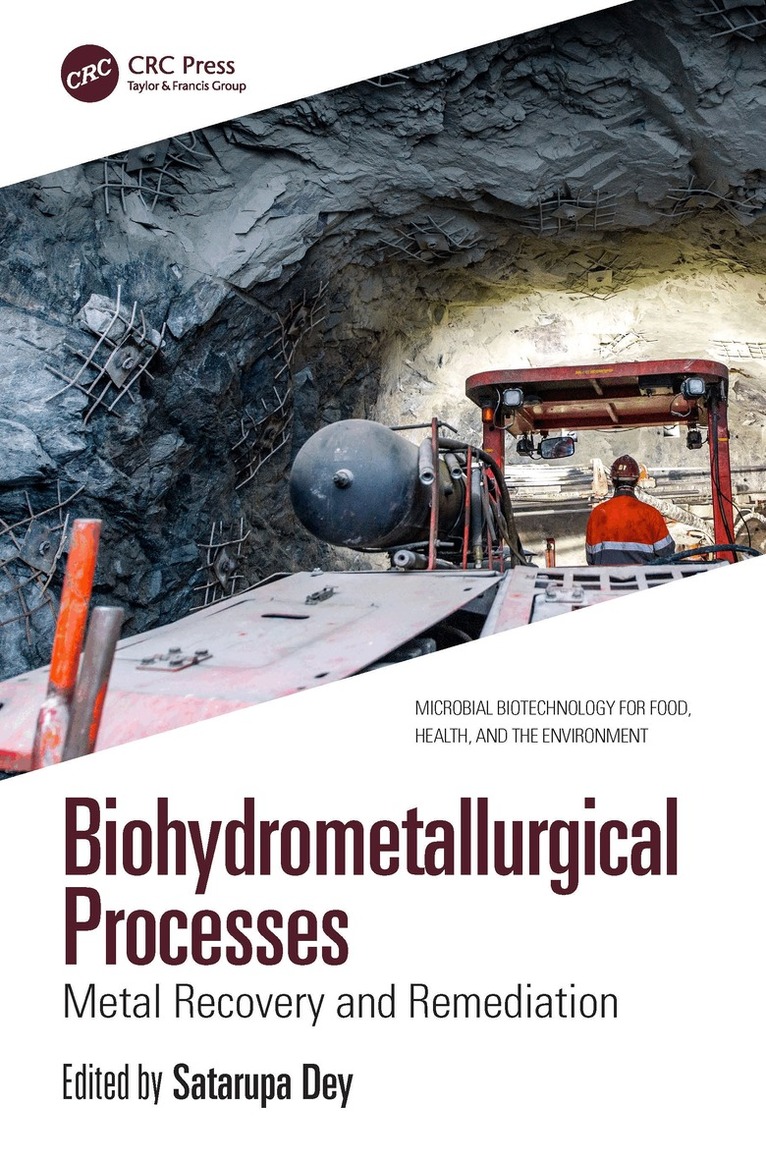
Extensive industrialization has led to an increased release of toxic metals into the soil and air. Industrial waste can include mine overburden, bauxite residue, and E waste, and these can serve as a source of valuable recoverable metals. There are relatively simple methods to recycle these wastes, but they require additional chemicals, are expensive, and generate secondary waste that causes environmental pollution. Biohydrometallurgical processing is a cost-effective and ecofriendly alternative where biological processes help conserve dwindling ore resources and extract metals in a nonpolluting way. Microbes can be used in metal extraction from primary ores, waste minerals, and industrial and mining wastes. Biohydrometallurgical Processes: Metal Recovery and Remediation serves as a useful guide for microbiologists, biotechnologists, and various industrialists dealing with mining, metallurgy, chemical engineering, and environmental sciences.Features:Examines advances in biohydrometallurgy, biomineralization, and bioleaching techniquesDiscusses the importance of bacteria in biohydrometallurgical processes and microbial interventions for waste cleanup and upgradation of mineralsPresents the latest techniques for biosynthesis related to different metals, along with recent developments in alternative procedures using extremophiles and leaching bacteria
727 kr
Skickas inom 10-15 vardagar
Extensive industrialization has led to an increased release of toxic metals into the soil and air. Industrial waste can include mine overburden, bauxite residue, and E waste, and these can serve as a source of valuable recoverable metals. There are relatively simple methods to recycle these wastes, but they require additional chemicals, are expensive, and generate secondary waste that causes environmental pollution. Biohydrometallurgical processing is a cost-effective and ecofriendly alternative where biological processes help conserve dwindling ore resources and extract metals in a nonpolluting way. Microbes can be used in metal extraction from primary ores, waste minerals, and industrial and mining wastes. Biohydrometallurgical Processes: Metal Recovery and Remediation serves as a useful guide for microbiologists, biotechnologists, and various industrialists dealing with mining, metallurgy, chemical engineering, and environmental sciences.Features:Examines advances in biohydrometallurgy, biomineralization, and bioleaching techniquesDiscusses the importance of bacteria in biohydrometallurgical processes and microbial interventions for waste cleanup and upgradation of mineralsPresents the latest techniques for biosynthesis related to different metals, along with recent developments in alternative procedures using extremophiles and leaching bacteria
1 569 kr
Skickas inom 10-15 vardagar
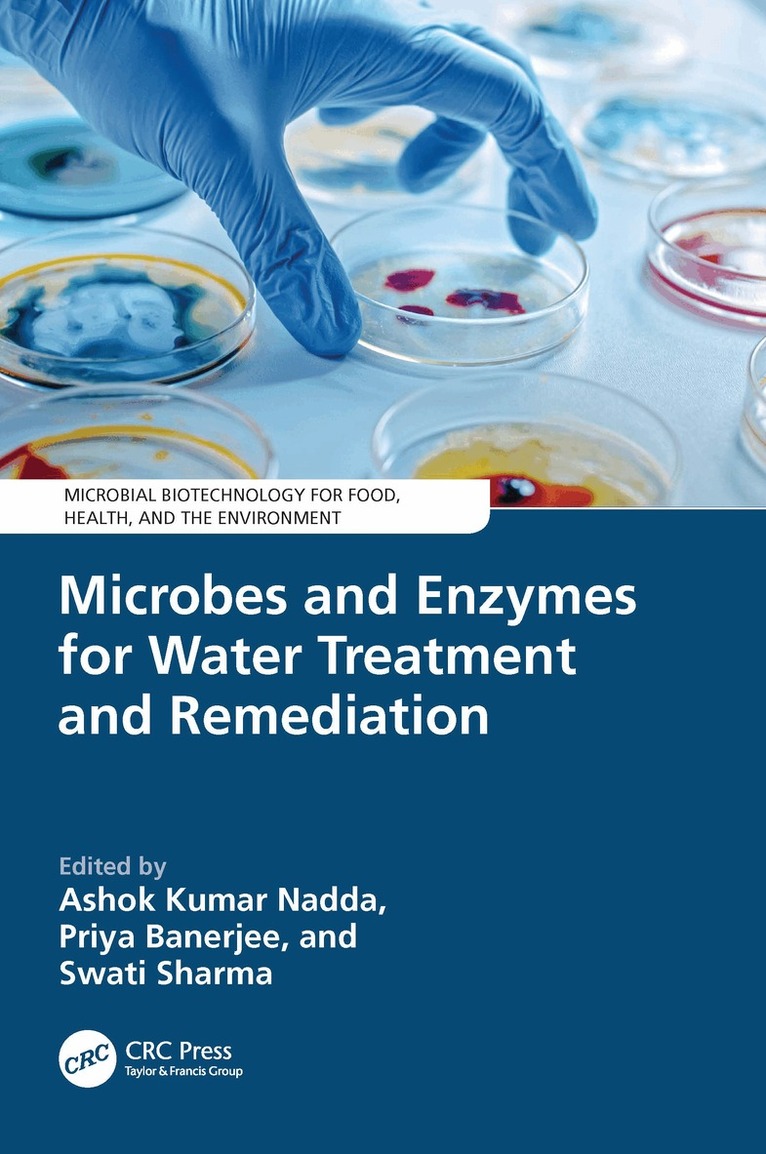
The introduction of emerging contaminants through anthropogenic activities and industrial discharges has raised significant public health concerns worldwide. Various techniques, including bioremediation, have been explored for their effectiveness in removing pollutants from water bodies and effluents. Microorganisms, particularly bacteria and fungi, have emerged as promising candidates for bioremediation due to their abundance, diversity, and ability to thrive under various conditions. Microbes and Enzymes for Water Treatment and Remediation covers a range of topics, from the role of microorganisms and enzymes in efficient pollutant removal to recent advances in microbial immobilization and enzymatic systems for enhanced wastewater treatment. The book provides up-to-date insights into the potential of microbial and enzyme-based processes for wastewater treatment, addressing challenges and limitations while offering alternative methods for effluent treatment and water reclamation. It serves as a valuable resource for understanding the interplay between microbial, biological, and chemical components in the remediation of toxic aqueous pollutants, aiding both researchers and industrialists in advancing environmental stewardship efforts.Offers comprehensive coverage of emerging contaminants and their impact on public health.Provides in-depth exploration of bioremediation techniques utilizing microbial and enzymatic pathways.Addresses the limitations and challenges of the existing microbial and enzyme-based processes for wastewater treatment.
1 366 kr
Skickas inom 10-15 vardagar
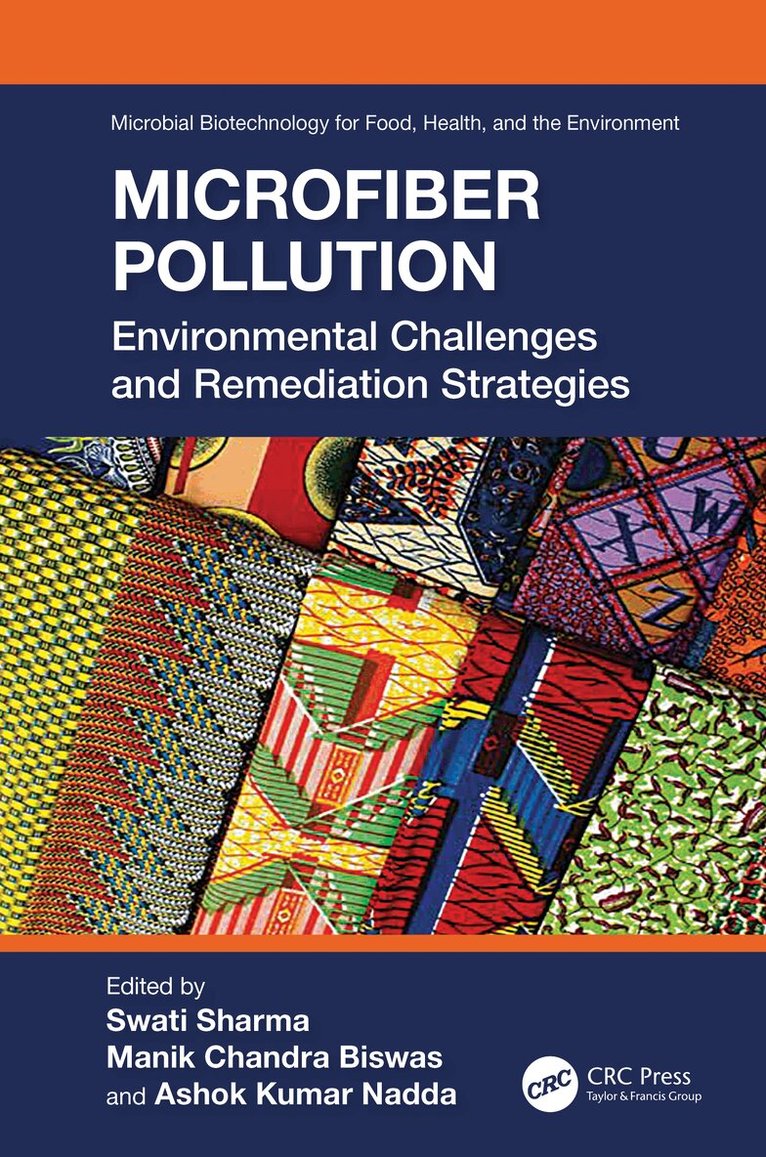
Microfibers, synthetic fibers like polyester and nylon, are emerging contaminants widely distributed in air, water, and soil, posing significant ecological risks. The textile industry, driven by fast fashion trends, is a major source of microfiber pollution in both aquatic and terrestrial environments. These fibers degrade air quality, especially indoors, where they shed from textiles and contribute to respiratory issues and have potential carcinogenic effects due to associated dyes and pollutants. The widespread impact on human health and ecosystems has spurred interest in sustainable textiles and efforts to reduce microfiber pollution. Microfiber Pollution: Environmental Challenges and Remediation Strategies examines the global sources, environmental impacts, and remediation strategies for microfibers, aiming to educate consumers and encourage industry shifts towards eco-friendly alternatives.Provides an in-depth examination of global microfiber sources, detailing their distribution in air, water, and soil, and highlighting the environmental and aquatic impacts.Explores advanced methods for detecting and characterizing microfibers, enhancing understanding of how these pollutants propagate into oceans and affect marine habitats.Discusses the potential threats of microfibers to aquatic species, human health, and the food chain.Reviews current remediation technologies and sustainability trends in the textile industry, offering insights into future challenges and motivating both consumers and industries to adopt eco-friendly practices.