Comparative and International Working-Class History – serie
Visar alla böcker i serien Comparative and International Working-Class History. Handla med fri frakt och snabb leverans.
11 produkter
11 produkter
Häftad, Engelska, 1997
609 kr
Skickas inom 3-6 vardagar
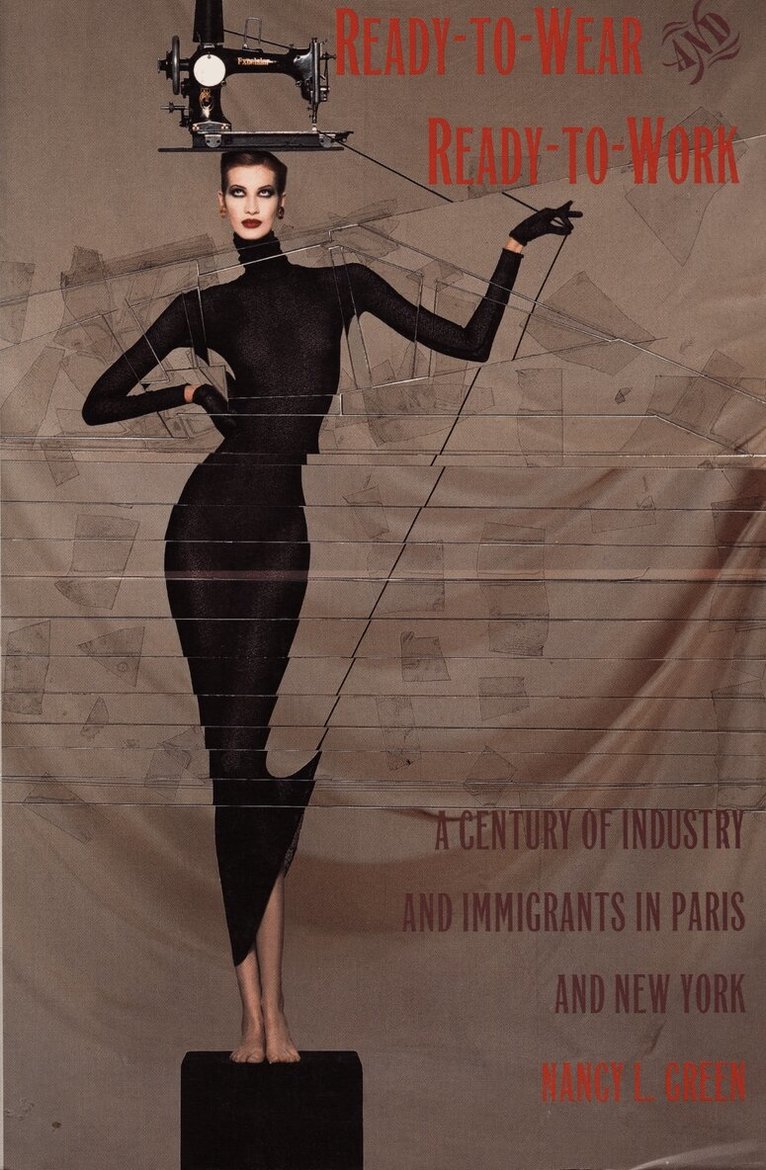
Nancy L. Green offers a critical and lively look at New York’s Seventh Avenue and the Parisian Sentier in this first comparative study of the two historical centers of the women’s garment industry. Torn between mass production and "art," this industry is one of the few manufactauring sectors left in the service-centered cities of today. Ready-to-Wear and Ready-to-Work tells the story of urban growth, the politics of labor, and the relationships among the many immigrant groups who have come to work the sewing machines over the last century.Green focuses on issues of fashion and fabrication as they involve both the production and consumption of clothing. Traditionally, much of the urban garment industry has been organized around small workshops and flexible homework, and Green emphasizes the effect this labor organization had on the men and mostly women who have sewn the garments. Whether considering the immigrant Jews, Italians, Puerto Ricans, Dominicans, and Chinese in New York or the Chinese-Cambodians, Turks, Armenians, and Russian, Polish, and Tunisian Jews in Paris, she outlines similarities of social experience in the shops and the unions, while allowing the voices of the workers, in all their diversity to be heard. A provocative examination of gender and ethnicity, historical conflict and consensus, and notions of class and cultural difference, Ready-to-Wear and Ready-to-Work breaks new ground in the methodology of comparative history.
Inbunden, Engelska, 1997
1 465 kr
Skickas inom 5-8 vardagar
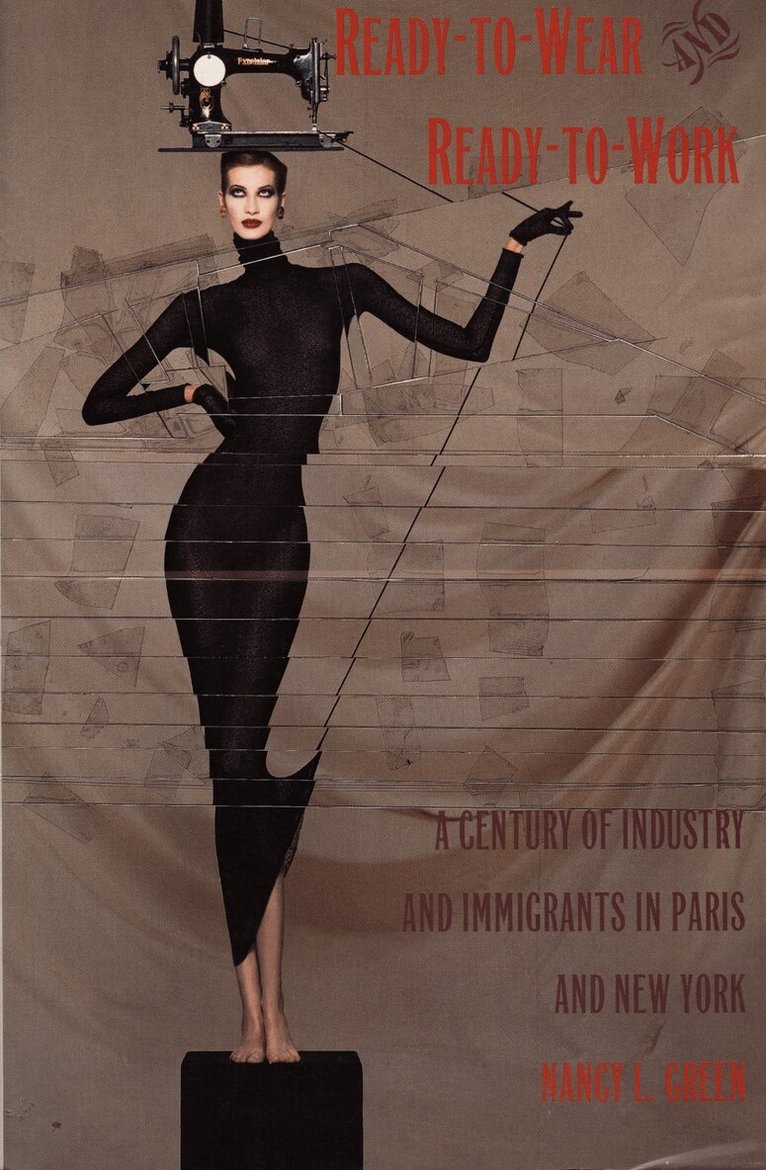
Nancy L. Green offers a critical and lively look at New York’s Seventh Avenue and the Parisian Sentier in this first comparative study of the two historical centers of the women’s garment industry. Torn between mass production and "art," this industry is one of the few manufactauring sectors left in the service-centered cities of today. Ready-to-Wear and Ready-to-Work tells the story of urban growth, the politics of labor, and the relationships among the many immigrant groups who have come to work the sewing machines over the last century.Green focuses on issues of fashion and fabrication as they involve both the production and consumption of clothing. Traditionally, much of the urban garment industry has been organized around small workshops and flexible homework, and Green emphasizes the effect this labor organization had on the men and mostly women who have sewn the garments. Whether considering the immigrant Jews, Italians, Puerto Ricans, Dominicans, and Chinese in New York or the Chinese-Cambodians, Turks, Armenians, and Russian, Polish, and Tunisian Jews in Paris, she outlines similarities of social experience in the shops and the unions, while allowing the voices of the workers, in all their diversity to be heard. A provocative examination of gender and ethnicity, historical conflict and consensus, and notions of class and cultural difference, Ready-to-Wear and Ready-to-Work breaks new ground in the methodology of comparative history.
Häftad, Engelska, 1997
386 kr
Skickas inom 5-8 vardagar
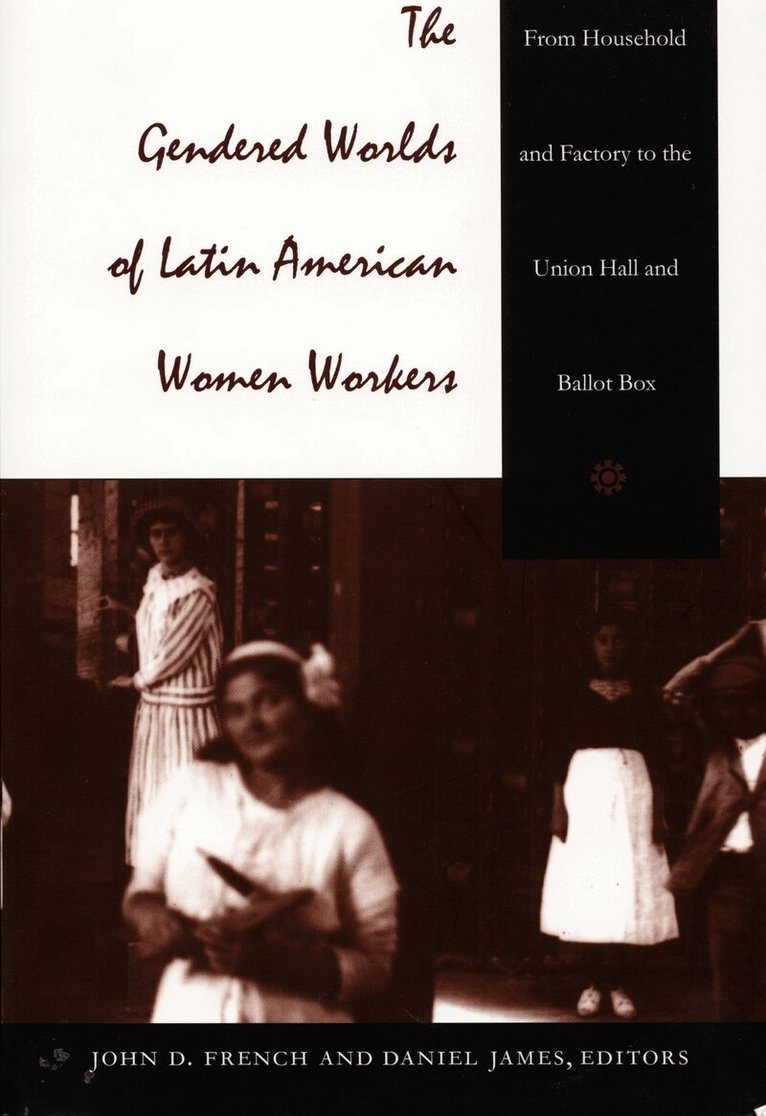
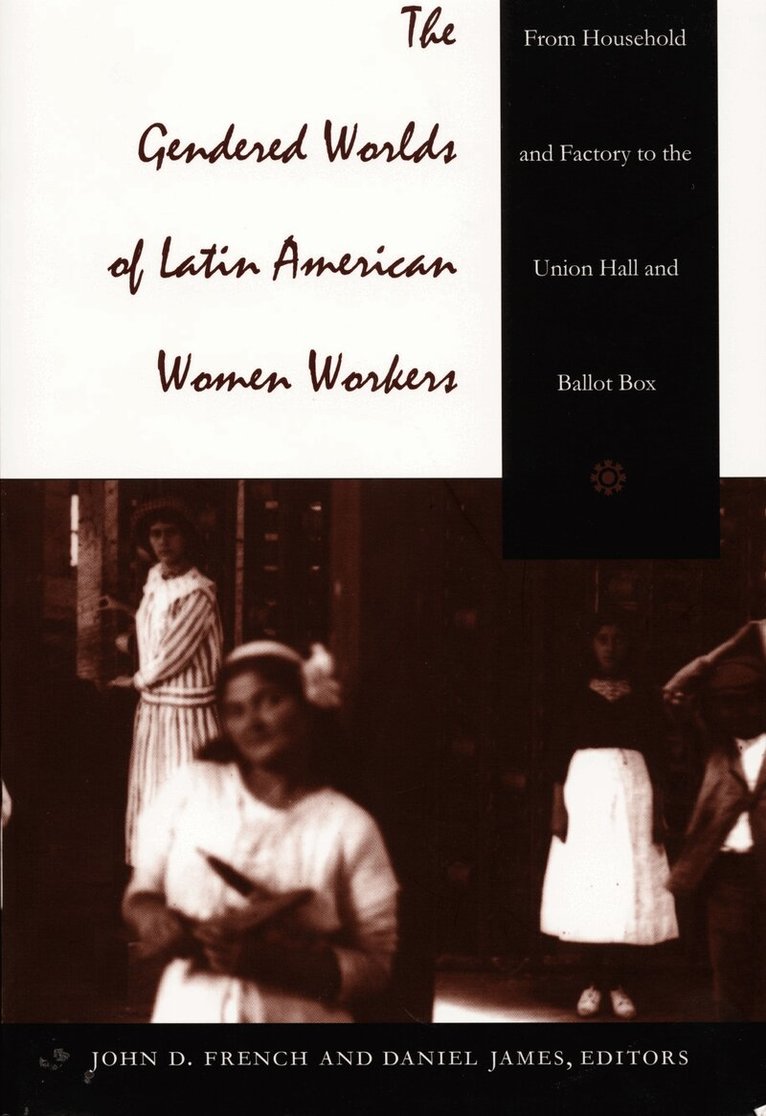
The Gendered Worlds of Latin American Women Workers examines the lives of Latin American women who entered factory labor in increasing numbers in the early part of the twentieth century. Emphasizing the integration of traditional labor history topics with historical accounts of gender, female subjectivity, and community, this volume focuses on the experience of working women at mid-century, especially those laboring in the urban industrial sector. In its exploration of working women’s agency and consciousness, this collection offers rich detail regarding women’s lives as daughters, housewives, mothers, factory workers, trade union leaders, and political activists.Widely seen as a hostile sexualized space, the modern factory was considered a threat, not only to the virtue of working women, but also to the survival of the family, and thus, the future of the nation. Yet working-class women continued to labor outside the home and remained highly visible in the expanding world of modern industry. In nine essays dealing with Argentina, Brazil, Chile, Colombia, and Guatemala, the contributors make extensive use of oral histories to describe the contradictory experiences of women whose work defied gender prescriptions but was deemed necessary by working-class families in a world of need and scarcity. The volume includes discussion of previously neglected topics such as single motherhood, women’s struggle against domestic violence, and the role of women as both desiring and desired subjects.Contributors. Ann Farnsworth-Alvear, Mary Lynn Pedersen Cluff, John D. French, Daniel James, Thomas Miller Klubock, Deborah Levenson-Estrada, Mirta Zaida Lobato, Heidi Tinsman, Theresa R. Veccia, Barbara Weinstein
Häftad, Engelska, 1998
288 kr
Skickas inom 5-8 vardagar
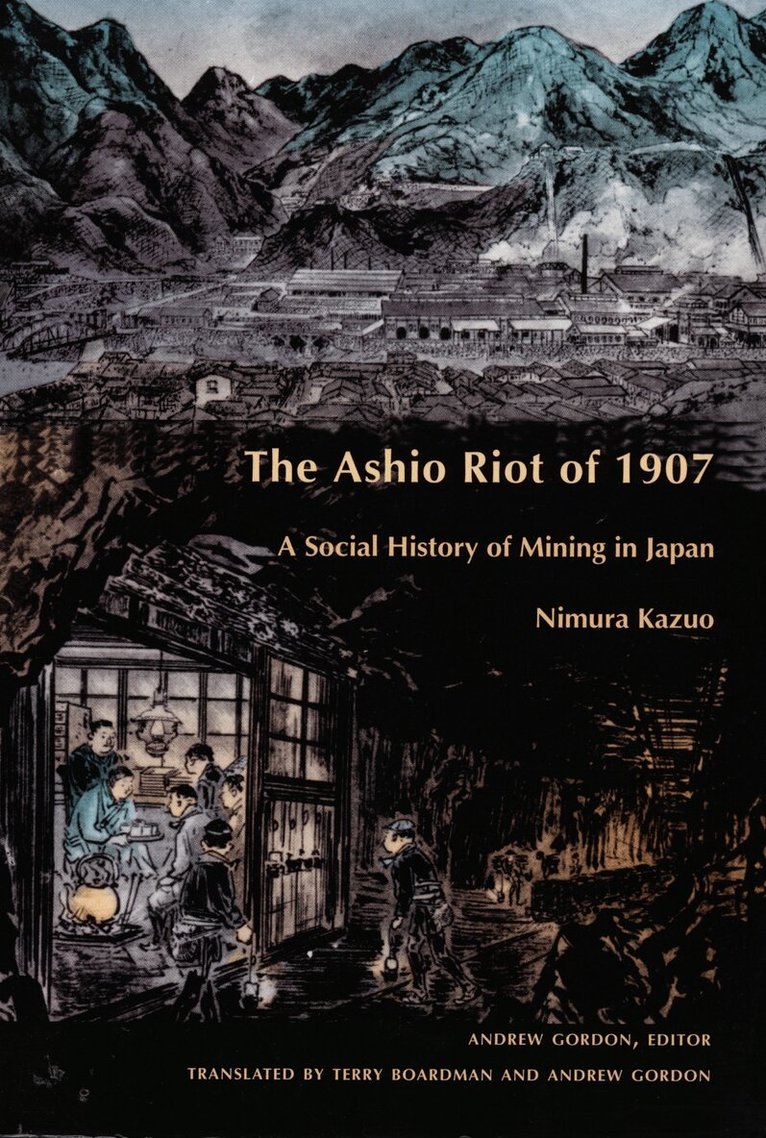
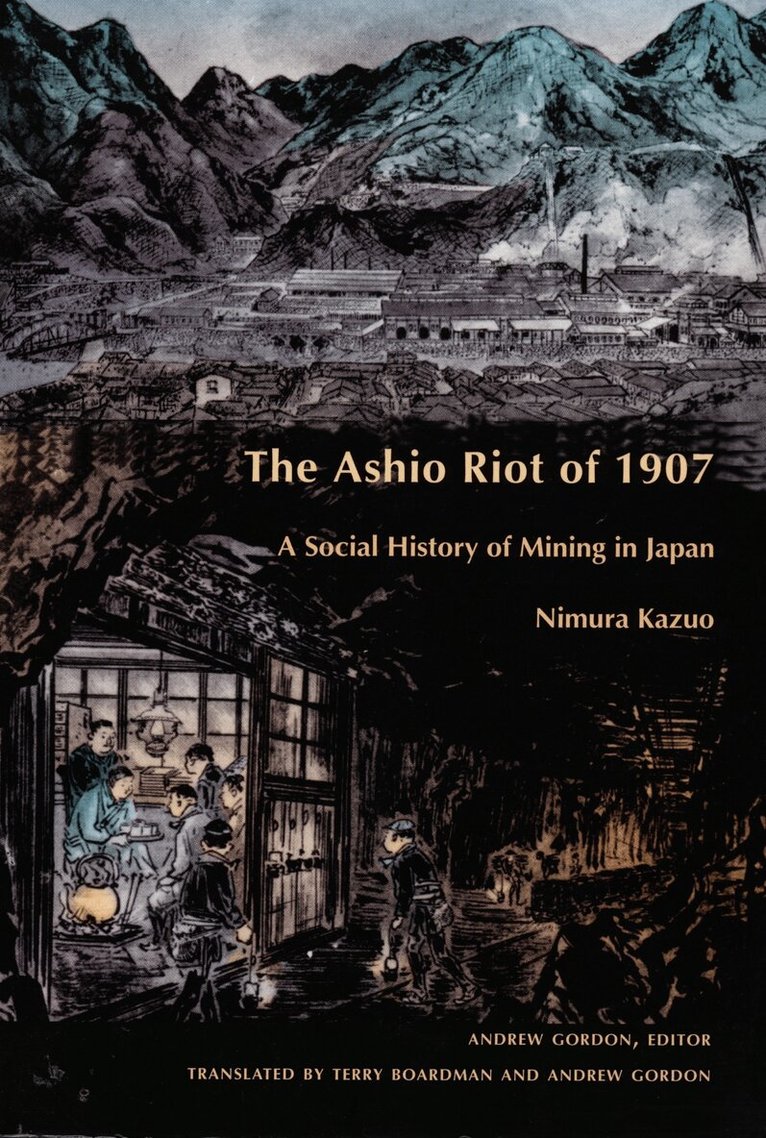
In The Ashio Riot of 1907, Nimura Kazuo explains why the workers at the Ashio copper mine-Japan’s largest mining concern and one of the largest such operations in the world-joined together for three days of rioting against the Furukawa Company in February 1907. Exploring an event in labor history unprecedented in the Japan of that time, Nimura uses this riot as a launching point to analyze the social, economic, and political structure of early industrial Japan. As such, The Ashio Riot of 1907 functions as a powerful critique of Japanese scholarly approaches to labor economics and social history. Arguing against the spontaneous resistance theory that has long dominated Japanese social history accounts, Nimura traces the laborers’ unrest prior to the riots as well as the development of the event itself. Drawing from such varied sources as governmental records, media reports, and secret legal documents relating to the riot, Nimura discusses the active role of the metal mining workers’ trade organization and the stance taken by mine labor bosses. He examines how technological development transformed labor-management relations and details the common characteristics of the laborers who were involved in the riot movement. In the course of this historical analysis, Nimura takes on some of the most influential critical perspectives on Japanese social and labor history. This translation of Nimura’s prize-winning study-originally published in Japan-contains a preface by Andrew Gordon and an introduction and prologue written especially for this edition.
Häftad, Engelska, 1998
442 kr
Skickas inom 5-8 vardagar
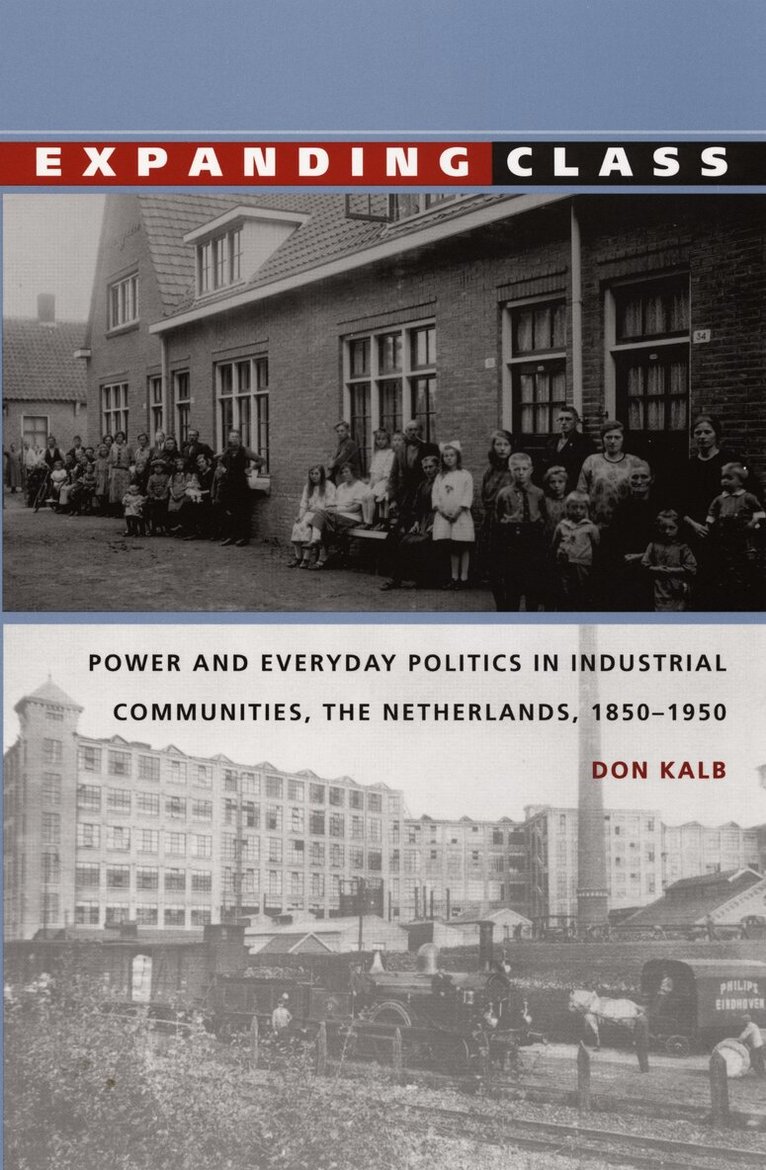
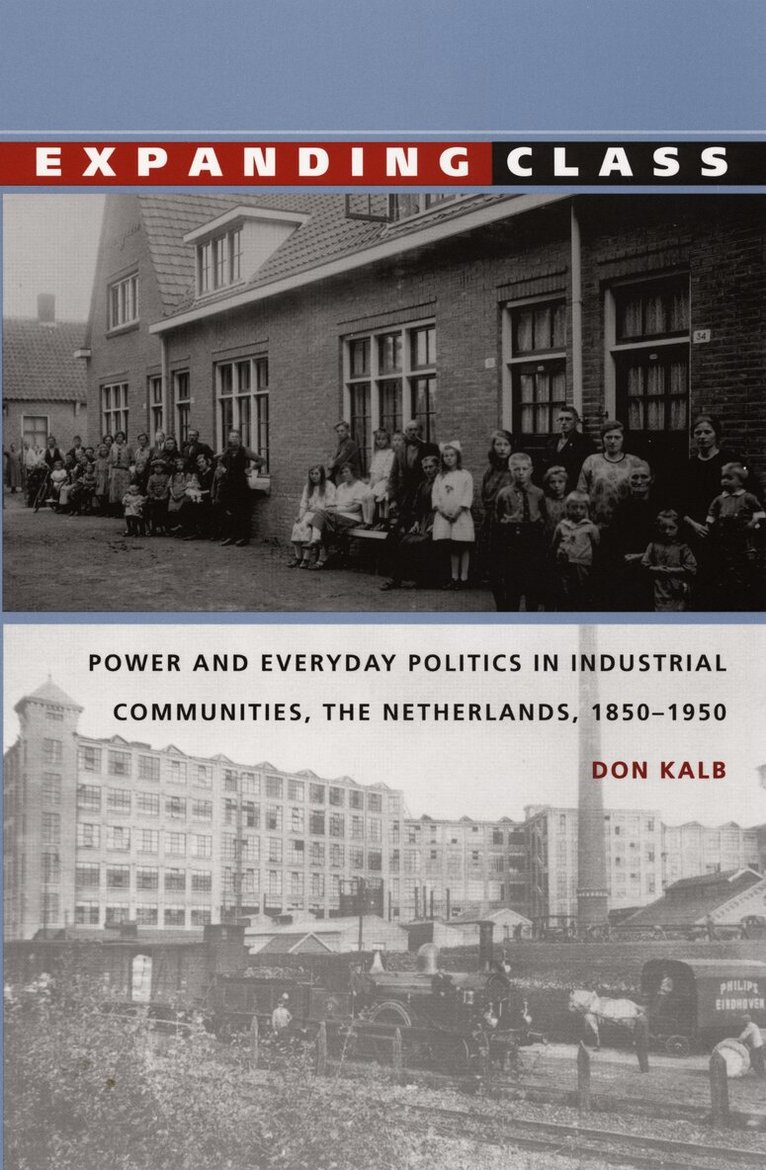
Expanding Class is the study and story of industrial class relations in North Brabant, a Catholic province of The Netherlands, over a hundred-year period. In examining the lives of workers in one of Europe’s more idiosyncratic industrial regions, Don Kalb affirms the utility of class analysis while responding to the cultural critics who have encouraged a movement away from this focus in labor history. In so doing, Expanding Class advances an interdisciplinary historical anthropology of working-class formation. Basing his analysis on oral as well as archival sources, Kalb reveals a dynamic relationship between capitalist industrialization, locality, and cultural class identities.Expanding Class compares Brabant’s quaint central shoemaking district to its electrical boomtown Eindhoven, home of the enormous Philips Corporation. It introduces the concept of "flexible familism," a sociological phenomenon in which family daughters were employed to facilitate a cheap and ample labor force. Industrialists manipulated and fostered flexible familism to ensure the discipline and loyalty of the working-class community. By using the industrial Netherlands as a paradigm, Kalb reveals new and productive ways to examine class construction and the development of labor history in other countries over the past thirty years, steering a path between the two schools of thought-cultural and economic-that have dominated labor history discussions in recent years.
Häftad, Engelska, 1998
609 kr
Skickas inom 3-6 vardagar
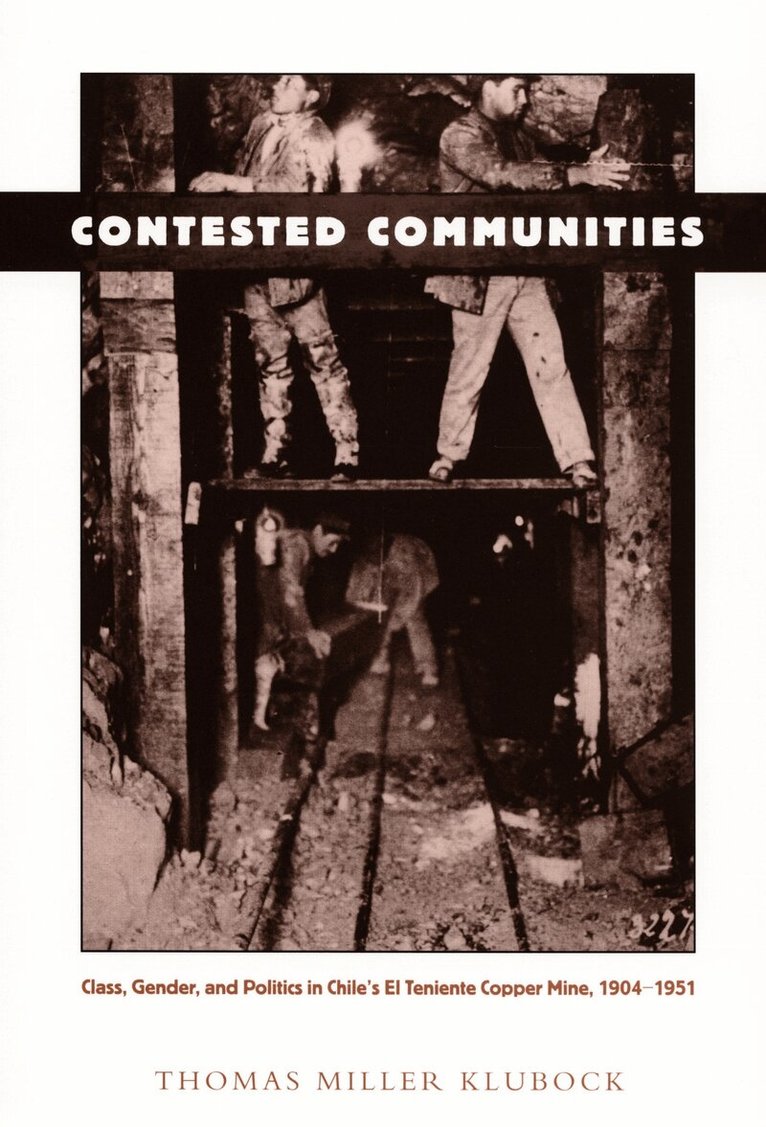
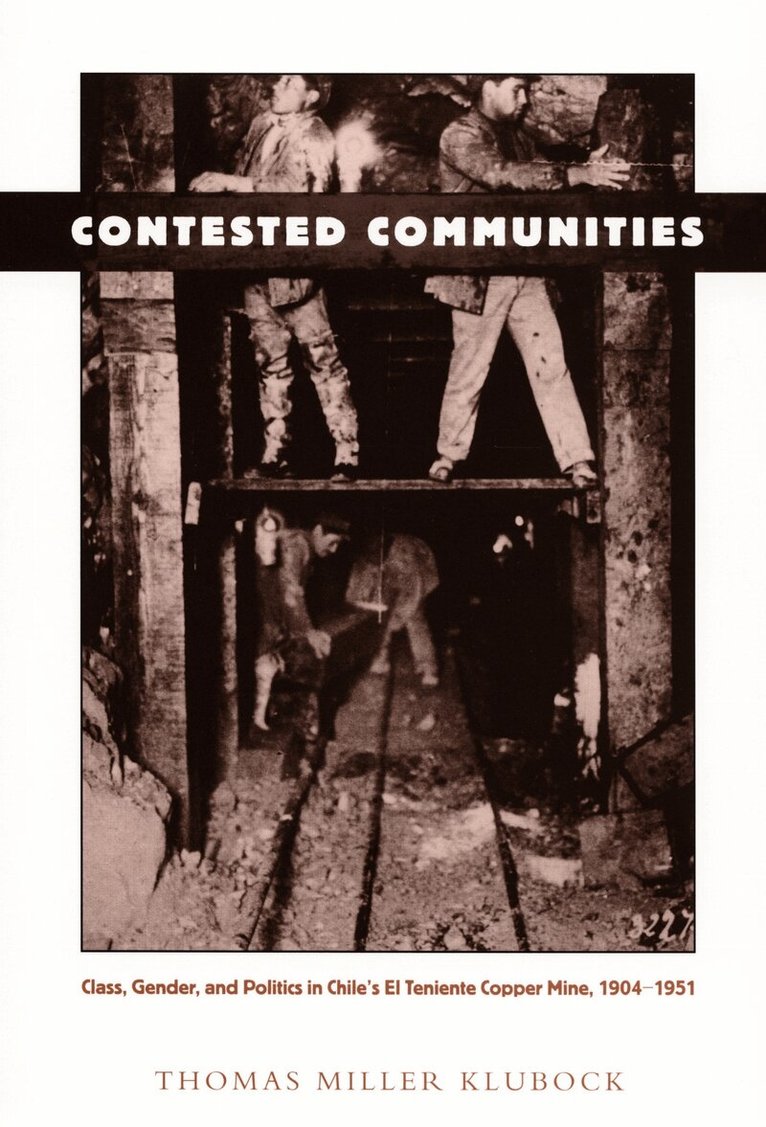
In Contested Communities Thomas Miller Klubock analyzes the experiences of the El Teniente copper miners during the first fifty years of the twentieth century. Describing the everyday life and culture of the mining community, its impact on Chilean politics and national events, and the sense of self and identity working-class men and women developed in the foreign-owned enclave, Klubock provides important insights into the cultural and social history of Chile.Klubock shows how a militant working-class community was established through the interplay between capitalist development, state formation, and the ideologies of gender. In describing how the North American copper company attempted to reconfigure and reform the work and social-cultural lives of men and women who migrated to the mine, Klubock demonstrates how struggles between labor and capital took place on a gendered field of power and reconstituted social constructions of masculinity and femininity. As a result, Contested Communities describes more accurately than any previous study the nature of grassroots labor militancy, working-class culture, and everyday politics of gender relations during crucial years of the Chilean Popular Front in the 1930s and 1940s.
Häftad, Engelska, 1998
609 kr
Skickas inom 3-6 vardagar
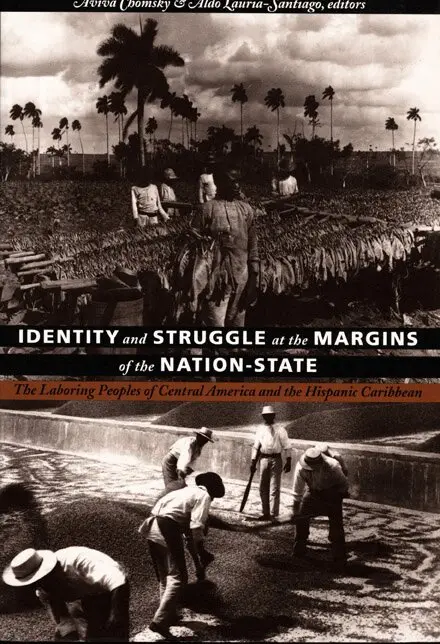
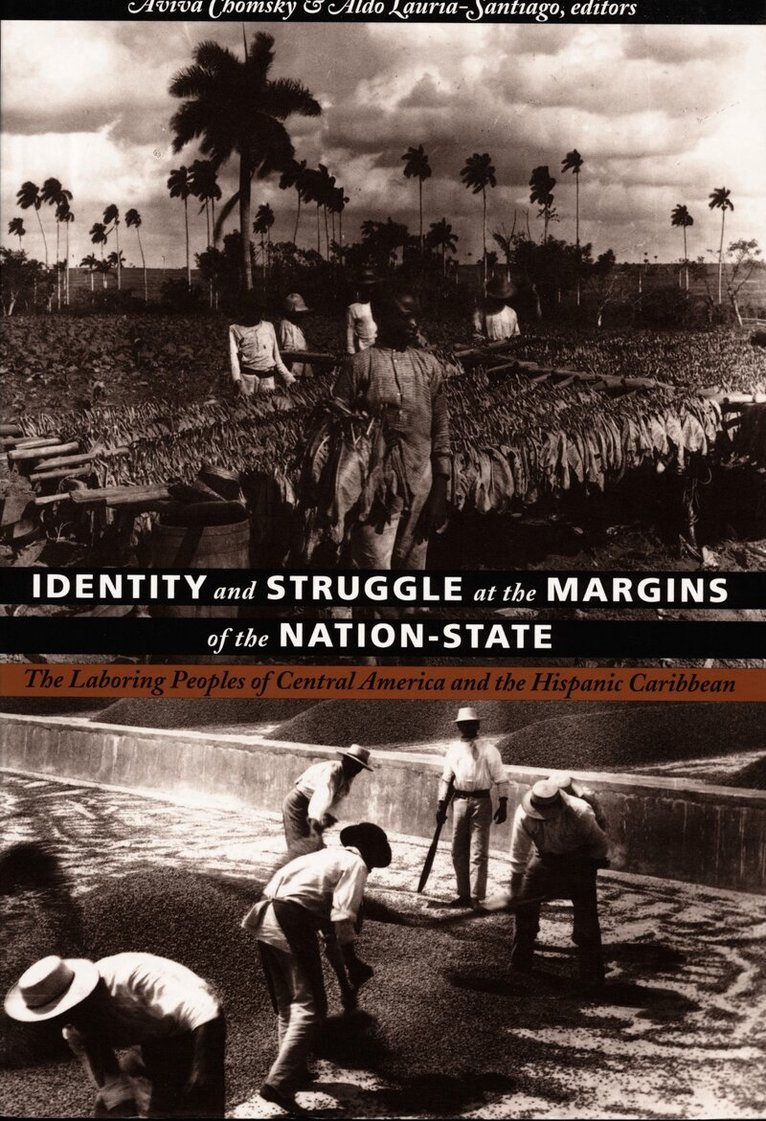
Identity and Struggle at the Margins of the Nation-State brings together new research on the social history of Central America and the Spanish-speaking Caribbean during the late nineteenth and early twentieth centuries. Aviva Chomsky and Aldo A. Lauria Santiago have gathered both well-known and emerging scholars to demonstrate how the actions and ideas of rural workers, peasants, migrants, and women formed an integral part of the growth of the export economies of the era and to examine the underacknowledged impact such groups had on the shaping of national histories. Responding to the fact that the more common, elite-centered “national” histories distort or erase the importance of gender, race, ethnicity, popular consciousness, and identity, contributors to this volume correct this imbalance by moving these previously overlooked issues to the center of historical research and analysis. In so doing, they describe how these marginalized working peoples of the Hispanic Caribbean Basin managed to remain centered on not only class-based issues but on a sense of community, a desire for dignity, and a struggle for access to resources. Individual essays include discussions of plantation justice in Guatemala, highland Indians in Nicaragua, the effects of foreign corporations in Costa Rica, coffee production in El Salvador, banana workers in Honduras, sexuality and working-class feminism in Puerto Rico, the Cuban sugar industry, agrarian reform in the Dominican Republic, and finally, potential directions for future research and historiography on Central America and the Caribbean. This collection will have a wide audience among Caribbeanists and Central Americanists, as well as students of gender studies, and labor, social, Latin American, and agrarian history. Contributors. Patricia Alvarenga, Barry Carr, Julie A. Charlip, Aviva Chomsky, Dario Euraque, Eileen Findlay, Cindy Forster, Jeffrey L. Gould, Lowell Gudmundson, Aldo A. Lauria Santiago, Francisco Scarano, Richard Turits
Häftad, Engelska, 2000
543 kr
Skickas inom 3-6 vardagar
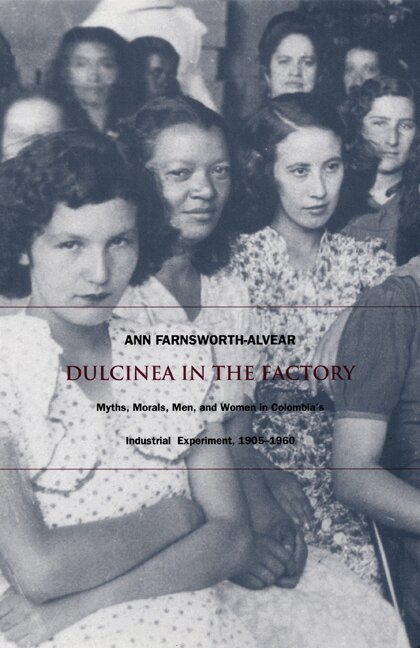
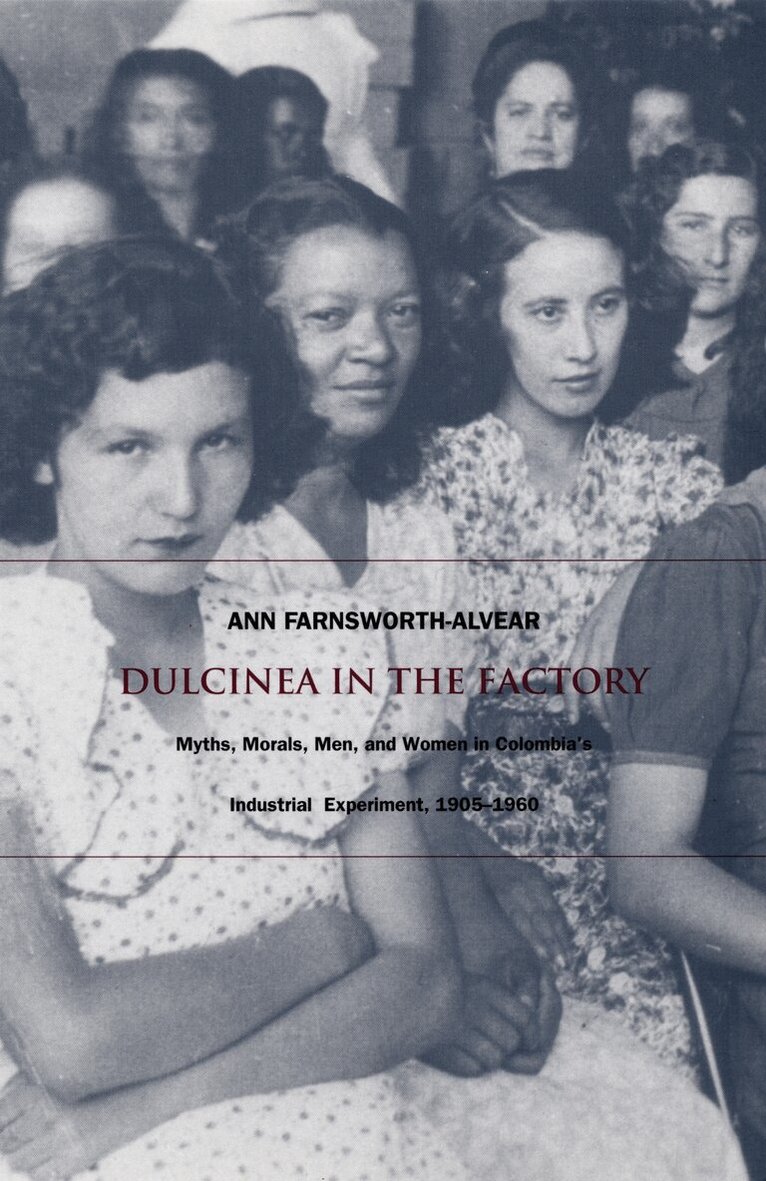
Before it became the center of Latin American drug trafficking, the Colombian city of MedellÍn was famous as a success story of industrialization, a place where protectionist tariffs had created a “capitalist paradise.” By the 1960s, the city’s textile industrialists were presenting themselves as the architects of a social stability that rested on Catholic piety and strict sexual norms. Dulcinea in the Factory explores the boundaries of this paternalistic order by investigating workers’ strategies of conformity and resistance and by tracing the disciplinary practices of managers during the period from the turn of the century to a massive reorganization of the mills in the late 1950s.Ann Farnsworth-Alvear’s analyses of archived personnel records, internal factory correspondence, printed regulations, and company magazines are combined with illuminating interviews with retired workers to allow a detailed reconstruction of the world behind the mill gate. In a place where the distinction between virgins and nonvirgins organized the labor market for women, the distance between chaste and unchaste behavior underlay a moral code that shaped working women’s self-perceptions. Farnsworth-Alvear challenges the reader to understand gender not as an opposition between female and male but rather as a normative field, marked by “proper” and “improper” ways of being female or male. Disputing the idea that the shift in the mills’ workforce over several decades from mainly women to almost exclusively men was based solely on economic factors, the author shows how gender and class, as social practices, converged to shape industrial development itself.Innovative in its creative employment of subtle and complex material, Dulcinea in the Factory addresses long-standing debates within labor history about proletarianization and work culture. This book’s focus on Colombia will make it valuable to Latin Americanists, but it will also appeal to a wide readership beyond Latin American and labor studies, including historians and sociologists, as well as students of women’s studies, social movements, and anthropology.
Häftad, Engelska, 2002
442 kr
Skickas inom 5-8 vardagar
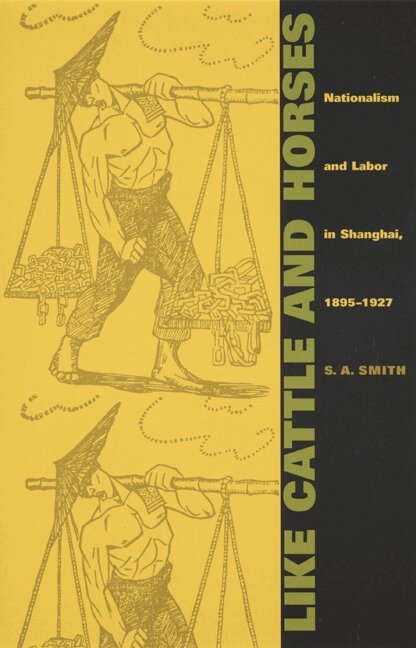
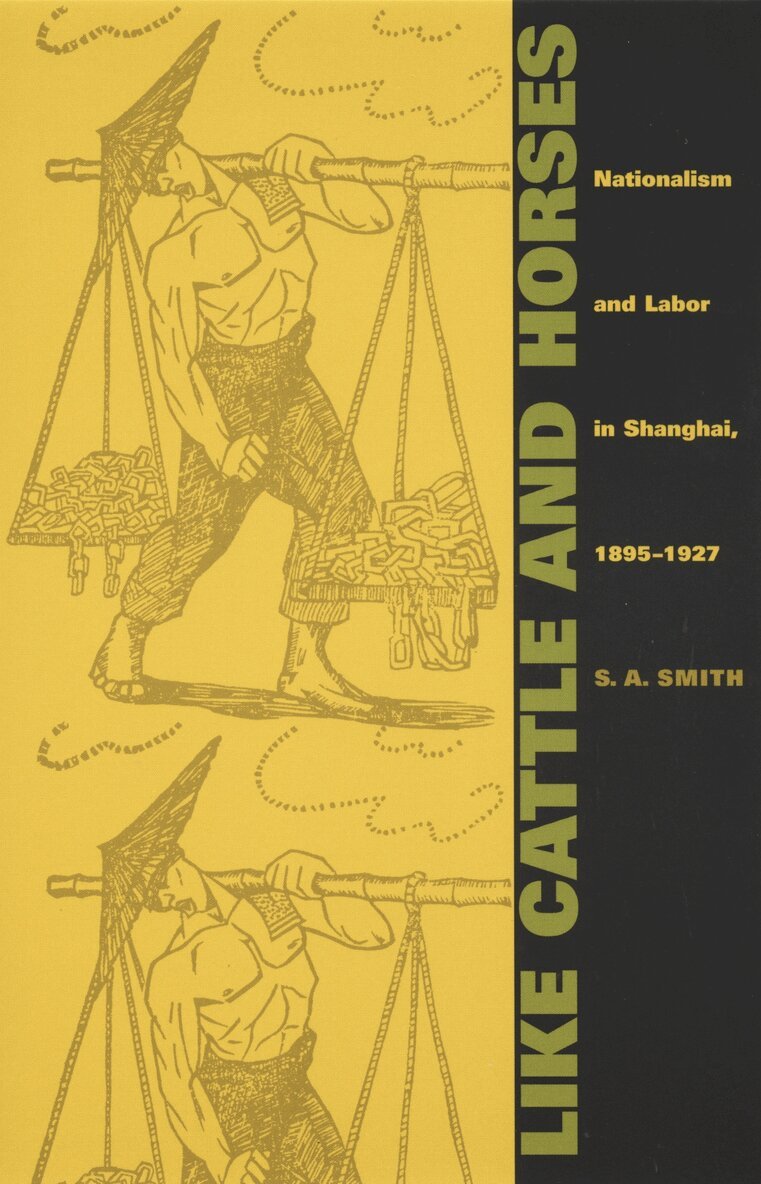
In Like Cattle and Horses Steve Smith connects the rise of Chinese nationalism to the growth of a Chinese working class. Moving from the late nineteenth century, when foreign companies first set up factories on Chinese soil, to 1927, when the labor movement created by the Chinese Communist Party was crushed by Chiang Kai-shek, Smith uses a host of documents-journalistic accounts of strikes, memoirs by former activists, police records-to argue that a nationalist movement fueled by the effects of foreign imperialism had a far greater hold on working-class identity than did class consciousness. While the massive wave of labor protest in the 1920s was principally an expression of militant nationalism rather than of class consciousness, Smith argues, elements of a precarious class identity were in turn forged by the very discourse of nationalism. By linking work-related demands to the defense of the nation, anti-imperialist nationalism legitimized participation in strikes and sensitized workers to the fact that they were worthy of better treatment as Chinese citizens. Smith shows how the workers’ refusal to be treated “like cattle and horses” (a phrase frequently used by workers to describe their condition) came from a new but powerfully felt sense of dignity. In short, nationalism enabled workers to interpret the anger they felt at their unjust treatment in the workplace in political terms and to create a link between their position as workers and their position as members of an oppressed nation. By focusing on the role of the working class, Like Cattle and Horses is one of very few studies that examines nationalism “from below,” acknowledging the powerful agency of nonelite forces in promoting national identity.Like Cattle and Horses will interest historians of labor, modern China, and nationalism, as well as those engaged in the study of revolutions and revolt.
Häftad, Engelska, 2003
489 kr
Skickas inom 3-6 vardagar
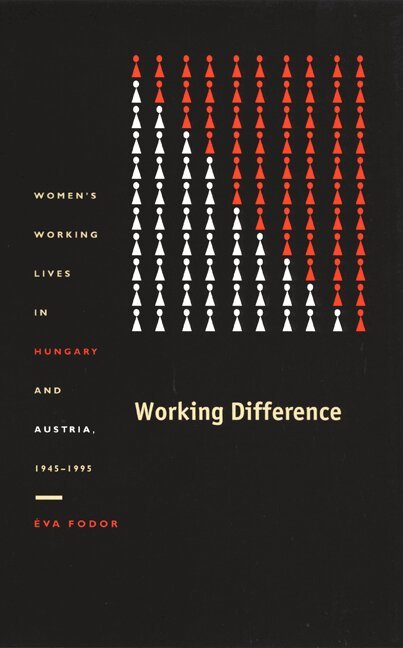
Working Difference is one of the first comparative, historical studies of women's professional access to public institutions in a state socialist and a capitalist society. Éva Fodor examines women's inclusion in and exclusion from positions of authority in Austria and Hungary in the latter half of the twentieth century. Until the end of World War II women's lives in the two countries, which were once part of the same empire, followed similar paths, which only began to diverge after the communist takeover in Hungary in the late 1940s. Fodor takes advantage of Austria and Hungary's common history to carefully examine the effects of state socialism and the differing trajectories to social mobility and authority available to women in each country.Fodor brings qualitative and quantitative analyses to bear, combining statistical analyses of survey data, interviews with women managers in both countries, and archival materials including those from the previously classified archives of the Hungarian communist party and transcripts from sessions of the Austrian Parliament. She shows how women's access to power varied in degree and operated through different principles and mechanisms in accordance with the stratification systems of the respective countries. In Hungary women's mobility was curtailed by political means (often involving limited access to communist party membership), while in Austria women's professional advancement was affected by limited access to educational institutions and the labor market. Fodor discusses the legacies of Austria's and Hungary's "gender regimes" following the demise of state socialism and during the process of integration into the European Union.
Häftad, Engelska, 2010
741 kr
Skickas inom 3-6 vardagar
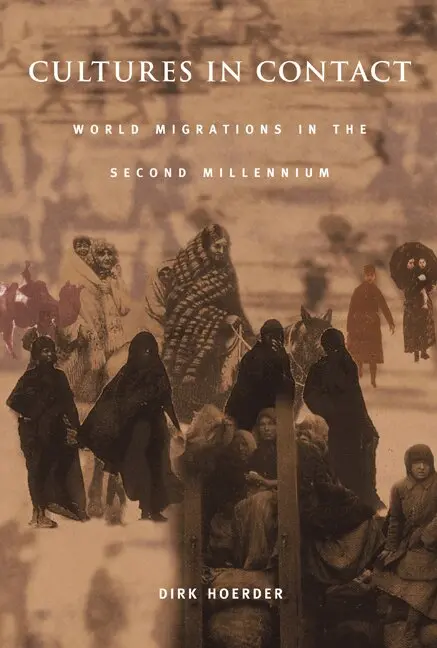
A landmark work on human migration around the globe, Cultures in Contact provides a history of the world told through the movements of its people. It is a broad, pioneering interpretation of the scope, patterns, and consequences of human migrations over the past ten centuries. In this magnum opus thirty years in the making, Dirk Hoerder reconceptualizes the history of migration and immigration, establishing that societal transformation cannot be understood without taking into account the impact of migrations and, indeed, that mobility is more characteristic of human behavior than is stasis. Signaling a major paradigm shift, Cultures in Contact creates an English-language map of human movement that is not Atlantic Ocean-based. Hoerder describes the origins, causes, and extent of migrations around the globe and analyzes the cultural interactions they have triggered. He pays particular attention to the consequences of immigration within the receiving countries. His work sweeps from the eleventh century forward through the end of the twentieth, when migration patterns shifted to include transpacific migration, return migrations from former colonies, refugee migrations, and distinct regional labor migrations in the developing world. Hoerder demonstrates that as we enter the third millennium, regional and intercontinental migration patterns no longer resemble those of previous centuries. They have been transformed by new communications systems and other forces of globalization and transnationalism.