Animals, History, Culture – serie
Visar alla böcker i serien Animals, History, Culture. Handla med fri frakt och snabb leverans.
22 produkter
22 produkter
Inbunden, Engelska, 2002
682 kr
Skickas
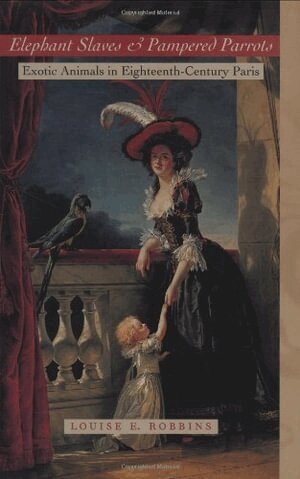
In 1775, a visitor to Laurent Spinacuta's Grande Menagerie at the annual winter fair in Paris would have seen two tigers, several kinds of monkeys, an armadillo, an ocelot, and a condor-in all, forty-two live animals. In Elephant Slaves and Pampered Parrots, Louise Robbins explains that exotic animals from around the world were common in eighteenth-century Paris. In the streets of the city, residents and visitors could observe performing elephants and a fighting polar bear. Those looking for unusual pets could purchase parrots, flying squirrels, and capuchin monkeys. The royal menagerie at Versailles displayed lions, cranes, an elephant, a rhinoceros, and a zebra, which in 1760 became a major court attraction. For Enlightenment-era Parisians, exotic animals both piqued scientific curiosity and conveyed social status. Their availability was a boon for naturalists like Buffon, author of the best-selling Histoire naturelle, who observed unusual species in a variety of locations around the city.Louis XVI saw his menagerie as a manifestation of his power and funded its upkeep accordingly, while critics used the caged animals as metaphors of slavery and political oppression amidst the growing political turmoil. In her engaging and often surprising account, Robbins considers nearly every aspect of France's obsession with exotic fauna, from the vast literature on exotic animals and the inner workings of the oiseleurs' (birdsellers') guild to how the animals were transported, housed, and cared for. Based on wide-ranging and imaginative research, Elephant Slaves and Pampered Parrots stands as a major contribution to the history of human-animal relations, eighteenth-century culture, and French colonialism.
Inbunden, Engelska, 2004
571 kr
Skickas
How did animal breeding emerge as a movement? Who took part and for what reasons? How do the pedigree and market systems work? What light might the movement shed on the assumptions behind human eugenics? In Bred for Perfection, Margaret Derry provides the most comprehensive and accessible book yet published on the human quest to improve and develop livestock. Derry, herself a breeder and trained historian of science, explores the "triangle" of genetics, eugenics, and practical breeding, focusing on Shorthorn cattle, show dogs and working dogs, and one type of purebred horse, the Arabian. By examining specific breeders and the animals they produced, she illuminates the role of technology, genetics, culture, and economics in the system of purebred breeding. Bred for Perfection also provides the historical context in which this system arose, adding to our understanding of how domestication works and how our welfare-since the dawn of time-has been intertwined with the lives of animals.
Inbunden, Engelska, 2009
715 kr
Skickas inom 5-8 vardagar
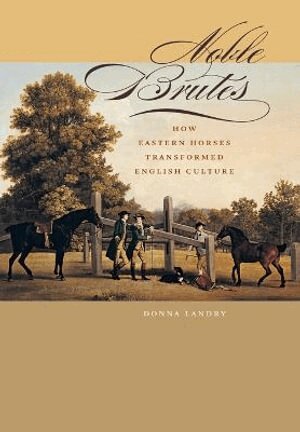
"His lordship's Arabian," a phrase often heard in eighteenth-century England, described a new kind of horse imported into the British Isles from the Ottoman Empire and the Barbary States of North Africa. Noble Brutes traces how the introduction of these Eastern blood horses transformed early modern culture and revolutionized England's racing and equestrian tradition. More than two hundred Oriental horses were imported into the British Isles between 1650 and 1750. With the horses came Eastern ideas about horsemanship and the relationship between horses and humans. Landry's groundbreaking archival research reveals how these Eastern imports profoundly influenced riding and racing styles, as well as literature and sporting art. After only a generation of crossbreeding on British soil, the English Thoroughbred was born, and with it the gentlemanly ideal of free forward movement over a country as an enactment of English liberties. This radical reinterpretation of Ottoman and Arab influences on horsemanship and breeding sheds new light on English national identity, as illustrated in such classic works as Jonathan Swift's Gulliver's Travels and George Stubbs's portrait of Whistlejacket.
Häftad, Engelska, 2011
448 kr
Skickas inom 5-8 vardagar
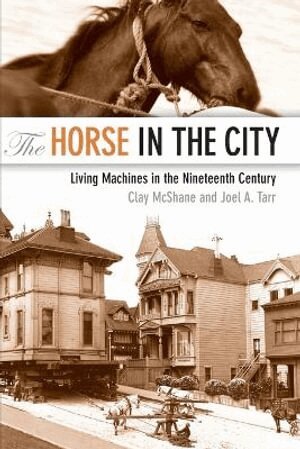
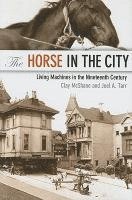
The nineteenth century was the golden age of the horse. In urban America, the indispensable horse provided the power for not only vehicles that moved freight, transported passengers, and fought fires but also equipment in breweries, mills, foundries, and machine shops. Clay McShane and Joel A. Tarr, prominent scholars of American urban life, here explore the critical role that the horse played in the growing nineteenth-century metropolis. Using such diverse sources as veterinary manuals, stable periodicals, teamster magazines, city newspapers, and agricultural yearbooks, they examine how the horses were housed and fed and how workers bred, trained, marketed, and employed their four-legged assets. Not omitting the problems of waste removal and corpse disposal, they touch on the municipal challenges of maintaining a safe and productive living environment for both horses and people and the rise of organizations like the American Society for the Prevention of Cruelty to Animals.In addition to providing an insightful account of life and work in nineteenth-century urban America, The Horse in the City brings us to a richer understanding of how the animal fared in this unnatural and presumably uncomfortable setting.
Häftad, Engelska, 2011
435 kr
Skickas inom 5-8 vardagar
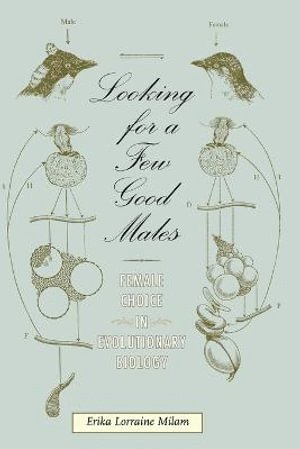
Why do female animals select certain mates, and how do scientists determine the answer? In considering these questions, Erika Lorraine Milam explores the fascinating patterns of experiment and interpretation that emerged as twentieth-century researchers studied sexual selection and female choice. Approaching the topic from both biological and animal-studies perspectives, Milam not only presents a broad history of sexual selection-from Darwin to sociobiology-but also analyzes the animal-human continuum from the perspectives of sex, evolution, and behavior. She asks how social and cultural assumptions influence human-animal research and wonders about the implications of gender on scientific outcomes. Although female choice appears to be a straightforward theoretical concept, the study of sexual selection has been anything but simple. Scientists in the early twentieth century investigated female choice in animals but did so with human social and sexual behavior as their ultimate objective. By the 1940s, evolutionary biologists and population geneticists shifted their focus, studying instead how evolution affected natural animal populations.Two decades later, organismal biologists once again redefined the investigation of sexual selection as sociobiology came to dominate the discipline. Outlining the ever-changing history of this field of study, Milam uncovers lost mid-century research programs and finds that the discipline did not languish in the decades between Darwin's theory of sexual selection and sociobiology, as observers commonly believed. Rather, population geneticists, ethologists, and organismal biologists alike continued to investigate this important theory throughout the twentieth century.
Inbunden, Engelska, 2019
678 kr
Skickas inom 5-8 vardagar
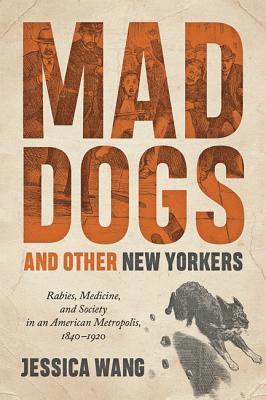
How rabid dogs, the struggles to contain them, and their power over the public imagination intersected with New York City's rise to urban preeminence.Rabies enjoys a fearsome and lurid reputation. Throughout the decades of spiraling growth that defined New York City from the 1840s to the 1910s, the bone-chilling cry of "Mad dog!" possessed the power to upend the ordinary routines and rhythms of urban life. In Mad Dogs and Other New Yorkers, Jessica Wang examines the history of this rare but dreaded affliction during a time of rapid urbanization. Focusing on a transformative era in medicine, politics, and urban society, Wang uses rabies to survey urban social geography, the place of domesticated animals in the nineteenth-century city, and the world of American medicine. Rabies, she demonstrates, provides an ideal vehicle for exploring physicians' ideas about therapeutics, disease pathology, and the body as well as the global flows of knowledge and therapeutics. Beyond the medical realm, the disease also illuminates the cultural fears and political contestations that evolved in lockstep with New York City's burgeoning cityscape.Mad Dogs and Other New Yorkers offers lay readers and specialists alike the opportunity to contemplate a tumultuous domain of people, animals, and disease against a backdrop of urban growth, medical advancement, and social upheaval. The result is a probing history of medicine that details the social world of New York physicians, their ideas about a rare and perplexing disorder, and the struggles of an ever-changing, ever-challenging urban society.
Spark from the Deep
How Shocking Experiments with Strongly Electric Fish Powered Scientific Discovery
Inbunden, Engelska, 2013
468 kr
Skickas inom 5-8 vardagar
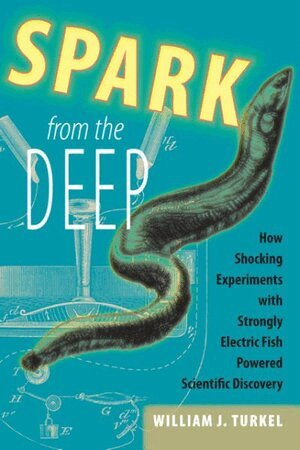
Spark from the Deep tells the story of how human beings came to understand and use electricity by studying the evolved mechanisms of strongly electric fish. These animals have the ability to shock potential prey or would-be predators with high-powered electrical discharges. William J. Turkel asks completely fresh questions about the evolutionary, environmental, and historical aspects of people's interest in electric fish. Stimulated by painful encounters with electric catfish, torpedos, and electric eels, people learned to harness the power of electric shock for medical therapies and eventually developed technologies to store, transmit, and control electricity. Now we look to these fish as an inspiration for engineering new sensors, computer interfaces, autonomous undersea robots, and energy-efficient batteries.
Inbunden, Engelska, 2018
505 kr
Skickas inom 5-8 vardagar
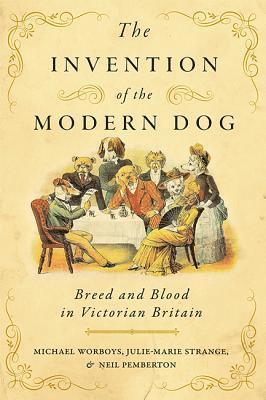
The story of the thoroughly Victorian origins of dog breeds.For centuries, different types of dogs were bred around the world for work, sport, or companionship. But it was not until Victorian times that breeders started to produce discrete, differentiated, standardized breeds. In The Invention of the Modern Dog, Michael Worboys, Julie-Marie Strange, and Neil Pemberton explore when, where, why, and how Victorians invented the modern way of ordering and breeding dogs. Though talk of "breed" was common before this period in the context of livestock, the modern idea of a dog breed defined in terms of shape, size, coat, and color arose during the Victorian period in response to a burgeoning competitive dog show culture. The authors explain how breeders, exhibitors, and showmen borrowed ideas of inheritance and pure blood, as well as breeding practices of livestock, horse, poultry and other fancy breeders, and applied them to a species that was long thought about solely in terms of work and companionship.The new dog breeds embodied and reflected key aspects of Victorian culture, and they quickly spread across the world, as some of Britain’s top dogs were taken on stud tours or exported in a growing international trade. Connecting the emergence and development of certain dog breeds to both scientific understandings of race and blood as well as Britain’s posture in a global empire, The Invention of the Modern Dog demonstrates that studying dog breeding cultures allows historians to better understand the complex social relationships of late-nineteenth-century Britain.
Inbunden, Engelska, 2022
505 kr
Skickas inom 5-8 vardagar
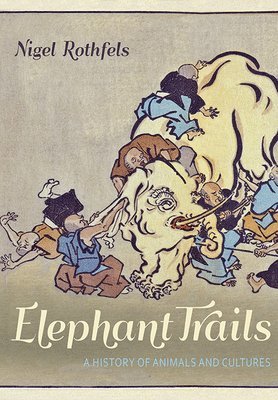
Why have elephants—and our preconceptions about them—been central to so much of human thought?From prehistoric cave drawings in Europe and ancient rock art in Africa and India to burning pyres of confiscated tusks, our thoughts about elephants tell a story of human history. In Elephant Trails, Nigel Rothfels argues that, over millennia, we have made elephants into both monsters and miracles as ways to understand them but also as ways to understand ourselves.Drawing on a broad range of sources, including municipal documents, zoo records, museum collections, and encounters with people who have lived with elephants, Rothfels seeks out the origins of our contemporary ideas about an animal that has been central to so much of human thought. He explains how notions that have been associated with elephants for centuries—that they are exceptionally wise, deeply emotional, and have a special understanding of death; that they never forget, are beloved of the gods, and suffer unusually in captivity; and even that they are afraid of mice—all tell part of the story of these amazing beings. Exploring the history of a skull in a museum, a photograph of an elephant walking through the American South in the early twentieth century, the debate about the quality of life of a famous elephant in a zoo, and the accounts of elephant hunters, Rothfels demonstrates that elephants are not what we think they are—and they never have been. Elephant Trails is a compelling portrait of what the author terms "our elephant."
Häftad, Engelska, 2022
269 kr
Skickas
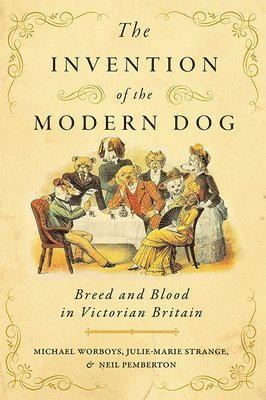
The story of the thoroughly Victorian origins of dog breeds.For centuries, different types of dogs were bred around the world for work, sport, or companionship. But it was not until Victorian times that breeders started to produce discrete, differentiated, standardized breeds. In The Invention of the Modern Dog, Michael Worboys, Julie-Marie Strange, and Neil Pemberton explore when, where, why, and how Victorians invented the modern way of ordering and breeding dogs. Though talk of "breed" was common before this period in the context of livestock, the modern idea of a dog breed defined in terms of shape, size, coat, and color arose during the Victorian period in response to a burgeoning competitive dog show culture. The authors explain how breeders, exhibitors, and showmen borrowed ideas of inheritance and pure blood, as well as breeding practices of livestock, horse, poultry and other fancy breeders, and applied them to a species that was long thought about solely in terms of work and companionship.The new dog breeds embodied and reflected key aspects of Victorian culture, and they quickly spread across the world, as some of Britain’s top dogs were taken on stud tours or exported in a growing international trade. Connecting the emergence and development of certain dog breeds to both scientific understandings of race and blood as well as Britain’s posture in a global empire, The Invention of the Modern Dog demonstrates that studying dog breeding cultures allows historians to better understand the complex social relationships of late-nineteenth-century Britain.
Inbunden, Engelska, 2023
687 kr
Skickas inom 5-8 vardagar
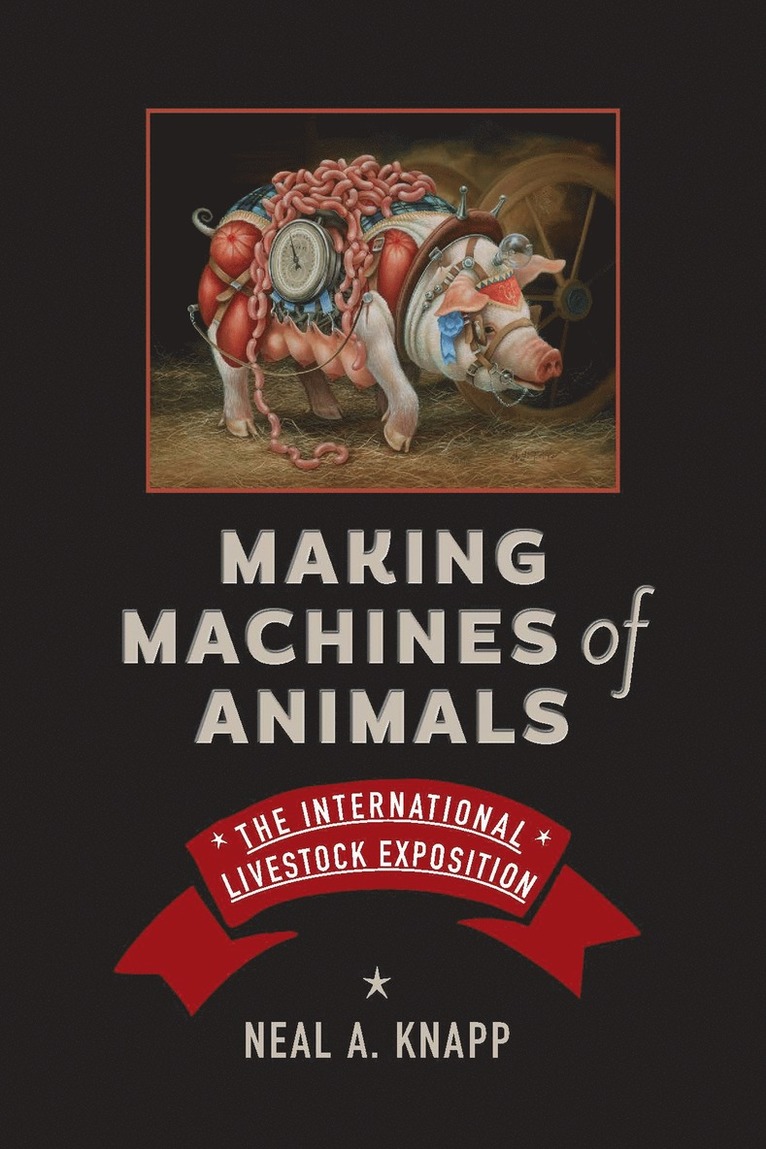
How the Chicago International Livestock Exposition leveraged the eugenics movement to transform animals into machines and industrialize American agriculture.In 1900, the Chicago International Livestock Exposition became the epicenter of agricultural reform that focused on reinventing animals' bodies to fit a modern, industrial design. Chicago meatpackers partnered with land-grant university professors to create the International—a spectacle on the scale of a world's fair—with the intention of setting the standard for animal quality and, in doing so, transformed American agriculture.In Making Machines of Animals, Neal A. Knapp explains the motivations of both the meatpackers and the professors, describing how they deployed the International to redefine animality itself. Both professors and packers hoped to replace so-called scrub livestock with "improved" animals and created a new taxonomy of animal quality based on the burgeoning eugenics movement. The International created novel definitions of animal superiority and codified new norms, resulting in a dramatic shift in animal weight, body size, and market age. These changes transformed the animals from multipurpose to single-purpose products. These standardized animals and their dependence on off-the-farm inputs and exchanges limited farmers' choices regarding husbandry and marketing, ultimately undermining any goals for balanced farming or the maintenance and regeneration of soil fertility.Drawing on land-grant university research and publications, meatpacker records and propaganda, and newspaper and agricultural journal articles, Knapp critiques the supposed market-oriented, efficiency-driven industrial reforms proffered by the International, which were underpinned by irrational, racist ideologies. The livestock reform movement not only resulted in cruel and violent outcomes for animals but also led to twentieth-century crops and animal husbandry that were rife with inefficiencies and agricultural vulnerabilities.
Inbunden, Engelska, 2024
801 kr
Skickas inom 5-8 vardagar
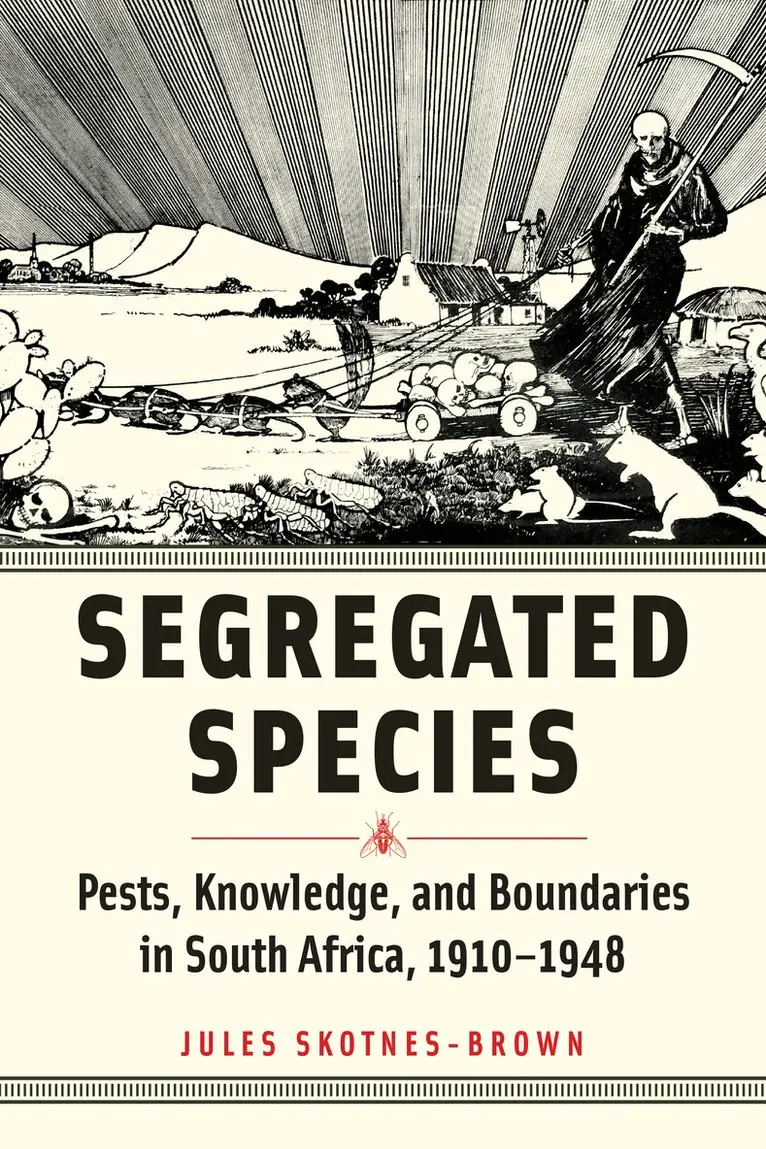
A timely history of the connections between science, segregation, and species in twentieth-century South Africa.Winner of the First Book Prize by the Royal Historical SocietyThroughout the twentieth century, rural South Africa was dominated by systems of racial segregation and apartheid that brutally oppressed its Black population. At the same time, the countryside was defined by a related settler obsession: the control of animals that farmers, scientists, and state officials considered pests. Elephants rampaged on farmlands, trampling fences, crops, and occasionally humans. Grain-eating birds flocked on plantations, devouring harvests. Bubonic plague crept across the veld in the bodies of burrowing and crop-devouring rodents.In Segregated Species, Jules Skotnes-Brown argues that racial segregation and pest control were closely connected in early twentieth-century South Africa. Strategies for the containment of pests were redeployed for the management of humans and vice versa. Settlers blamed racialized populations for the abundance of pests and mobilized metaphors of pestilence to dehumanize them. Even knowledge produced about pests was segregated into the binary categories of "native" and "scientific." Black South Africans critiqued such injustices, and some circulated revolutionary rhetoric through images and metaphors of locusts. Ultimately, pest-control practices played an important role in shaping colonial hierarchies of race and species and in mediating relationships among human groups. Skotnes-Brown demonstrates that the history of South Africa—and colonial history generally—cannot be fully understood without analyzing the treatment of both animals and humans.
Häftad, Engelska, 2025
503 kr
Skickas inom 5-8 vardagar
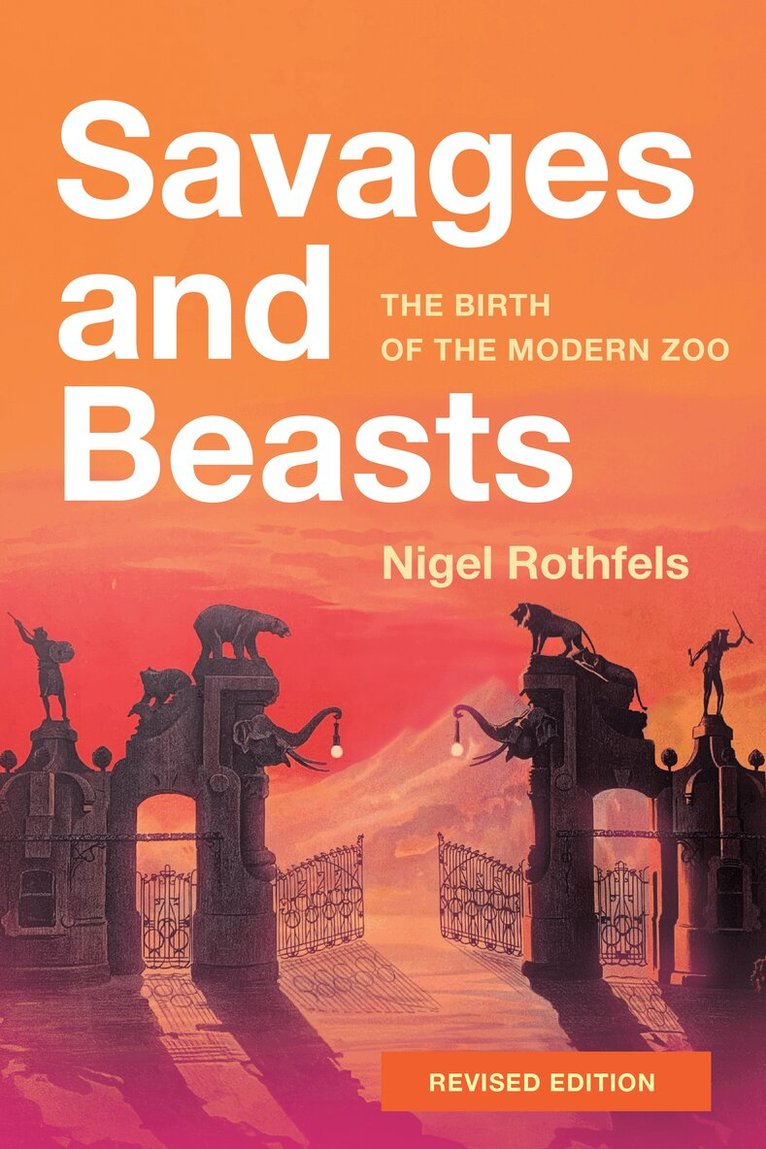
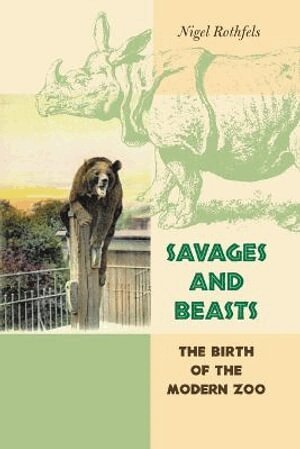
Now completely revised! A history of the modern zoo.In this revised edition of Savages and Beasts, Nigel Rothfels traces the origins of the modern zoo to the efforts of the German entrepreneur Carl Hagenbeck, the most successful dealer in exotic animals in the nineteenth century. Building from his core business in animals, Hagenbeck eventually became even more famous for his large ethnographic exhibitions and circus ventures. When Hagenbeck opened his Animal Park near Hamburg, Germany, in 1907, he brought together all his business interests in a revolutionary zoological park. He moved wild animals out of their cages and into "natural landscapes" and, in the process, invented a new way of imagining captivity. Through the use of theatrical scenery, the animals and people performing in his ethnographic exhibitions appeared to be living in their native lands. This revised edition addresses ethical concerns about the representation of indigenous peoples and animals and includes a host of new images and photographs.By examining Hagenbeck's enterprises, Savages and Beasts demonstrates how ideas about the role of zoos and the nature of animal captivity developed in the late nineteenth century. Rothfels provides a much-needed historical perspective on the connections between the development of modern zoos and their colonial histories.
Häftad, Engelska, 2025
434 kr
Skickas
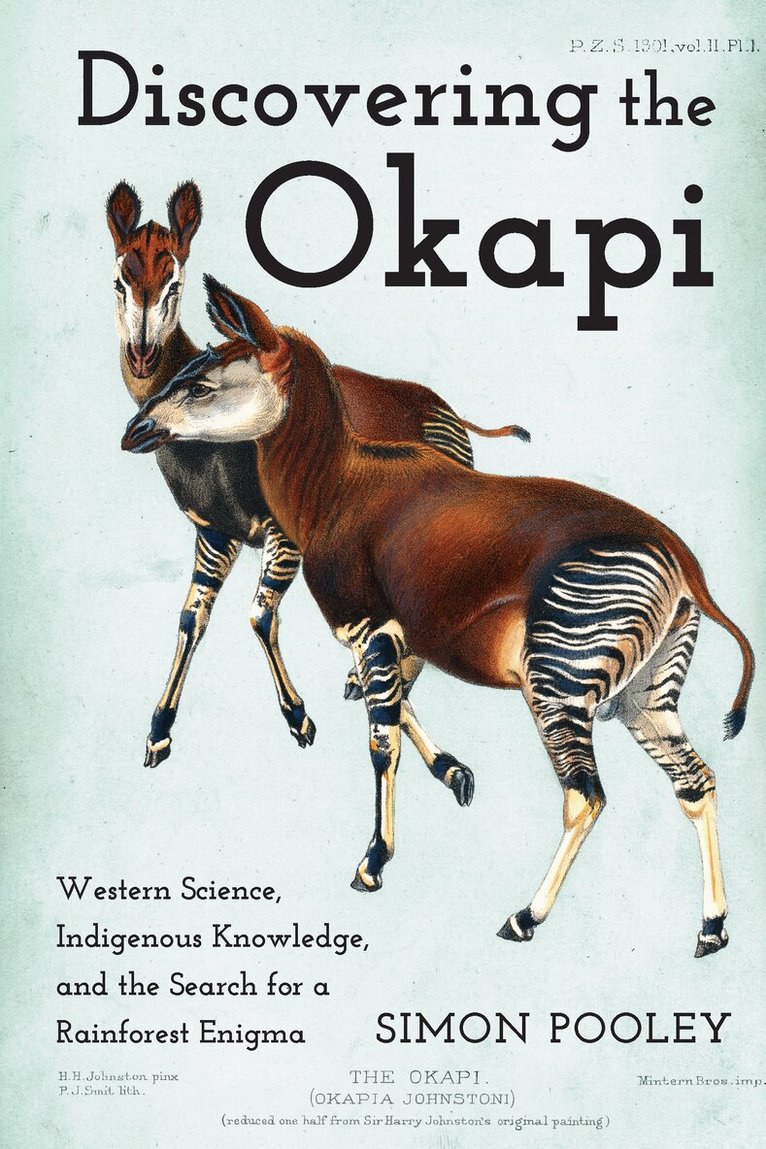
The captivating history of the okapi and its symbolic role in science, culture, and conservation.In Discovering the Okapi, Simon Pooley offers a fascinating portrait of the okapi—an elusive short-necked giraffid with zebra stripes, surviving in the rainforests of central Africa's Congo basin—and unpacks the complicated layers of Western science and Indigenous knowledge that shaped the world's understanding of this unique creature. Pooley tells the story of the okapi's "discovery" in 1900 by British naturalist Sir Harry Johnston, as well as the overlooked contributions of the Indigenous African people whose expertise made this sighting and subsequent hunt for specimens possible. The book traces how colonial politics and scientific racism shaped early accounts of the animal's study and examines the enduring biases that continue to influence conservation efforts today. The okapi became a symbol of scientific curiosity, colonial power, and conservation challenges, revealing complex intersections among biodiversity, cultural heritage, and environmental stewardship. Its precarious existence in captivity and the wild exposes how Western and Indigenous approaches to conservation can—and must—find common ground for its survival.
Häftad, Engelska, 2026
776 kr
Kommande
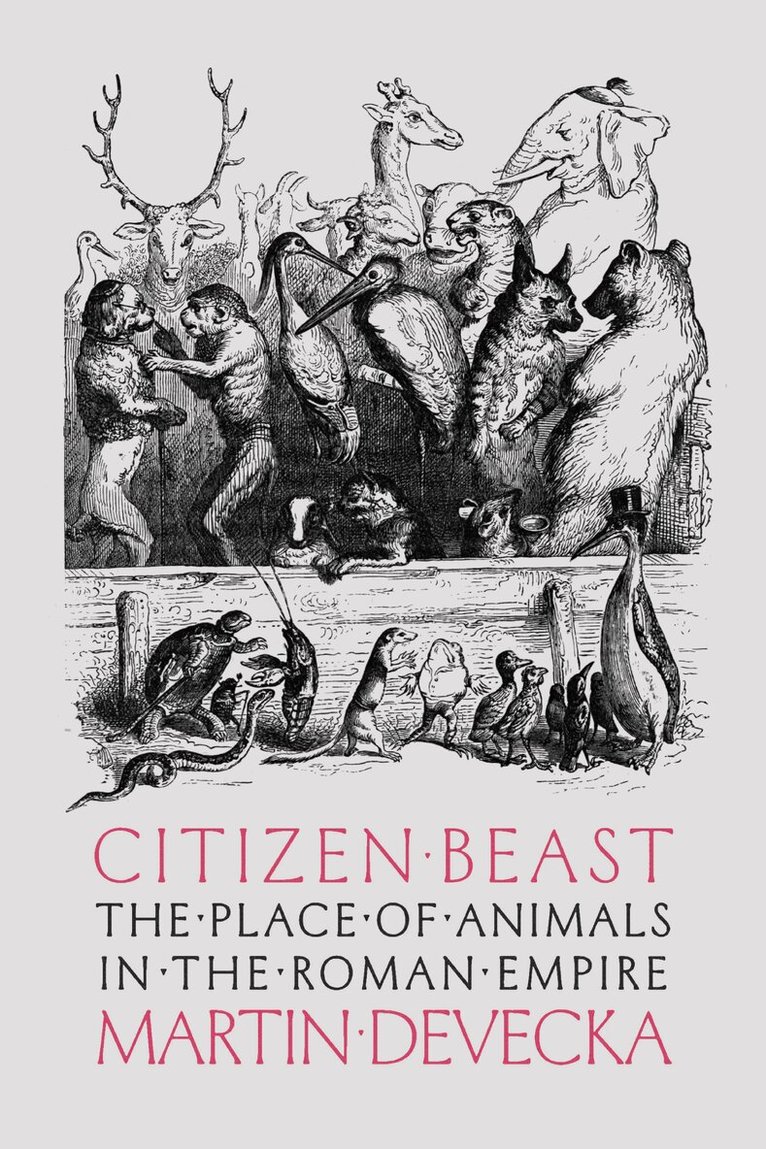
Animals, power, and belonging in the Roman Empire.Animals were everywhere in the Roman world: in labor, ritual, entertainment, warfare, and luxury. In Citizen Beast, Martin Devecka argues that they were not merely background figures but central participants in the formation of empire. He examines how animals came to belong to Rome and how their incorporation mirrored the processes that shaped human citizenship, subjection, and exclusion.Birds, mice, elephants, bears, pigs, donkeys, eels, and oysters serve as case studies for understanding how imperial power organized life itself. Through these examples, Citizen Beast reveals an empire that governed humans and animals together, treating both of them as economic resources and symbolic instruments. Roman writers often understood animals as intentional beings whose cooperation—or resistance—mattered. Devecka shows how these ideas helped structure legal practices, religious rituals, systems of punishment, and regimes of extraction. Animals helped enforce violence, stabilize hierarchy, and produce elite distinction, while also exposing the limits of imperial control.By treating the Roman Empire as a multispecies world, Citizen Beast reframes familiar histories of power, agency, and governance. The result is a striking account of how empire functioned by managing living beings—and why animals must be understood as historical actors in their own right.
Inbunden, Engelska, 2005
697 kr
Tillfälligt slut
In Civilized Creatures, Jennifer Mason challenges some of our most enduring ideas about how encounters with nonhuman nature shaped American literature and culture. Mason argues that in the second half of the nineteenth century the most powerful influence on Americans' understanding of their affinities with animals was not increasing separation from the pastoral and the wilderness; instead, it was the population's feelings about the ostensibly civilized animals they encountered in their daily lives. Americans of diverse backgrounds, Mason shows, found it attractive as well as politic to imagine themselves as most closely connected to those creatures who shared humans' aptitude for civilized life. And to the minds of many in this period, national prosperity depended less on periodic exposure to untamed, wild nature than it did on the proper care and keeping of such animals within suburban and urban environments. Combining literary analysis with cultural histories of equestrianism, petkeeping, and the animal welfare movement, Civilized Creatures offers new readings of works by Susan Warner, Nathaniel Hawthorne, Harriet Beecher Stowe, and Charles W. Chesnutt.In each case, Mason demonstrates that understanding contemporary relationships between humans and animals is essential for understanding the debates about gender, race, and cultural power enacted in these texts.
Inbunden, Engelska, 2007
898 kr
Tillfälligt slut
Ants long have fascinated linguists, human sociologists, and even cyberneticians. At the end of the nineteenth century, ants seemed to be admirable models for human life and were praised for their work ethic, communitarianism, and apparent empathy. They provided a natural-theological lesson on the relative importance of humans within creation and inspired psychologists to investigate the question of instinct and its place in the life of higher animals and humans. By the 1930s, however, ants came to symbolize one of modernity's deepest fears: the loss of selfhood. Researchers then viewed the ant colony as an unthinking mass, easily ruled and slavishly organized. In this volume, Charlotte Sleigh uses specific representations of ants within the field of entomology from the late nineteenth to mid-twentieth centuries to explore the broader role of metaphors in science and their often unpredictable translations. Marking the centenary of the coining of "myrmecology" to describe the study of ants, Six Legs Better demonstrates the remarkable historical role played by ants as a node where notions of animal, human, and automaton intersect.
Inbunden, Engelska, 2007
564 kr
Tillfälligt slut
The nineteenth century was the golden age of the horse. In urban America, the indispensable horse provided the power for not only vehicles that moved freight, transported passengers, and fought fires but also equipment in breweries, mills, foundries, and machine shops. Clay McShane and Joel A. Tarr, prominent scholars of American urban life, here explore the critical role that the horse played in the growing nineteenth-century metropolis. Using such diverse sources as veterinary manuals, stable periodicals, teamster magazines, city newspapers, and agricultural yearbooks, they examine how the horses were housed and fed and how workers bred, trained, marketed, and employed their four-legged assets. Not omitting the problems of waste removal and corpse disposal, they touch on the municipal challenges of maintaining a safe and productive living environment for both horses and people and the rise of organizations like the American Society for the Prevention of Cruelty to Animals.In addition to providing an insightful account of life and work in nineteenth-century urban America, The Horse in the City brings us to a richer understanding of how the animal fared in this unnatural and presumably uncomfortable setting.
Inbunden, Engelska, 2008
564 kr
Tillfälligt slut
The world of Thoroughbred racing is glamorous, secretive, dangerous, and seductive-the sport of kings and the poor man's obsession. While the spectacle of racing stirs the imagination, it belies the ruthless business that lies beneath. This engaging original study demystifies this complex world by comparing centers of excellence in Britain and North America. Drawing from intensive field work in Suffolk's Newmarket and Kentucky's Lexington, Rebecca Cassidy gives us the inside track on all players in the industry-from the elite breeders and owners to the stable boys, racetrack workers, and veterinarians. She leads us through horse farms, breeding barns, and yearling sales; explains rigorous training regimens; and brings us trackside on race day. But the history of Thoroughbred racing culture is more than a collection of fascinating characters and exciting events. Cassidy's investigation reveals the factors-ethical, cultural, political, and economic-that have shaped the racing tradition.
Häftad, Engelska, 2008
295 kr
Tillfälligt slut
To modern sensibilities, nineteenth-century zoos often seem to be unnatural places where animals led miserable lives in cramped, wrought-iron cages. Today zoo animals, in at least the better zoos, wander in open spaces that resemble natural habitats and are enclosed, not by bars, but by moats, cliffs, and other landscape features. In Savages and Beasts, Nigel Rothfels traces the origins of the modern zoo to the efforts of the German animal entrepreneur Carl Hagenbeck. By the late nineteenth century, Hagenbeck had emerged as the world's undisputed leader in the capture and transport of exotic animals. His business included procuring and exhibiting indigenous peoples in highly profitable spectacles throughout Europe and training exotic animals-humanely, Hagenbeck advertised-for circuses around the world. When in 1907 the Hagenbeck Animal Park opened in a village near Hamburg, Germany, Hagenbeck brought together all his business interests in a revolutionary zoological park. He moved wild animals out of their cages and into "natural landscapes" alongside "primitive" peoples from Africa, Asia, the Americas, and the islands of the Pacific.Hagenbeck had invented a new way of imagining captivity: the animals and people on exhibit appeared to be living in the wilds of their native lands. By looking at Hagenbeck's multiple enterprises, Savages and Beasts demonstrates how seemingly enlightened ideas about the role of zoos and the nature of animal captivity developed within the essentially tawdry business of placing exotic creatures on public display. Rothfels provides both fascinating reading and much-needed historical perspective on the nature of our relationship with the animal kingdom.
Inbunden, Engelska, 2011
567 kr
Tillfälligt slut
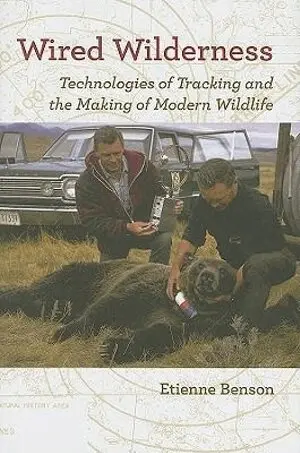
American wildlife biologists first began fitting animals with radio transmitters in the 1950s. By the 1980s the practice had proven so useful to scientists and nonscientists alike that it became global. Wired Wilderness is the first book-length study of the origin, evolution, use, and impact of these now-commonplace tracking technologies. Combining approaches from environmental history, the history of science and technology, animal studies, and the cultural and political history of the United States, Etienne Benson traces the radio tracking of wild animals across a wide range of institutions, regions, and species and in a variety of contexts. He explains how hunters, animal-rights activists, and other conservation-minded groups gradually turned tagging from a tool for control into a conduit for connection with wildlife.Drawing on extensive archival research, interviews with wildlife biologists and engineers, and in-depth case studies of specific conservation issues-such as the management of deer, grouse, and other game animals in the upper Midwest and the conservation of tigers and rhinoceroses in Nepal-Benson illuminates telemetry's context-dependent uses and meanings as well as commonalities among tagging practices. Wired Wilderness traces the evolution of the modern wildlife biologist's field practices and shows how the intense interest of nonscientists at once constrained and benefited the field. Scholars of and researchers involved in wildlife management will find this history both fascinating and revealing.
Inbunden, Engelska, 2013
584 kr
Tillfälligt slut
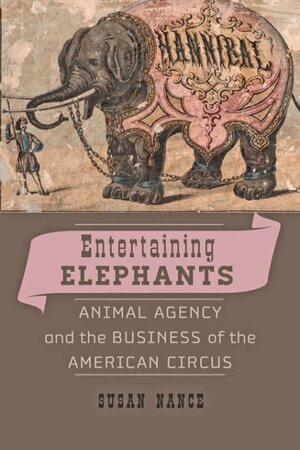
Consider the career of an enduring if controversial icon of American entertainment: the genial circus elephant. In "Entertaining Elephants" Susan Nance examines elephant behavior - drawing on the scientific literature of animal cognition, learning, and communications - to offer a study of elephants as actors (rather than objects) in American circus entertainment between 1800 and 1940. By developing a deeper understanding of animal behavior, Nance asserts, we can more fully explain the common history of all species. "Entertaining Elephants" is the first account that uses research on animal welfare, health, and cognition to interpret the historical record, examining how both circus people and elephants struggled behind the scenes to meet the profit necessities of the entertainment business. The book does not claim that elephants understood, endorsed, or resisted the world of show business as a human cultural or business practice, but it does speak of elephants rejecting the conditions of their experience. They lived in a kind of parallel reality in the circus, one that was defined by their interactions with people, other elephants, horses, bull hooks, hay, and the weather.Nance's study informs and complicates contemporary debates over human interactions with animals in entertainment and beyond, questioning the idea of human control over animals and people's claims to speak for them. As sentient beings, these elephants exercised agency, but they had no way of understanding the human cultures that created their captivity, and they obviously had no claim on (human) social and political power. They often lived lives of apparent desperation.