Debates in World History - Böcker
Visar alla böcker i serien Debates in World History. Handla med fri frakt och snabb leverans.
10 produkter
10 produkter
337 kr
Skickas inom 10-15 vardagar
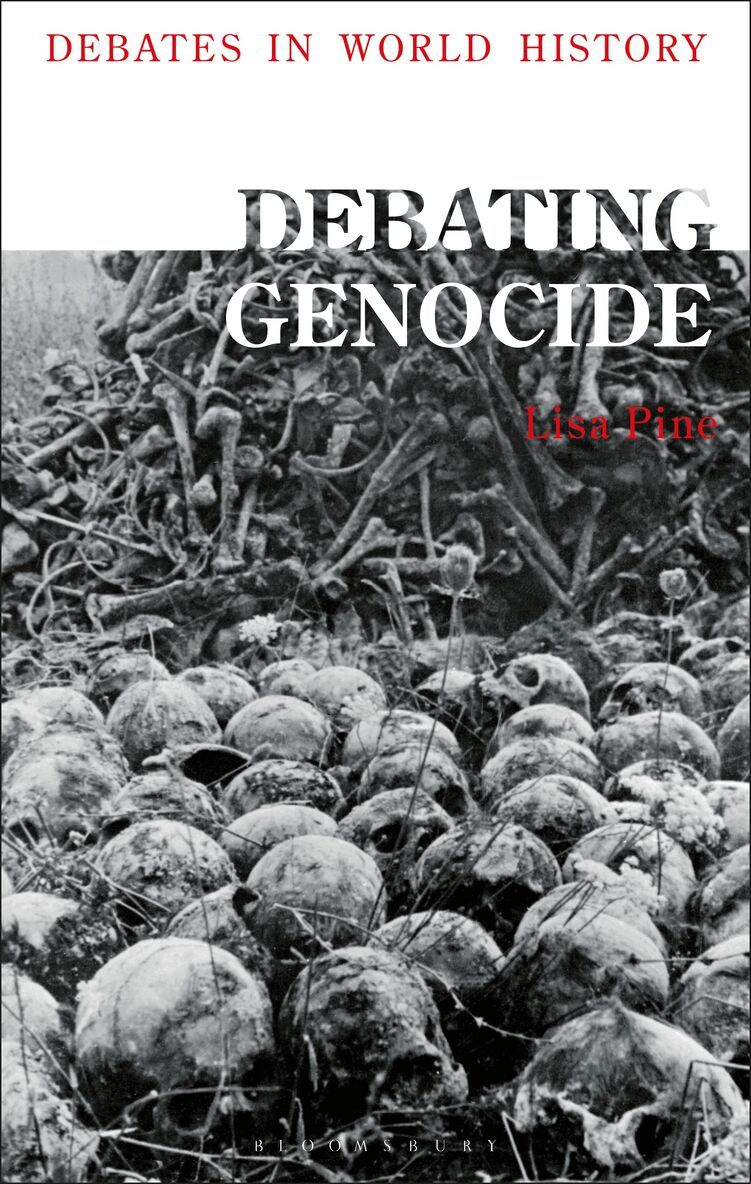
This book explores the subject of genocide through key debates and case studies. It analyses the dynamics of genocide – the processes and mechanisms of acts committed with the intention of destroying, in whole or in part, a national, ethnic, religious or racial group – in order to shed light upon its origins, characteristics and consequences.Debating Genocide begins with an introduction to the concept of genocide. It then examines the colonial genocides at the end of the 19th- and start of the 20th-centuries; the Armenian Genocide of 1915-16; the Nazi ‘Final Solution’; the Nazi genocide of the Gypsies; mass murder in Cambodia under the Khmer Rouge; the genocides in the 1990s in the former Yugoslavia and Rwanda; and the genocide in Sudan in the early 21st century. It also includes a thematic chapter which covers gender and genocide, as well as issues of memory and memorialisation. Finally, the book considers how genocides end, as well as the questions of resolution and denial, with Lisa Pine examining the debates around prediction and prevention and the R2P (Responsibility to Protect) initiative.This book is crucial for any students wanting to understand why genocides have occurred, why they still occur and what the key historical discussions around this subject entail.
901 kr
Skickas inom 10-15 vardagar
This book explores the subject of genocide through key debates and case studies. It analyses the dynamics of genocide – the processes and mechanisms of acts committed with the intention of destroying, in whole or in part, a national, ethnic, religious or racial group – in order to shed light upon its origins, characteristics and consequences.Debating Genocide begins with an introduction to the concept of genocide. It then examines the colonial genocides at the end of the 19th- and start of the 20th-centuries; the Armenian Genocide of 1915-16; the Nazi ‘Final Solution’; the Nazi genocide of the Gypsies; mass murder in Cambodia under the Khmer Rouge; the genocides in the 1990s in the former Yugoslavia and Rwanda; and the genocide in Sudan in the early 21st century. It also includes a thematic chapter which covers gender and genocide, as well as issues of memory and memorialisation. Finally, the book considers how genocides end, as well as the questions of resolution and denial, with Lisa Pine examining the debates around prediction and prevention and the R2P (Responsibility to Protect) initiative.This book is crucial for any students wanting to understand why genocides have occurred, why they still occur and what the key historical discussions around this subject entail.
296 kr
Skickas inom 10-15 vardagar
This timely book introduces readers to anarchism’s relationship to broader history, offering not only a history of anarchism in the modern period, but a critical introduction to debates on anarchist history. Attention thus far has been biased towards intellectual history and key thinkers such as Proudhon, Bakunin and Kropotkin, but these studies have neglected the social movements and spaces which have seen ‘anarchy in action’ and marginalised the role of women and voices beyond Europe and the United States.Debating Anarchism offers a different perspective, engaging with women’s anarchist experiences and grounding recent historical work on anarchism in a global perspective. Interrogating anarchism as a concept, a movement and a social reality the author guides the reader through the origins of anarchism in the age of revolutions, assessing experiences of anarchy in Russia, Spain, India and beyond. Tracing the development of ‘the beautiful idea’ through the 20th century, Finn explores anarchism in the Cold War world through to postmodernity and the 21st century. This volume situates anarchism in the broader historiographies of the modern world, offering a unique starting point for students of history, politics and philosophy seeking to understand the abiding power of ‘the beautiful idea’ – a society without government.
635 kr
Skickas
This timely book introduces readers to anarchism’s relationship to broader history, offering not only a history of anarchism in the modern period, but a critical introduction to debates on anarchist history. Attention thus far has been biased towards intellectual history and key thinkers such as Proudhon, Bakunin and Kropotkin, but these studies have neglected the social movements and spaces which have seen ‘anarchy in action’ and marginalised the role of women and voices beyond Europe and the United States.Debating Anarchism offers a different perspective, engaging with women’s anarchist experiences and grounding recent historical work on anarchism in a global perspective. Interrogating anarchism as a concept, a movement and a social reality the author guides the reader through the origins of anarchism in the age of revolutions, assessing experiences of anarchy in Russia, Spain, India and beyond. Tracing the development of ‘the beautiful idea’ through the 20th century, Finn explores anarchism in the Cold War world through to postmodernity and the 21st century. This volume situates anarchism in the broader historiographies of the modern world, offering a unique starting point for students of history, politics and philosophy seeking to understand the abiding power of ‘the beautiful idea’ – a society without government.
292 kr
Skickas
This concise introduction offers an overview of the global rise and spread of nationalism since the late 18th century. Reflecting on key themes and scholarship it presents case studies and primary sources to track the emergence of the modern nation, and understand how nationalism has given rise to phenomena such as identity-based conflict, authoritarian politics and populist movements.Debating Nationalism goes beyond a European focus to explore how nationalism has led to the emergence of nation states, ethnic conflict and how it is expressed everyday over the last 300 years. It engages with key debates such as the origins of nations and the dynamics of ethnic conflict and uses a historical lens to shed light on contemporary issues around migration, diversity and authoritarian politics.This updated and revised edition includes updates on recent developments and the latest literature with additional material throughout, covering the rise of the far-right, Covid-19, Russian aggression against Ukraine and the war in Gaza, and topics including everyday nationalism, culture, minority nationalist politics, gender, and post-colonial authoritarianism. With new further reading sections, a dedicated chapter as a guide to key debates and a glossary of terms, this book offers students a holistic understanding of the history of nationalism.
901 kr
Skickas inom 10-15 vardagar
This concise introduction offers an overview of the global rise and spread of nationalism since the late 18th century. Reflecting on key themes and scholarship it presents case studies and primary sources to track the emergence of the modern nation, and understand how nationalism has given rise to phenomena such as identity-based conflict, authoritarian politics and populist movements.Debating Nationalism goes beyond a European focus to explore how nationalism has led to the emergence of nation states, ethnic conflict and how it is expressed everyday over the last 300 years. It engages with key debates such as the origins of nations and the dynamics of ethnic conflict and uses a historical lens to shed light on contemporary issues around migration, diversity and authoritarian politics.This updated and revised edition includes updates on recent developments and the latest literature with additional material throughout, covering the rise of the far-right, Covid-19, Russian aggression against Ukraine and the war in Gaza, and topics including everyday nationalism, culture, minority nationalist politics, gender, and post-colonial authoritarianism. With new further reading sections, a dedicated chapter as a guide to key debates and a glossary of terms, this book offers students a holistic understanding of the history of nationalism.
324 kr
Skickas inom 10-15 vardagar
The industrial revolution was and is a huge development and one of the fundamental changes in human experience in the modern world. In Debating the Industrial Revolution, Peter N. Stearns, a leading expert in world history, presents the major contours of the ongoing debates over industrialization in history. He explores the central historical discussion over what caused such a momentous change, demonstrating how interpretations have developed over time and encouraging students to critically engage with historical practice.Trying to understand why industrialization happened, and why it continues to happen, continues to organize considerable analytical energy. This book will be the ideal primer for students wanting to understand the key debates, and get a sense of how they might develop in the future.
1 314 kr
Skickas inom 10-15 vardagar
The industrial revolution was and is a huge development and one of the fundamental changes in human experience in the modern world. In Debating the Industrial Revolution, Peter N. Stearns, a leading expert in world history, presents the major contours of the ongoing debates over industrialization in history. He explores the central historical discussion over what caused such a momentous change, demonstrating how interpretations have developed over time and encouraging students to critically engage with historical practice.Trying to understand why industrialization happened, and why it continues to happen, continues to organize considerable analytical energy. This book will be the ideal primer for students wanting to understand the key debates, and get a sense of how they might develop in the future.
1 314 kr
Skickas inom 10-15 vardagar
Revolution is an idea that has been one of the most important drivers of human activity since its emergence in its modern form in the 18th century. From the American and French revolutionaries who upset a monarchical order that had dominated for over a millennium up to the Arab Spring, this notion continues but has also developed its meanings. Equated with democracy and legal equality at first and surprisingly redefined into its modern meaning, revolution has become a means to create nations, change the social order, and throw out colonial occupiers, and has been labelled as both conservative and reactionary.In this concise introduction to the topic, Jack R. Censer charts the development of these competing ideas and definitions in four chronological sections. Each section includes a debate from protagonists who represent various forms of revolution and counterrevolution, allowing students a firmer grasp on the particular ideas and individuals of each era. This book offers a new approach to the topic of revolution for all students of world history.
318 kr
Skickas inom 7-10 vardagar
Revolution is an idea that has been one of the most important drivers of human activity since its emergence in its modern form in the 18th century. From the American and French revolutionaries who upset a monarchical order that had dominated for over a millennium up to the Arab Spring, this notion continues but has also developed its meanings. Equated with democracy and legal equality at first and surprisingly redefined into its modern meaning, revolution has become a means to create nations, change the social order, and throw out colonial occupiers, and has been labelled as both conservative and reactionary.In this concise introduction to the topic, Jack R. Censer charts the development of these competing ideas and definitions in four chronological sections. Each section includes a debate from protagonists who represent various forms of revolution and counterrevolution, allowing students a firmer grasp on the particular ideas and individuals of each era. This book offers a new approach to the topic of revolution for all students of world history.