Earthscan Conservation and Development – serie
Visar alla böcker i serien Earthscan Conservation and Development. Handla med fri frakt och snabb leverans.
14 produkter
14 produkter
Häftad, Engelska, 2019
657 kr
Skickas inom 10-15 vardagar
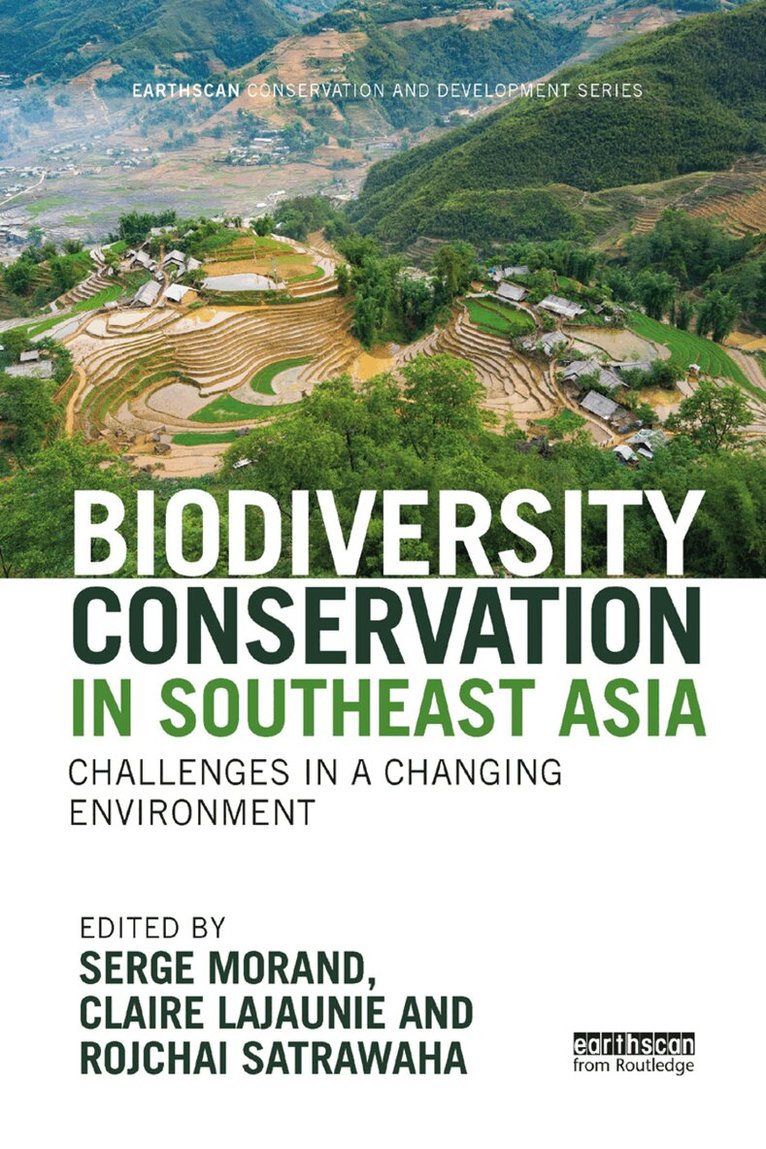
Southeast Asia is highly diversified in terms of socio-ecosystems and biodiversity, but is undergoing dramatic environmental and social changes. These changes characterize the recent period and can be illustrated by the effects of the Green Revolution in the late 1960s and 1970s, to the globalization of trade and increasing agronomic intensification over the past decade. Biodiversity Conservation in Southeast Asia provides theoretical overviews and challenges for applied research in living resource management, conservation ecology, health ecology and conservation planning in Southeast Asia. Five key themes are addressed: origin and evolution of Southeast Asian biodiversity; challenges in conservation biology; ecosystem services and biodiversity; managing biodiversity and living resources; policy, economics and governance of biodiversity. Detailed case studies are included from Thailand and the Lower Mekong Basin, while other chapters address cross-cutting themes applicable to the whole Southeast Asia region.This is a valuable resource for academics and students in the areas of ecology, conservation, environmental policy and management, Southeast Asian studies and sustainable development.
Häftad, Engelska, 2020
629 kr
Skickas inom 10-15 vardagar
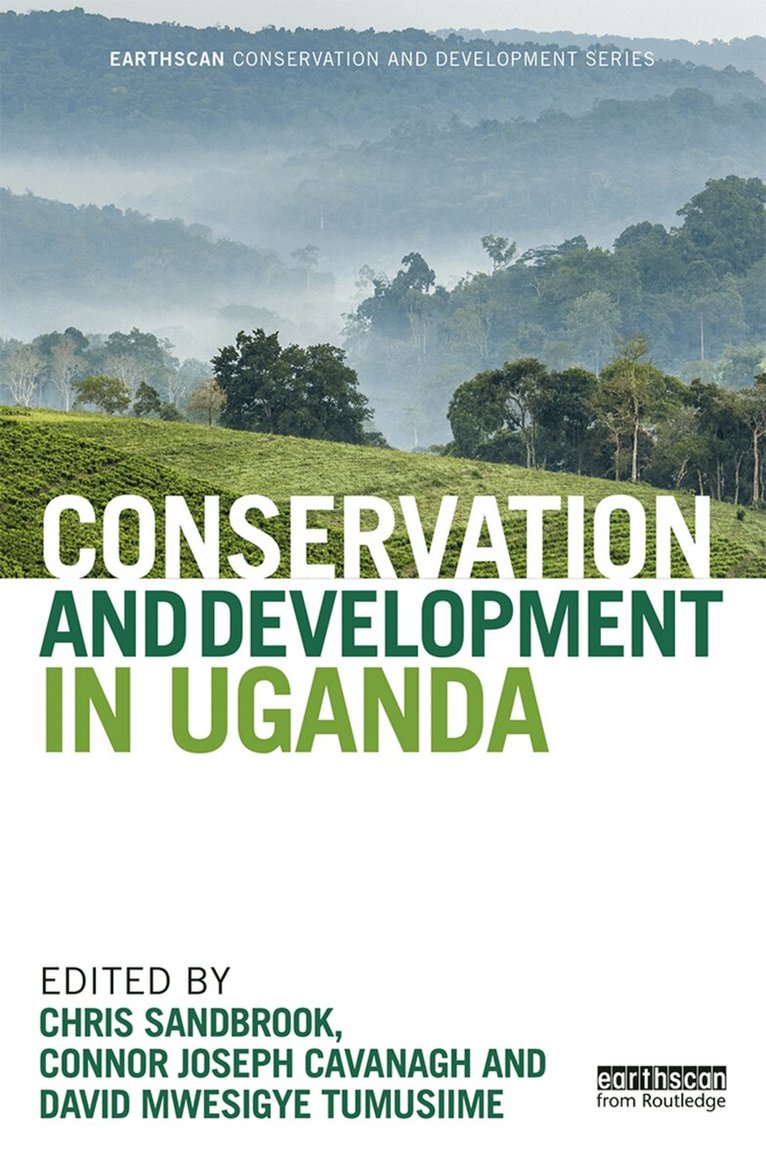
Uganda has extensive protected areas and iconic wildlife (including mountain gorillas), which exist within a complex social and political environment. In recent years Uganda has been seen as a test bed and model case study for numerous and varied approaches to address complex and connected conservation and development challenges. This volume reviews and assesses these initiatives, collecting new research and analyses both from emerging scholars and well-established academics in Uganda and around the globe. Approaches covered range from community-based conservation to the more recent proliferation of neoliberalised interventions based on markets and payments for ecosystem services. Drawing on insights from political ecology, human geography, institutional economics, and environmental science, the authors explore the challenges of operationalising truly sustainable forms of development in a country whose recent history is characterised by a highly volatile governance and development context. They highlight the stakes for vulnerable human populations in relation to of large and growing socioeconomic inequalities, as well as for Uganda’s rich, unique, and globally significant biodiversity. They illustrate the conflicts that occur between competing claims of conservation, agriculture, tourism, and the energy and mining industries. Crucially, the book draws out lessons that can be learned from the Ugandan experience for conservation and development practitioners and scholars around the world.
Häftad, Engelska, 2020
629 kr
Skickas inom 10-15 vardagar
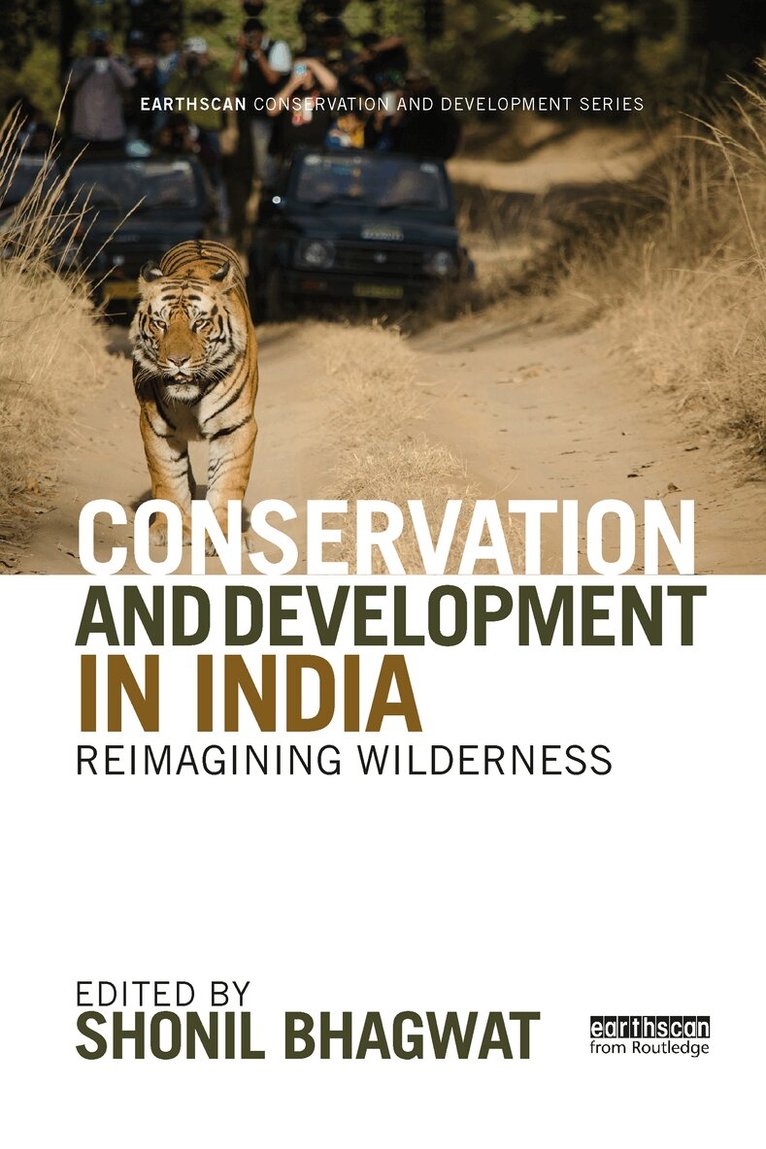
Despite decades of efforts to integrate conservation and development, India is torn between two very different worldviews of peoples’ place in the country’s natural environment. This book takes a critical look at nature conservation and poverty alleviation in India. It opens up discussion of the conservation–development nexus in a country that stands at a major crossroads, where forces of neoliberalism, globalisation and urbanisation are driving the future of India’s environment. As the book shows, conservation in India is increasingly concerned with creating ‘theme parks’ – inviolate, albeit isolated, spaces for wild nature, whereas development is concerned with fast-tracking the construction of built infrastructure while also rolling out nationwide welfare programmes – promising food, clothing and shelter for the poorest of the poor living in rural India. Conservation and development therefore have very different motivations and attempts to find a common ground have been fraught with challenges. This has been particularly so on the fringes of wildlife parks, where the rural poor come in frequent contact with wild animals to the detriment of both people and wildlife. Chapters are written by leading scholars on India to provide a vision of the future of Indian nature conservation. Whilst focused on India, the book will also be of interest to scholars and researchers of conservation and development more globally. As a ‘rising power’, the world’s eyes are set on India’s development trajectory and there is unprecedented interest in the course of development that the world’s largest democracy takes in the decades to come.
Häftad, Engelska, 2016
768 kr
Skickas inom 10-15 vardagar
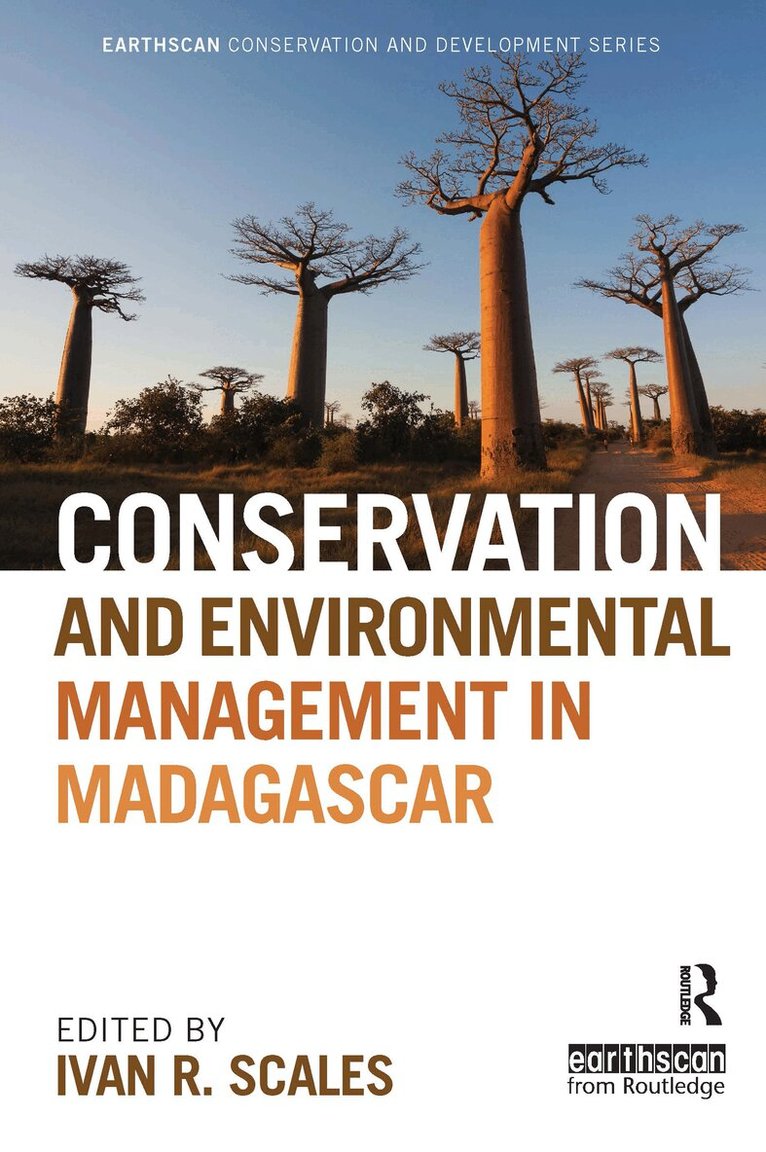
Madagascar is one of the most biologically diverse places on the planet, the result of 160 million years of isolation from the African mainland. More than 80% of its species are not found anywhere else on Earth. However, this highly diverse flora and fauna is threatened by habitat loss and fragmentation, and the island has been classified as one of the world’s highest conservation priorities. Drawing on insights from geography, anthropology, sustainable development, political science and ecology, this book provides a comprehensive assessment of the status of conservation and environmental management in Madagascar. It describes how conservation organisations have been experimenting with new forms of protected areas, community-based resource management, ecotourism, and payments for ecosystem services. But the country must also deal with pressing human needs. The problems of poverty, development, environmental justice, natural resource use and biodiversity conservation are shown to be interlinked in complex ways. Authors address key questions, such as who are the winners and losers in attempts to conserve biodiversity? And what are the implications of new forms of conservation for rural livelihoods and environmental justice?
Inbunden, Engelska, 2014
2 359 kr
Skickas inom 10-15 vardagar
Madagascar is one of the most biologically diverse places on the planet, the result of 160 million years of isolation from the African mainland. More than 80% of its species are not found anywhere else on Earth. However, this highly diverse flora and fauna is threatened by habitat loss and fragmentation, and the island has been classified as one of the world’s highest conservation priorities. Drawing on insights from geography, anthropology, sustainable development, political science and ecology, this book provides a comprehensive assessment of the status of conservation and environmental management in Madagascar. It describes how conservation organisations have been experimenting with new forms of protected areas, community-based resource management, ecotourism, and payments for ecosystem services. But the country must also deal with pressing human needs. The problems of poverty, development, environmental justice, natural resource use and biodiversity conservation are shown to be interlinked in complex ways. Authors address key questions, such as who are the winners and losers in attempts to conserve biodiversity? And what are the implications of new forms of conservation for rural livelihoods and environmental justice?
Inbunden, Engelska, 2015
2 220 kr
Skickas inom 10-15 vardagar
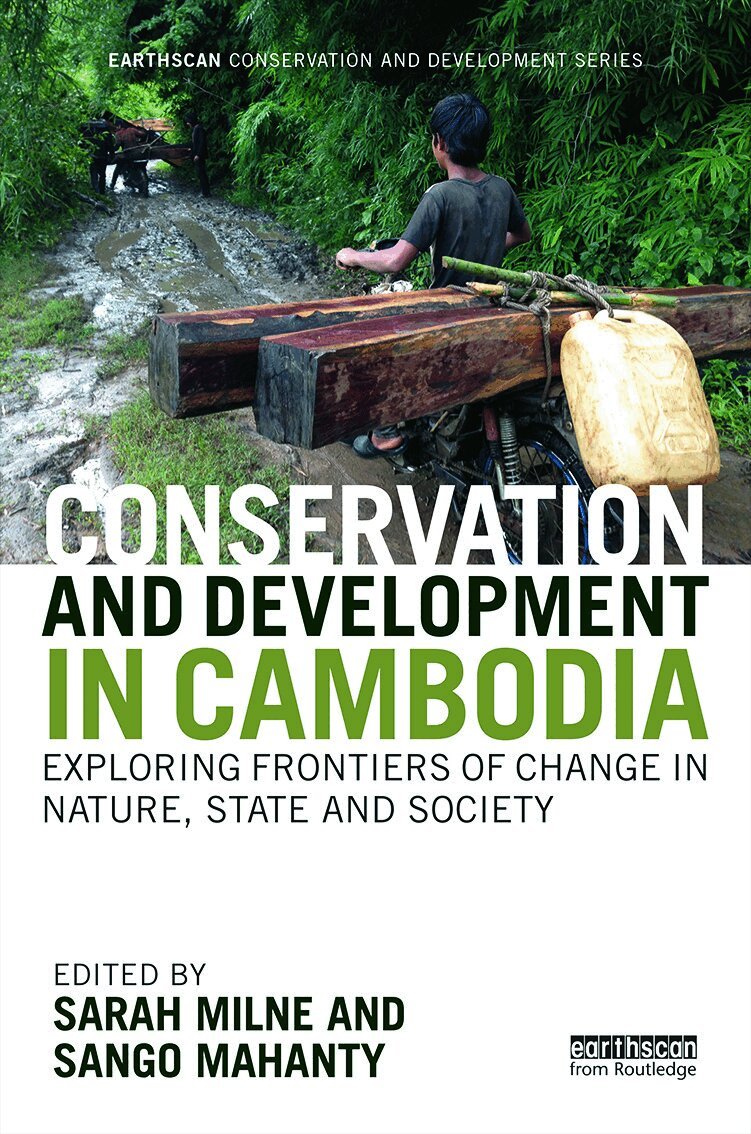
Written by leading authorities from Australasia, Europe and North America, this book examines the dynamic conflicts and synergies between nature conservation and human development in contemporary Cambodia.After suffering conflict and stagnation in the late twentieth century, Cambodia has experienced an economic transformation in the last decade, with growth averaging almost ten per cent per year, partly through investment from China. However this rush for development has been coupled with tremendous social and environmental change which, although positive in some aspects, has led to rising inequality and profound shifts in the condition, ownership and management of natural resources. High deforestation rates, declining fish stocks, biodiversity loss, and alienation of indigenous and rural people from their land and traditional livelihoods are now matters of increasing local and international concern.The book explores the social and political dimensions of these environmental changes in Cambodia, and of efforts to intervene in and ‘improve’ current trajectories for conservation and development. It provides a compelling analysis of the connections between nature, state and society, pointing to the key role of grassroots and non-state actors in shaping Cambodia’s frontiers of change. These insights will be of great interest to scholars of Southeast Asia and environment-development issues in general.
Häftad, Engelska, 2024
490 kr
Skickas inom 10-15 vardagar
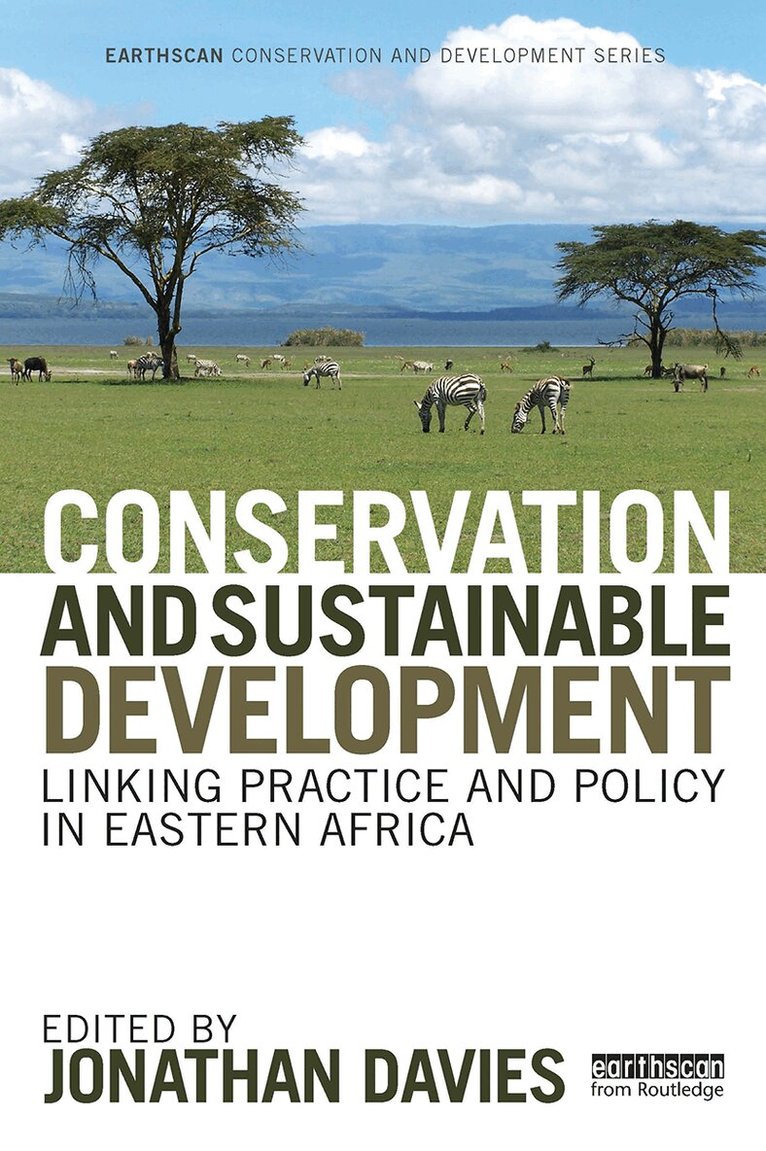
The links between policy and practice in natural resource management are often depicted as a cyclical and rational process. In reality, policymaking and implementation are often irrational, unpredictable and highly political. Many science and knowledge-based institutions undertake rigorous research with the aim of influencing policy, but often their influence is much less than intended. Understanding who influences policy at different levels, and how, is crucial to ensure that science is deployed most effectively so as to have an influence on conservation and natural resource management. Conservation and Sustainable Development presents a variety of innovative ways that have been used to influence policy processes, from community pressure groups through elected and unelected leaders, to scientific discourse at the levels of directors of economic planning and conservation. This book analyzes experiences from a variety of conservation interventions by the International Union for Conservation of Nature (IUCN) and other agencies, primarily in Eastern Africa, and challenges the notion of policymaking as a cyclical process. It elaborates on this theme and presents an array of examples of how communities have influenced government, through direct lobbying, influence of parliamentarians, wielding of science and research, and inter-community dialogue, networking and solidarity. The authors present a framework for understanding and strategizing such work so that other institutions can identify where they can best add value.
Inbunden, Engelska, 2017
2 151 kr
Skickas inom 10-15 vardagar
Southeast Asia is highly diversified in terms of socio-ecosystems and biodiversity, but is undergoing dramatic environmental and social changes. These changes characterize the recent period and can be illustrated by the effects of the Green Revolution in the late 1960s and 1970s, to the globalization of trade and increasing agronomic intensification over the past decade. Biodiversity Conservation in Southeast Asia provides theoretical overviews and challenges for applied research in living resource management, conservation ecology, health ecology and conservation planning in Southeast Asia. Five key themes are addressed: origin and evolution of Southeast Asian biodiversity; challenges in conservation biology; ecosystem services and biodiversity; managing biodiversity and living resources; policy, economics and governance of biodiversity. Detailed case studies are included from Thailand and the Lower Mekong Basin, while other chapters address cross-cutting themes applicable to the whole Southeast Asia region.This is a valuable resource for academics and students in the areas of ecology, conservation, environmental policy and management, Southeast Asian studies and sustainable development.
Häftad, Engelska, 2017
712 kr
Skickas inom 10-15 vardagar
Written by leading authorities from Australasia, Europe and North America, this book examines the dynamic conflicts and synergies between nature conservation and human development in contemporary Cambodia.After suffering conflict and stagnation in the late twentieth century, Cambodia has experienced an economic transformation in the last decade, with growth averaging almost ten per cent per year, partly through investment from China. However this rush for development has been coupled with tremendous social and environmental change which, although positive in some aspects, has led to rising inequality and profound shifts in the condition, ownership and management of natural resources. High deforestation rates, declining fish stocks, biodiversity loss, and alienation of indigenous and rural people from their land and traditional livelihoods are now matters of increasing local and international concern.The book explores the social and political dimensions of these environmental changes in Cambodia, and of efforts to intervene in and ‘improve’ current trajectories for conservation and development. It provides a compelling analysis of the connections between nature, state and society, pointing to the key role of grassroots and non-state actors in shaping Cambodia’s frontiers of change. These insights will be of great interest to scholars of Southeast Asia and environment-development issues in general.
Inbunden, Engelska, 2018
2 151 kr
Skickas inom 10-15 vardagar
Uganda has extensive protected areas and iconic wildlife (including mountain gorillas), which exist within a complex social and political environment. In recent years Uganda has been seen as a test bed and model case study for numerous and varied approaches to address complex and connected conservation and development challenges. This volume reviews and assesses these initiatives, collecting new research and analyses both from emerging scholars and well-established academics in Uganda and around the globe. Approaches covered range from community-based conservation to the more recent proliferation of neoliberalised interventions based on markets and payments for ecosystem services. Drawing on insights from political ecology, human geography, institutional economics, and environmental science, the authors explore the challenges of operationalising truly sustainable forms of development in a country whose recent history is characterised by a highly volatile governance and development context. They highlight the stakes for vulnerable human populations in relation to of large and growing socioeconomic inequalities, as well as for Uganda’s rich, unique, and globally significant biodiversity. They illustrate the conflicts that occur between competing claims of conservation, agriculture, tourism, and the energy and mining industries. Crucially, the book draws out lessons that can be learned from the Ugandan experience for conservation and development practitioners and scholars around the world.
Inbunden, Engelska, 2017
2 151 kr
Skickas inom 10-15 vardagar
Loss of biodiversity is one of the great environmental challenges facing humanity but unfortunately efforts to reduce the rate of loss have so far failed. At the same time, these efforts have too often resulted in unjust social outcomes in which people living in or near to areas designated for conservation lose access to their territories and resources. In this book the author argues that our approach to biodiversity conservation needs to be more strongly informed by a concern for and understanding of social justice issues. Injustice can be a driver of biodiversity loss and a barrier to efforts at preservation. Conversely, the pursuit of social justice can be a strong motivation to find solutions to environmental problems. The book therefore argues that the pursuit of socially just conservation is not only intrinsically the right thing to do, but will also be instrumental in bringing about greater success. The argument for a more socially just conservation is initially developed conceptually, drawing upon ideas of environmental justice that incorporate concerns for distribution, procedure and recognition. It is then applied to a range of approaches to conservation including benefit sharing arrangements, integrated conservation and development projects and market-based approaches such as sustainable timber certification and payments for ecosystem services schemes. Case studies are drawn from the author's research in Rwanda, Uganda, Tanzania, Laos, Bolivia, China and India.
Häftad, Engelska, 2017
657 kr
Skickas inom 10-15 vardagar
Loss of biodiversity is one of the great environmental challenges facing humanity but unfortunately efforts to reduce the rate of loss have so far failed. At the same time, these efforts have too often resulted in unjust social outcomes in which people living in or near to areas designated for conservation lose access to their territories and resources. In this book the author argues that our approach to biodiversity conservation needs to be more strongly informed by a concern for and understanding of social justice issues. Injustice can be a driver of biodiversity loss and a barrier to efforts at preservation. Conversely, the pursuit of social justice can be a strong motivation to find solutions to environmental problems. The book therefore argues that the pursuit of socially just conservation is not only intrinsically the right thing to do, but will also be instrumental in bringing about greater success. The argument for a more socially just conservation is initially developed conceptually, drawing upon ideas of environmental justice that incorporate concerns for distribution, procedure and recognition. It is then applied to a range of approaches to conservation including benefit sharing arrangements, integrated conservation and development projects and market-based approaches such as sustainable timber certification and payments for ecosystem services schemes. Case studies are drawn from the author's research in Rwanda, Uganda, Tanzania, Laos, Bolivia, China and India.
Inbunden, Engelska, 2018
2 151 kr
Skickas inom 10-15 vardagar
Despite decades of efforts to integrate conservation and development, India is torn between two very different worldviews of peoples’ place in the country’s natural environment. This book takes a critical look at nature conservation and poverty alleviation in India. It opens up discussion of the conservation–development nexus in a country that stands at a major crossroads, where forces of neoliberalism, globalisation and urbanisation are driving the future of India’s environment. As the book shows, conservation in India is increasingly concerned with creating ‘theme parks’ – inviolate, albeit isolated, spaces for wild nature, whereas development is concerned with fast-tracking the construction of built infrastructure while also rolling out nationwide welfare programmes – promising food, clothing and shelter for the poorest of the poor living in rural India. Conservation and development therefore have very different motivations and attempts to find a common ground have been fraught with challenges. This has been particularly so on the fringes of wildlife parks, where the rural poor come in frequent contact with wild animals to the detriment of both people and wildlife. Chapters are written by leading scholars on India to provide a vision of the future of Indian nature conservation. Whilst focused on India, the book will also be of interest to scholars and researchers of conservation and development more globally. As a ‘rising power’, the world’s eyes are set on India’s development trajectory and there is unprecedented interest in the course of development that the world’s largest democracy takes in the decades to come.
Inbunden, Engelska, 2012
1 979 kr
Skickas inom 10-15 vardagar
The links between policy and practice in natural resource management are often depicted as a cyclical and rational process. In reality, policymaking and implementation are often irrational, unpredictable and highly political. Many science and knowledge-based institutions undertake rigorous research with the aim of influencing policy, but often their influence is much less than intended. Understanding who influences policy at different levels, and how, is crucial to ensure that science is deployed most effectively so as to have an influence on conservation and natural resource management. Conservation and Sustainable Development presents a variety of innovative ways that have been used to influence policy processes, from community pressure groups through elected and unelected leaders, to scientific discourse at the levels of directors of economic planning and conservation. This book analyzes experiences from a variety of conservation interventions by the International Union for Conservation of Nature (IUCN) and other agencies, primarily in Eastern Africa, and challenges the notion of policymaking as a cyclical process. It elaborates on this theme and presents an array of examples of how communities have influenced government, through direct lobbying, influence of parliamentarians, wielding of science and research, and inter-community dialogue, networking and solidarity. The authors present a framework for understanding and strategizing such work so that other institutions can identify where they can best add value.