Eastern and Central European Voices – serie
Visar alla böcker i serien Eastern and Central European Voices. Handla med fri frakt och snabb leverans.
11 produkter
11 produkter
Inbunden, Engelska, 2024
2 765 kr
Skickas inom 11-20 vardagar
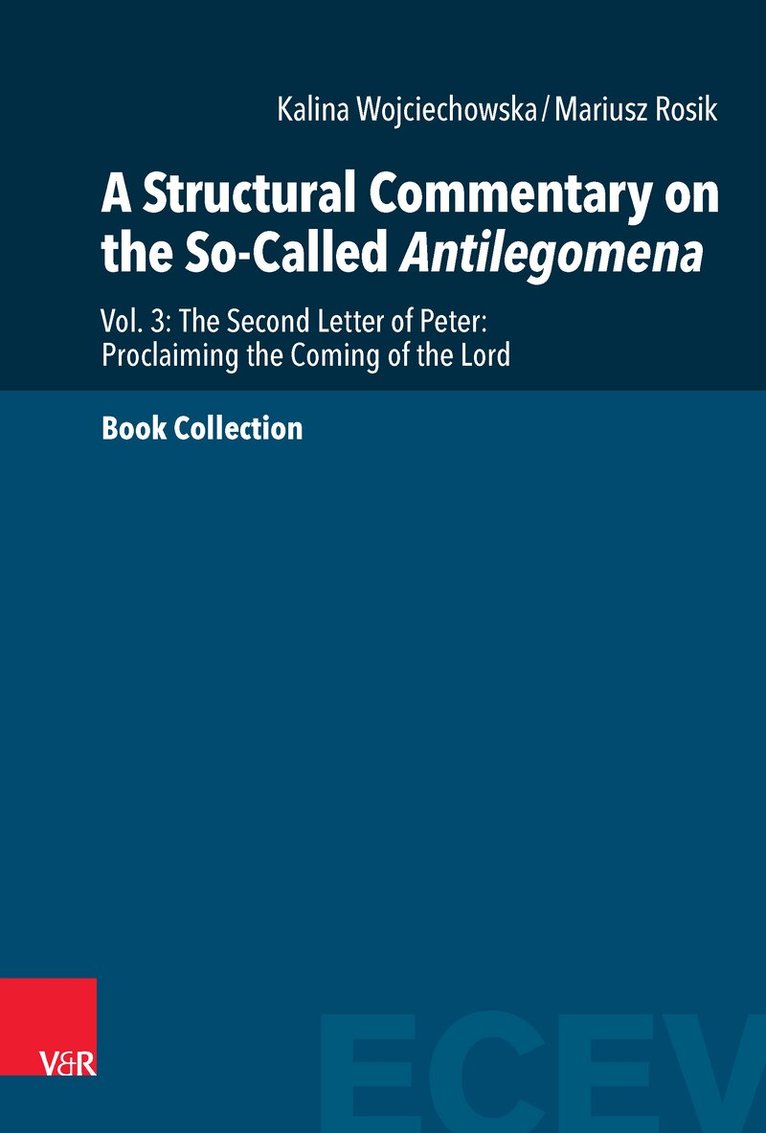
The structural approach facilitates exposure of the elements of eschatological teaching characteristic of 2 Peter’s author with its correct or incorrect interpretation. Narratives drawn from Jewish tradition aim to show two attitudes towards the announcement of destruction: a positive attitude, signifying salvation, and a negative attitude, signifying annihilation. This pattern is transferred to the attitude towards prophetic and apostolic eschatological teaching. Part 1 of the commentary (2 Pet 1–2) focuses on the misinterpretation of this teaching by false teachers and their followers. Their eschatological scepticism is ridiculed and their grim fate described. As the starting point for this description and Peter’s whole line of argumentation 2 Pet 2:3b is taken – the thesis is that God’s inaction is only apparent, while judgment and punishment are inevitable, although only God knows when they will be executed.Part 2 of the commentary (2 Pet 3) focuses on the proper interpretation of this teaching and on laying out the principles of the letter author's hermeneutics. This hermeneutic construes texts from Jewish tradition as foreshadowing and typologies of eschatological events. In explaining the principles of his hermeneutic, the letter’s author drew on the creation story, which Jewish apocalypticism read inversely, to mark that the eschatological hermeneutics is rooted in tradition. The starting point of Peter's line of argumentation was taken to be 2 Pet 3:5.7 with its thesis of God's creative and destructive word and God's sovereign will regarding the preservation of creation and the appointment of the time of judgement. This thesis explains the apparent lack of divine action, which was also a major concern in Part 1 of the commentary (2 Pet 1–2).
Inbunden, Engelska, 2025
1 782 kr
Skickas inom 11-20 vardagar
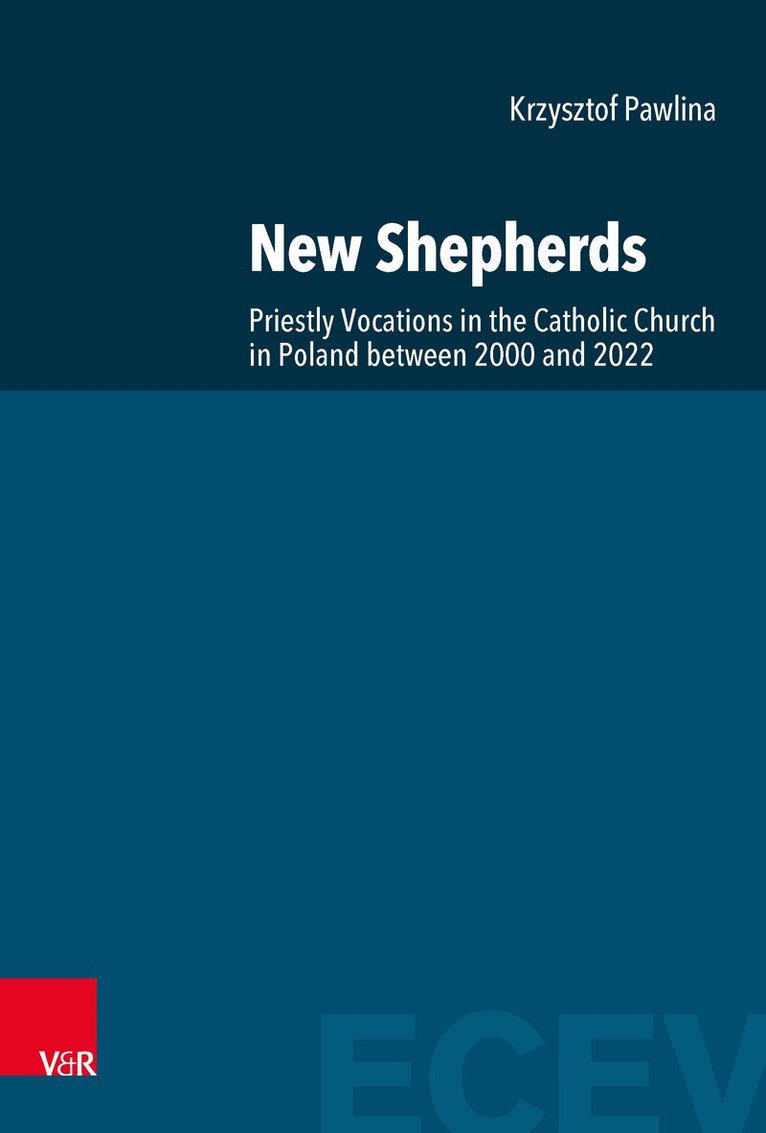
Krzysztof Pawlina presents in his book a profile of a candidate for the priesthood who enters a seminary in Poland. The study was first conducted by survey method in 2000 and then repeated twenty years later. In the former period, the survey covered seminarians born and partly brought up during the communist rule in Poland, while in the latter, the survey subjects were young people who were brought up in the conditions of a democracy and the free market economy. The research captured the change that had taken place in regard to the social identity, lifestyle and mentality of candidates for the priesthood. The study covered aspects such as the geographical and social sources of priestly vocations, the cultural background of priesthood candidates, their religiosity, their world of values, their motivations, their understanding of the priesthood and the Church. This change in question was explored in the context of social transformations, especially the secularisation processes taking place in the last two decades of Poland.
Inbunden, Engelska, 2024
1 782 kr
Skickas inom 11-20 vardagar
Inbunden, Engelska, 2025
1 512 kr
Skickas inom 3-6 vardagar
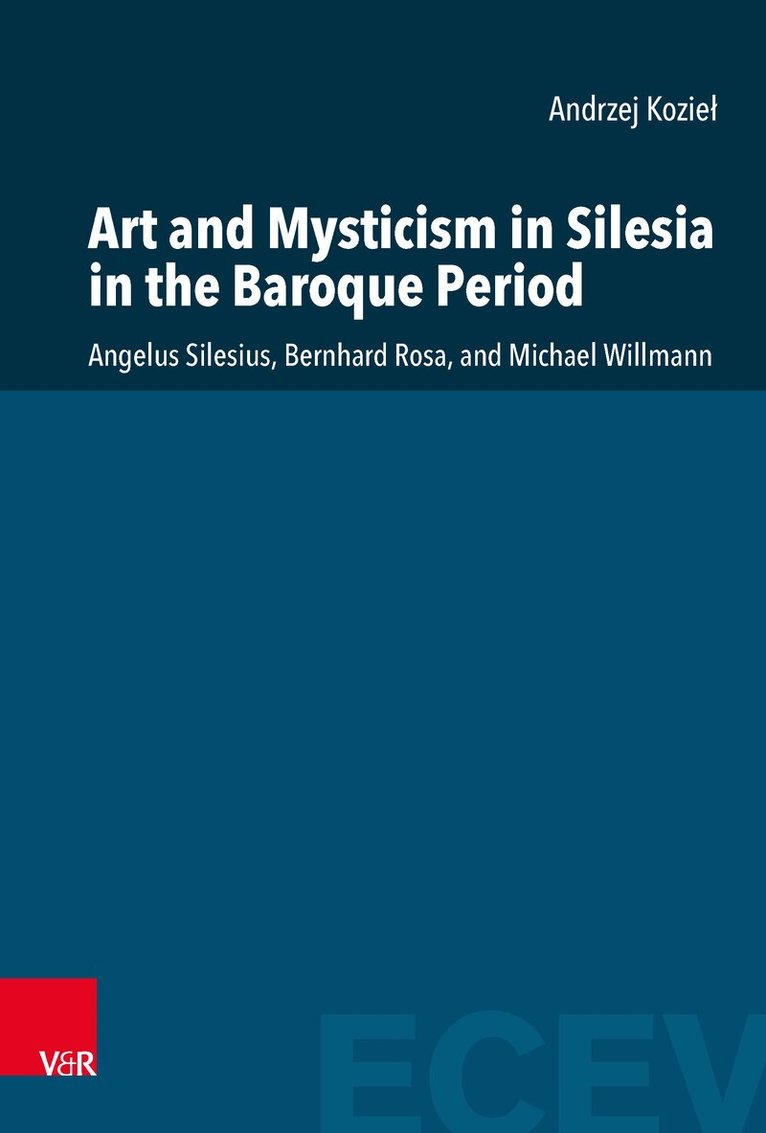
This volume deals with original mystical initiatives and related artistic realizations, which were created in the circle of the outstanding Silesian poet and theologian, Johannes Scheffler, known as Angelus Silesius, abbot of the Cistercian monastery in Krzeszów, Bernhard Rosa and the most outstanding Silesian artist, Michael Willmann. Although the 17th century Silesian mysticism is now very popular worldwide, we know very little about the relationship between mysticism and art in former Silesia. This issue has never been the subject of a comprehensive study. It is not surprising, therefore, that the research so far overlooked the unusual and unique joint initiative mentioned above by two outstanding Silesian mystics and the best Silesian artist of the Baroque era. Its aim was to combine elements of mystical experience with various forms of mass piety of a counter-Reformation nature. Importantly, all forms of mass mystical piety were closely linked to the use of devotional works of art, which were designed primarily by Michael Willmann. They became the most popular images in the religious culture of Silesia until the end of the 18th century. Just as the literary and philosophical achievements of Silesian mystics led by Angelus Silesius, so also works of art serving mystical piety, which were created by Willmann, we can safely consider as a kind of event and an important contribution of Silesia to the culture of European Baroque.
Inbunden, Engelska, 2025
1 164 kr
Skickas inom 3-6 vardagar
Was the Cistercian abbey in Krzeszów really a European center of art and theological thought? This study in eight chapters tries to answer this question. The first chapter shows how deep the foundations of the Krzeszów Abbey go. The next three chapters are devoted to various works, initiatives and architecture of the Baroque era. First, the unique painting of Our Lady of Mercy in the Mater Misericordiae type, which was created in 1624, was presented. Then, the sculptural foundations of Abbot Geyer in the area of the Krzeszów abbey and in its latifundia were discussed. Finally, the architecture of the baroque abbey church, unique on a European scale, was presented. Grace of the Blessed Virgin Mary. This proves what an extraordinary center Krzeszów was in terms of the art created there.In the next two chapters, the reader finds the answer to the question: Was Krzeszów also a significant theological center in Europe at that time? First in terms of Catholic dogmatic, and then in terms of biblical linguistics.The study ends with two chapters, the first of which focuses on the sacralization of the landscape by introducing modern forms of imitation of the Holy Land and the cult of saints. The second one presents the baroque iconography of the Cistercian monastery in Krzeszów from the end of the 17th century to the beginning of the 20th century, which shows the changes in its social function over the centuries.
Inbunden, Engelska, 2025
1 175 kr
Skickas inom 3-6 vardagar
“Grand phenomena do not strike us the less when we have discovered something of their wonderful mechanism” – is it a modern apology for the reunification of science and faith? Not really. The text written by St. Basil is 1,600 years old and is the golden line for the Catholic tradition from its beginnings to our days. The purpose of this book is to show the reader how to discover this in the history of Christian encounters with science. St. Paul began it, St. Augustine brought it to excellence, St. Thomas Aquinas made it visible to all. Yes, there was an outbreak of conflict in this area, culminating in the 19th century, but the future is not necessarily so dark. We have so many spiritual masters to learn from. We, the present dwarfs, can see further, sitting on the shoulders of giants... Yes, this brilliant saying also comes from the Catholic tradition.
Inbunden, Engelska, 2026
1 782 kr
Kommande
There is no single correct answer to the question, what is the Kingdom of the Heavens according to the parables of Matthew? The parables of the Kingdom are open-ended and no single interpretation will exhaust their meaning. They are poetic rather than narrative; symbolic and figurative rather than literal; and tend to inspire rather than provide a systematic explanation of faith. Matthew was more of a creative theologian than a technical engineer. It is, however, possible to come near to an answer. The conceptual metaphors of the Kingdom outline the framework of Matthew’s understanding. Hence the parables convey three paradigms. They are concerned with telling a story about the Kingdom’s progress in time and its closeness, its ultimate fulfilment which will bring a final assessment of each person’s righteousness, and the call for radical commitment which will culminate in an enormous gain. The call to commitment is multi-faceted. The Kingdom calls for forgiveness, merciful justice, acceptance of its demands (living righteously) and readiness to fulfil them. This quadruple call is its core message.
Inbunden, Engelska, 2024
1 782 kr
Skickas inom 11-20 vardagar
The structural approach facilitates exposure of the elements of eschatological teaching characteristic of 2 Peter’s author with its correct or incorrect interpretation. Narratives drawn from Jewish tradition aim to show two attitudes towards the announcement of destruction: a positive attitude, signifying salvation, and a negative attitude, signifying annihilation. This pattern is transferred to the attitude towards prophetic and apostolic eschatological teaching. Part 1 of the commentary (2 Pet 1–2) focuses on the misinterpretation of this teaching by false teachers and their followers. Their eschatological scepticism is ridiculed and their grim fate described. As the starting point for this description and Peter’s whole line of argumentation 2 Pet 2:3b is taken – the thesis is that God’s inaction is only apparent, while judgment and punishment are inevitable, although only God knows when they will be executed.Part 2 of the commentary (2 Pet 3) focuses on the proper interpretation of this teaching and on laying out the principles of the letter author's hermeneutics. This hermeneutic construes texts from Jewish tradition as foreshadowing and typologies of eschatological events. In explaining the principles of his hermeneutic, the letter’s author drew on the creation story, which Jewish apocalypticism read inversely, to mark that the eschatological hermeneutics is rooted in tradition. The starting point of Peter's line of argumentation was taken to be 2 Pet 3:5.7 with its thesis of God's creative and destructive word and God's sovereign will regarding the preservation of creation and the appointment of the time of judgement. This thesis explains the apparent lack of divine action, which was also a major concern in Part 1 of the commentary (2 Pet 1–2).
Inbunden, Engelska, 2024
1 238 kr
Skickas inom 11-20 vardagar
The structural approach facilitates exposure of the elements of eschatological teaching characteristic of 2 Peter’s author with its correct or incorrect interpretation. Narratives drawn from Jewish tradition aim to show two attitudes towards the announcement of destruction: a positive attitude, signifying salvation, and a negative attitude, signifying annihilation. This pattern is transferred to the attitude towards prophetic and apostolic eschatological teaching. Part 1 of the commentary (2 Pet 1–2) focuses on the misinterpretation of this teaching by false teachers and their followers. Their eschatological scepticism is ridiculed and their grim fate described. As the starting point for this description and Peter’s whole line of argumentation 2 Pet 2:3b is taken – the thesis is that God’s inaction is only apparent, while judgment and punishment are inevitable, although only God knows when they will be executed.Part 2 of the commentary (2 Pet 3) focuses on the proper interpretation of this teaching and on laying out the principles of the letter author's hermeneutics. This hermeneutic construes texts from Jewish tradition as foreshadowing and typologies of eschatological events. In explaining the principles of his hermeneutic, the letter’s author drew on the creation story, which Jewish apocalypticism read inversely, to mark that the eschatological hermeneutics is rooted in tradition. The starting point of Peter's line of argumentation was taken to be 2 Pet 3:5.7 with its thesis of God's creative and destructive word and God's sovereign will regarding the preservation of creation and the appointment of the time of judgement. This thesis explains the apparent lack of divine action, which was also a major concern in Part 1 of the commentary (2 Pet 1–2).
Inbunden, Engelska, 2022
1 224 kr
Skickas inom 11-20 vardagar
Post-war Lower Silesia was intended by the communists to be a "laboratory of socialism". Hence, they developed and pursued a special policy towards the Catholic Church. The book highlights the specificity of the pastoral ministry provided by the successive rulers of the Church in Wrocław (Karol Milik, Kazimierz Lagosz, Cardinal Bolesław Kominek) in the realities of the communist state. It shows the role of Cardinal Kominek who was persecuted for his attitude towards communists, his activity in the Polish Episcopate and in the forum of the universal Church. Moreover, it presents the system of repression aimed at diocesan clergy and religious orders and limiting theological education. With the objective of secularising the Lower Silesian society, the communists put emphasis on promoting their ideology, especially among the young generation. The Church responded with speeches by hierarchs condemning these activities and with pastoral initiatives to slow down the process.
Inbunden, Engelska, 2026
1 411 kr
Skickas inom 3-6 vardagar
The provisions contained in can. 838 of CCL refer to important issues, related to the adaptation and accommodation of liturgical law. They have always been the subject of attentive and continuous interest of the Church, in order to not only preserve the essential unity of the Roman rite (SC 38), but also to facilitate the common meeting of people with God, which, of course, should take place through prayer, but also through adapted symbols and signs and proper language of communication (SC 39–40). Issues so important for the life of the Church deserve an in-depth canonical reflection, which is why they were taken up in four chapters of the study on the adaptation and accommodation of liturgical law in light of can. 838 of CCL. In the first chapter, the presentation included introductory issues relating to liturgical law. The second chapter has become a space for approximation of the concept of adaptation and accommodation in canon law. The third chapter presents the legal regulations in the field of adaptation and accommodation. The fourth chapter focused on adaptation and accommodation inherent in legal and canonical practice. Published on September 3, 2017 by Pope Francis, the Apostolic Letter Motu Proprio Magnum principium not only altered the content of §2 and §3 of can. 838 of CCL, but it also became an important contribution to the discussion on inculturation and the related adaptations and accommodation of liturgical law in many circles.