EIC Books - Böcker
Visar alla böcker i serien EIC Books. Handla med fri frakt och snabb leverans.
13 produkter
13 produkter
Del 2 - EIC Books
Applications of Physical Methods to Inorganic and Bioinorganic Chemistry
Inbunden, Engelska, 2007
2 389 kr
Skickas inom 11-20 vardagar
Modern spectroscopic and instrumental techniques are essential to the practice of inorganic and bioinorganic chemistry. This first volume in the new Wiley Encyclopedia of Inorganic Chemistry Methods and Applications Series provides a consistent and comprehensive description of the practical applicability of a large number of techniques to modern problems in inorganic and bioinorganic chemistry. The outcome is a text that provides invaluable guidance and advice for inorganic and bioinorganic chemists to select appropriate techniques, whilst acting as a source to the understanding of these methods. This volume is also available as part of Encyclopedia of Inorganic Chemistry, 5 Volume Set.This set combines all volumes published as EIC Books from 2007 to 2010, representing areas of key developments in the field of inorganic chemistry published in the Encyclopedia of Inorganic Chemistry. Find out more.
3 687 kr
Skickas inom 11-20 vardagar
Connecting inorganic chemistry to the hottest topic in materials science, this timely resource collects the contributions made by leading inorganic chemists towards nanomaterials research. The second volume in the “Wiley Encyclopedia of Inorganic Chemistry Methods and Applications Series,” this signature title concentrates on recent developments in the field and includes all key topics such as nanowires, nanotubes, biomineralization, supramolecular materials and much more. This volume is also available as part of Encyclopedia of Inorganic Chemistry, 5 Volume Set.This set combines all volumes published as EIC Books from 2007 to 2010, representing areas of key developments in the field of inorganic chemistry published in the Encyclopedia of Inorganic Chemistry. Find out more.
2 213 kr
Tillfälligt slut
Over the past several decades there have been major advances in our ability to computationally evaluate the electronic structure of inorganic molecules, particularly transition metal systems. This advancement is due to the Moore’s Law increase in computing power as well as the impact of density functional theory (DFT) and its implementation in commercial and freeware programs for quantum chemical calculations. Improved pure and hybrid density functionals are allowing DFT calculations with accuracy comparable to high-level Hartree-Fock treatments, and the results of these calculations can now be evaluated by experiment. When calculations are correlated to, and supported by, experimental data they can provide fundamental insight into electronic structure and its contributions to physical properties and chemical reactivity. This interplay continues to expand and contributes to both improved value of experimental results and improved accuracy of computational predictions.The purpose of this EIC Book is to provide state-of-the-art presentations of quantum mechanical and related methods and their applications, written by many of the leaders in the field. Part 1 of this volume focuses on methods, their background and implementation, and their use in describing bonding properties, energies, transition states and spectroscopic features. Part 2 focuses on applications in bioinorganic chemistry and Part 3 discusses inorganic chemistry, where electronic structure calculations have already had a major impact. This addition to the EIC Book series is of significant value to both experimentalists and theoreticians, and we anticipate that it will stimulate both further development of the methodology and its applications in the many interdisciplinary fields that comprise modern inorganic and bioinorganic chemistry.This volume is also available as part of Encyclopedia of Inorganic Chemistry, 5 Volume Set.This set combines all volumes published as EIC Books from 2007 to 2010, representing areas of key developments in the field of inorganic chemistry published in the Encyclopedia of Inorganic Chemistry. Find out more.
2 227 kr
Skickas inom 5-8 vardagar
Nuclear energy is the one energy source that could meet the world's growing energy needs and provide a smooth transition from fossil fuels to renewable energy in the coming decades and centuries. It is becoming abundantly clear that an increase in nuclear energy capacity will, and probably must, take place. However, nuclear energy and the use of radionuclides for civilian and military purposes lead to extremely long-lived waste that is costly and highly problematic to deal with. Therefore, it is critically important ot understand the environmental implications of radionuclides for ecosystems and human health if nuclear energy is to be used to avoid the impending global energy crisis. The present volume of the EIC Books series addresses this critical need by providing fundamental information on environmentally significant radionuclides.The content of this book was developed in collaboration with many of the authors of the chapters. Given the enormity of the subject the Editor and the Authors had to be judicious in selecting the chapters that would appropriately encompass and describe the primary topics, particularly those that are of importance to the health of ecosystems and humans. The resulting chapters were chosen to provide this information in a book of useful and appropriate length. Each chapter provides fundamental information on the chemistry of the radionuclides, their occurrence and movement in the enivornment, separation and analyses, and the technologies needed for their remediation and mitigation. The chapters are structured with a common, systematic format in order to facilitate comparions between elements and groups of elements.About EIC BooksThe Encyclopedia of Inorganic Chemistry (EIC) has proved to be one of the defining standards in inorganic chemistry, and most chemistry libraries around the world have access either to the first of second print editon, or to the online version. Many readers, however, prefer to have more concise thematic volumes, targeted to their specific area of interest. This feedback from EIC readers has encouraged the Editors to plan a series of EIC Books, focusing on topics of current interest. They will appear on a regular basis, and will feature leading scholars in their fields. Like the Encyclopedia, EIC Books aims to provide both the starting research student and the confirmed research worker with a critical distillation of the leading concepts in inorganic and bioinorganic chemistry, and provide a structured entry into the fields covered.This volume is also available as part of Encyclopedia of Inorganic Chemistry, 5 Volume Set.This set combines all volumes published as EIC Books from 2007 to 2010, representing areas of key developments in the field of inorganic chemistry published in the Encyclopedia of Inorganic Chemistry. Find out more.
Energy Production and Storage
Inorganic Chemical Strategies for a Warming World
Inbunden, Engelska, 2010
1 695 kr
Skickas inom 7-10 vardagar
Energy production and storage are central problems for our time. In principle, abundant energy is available from the sun to run the earth in a sustainable way. Solar energy can be directly harnessed by agricultural and photovoltaic means, but the sheer scale of the energy demand poses severe challenges, for example any major competition between biomass production and food production would simply transfer scarcity from energy to food. Indirect use of solar energy in the form of wind looks also promising, especially for those regions not blessed with abundant sunlight. Other modes such as tidal and wave energy may well become important niche players. Inorganic chemistry plays a decisive role in the development of new energy technologies and this Volume covers some promising modes of alternative energy production and storage that minimize the atmospheric burden of fossil-derived carbon monoxide. No one production or storage mode is likely to dominate, at least at first, and numerous possibilities need to be explored to compare their technical feasibility and economics. This provides the context for a broad exploration of novel ideas that we are likely to see in future years as the field expands.This Volume covers a wide range of topics, such as: - Water splitting, only water is a sufficiently cheap and abundant electron source for global exploitation; - Energy conversion by photosynthesis; - Molecular catalysts for water splitting; - Thermochemical water splitting; - Photocatalytic hydrogen production; - Artificial photosynthesis, progress of the Swedish Consortium; - Hydrogen economy; - Reduction of carbon dioxide to useful fuels; - Conversion of methane to methanol; - Dye sensitized solar cells; - Photoinitiated electron transfer in fuel cells; - Proton exchange membranes for fuel cells; - Intermediate temperature solid oxide fuel cells; - Direct Ethanol fuel cells; - Molecular catalysis for fuel cells; - Enzymes and microbes in fuel cells; - Li-Ion batteries; - Magic Angle Spinning NMR studies of battery materials; Supercapacitors and electrode materials.About EIC BooksThe Encyclopedia of Inorganic Chemistry (EIC) has proved to be one of the defining standards in inorganic chemistry, and most chemistry libraries around the world have access either to the first or second print edition, or to the online version. Many readers, however, prefer to have more concise thematic volumes, targeted to their specific area of interest. This feedback from EIC readers has encouraged the Editors to plan a series of EIC Books, focusing on topics of current interest. They will appear on a regular basis, and will feature leading scholars in their fields. Like the Encyclopedia, EIC Books aim to provide both the starting research student and the confirmed research worker with a critical distillation of the leading concepts in inorganic and bioinorganic chemistry, and provide a structured entry into the fields covered.This volume is also available as part of Encyclopedia of Inorganic Chemistry, 5 Volume Set.This set combines all volumes published as EIC Books from 2007 to 2010, representing areas of key developments in the field of inorganic chemistry published in the Encyclopedia of Inorganic Chemistry. Find out more.
1 979 kr
Skickas inom 11-20 vardagar
The first seven metals in the periodic table are lithium, beryllium, sodium, magnesium, aluminium, potassium and calcium, known collectively as the “lightest metals”. The growing uses of these seven elements are enmeshing them ever more firmly into critical areas of 21st century technology, including energy storage, catalysis, and various applications of nanoscience. This volume provides comprehensive coverage of the fundamentals and recent advances in the science and technology of the lightest metals. Opening chapters of the book describe major physical and chemical properties of the metals, their occurrence and issues of long-term availability. The book goes on to disucss a broad range of chemical features, including low oxidation state chemistry, organometallics, metal-centered NMR spectroscopy, and cation-π interactions. Current and emerging applications of the metals are presented, including lithium-ion battery technology, hydrogen storage chemistry, superconductor materials, transparent ceramics, nano-enhanced catalysis, and research into photosynthesis and photoelectrochemical cells.The content from this book will be added online to the Encyclopedia of Inorganic and Bioinorganic Chemistry: http://www.wileyonlinelibrary.com/ref/eibc
2 121 kr
Skickas inom 11-20 vardagar
The Earth's natural resources are finite and easily compromised by contamination from industrial chemicals and byproducts from the degradation of consumer products. The growing field of green and sustainable chemistry seeks to address this through the development of products and processes that are environmentally benign while remaining economically viable. Inorganic chemistry plays a critical role in this endeavor in areas such as resource extraction and isolation, renewable energy, catalytic processes, waste minimization and avoidance, and renewable industrial feedstocks.Sustainable Inorganic Chemistry presents a comprehensive overview of the many new developments taking place in this rapidly expanding field, in articles that discuss fundamental concepts alongside cutting-edge developments and applications. The volume includes educational reviews from leading scientists on a broad range of topics including: inorganic resources, sustainable synthetic methods, alternative reaction conditions, heterogeneous catalysis, photocatalysis, sustainable nanomaterials, renewable and clean fuels, water treatment and remediation, waste valorization and life cycle sustainability assessment.The content from this book will be added online to the Encyclopedia of Inorganic and Bioinorganic Chemistry.
2 049 kr
Skickas inom 11-20 vardagar
Summarizes the essential biosynthetic pathways for assembly of metal cofactor sites in functional metalloproteinsMetalloprotein Active Site Assembly focuses on the processes that have evolved to orchestrate the assembly of metal cofactor sites in functional metalloproteins. It goes beyond the simple incorporation of single metal ions in a protein framework, and includes metal cluster assembly, metal-cofactor biosynthesis and insertion, and metal-based post-translational modifications of the protein environments that are necessary for function. Several examples of each of these areas have now been identified and studied; the current volume provides the current state-of-the-art understanding of the processes involved.An excellent companion to the earlier book in this series Metals in Cells—which discussed both the positive and negative effects of cellular interactions with metals—this comprehensive book provides a diverse sampling of what is known about metalloprotein active site assembly processes. It covers all major biological transition metal components (Mn, Fe, Co, Ni, Mo), as well as the other inorganic components, metal-binding organic cofactors (e.g., heme, siroheme, cobalamin, molybdopterin), and post-translationally modified metal binding sites that make up the patchwork of evolved biological catalytic sites. The book compares and contrasts the biosynthetic assembly of active sites involving all biological metals. This has never been done before since it is a relatively new, fast-developing area of research.Metalloprotein Active Site Assembly is an ideal text for practitioners of inorganic biochemistry who are studying the biosynthetic pathways and gene clusters involved in active site assembly, and for inorganic chemists who want to apply the concepts learned to potential synthetic pathways to active site mimics.
2 176 kr
Skickas inom 11-20 vardagar
An authoritative survey of the science and advanced technological uses of the actinide and transactinide metalsThe Heaviest Metals offers an essential resource that covers the fundamentals of the chemical and physical properties of the heaviest metals as well as the most recent advances in their science and technology. The authors – noted experts in the field – offer an authoritative review of the actinide and transactinide elements, i.e., the elements from actinium to lawrencium as well as rutherfordium through organesson, the current end of the periodic table, element 118.The text explores the history of the metals, their occurrence and issues of production, and covers a broad range of chemical subjects including environmental concerns and remediation approaches. The authors also offer information on the most recent and emerging applications of the metals, such as in superconducting materials, catalysis, and research into medical diagnostics. This important resource: Provides an overview of the science and advanced technological uses of the actinide and transactinide metalsDescribes the basic chemical and physical properties of the heaviest metals, and discusses the challenges and opportunities for their technological applicationsContains accessible information on the fundamental features of the heaviest metals, special requirements for their experimental study, and the critical role of computational characterization of their compoundsHighlights the most current and emerging applications in areas such as superconducting materials, catalysis, nuclear forensics, and medicinePresents vital contemporary issues of the heaviest metalsWritten for graduate students and researchers working with the actinide and transactinide elements, industrial and academic inorganic and nuclear chemists, and engineers, The Heaviest Metals is a comprehensive volume that explores the fundamental chemistry and properties of the heaviest metals, and the challenges and opportunities associated with their present and emerging technological uses.
1 840 kr
Skickas inom 7-10 vardagar
A guide to the fundamental chemistry and recent advances of battery materialsIn one comprehensive volume, Inorganic Battery Materials explores the basic chemistry principles, recent advances, and the challenges and opportunities of the current and emerging technologies of battery materials. With contributions from an international panel of experts, this authoritative resource contains information on the fundamental features of battery materials, discussions on material synthesis, structural characterizations and electrochemical reactions.The book explores a wide range of topics including the state-of-the-art lithium ion battery chemistry to more energy-aggressive chemistries involving lithium metal. The authors also include a review of sulfur and oxygen, aqueous battery chemistry, redox flow battery chemistry, solid state battery chemistry and environmentally beneficial carbon dioxide battery chemistry. In the context of renewable energy utilization and transportation electrification, battery technologies have been under more extensive and intensive development than ever. This important book: Provides an understanding of the chemistry of a battery technologyExplores battery technology's potential as well as the obstacles that hamper the potential from being realizedHighlights new applications and points out the potential growth areas that can serve as inspirations for future researchIncludes an understanding of the chemistry of battery materials and how they store and convert energyWritten for students and academics in the fields of energy materials, electrochemistry, solid state chemistry, inorganic materials chemistry and materials science, Inorganic Battery Materials focuses on the inorganic chemistry of battery materials associated with both current and future battery technologies to provide a unique reference in the field.About EIBC BooksThe Encyclopedia of Inorganic and Bioinorganic Chemistry (EIBC) was created as an online reference in 2012 by merging the Encyclopedia of Inorganic Chemistry and the Handbook of Metalloproteins. The resulting combination proves to be the defining reference work in the field of inorganic and bioinorganic chemistry, and a lot of chemistry libraries around the world have access to the online version. Many readers, however, prefer to have more concise thematic volumes in print, targeted to their specific area of interest. This feedback from EIBC readers has encouraged the Editors to plan a series of EIBC Books [formerly called EIC Books], focusing on topics of current interest.EIBC Books will appear on a regular basis, will be edited by the EIBC Editors and specialist Guest Editors, and will feature articles from leading scholars in their fields. EIBC Books aim to provide both the starting research student and the confirmed research worker with a critical distillation of the leading concepts in inorganic and bioinorganic chemistry, and provide a structured entry into the fields covered.
2 126 kr
Tillfälligt slut
Lanthanides are of great importance for the electronic industries, this new book (from the EIBC Book Series) provides a comprehensive coverage of the basic chemistry, particularly inorganic chemistry, of the lanthanoid elements, those having a 4f shell of electrons. A chapter is describing the similarity of the Group 3 elements, Sc, Y, La, the group from which the lanthanoids originate and the group 13 elements, particularly aluminum, having similar properties. Inclusion of the group 3 and 13 elements demonstrates how the lanthanoid elements relate to other, more common, elements in the Periodic Table. Beginning chapters describe the occurrence and mineralogy of the elements, with a focus on structural features observed in compounds described in later chapters. The majority of the chapters is organized by the oxidation state of the elements, Ln(0), Ln(II), Ln(III), and Ln(IV). Within this organization the chapters are further distinguished by type of compound, inorganic (oxides and hydroxides, aqueous speciation, halides, alkoxides, amides and thiolates, and chelates) and organometallic. Concluding chapters deal with diverse and critically important applications of the lanthanoids in electronic and magnetic materials, and medical imaging.
1 753 kr
Tillfälligt slut
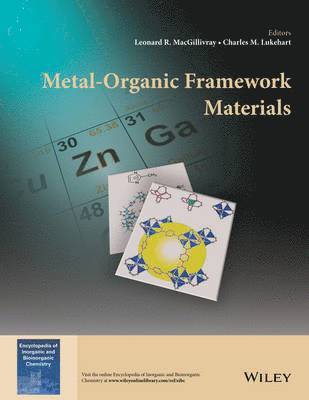
Metal-Organic Frameworks (MOFs) are crystalline compounds consisting of rigid organic molecules held together and organized by metal ions or clusters. Special interests in these materials arise from the fact that many are highly porous and can be used for storage of small molecules, for example H2 or CO2. Consequently, the materials are ideal candidates for a wide range of applications including gas storage, separation technologies and catalysis. Potential applications include the storage of hydrogen for fuel-cell cars, and the removal and storage of carbon dioxide in sustainable technical processes. MOFs offer the inorganic chemist and materials scientist a wide range of new synthetic possibilities and open the doors to new and exciting basic research. Metal-Organic Frameworks Materials provides a solid basis for the understanding of MOFs and insights into new inorganic materials structures and properties. The volume also reflects progress that has been made in recent years, presenting a wide range of new applications including state-of-the art developments in the promising technology for alternative fuels. The comprehensive volume investigates structures, symmetry, supramolecular chemistry, surface engineering, recognition, properties, and reactions. The content from this book will be added online to the Encyclopedia of Inorganic and Bioinorganic Chemistry: http://www.wileyonlinelibrary.com/ref/eibc
2 033 kr
Skickas inom 7-10 vardagar
Over the last three decades a lot of research on the role of metals in biochemistry and medicine has been done. As a result many structures of biomolecules with metals have been characterized and medicinal chemistry studied the effects of metal containing drugs.This new book (from the EIBC Book Series) covers recent advances made by top researchers in the field of metals in cells [the “metallome”] and include: regulated metal ion uptake and trafficking, sensing of metals within cells and across tissues, and identification of the vast cellular factors designed to orchestrate assembly of metal cofactor sites while minimizing toxic side reactions of metals. In addition, it features aspects of metals in disease, including the role of metals in neuro-degeneration, liver disease, and inflammation, as a way to highlight the detrimental effects of mishandling of metal trafficking and response to "foreign" metals. With the breadth of our recently acquired understanding of metals in cells, a book that features key aspects of cellular handling of inorganic elements is both timely and important. At this point in our understanding, it is worthwhile to step back and take an expansive view of how far our understanding has come, while also highlighting how much we still do not know.The content from this book will publish online, as part of EIBC in December 2013, find out more about the Encyclopedia of Inorganic and Bioinorganic Chemistry, the essential online resource for researchers and students working in all areas of inorganic and bioinorganic chemistry.