Electro-Technologies for Food Processing Series - Böcker
Visar alla böcker i serien Electro-Technologies for Food Processing Series. Handla med fri frakt och snabb leverans.
5 produkter
5 produkter
1 078 kr
Skickas inom 10-15 vardagar
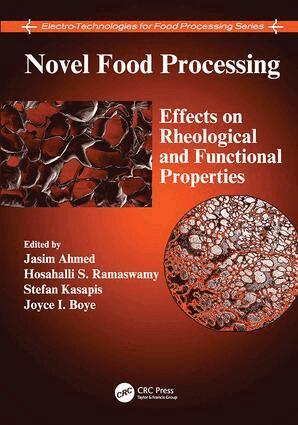
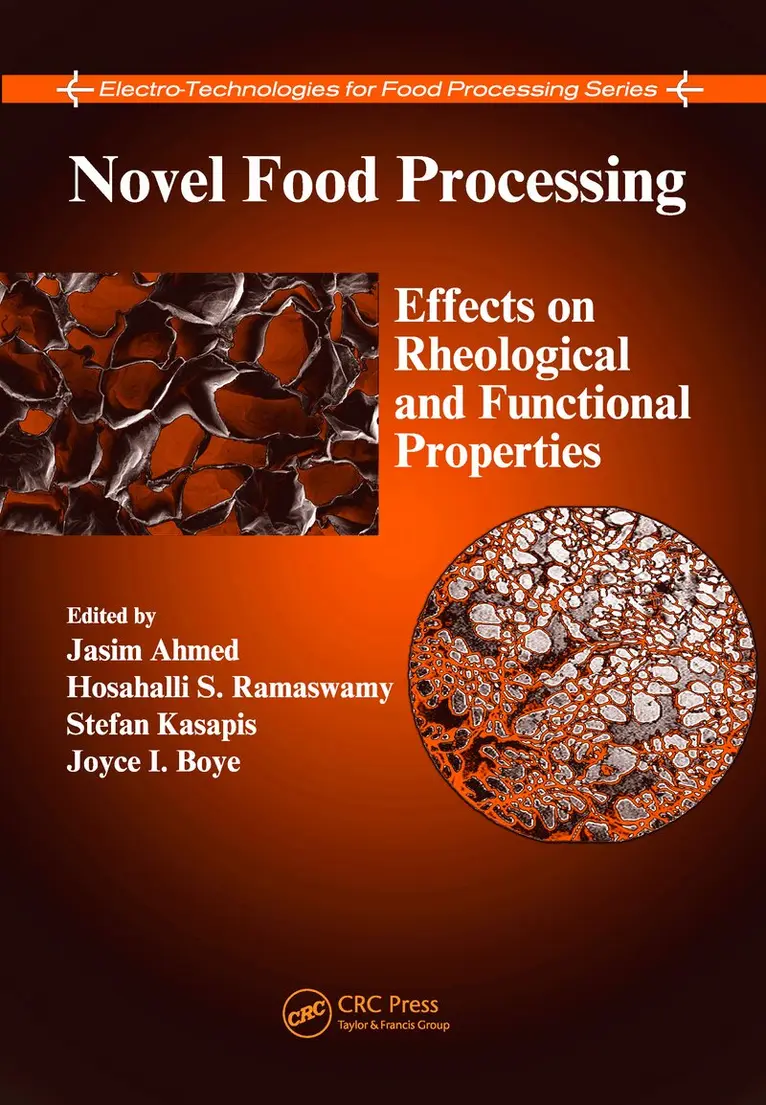
Rapid expansion of research on the development of novel food processes in the past decade has resulted in novel processes drawn from fields outside the traditional parameters of food processing. Providing a wealth of new knowledge, Novel Food Processing: Effects on Rheological and Functional Properties covers structural and functional changes at the micro level, and their implications at the macro level, in food exposed to new and emerging technologies.Contributions from an international panel with academic and professional credentials form the backbone of this work. They focus on the functional, rheological, and micro-structural changes that occur in foods when using emerging technologies such as high pressure processing, Ohmic heating, pulse electric fields, and ultraviolet radiation. The book examines new and innovative applications and presents the impact of these research findings on the nutritional aspects of protein and carbohydrate containing foods. It also considers the synergic effects of protein-starch components. Each chapter provides an in-depth analysis of a novel technology and its effect on food structure and function.New directions in food processing will continue to be influenced by diverse fields and used to respond to consumer concerns about food safety, quality, sensory attributes, and nutrition. Combining coverage of technological applications with the chemistry of food and biomaterials, this book illustrates in a very clear and concise fashion the structure-functionality relationship and how it is affected by newly developed and increasingly popular processing technologies.
1 294 kr
Skickas inom 10-15 vardagar
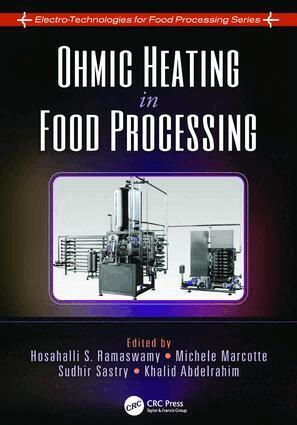
Ohmic heating provides rapid and uniform heating, resulting in less thermal damage than conventional heating and allowing manufacturers to obtain high-quality products with minimum sensorial, nutritional, and structural changes. Ohmic Heating in Food Processing covers several aspects of Ohmic heating: science and engineering, chemistry and physics, biochemistry and nutrition, quality and safety, and development and technology, both basic and applied. It describes the importance of Ohmic technology and how to implement it in practice, addressing basic theory, principles, and applications.Divided into nine sections, this volume covers the basics of Ohmic heating, including a historic overview and fundamental principles; electrical conductivity, its importance, factors that influence it, and data modeling; biological effects of electricity on foods and food components, including microorganisms, enzymes, proteins, carbohydrates, and fats; and Ohmic heating behavior and design parameters. The book also deals with issues in Ohmic heating equipment, Ohmic heating modeling issues, and process validation issues.The authors discuss various applications of Ohmic heating applied to different classes of foods, such as muscle foods (meat, poultry, and fish), dairy products, fruits, and vegetables. They also examine commercially successful applications of food products processed by Ohmic heating and considers applications of Ohmic heating where preservation is not the main focus, for example, blanching, Ohmic thawing, and the potential for Ohmic heating for long-duration space missions.
3 397 kr
Skickas inom 10-15 vardagar
Ohmic heating provides rapid and uniform heating, resulting in less thermal damage than conventional heating and allowing manufacturers to obtain high-quality products with minimum sensorial, nutritional, and structural changes. Ohmic Heating in Food Processing covers several aspects of Ohmic heating: science and engineering, chemistry and physics, biochemistry and nutrition, quality and safety, and development and technology, both basic and applied. It describes the importance of Ohmic technology and how to implement it in practice, addressing basic theory, principles, and applications.Divided into nine sections, this volume covers the basics of Ohmic heating, including a historic overview and fundamental principles; electrical conductivity, its importance, factors that influence it, and data modeling; biological effects of electricity on foods and food components, including microorganisms, enzymes, proteins, carbohydrates, and fats; and Ohmic heating behavior and design parameters. The book also deals with issues in Ohmic heating equipment, Ohmic heating modeling issues, and process validation issues.The authors discuss various applications of Ohmic heating applied to different classes of foods, such as muscle foods (meat, poultry, and fish), dairy products, fruits, and vegetables. They also examine commercially successful applications of food products processed by Ohmic heating and considers applications of Ohmic heating where preservation is not the main focus, for example, blanching, Ohmic thawing, and the potential for Ohmic heating for long-duration space missions.
3 264 kr
Skickas inom 10-15 vardagar
Rapid expansion of research on the development of novel food processes in the past decade has resulted in novel processes drawn from fields outside the traditional parameters of food processing. Providing a wealth of new knowledge, Novel Food Processing: Effects on Rheological and Functional Properties covers structural and functional changes at the micro level, and their implications at the macro level, in food exposed to new and emerging technologies.Contributions from an international panel with academic and professional credentials form the backbone of this work. They focus on the functional, rheological, and micro-structural changes that occur in foods when using emerging technologies such as high pressure processing, Ohmic heating, pulse electric fields, and ultraviolet radiation. The book examines new and innovative applications and presents the impact of these research findings on the nutritional aspects of protein and carbohydrate containing foods. It also considers the synergic effects of protein-starch components. Each chapter provides an in-depth analysis of a novel technology and its effect on food structure and function.New directions in food processing will continue to be influenced by diverse fields and used to respond to consumer concerns about food safety, quality, sensory attributes, and nutrition. Combining coverage of technological applications with the chemistry of food and biomaterials, this book illustrates in a very clear and concise fashion the structure-functionality relationship and how it is affected by newly developed and increasingly popular processing technologies.
3 161 kr
Skickas inom 10-15 vardagar
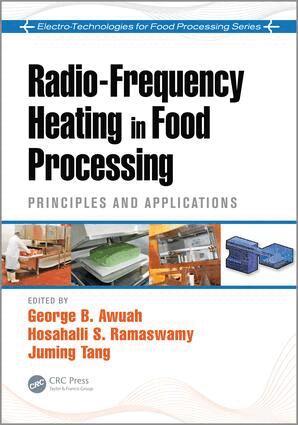
Radio-Frequency Heating in Food Processing: Principles and Applications covers the fundamentals of radio-frequency (RF) heating and the use of RF-heating technologies in modern food processing, preservation, and related industries. Focusing on industrial and lab-scale applications where RF heating has been employed successfully or reported to have potential benefits over conventional heating options, this state-of-the-art reference:Explains the similarities, differences, advantages, and limitations of RF and microwave heating as applied to agricultural productsDescribes fiber-optics temperature sensors and their utility in monitoring temperature during RF and microwave heatingDiscusses the dielectric and thermo-physical properties of agricultural products amenable to RF and microwave heating, presenting measurement techniques, mathematical concepts, and computer simulation modelsProvides practical perspectives on industrial RF units used in manufacturing food products, addressing free-running oscillators and 50-Ω designs for RF heaters and applicatorsUses finite-element formulations to determine design parameters including resonant modes, circuit impedance, and electric field distribution in RF applicatorsExamines RF-heating effects on microorganisms, enzymes, and food quality attributes for products such as poultry, beef, pork, eggs, fish, milk, fruits, vegetables, and seafoodExplores RF-heating applications beyond food processing, such as agricultural product deinfestation, waste treatment, counterfeit prevention, package tracking, and transportation of food from farm to tableRadio-Frequency Heating in Food Processing: Principles and Applications supplies an in-depth overview of the fundamental science and engineering principles governing RF applications, as well as a solid understanding of industrial RF unit design options, challenges, and opportunities for development.