Garland Handbooks of World Music – serie
Visar alla böcker i serien Garland Handbooks of World Music. Handla med fri frakt och snabb leverans.
9 produkter
9 produkter
1 085 kr
Skickas inom 10-15 vardagar
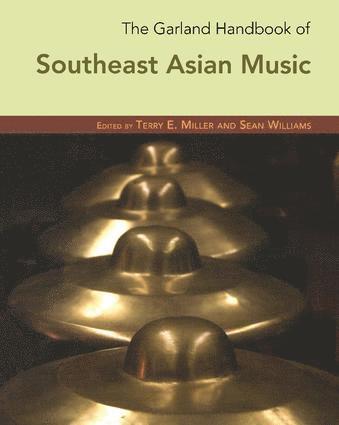
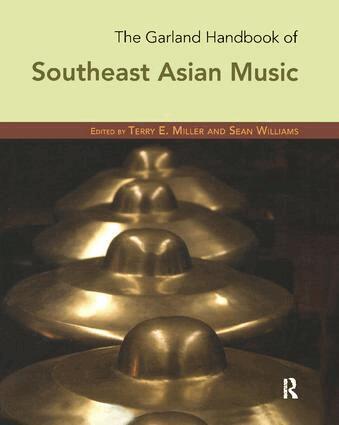
The Garland Handbook of Southeast Asian Music is comprised of essays from The Garland Encyclopedia of World Music: Volume 4, Southeast Asia (1998). Largely revised and updated, the essays offer detailed, regional studies of the different musical cultures of Southeast Asia and examine the ways in which music helps to define the identity of this particular area. Part one provides an in-depth introduction to the area of Southeast Asia and explores a series of issues and processes, such as colonialism, mass media, spirituality, and war. The articles in this section are important in gaining historical, political, and social perspective. Part two focuses on mainland Southeast Asia, with essays representing Cambodia, Thailand, Laos, Burma, Peninsular Malaysia, Vietnam, Singapore, and the minority peoples of mainland Southeast Asia. Part three focuses on island Southeast Asia, dividing the area into three sections: Indonesia, the Philippines, and Borneo. In addition to offering a detailed study of the music of each area, it also offers recent perspectives on the gamelan and theater traditions of Indonesia. Questions for Critical Thinking at the end of each major section guide and focus attention on what issues – musical and cultural – arise when one studies the music of Southeast Asia – issues that might not occur in the study of other musics of the world. An accompanying compact disc offers musical examples from Southeast Asia.
1 140 kr
Skickas inom 10-15 vardagar
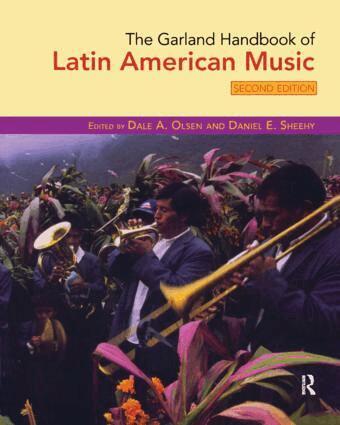
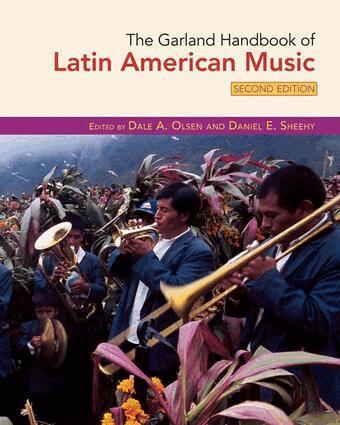
The Garland Handbook of Latin American Music is comprised of essays from The Garland Encyclopedia of World Music: Volume 2, South America, Mexico, Central America, and the Carribean, (1998). Revised and updated, the essays offer detailed, regional studies of the different musical cultures of Latin America and examine the ways in which music helps to define the identity of this particular area. Part One provides an in-depth introduction to the area of Latin America and describes the history, geography, demography, and cultural settings of the regions that comprise Latin America. It also explores the many ways to research Latin American music, including archaeology, iconography, mythology, history, ethnography, and practice. Part Two focuses on issues and processes, such as history, politics, geography, and immigration, which are responsible for the similarities and the differences of each region’s uniqueness and individuality. Part Three focuses on the different regions, countries, and cultures of Caribbean Latin America, Middle Latin America, and South America with selected regional case studies.The second edition has been expanded to cover Haiti, Panama, several more Amerindian musical cultures, and Afro-Peru. Questions for Critical Thinking at the end of each major section guide focus attention on what musical and cultural issues arise when one studies the music of Latin America -- issues that might not occur in the study of other musics of the world. Two audio compact discs offer musical examples of some of the music of Latin America.
1 140 kr
Skickas inom 10-15 vardagar
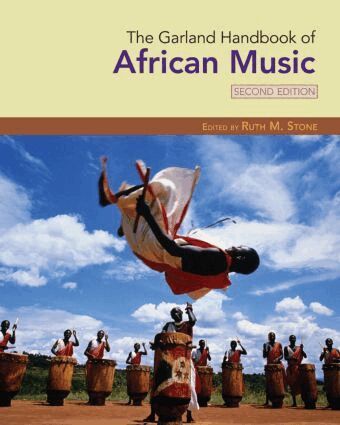
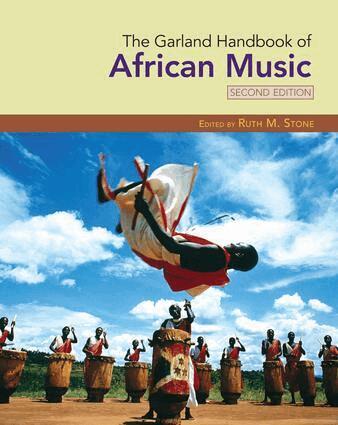
The Garland Handbook of African Music is comprised of essays from The Garland Encyclopedia of World Music: Volume 1, Africa, (1997). Revised and updated, the essays offer detailed, regional studies of the different musical cultures of Africa and examine the ways in which music helps to define the identity of this particular area. Part One provides an in-depth introduction to Africa. Part Two focuses on issues and processes, such as notation and oral tradition, dance in communal life, and intellectual property. Part Three focuses on the different regions, countries, and cultures of Africa with selected regional case studies. The second edition has been expanded to include exciting new scholarship that has been conducted since the first edition was published. Questions for Critical Thinking at the end of each major section guide and focus attention on what musical and cultural issues arise when one studies the music of Africa -- issues that might not occur in the study of other musics of the world. An accompanying audio compact disc offers musical examples of some of the music of Africa.
1 773 kr
Skickas inom 10-15 vardagar
John Rawls is the pre-eminent political philosopher of our time. His 1971 masterpiece, A Theory of Justice, permanently changed the landscape of moral and political theory, revitalizing the normative study of social issues and taking stands about justice, ethics, rationality, and philosophical method that continue to draw followers and critics today. His Political Liberalism (rev. ed., 1996) squarely faced the fundamental challenges posed by cultural, religious, and philosophical pluralism. It should be no surprise, then, that turn-of-the-century searches of the periodical indices in philosophy, economics, law, the humanities, and related fields turn up almost three thousand articles devoted to a critical discussion of Rawls's theory. In these Volumes we reprint a wide-ranging selection of the most influential and insightful articles on Rawls.The articles in the present volume reflect the critical discussion of the two principles of justice as fairness - Rawls's theory - and his most general ideas about their justification, namely Kantian constructivism and reflective equilibrium.
2 656 kr
Skickas inom 10-15 vardagar
While teachers may not teach ethics or values as a part of the curriculum, they do so through daily modeling, helping students make choices, helping children learn to socialize and reinforcing those behaviors that are successful and those that should be avoided. This collection of essays discusses some of the most significant ethical decisions faced by both society and the individual K-12 schoolteacher today.
2 176 kr
Skickas inom 10-15 vardagar
The Garland Handbook of Latin American Music is comprised of essays from The Garland Encyclopedia of World Music: Volume 2, South America, Mexico, Central America, and the Carribean, (1998). Revised and updated, the essays offer detailed, regional studies of the different musical cultures of Latin America and examine the ways in which music helps to define the identity of this particular area. Part One provides an in-depth introduction to the area of Latin America and describes the history, geography, demography, and cultural settings of the regions that comprise Latin America. It also explores the many ways to research Latin American music, including archaeology, iconography, mythology, history, ethnography, and practice. Part Two focuses on issues and processes, such as history, politics, geography, and immigration, which are responsible for the similarities and the differences of each region’s uniqueness and individuality. Part Three focuses on the different regions, countries, and cultures of Caribbean Latin America, Middle Latin America, and South America with selected regional case studies.The second edition has been expanded to cover Haiti, Panama, several more Amerindian musical cultures, and Afro-Peru. Questions for Critical Thinking at the end of each major section guide focus attention on what musical and cultural issues arise when one studies the music of Latin America -- issues that might not occur in the study of other musics of the world. Two audio compact discs offer musical examples of some of the music of Latin America.
2 176 kr
Skickas inom 10-15 vardagar
The Garland Handbook of African Music is comprised of essays from The Garland Encyclopedia of World Music: Volume 1, Africa, (1997). Revised and updated, the essays offer detailed, regional studies of the different musical cultures of Africa and examine the ways in which music helps to define the identity of this particular area. Part One provides an in-depth introduction to Africa. Part Two focuses on issues and processes, such as notation and oral tradition, dance in communal life, and intellectual property. Part Three focuses on the different regions, countries, and cultures of Africa with selected regional case studies. The second edition has been expanded to include exciting new scholarship that has been conducted since the first edition was published. Questions for Critical Thinking at the end of each major section guide and focus attention on what musical and cultural issues arise when one studies the music of Africa -- issues that might not occur in the study of other musics of the world. An accompanying audio compact disc offers musical examples of some of the music of Africa.
2 876 kr
Skickas inom 10-15 vardagar
The Garland Handbook of Southeast Asian Music is comprised of essays from The Garland Encyclopedia of World Music: Volume 4, Southeast Asia (1998). Largely revised and updated, the essays offer detailed, regional studies of the different musical cultures of Southeast Asia and examine the ways in which music helps to define the identity of this particular area. Part one provides an in-depth introduction to the area of Southeast Asia and explores a series of issues and processes, such as colonialism, mass media, spirituality, and war. The articles in this section are important in gaining historical, political, and social perspective. Part two focuses on mainland Southeast Asia, with essays representing Cambodia, Thailand, Laos, Burma, Peninsular Malaysia, Vietnam, Singapore, and the minority peoples of mainland Southeast Asia. Part three focuses on island Southeast Asia, dividing the area into three sections: Indonesia, the Philippines, and Borneo. In addition to offering a detailed study of the music of each area, it also offers recent perspectives on the gamelan and theater traditions of Indonesia. Questions for Critical Thinking at the end of each major section guide and focus attention on what issues � musical and cultural � arise when one studies the music of Southeast Asia � issues that might not occur in the study of other musics of the world. An accompanying compact disc offers musical examples from Southeast Asia.
564 kr
Skickas inom 10-15 vardagar
While teachers may not teach ethics or values as a part of the curriculum, they do so through daily modeling, helping students make choices, helping children learn to socialize and reinforcing those behaviors that are successful and those that should be avoided. This collection of essays discusses some of the most significant ethical decisions faced by both society and the individual K-12 schoolteacher today.