Grand Challenges in Biology and Biotechnology – serie
Visar alla böcker i serien Grand Challenges in Biology and Biotechnology. Handla med fri frakt och snabb leverans.
16 produkter
16 produkter
Häftad, Engelska, 2018
1 635 kr
Skickas inom 10-15 vardagar
This book serves as essential reading for research scientists and biotechnologists from both academia and industry working in marine biotechnology and related disciplines. The book discusses recent advances and challenges in terms of science, technology, innovation, and policy for the development of the field; and how marine biotechnology may provide new solutions to some of the grand challenges faced by our society. Written in an accessible language, the book is also recommended as a reference text for decision-makers in government and non-governmental organizations in their efforts to foster the development of a global blue economy.With less than 5 % of the vast and rich marine environment explored, our seas and oceans represent a virtually unexplored resource for the discovery of novel product, processes, and development of bio-inspired synthetic drugs with biotechnological potential. As such, the marine environment has been considered Earth's last frontier of exploration. Recent advances in molecular techniques are providing the necessary tools to access on a larger scale the still-untapped ocean resources and, consequently, unveil the promise of the blue biotechnology. Governments are recognizing the potential of marine biotechnology to provide solutions to some of the Grand Challenges of the 21st Century such as sustainable energy and food sources, identification of novel drugs for improved health treatments, and providing new industrial materials and processes. For this reason, advances in marine biotechnology may foster the much-needed source of innovation and economic growth in many countries, and pave the way towards the development of a global blue economy, i.e. a new economic model based on the sustainable exploration of our ocean ecosystems.
Häftad, Engelska, 2018
2 395 kr
Skickas inom 10-15 vardagar
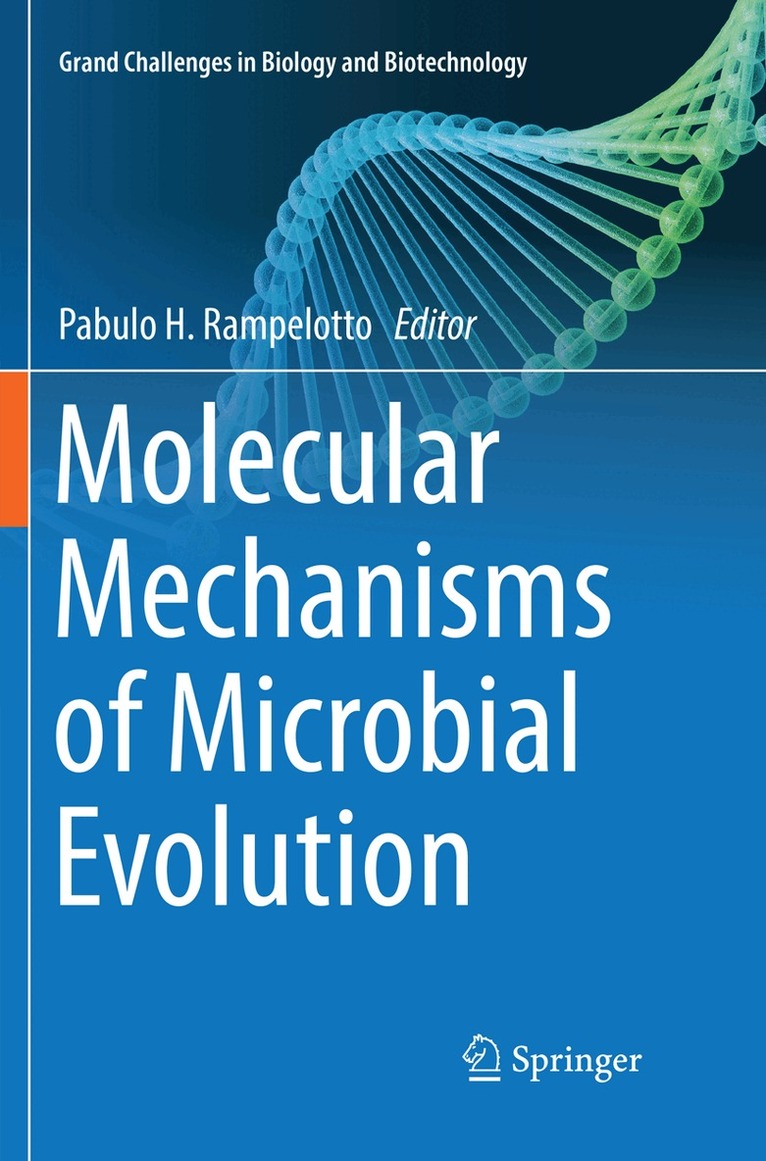
One of the most profound paradigms that have transformed our understanding about life over the last decades was the acknowledgement that microorganisms play a central role in shaping the past and present environments on Earth and the nature of all life forms. Each organism is the product of its history and all extant life traces back to common ancestors, which were microorganisms. Nowadays, microorganisms represent the vast majority of biodiversity on Earth and have survived nearly 4 billion years of evolutionary change. Microbial evolution occurred and continues to take place in a great variety of environmental conditions. However, we still know little about the processes of evolution as applied to microorganisms and microbial populations. In addition, the molecular mechanisms by which microorganisms communicate/interact with each other and with multicellular organisms remains poorly understood. Such patterns of microbe-host interaction are essential to understand the evolution of microbial symbiosis and pathogenesis.Recent advances in DNA sequencing, high-throughput technologies, and genetic manipulation systems have enabled studies that directly characterize the molecular and genomic bases of evolution, producing data that are making us change our view of the microbial world. The notion that mutations in the coding regions of genomes are, in combination with selective forces, the main contributors to biodiversity needs to be re-examined as evidence accumulates, indicating that many non-coding regions that contain regulatory signals show a high rate of variation even among closely related organisms. Comparative analyses of an increasing number of closely related microbial genomes have yielded exciting insight into the sources of microbial genome variability with respect to gene content, gene order and evolution of genes with unknown functions. Furthermore, laboratory studies (i.e. experimental microbial evolution) are providing fundamental biological insight through direct observation of the evolution process. They not only enable testing evolutionary theory and principles, but also have applications to metabolic engineering and human health. Overall, these studies ranging from viruses to Bacteria to microbial Eukaryotes are illuminating the mechanisms of evolution at a resolution that Darwin, Delbruck and Dobzhansky could barely have imagined. Consequently, it is timely to review and highlight the progress so far as well as discuss what remains unknown and requires future research. This book explores the current state of knowledge on the molecular mechanisms of microbial evolution with a collection of papers written by authors who are leading experts in the field.
Inbunden, Engelska, 2020
2 178 kr
Skickas inom 10-15 vardagar
In this book, researchers and practitioners working in the field present the major promises of algae biotechnology and they critically discuss the challenges arising from applications. Based on this assessment, the authors explore the great scientific, industrial and economic potential opened up by algae biotechnology. The first part of the book presents recent developments in key enabling technologies, which are the driving force to unleash the enormous potential of algae biotechnology. The second part of the book focuses on how practical applications of algae biotechnology may provide new solutions to some of the grand challenges of the 21st century.Algae offer great potential to support the building of a bio-based economy and they can contribute new solutions to some of the grand challenges of the 21st century. Despite significant progress, algae biotechnology is yet far from fulfilling its potential. How to unleash this enormous potential is the challenge that the own field is facing. New cultivation technologies and bioprocess engineering allow for optimization of the operation strategy of state-of the art industrial-scale production systems and they reduce the production costs. Parallel to this, new molecular technologies for genetic and metabolic engineering of (micro)algae develop quickly. The optimization of existing biochemical pathways or the introduction of pathway components makes high-yield production of specific metabolites possible. Novel screening technologies including high-throughput technologies enables testing of extremely large numbers of samples and, thus, allow for large scale modelling of biomolecular processes, which would have not been possible in the past. Moreover, profitable production can demand for integrated biorefining, which combines consecutive processes and various feedstocks to produce both transportation fuel, electric energy and valuable chemicals.
Häftad, Engelska, 2021
2 178 kr
Skickas inom 10-15 vardagar
In this book, researchers and practitioners working in the field present the major promises of algae biotechnology and they critically discuss the challenges arising from applications. Based on this assessment, the authors explore the great scientific, industrial and economic potential opened up by algae biotechnology. The first part of the book presents recent developments in key enabling technologies, which are the driving force to unleash the enormous potential of algae biotechnology. The second part of the book focuses on how practical applications of algae biotechnology may provide new solutions to some of the grand challenges of the 21st century.Algae offer great potential to support the building of a bio-based economy and they can contribute new solutions to some of the grand challenges of the 21st century. Despite significant progress, algae biotechnology is yet far from fulfilling its potential. How to unleash this enormous potential is the challenge that the own field is facing. New cultivation technologies and bioprocess engineering allow for optimization of the operation strategy of state-of the art industrial-scale production systems and they reduce the production costs. Parallel to this, new molecular technologies for genetic and metabolic engineering of (micro)algae develop quickly. The optimization of existing biochemical pathways or the introduction of pathway components makes high-yield production of specific metabolites possible. Novel screening technologies including high-throughput technologies enables testing of extremely large numbers of samples and, thus, allow for large scale modelling of biomolecular processes, which would have not been possible in the past. Moreover, profitable production can demand for integrated biorefining, which combines consecutive processes and various feedstocks to produce both transportation fuel, electric energy and valuable chemicals.
Inbunden, Engelska, 2020
1 635 kr
Skickas inom 10-15 vardagar
This volume provides a comprehensive overview of the major applications and potential of fungal biotechnology. The respective chapters report on the latest advances and opportunities in each topic area, proposing new and sustainable solutions to some of the major challenges faced by modern society. Aimed at researchers and biotechnologists in academia and industry, it represents essential reading for anyone interested in fungal biotechnology, as well as those working within the broader area of microbial biotechnology. Written in an accessible language, the book also offers a valuable reference resource for decision-makers in government and at non-governmental organizations who are involved in the development of cleaner technologies and the global bioeconomy. The 21st century is characterized by a number of critical challenges in terms of human health, developing a sustainable bioeconomy, facilitating agricultural production, and establishing practices that support a cleanerenvironment. While there are chemical solutions to some of these challenges, developing bio-based approaches is becoming increasingly important. Filamentous fungi, ‘the forgotten kingdom,’ are a group of unique organisms whose full potential has yet to be revealed. Some key properties, such as their exceptional capacity to secrete proteins into the external environment, have already been successfully harnessed for the production of industrial enzymes and cellulosic biofuels. Many further aspects discussed here –such as feeding the hungry with fungal protein, and the potential applications of the various small molecules produced by fungi –warrant further exploration. In turn, the book covers the use of fungal cell factories to produce foreign molecules, e.g. for therapeutics. Strategies including molecular approaches to strain improvement, and recent advances in high-throughput technologies, which are key to finding better products and producers, are also addressed. Lastly, the book discusses the advent of synthetic biology, which is destined to greatly expand the scope of fungal biotechnology.The chapter “Fungal Biotechnology in Space: Why and How?” is available open access under a Creative Commons Attribution 4.0 International License at link.springer.com.
Häftad, Engelska, 2021
1 635 kr
Skickas inom 10-15 vardagar
This volume provides a comprehensive overview of the major applications and potential of fungal biotechnology. The respective chapters report on the latest advances and opportunities in each topic area, proposing new and sustainable solutions to some of the major challenges faced by modern society. Aimed at researchers and biotechnologists in academia and industry, it represents essential reading for anyone interested in fungal biotechnology, as well as those working within the broader area of microbial biotechnology. Written in an accessible language, the book also offers a valuable reference resource for decision-makers in government and at non-governmental organizations who are involved in the development of cleaner technologies and the global bioeconomy. The 21st century is characterized by a number of critical challenges in terms of human health, developing a sustainable bioeconomy, facilitating agricultural production, and establishing practices that support a cleanerenvironment. While there are chemical solutions to some of these challenges, developing bio-based approaches is becoming increasingly important. Filamentous fungi, ‘the forgotten kingdom,’ are a group of unique organisms whose full potential has yet to be revealed. Some key properties, such as their exceptional capacity to secrete proteins into the external environment, have already been successfully harnessed for the production of industrial enzymes and cellulosic biofuels. Many further aspects discussed here –such as feeding the hungry with fungal protein, and the potential applications of the various small molecules produced by fungi –warrant further exploration. In turn, the book covers the use of fungal cell factories to produce foreign molecules, e.g. for therapeutics. Strategies including molecular approaches to strain improvement, and recent advances in high-throughput technologies, which are key to finding better products and producers, are also addressed. Lastly, the book discusses the advent of synthetic biology, which is destined to greatly expand the scope of fungal biotechnology.The chapter “Fungal Biotechnology in Space: Why and How?” is available open access under a Creative Commons Attribution 4.0 International License at link.springer.com.
Inbunden, Engelska, 2023
1 961 kr
Skickas inom 10-15 vardagar
Hot environments are diverse environments that habor a wide variety of anaerobic microorganisms. Although the existence of thermophilic microorganisms has been known for over a century, it is only since the 1970s that warm environments inhabited by thermophiles have been studied in more detail. While aerobic thermophiles have received most of the interest, thermophilic anaerobes have received less attention.This book provides a comprehensive overview of the fundamental aspects of thermophilic anaerobes, from their environments to their applications in biotechnology. The book is divided into three parts: 1) a general overview of thermophilic anaerobes, their history, environments, and phylogenetic relationships, 2) physiological aspects of thermophilic anaerobes and their mechanisms of thermal adaptation, and 3) the biotechnological applications of thermophiles for the production of biofuels and other chemical building blocks as well as their applications in specific industries.This comprehensive and up-to-date book, Thermophilic anaerobes - Phylogeny, Physiology and Biotechnological Applications, is a valuable resource for experienced researchers and early career scientists alike who want to learn more about this exciting and developing field.
Häftad, Engelska, 2024
1 961 kr
Skickas inom 10-15 vardagar
Hot environments are diverse environments that habor a wide variety of anaerobic microorganisms. Although the existence of thermophilic microorganisms has been known for over a century, it is only since the 1970s that warm environments inhabited by thermophiles have been studied in more detail. While aerobic thermophiles have received most of the interest, thermophilic anaerobes have received less attention.This book provides a comprehensive overview of the fundamental aspects of thermophilic anaerobes, from their environments to their applications in biotechnology. The book is divided into three parts: 1) a general overview of thermophilic anaerobes, their history, environments, and phylogenetic relationships, 2) physiological aspects of thermophilic anaerobes and their mechanisms of thermal adaptation, and 3) the biotechnological applications of thermophiles for the production of biofuels and other chemical building blocks as well as their applications in specific industries.This comprehensive and up-to-date book, Thermophilic anaerobes - Phylogeny, Physiology and Biotechnological Applications, is a valuable resource for experienced researchers and early career scientists alike who want to learn more about this exciting and developing field.
Inbunden, Engelska, 2025
2 395 kr
Skickas inom 10-15 vardagar
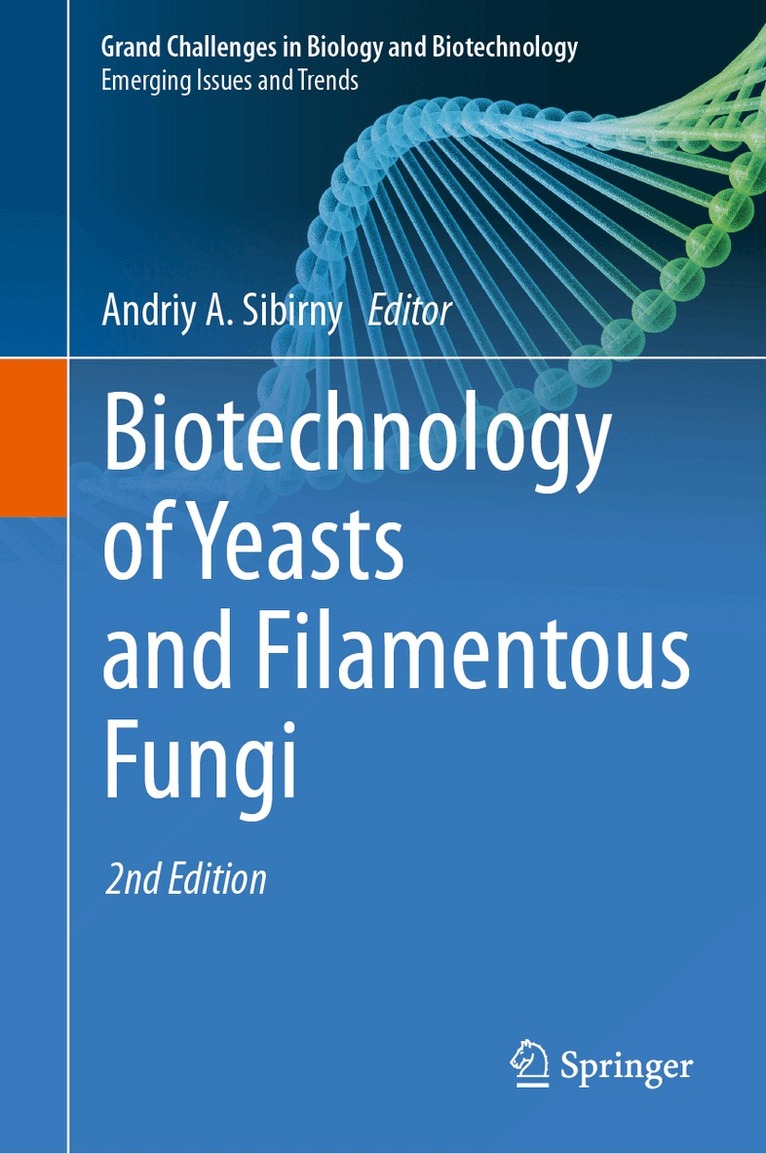
This updated and extended second edition provides a comprehensive overview on biotechnological applications of unicellular and multicellular fungi in a variety of industrial settings. Each chapter is dedicated to applications and potential beneficial use of particular strains of yeasts and filamentous fungi and their produced biomolecules, ranging from glycerol to carotenoids. This new edition further includes a brand-new chapter on lactic acid production in yeast.Targeted genetic and metabolic engineering of fungi allows production of native and transgenic enzymes and proteins in industrial scales. Those most prominently find application in biorefineries for the production of value-added chemicals and biofuels, in the pharmaceutical industry as well as in biomedicine. This volume addresses researchers from both academia and industry, and graduate students working in microbial biotechnology.
Häftad, Engelska, 2026
2 395 kr
Skickas inom 10-15 vardagar
This updated and extended second edition provides a comprehensive overview on biotechnological applications of unicellular and multicellular fungi in a variety of industrial settings. Each chapter is dedicated to applications and potential beneficial use of particular strains of yeasts and filamentous fungi and their produced biomolecules, ranging from glycerol to carotenoids. This new edition further includes a brand-new chapter on lactic acid production in yeast.Targeted genetic and metabolic engineering of fungi allows production of native and transgenic enzymes and proteins in industrial scales. Those most prominently find application in biorefineries for the production of value-added chemicals and biofuels, in the pharmaceutical industry as well as in biomedicine. This volume addresses researchers from both academia and industry, and graduate students working in microbial biotechnology.
Inbunden, Engelska, 2025
3 046 kr
Skickas inom 10-15 vardagar
This book provides comprehensive recommendations and insights into the fundamentals, innovations, and industrial applications of microalgae-based processes. Covering both upstream and downstream processes, it addresses challenges and solutions in scaling up microalgae technologies from laboratory to industrial uses.Key topics include cultivation techniques, bioreactor designs, harvesting and drying methods, and applications in food, biofuels, and environmental management. Special emphasis is placed on market trends, socio-political factors, regulatory frameworks, innovation, and sustainability, ensuring a holistic understanding of this rapidly evolving field.In addition, the final chapters are dedicated to real-world cases, highlighting pilot projects and large-scale installations that tackle practical challenges in engineering and commercialization. As an interdisciplinary science, microalgae technology has significant relevance in academia, industry, and government, driving innovation and contributing to a growing billion-dollar global market for high-value products.This book serves as an essential resource for students, researchers, scientists, engineers, and professionals seeking to deepen their knowledge and stay updated on the latest developments in microalgae research and applications.
Häftad, Engelska, 2026
3 046 kr
Skickas inom 10-15 vardagar
This book provides comprehensive recommendations and insights into the fundamentals, innovations, and industrial applications of microalgae-based processes. Covering both upstream and downstream processes, it addresses challenges and solutions in scaling up microalgae technologies from laboratory to industrial uses.Key topics include cultivation techniques, bioreactor designs, harvesting and drying methods, and applications in food, biofuels, and environmental management. Special emphasis is placed on market trends, socio-political factors, regulatory frameworks, innovation, and sustainability, ensuring a holistic understanding of this rapidly evolving field.In addition, the final chapters are dedicated to real-world cases, highlighting pilot projects and large-scale installations that tackle practical challenges in engineering and commercialization. As an interdisciplinary science, microalgae technology has significant relevance in academia, industry, and government, driving innovation and contributing to a growing billion-dollar global market for high-value products.This book serves as an essential resource for students, researchers, scientists, engineers, and professionals seeking to deepen their knowledge and stay updated on the latest developments in microalgae research and applications.
Del 1 - Grand Challenges in Biology and Biotechnology
Biotechnology of Extremophiles:
Advances and Challenges
Inbunden, Engelska, 2016
2 176 kr
Skickas inom 10-15 vardagar
Aimed at research scientists and biotechnologists, this book is an essential reading for those working with extremophiles and their potential biotechnological application. Here, we provide a comprehensive and reliable source of information on the recent advances and challenges in different aspects of the theme. Written in an accessible language, the book is also a recommended as reference text for anyone interested in this thriving field of research.Over the last decades, the study of extremophiles has provided ground breaking discoveries that challenge our understanding of biochemistry and molecular biology. In the applied side, extremophiles and their enzymes have spawned a multibillion dollar biotechnology industry, with applications spanning biomedical, pharmaceutical, industrial, environmental, and agricultural sectors. Taq DNA polymerase (which was isolated from Thermus aquaticus from a geothermal spring in Yellowstone National Park) is the most well-known example of the potential biotechnological application of extremophiles and their biomolecules. Indeed, the application of extremophiles and their biologically active compounds has opened a new era in biotechnology. However, despite the latest advances, we are just in the beginning of exploring the biotechnological potentials of extremophiles.
Inbunden, Engelska, 2018
1 635 kr
Skickas inom 10-15 vardagar
This book serves as essential reading for research scientists and biotechnologists from both academia and industry working in marine biotechnology and related disciplines. The book discusses recent advances and challenges in terms of science, technology, innovation, and policy for the development of the field; and how marine biotechnology may provide new solutions to some of the grand challenges faced by our society. Written in an accessible language, the book is also recommended as a reference text for decision-makers in government and non-governmental organizations in their efforts to foster the development of a global blue economy.With less than 5 % of the vast and rich marine environment explored, our seas and oceans represent a virtually unexplored resource for the discovery of novel product, processes, and development of bio-inspired synthetic drugs with biotechnological potential. As such, the marine environment has been considered Earth's last frontier of exploration. Recent advances in molecular techniques are providing the necessary tools to access on a larger scale the still-untapped ocean resources and, consequently, unveil the promise of the blue biotechnology. Governments are recognizing the potential of marine biotechnology to provide solutions to some of the Grand Challenges of the 21st Century such as sustainable energy and food sources, identification of novel drugs for improved health treatments, and providing new industrial materials and processes. For this reason, advances in marine biotechnology may foster the much-needed source of innovation and economic growth in many countries, and pave the way towards the development of a global blue economy, i.e. a new economic model based on the sustainable exploration of our ocean ecosystems.
Inbunden, Engelska, 2018
2 395 kr
Skickas inom 10-15 vardagar
One of the most profound paradigms that have transformed our understanding about life over the last decades was the acknowledgement that microorganisms play a central role in shaping the past and present environments on Earth and the nature of all life forms. Each organism is the product of its history and all extant life traces back to common ancestors, which were microorganisms. Nowadays, microorganisms represent the vast majority of biodiversity on Earth and have survived nearly 4 billion years of evolutionary change. Microbial evolution occurred and continues to take place in a great variety of environmental conditions. However, we still know little about the processes of evolution as applied to microorganisms and microbial populations. In addition, the molecular mechanisms by which microorganisms communicate/interact with each other and with multicellular organisms remains poorly understood. Such patterns of microbe-host interaction are essential to understand the evolution of microbial symbiosis and pathogenesis.Recent advances in DNA sequencing, high-throughput technologies, and genetic manipulation systems have enabled studies that directly characterize the molecular and genomic bases of evolution, producing data that are making us change our view of the microbial world. The notion that mutations in the coding regions of genomes are, in combination with selective forces, the main contributors to biodiversity needs to be re-examined as evidence accumulates, indicating that many non-coding regions that contain regulatory signals show a high rate of variation even among closely related organisms. Comparative analyses of an increasing number of closely related microbial genomes have yielded exciting insight into the sources of microbial genome variability with respect to gene content, gene order and evolution of genes with unknown functions. Furthermore, laboratory studies (i.e. experimental microbial evolution) are providing fundamental biological insight through direct observation of the evolution process. They not only enable testing evolutionary theory and principles, but also have applications to metabolic engineering and human health. Overall, these studies ranging from viruses to Bacteria to microbial Eukaryotes are illuminating the mechanisms of evolution at a resolution that Darwin, Delbruck and Dobzhansky could barely have imagined. Consequently, it is timely to review and highlight the progress so far as well as discuss what remains unknown and requires future research. This book explores the current state of knowledge on the molecular mechanisms of microbial evolution with a collection of papers written by authors who are leading experts in the field.
Del 1 - Grand Challenges in Biology and Biotechnology
Biotechnology of Extremophiles:
Advances and Challenges
Häftad, Engelska, 2018
2 241 kr
Skickas inom 10-15 vardagar
Aimed at research scientists and biotechnologists, this book is an essential reading for those working with extremophiles and their potential biotechnological application. Here, we provide a comprehensive and reliable source of information on the recent advances and challenges in different aspects of the theme. Written in an accessible language, the book is also a recommended as reference text for anyone interested in this thriving field of research.Over the last decades, the study of extremophiles has provided ground breaking discoveries that challenge our understanding of biochemistry and molecular biology. In the applied side, extremophiles and their enzymes have spawned a multibillion dollar biotechnology industry, with applications spanning biomedical, pharmaceutical, industrial, environmental, and agricultural sectors. Taq DNA polymerase (which was isolated from Thermus aquaticus from a geothermal spring in Yellowstone National Park) is the most well-known example of the potential biotechnological application of extremophiles and their biomolecules. Indeed, the application of extremophiles and their biologically active compounds has opened a new era in biotechnology. However, despite the latest advances, we are just in the beginning of exploring the biotechnological potentials of extremophiles.