• Fri frakt över 249 kr
  • •
  • Snabba leveranser
  • •
  • Billiga böcker
Kundservice

Du är på sajten för privatpersoner.

Företag, bibliotek eller offentlig verksamhet?

Du handlar på classic.bokus.com, där alla dina funktioner finns intakta.
Till classic.bokus.com
Bokus logotyp. Gå till startsidan.
  • Erbjudanden
  • Nyheter
  • Student
  • Topplistor
  • Barn & ungdom
  • Bokus Play
  • E-böcker
  • Pocketböcker
  • Spel & pussel

10% rabatt på allt med kod: NYSTART10 →

Sidfot

Mina sidor

    Hjälp

    • Kundservice
    • Vanliga frågor och svar
    • Frakt och leverans
    • Retur vid ångerrätt
    • Reklamera vara
    • Betalning
    • Köpvillkor
    • Allmänna villkor
    • Information om webbplatsens tillgänglighet

    Om Bokus

    • Om oss
    • Pressrum
    • För studenter
    • För företag
    • För bibliotek och offentlig verksamhet
    • För leverantörer
    • Hållbarhet

    Populärt

    • Aktuella erbjudanden
    • Presentkort
    • Studentlitteratur
    • Nya böcker
    • Topplistor
    • Signerade böcker
    • Engelska böcker

    Inspiration

    • Boktips
    • BookTok
    • Populära bokserier
    • Barnbokskaraktärer
    • Populära författare
    Logotyp för Bokus
    Följ oss på Facebook (extern länk)Följ oss på Instagram (extern länk)Följ oss på YouTube (extern länk)Följ oss på TikTok (extern länk)
    bokus @ CookiesAnpassa cookiesIntegritetspolicyKöpvillkor
    Till Citymail hemsida (extern länk)Till Budbee hemsida (extern länk)Till Postnord hemsida (extern länk)Till Schenker hemsida (extern länk)Till Early Bird hemsida (extern länk)Till Walleys hemsida (extern länk)
    1. Djur och Natur
    2. Naturböcker
    3. Svampböcker

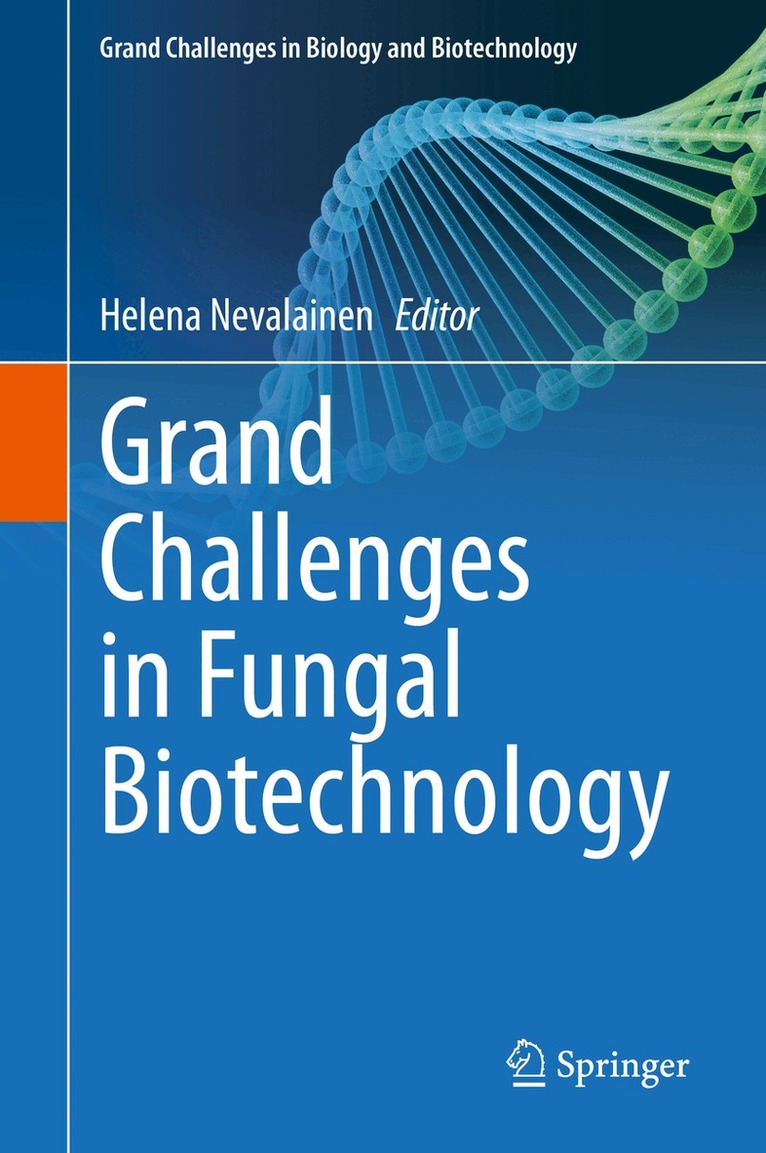
    Grand Challenges in Fungal Biotechnology

    AvHelena Nevalainen

    Inbunden, Engelska, 2020

    Del i serien Grand Challenges in Biology and Biotechnology

    1 626 kr

    Beställningsvara. Skickas inom 10-15 vardagar. Fri frakt över 249 kr.

    Beskrivning

    This volume provides a comprehensive overview of the major applications and potential of fungal biotechnology. The respective chapters report on the latest advances and opportunities in each topic area, proposing new and sustainable solutions to some of the major challenges faced by modern society. Aimed at researchers and biotechnologists in academia and industry, it represents essential reading for anyone interested in fungal biotechnology, as well as those working within the broader area of microbial biotechnology. Written in an accessible language, the book also offers a valuable reference resource for decision-makers in government and at non-governmental organizations who are involved in the development of cleaner technologies and the global bioeconomy. The 21st century is characterized by a number of critical challenges in terms of human health, developing a sustainable bioeconomy, facilitating agricultural production, and establishing practices that support a cleanerenvironment. While there are chemical solutions to some of these challenges, developing bio-based approaches is becoming increasingly important. Filamentous fungi, ‘the forgotten kingdom,’ are a group of unique organisms whose full potential has yet to be revealed. Some key properties, such as their exceptional capacity to secrete proteins into the external environment, have already been successfully harnessed for the production of industrial enzymes and cellulosic biofuels. Many further aspects discussed here –such as feeding the hungry with fungal protein, and the potential applications of the various small molecules produced by fungi –warrant further exploration. In turn, the book covers the use of fungal cell factories to produce foreign molecules, e.g. for therapeutics. Strategies including molecular approaches to strain improvement, and recent advances in high-throughput technologies, which are key to finding better products and producers, are also addressed. Lastly, the book discusses the advent of synthetic biology, which is destined to greatly expand the scope of fungal biotechnology.The chapter “Fungal Biotechnology in Space: Why and How?” is available open access under a Creative Commons Attribution 4.0 International License at link.springer.com.

    Produktinformation

    • Utgivningsdatum:2020-01-30
    • Mått:155 x 235 x 35 mm
    • Vikt:980 g
    • Format:Inbunden
    • Språk:Engelska
    • Serie:Grand Challenges in Biology and Biotechnology
    • Antal sidor:535
    • Förlag:Springer Nature Switzerland AG
    • ISBN:9783030295400

    Utforska kategorier

    • Svampböcker inom Djur och Natur
    • Svampar inom Naturvetenskap och teknik
    • Biokemisk teknik inom Naturvetenskap och teknik

    Mer om författaren

    Professor Helena Nevalainen is one of the pioneers in Fungal Biotechnology and has published widely on the topic. She has worked both in industry and academia in Finland and Australia, which has provided her a unique view of Fungal Biotechnology and challenges in the field globally. She has extensive experience from a number of Biotechnology Program steering committees and as an expert consultant to industry. She is currently Professor of Biotechnology at Macquarie University in Australia where she has acted as Director of Masters in Biotechnology Program and graduated several postgraduate students who have since moved on to leading positions nationally and internationally. She has active collaborations with several distinguished scientists and has also acted as an editor and guest editor in Fungal Biotechnology book series and specialist journals.

    Innehållsförteckning

    • Part 1: Fungal Biotechnology and the Global Challenges.- Chapter 1: Fungal Biotechnology: Unlocking the Full Potential of Fungi for a More Sustainable World.- Chapter 2: Fungal Attack on Environmental Pollutants Representing Poor Microbial Growth Substrates.- Chapter 3: The Biotechnology of Quorn Mycoprotein: Past, Present and Future Challenges.- Chapter 4: The Current Biotechnological Status and Potential of Plant and Algal Biomass Degrading/Modifying Enzymes from Ascomycete Fungi.- Part 2: Developments in Key Enabling Technologies.- Chapter 5: Genetic Transformation of Filamentous Fungi: Achievements and Challenges.- Chapter 6: Bottlenecks and Future Outlooks for High-Throughput Technologies for Filamentous Fungi.- Chapter 7: Strategies and Challenges for the Development of Industrial Enzymes Using Fungal Cell Factories.- Chapter 8: Meeting a Challenge: A View on Studying Transcriptional Control of Genes Involved Plant Biomass Degradation in Aspergillus niger.- Part  3: Towards Bioeconomy–Potential of Fungal Biotechnology.- Chapter 9: The Economic Potential of ArbuscularFungal Biotechnology in Agriculture.- Chapter 10: Molecular and Genetic Strategies for Enhanced Production of Heterologous LignocellulosicEnzymes.- Part 4: Branching Out – Emerging Opportunities.- Chapter 11: Horizontal Gene Transfer in Fungi.-  Chapter 12: Spotlight on Class I Hydrophobins: Their IntriguingBiochemical Properties and Industrial Prospects.- Chapter 13: An Aroma Odyssey: The Promise of Volatile Fungal Metabolites in Biotechnology.- Chapter 14: Fungal Peroxygenases: A Phylogenetically Old Superfamily of Heme Enzymes with Promiscuity for Oxygen Transfer Reactions.- Chapter 15: Progress and Research Needs of Plant Biomass Degradation by Basidiomycete Fungi.- Chapter 16: Organic Acids in the TCA Cycle: The Building Blocks of the Future.- Chapter 17: Opportunities for New Generation Ganodermaboninense Biotechnology.- Chapter 18: Fungal Biotechnology in Space: Why and How?.