Greenwood Technographies - Böcker
Visar alla böcker i serien Greenwood Technographies. Handla med fri frakt och snabb leverans.
15 produkter
15 produkter
675 kr
Skickas inom 10-15 vardagar
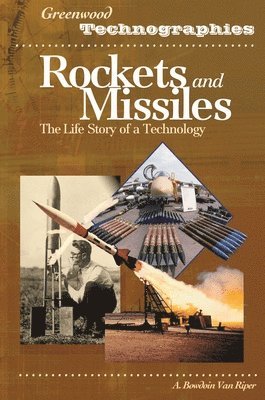
Beginning with World War II, missiles transformed the art of war. For the first time, cities of warring nations were vulnerable to sudden, unannounced, long-distance destruction. At the same time, rockets made possible one of the great triumphs of the modern age—the exploration of space. Rockets and Missiles traces the history of the technology that led to both the great fear of global warfare, and the great excitement of the Space Age. Beginning with the origins of rocketry in medieval and early modern Asia, the volume focuses on rocketry in late-20th-century Western Europe, Russia, and the United States, and also covers the spread of rocket technology in East Asia, the Middle East, and elsewhere.Rockets and Missiles covers everything any student or interested layperson would need to understand the history of rocketry. The introduction reviews basic principles of physics and basic elements of chemical rocket technology. Chapters trace the history of rockets from their origins to the present day, with a particular emphasis on the years since World War II. All three principal uses of rocket technology are covered in detail: missiles as long-range strategic weapons and short-range tactical weapons, and rockets as launch vehicles for sending payloads into space The book concludes with a survey of several types of non-chemical rockets now under development for use in outer space. While Rockets and Missiles covers the development of the technology, including how rockets improved in performance, reliability, and versatility. The book also stresses the impact of rocket technology—both military and civilian—on everyday life.
675 kr
Skickas inom 10-15 vardagar
Guns have existed in various forms for hundreds of years, and few objects have had such an immense impact on the history of the world. But how did firearms develop? Why did the styles of guns change over the years? Firearms tells the life story of the gun, from the hand-held weapons of ancient humans, to the medieval guns of China that propelled objects by chemical reactions, to the modern assault rifle, the gun as the primary weapon in the modern army, and the gun as a tool for hunting. Not only does the book demonstrate how firearms developed—an evolution dependent upon years of trial and error, and often based on the recurrent need for power, accuracy and a fast rate of fire—but it shows how these advances directly affected the everyday life of people in almost every civilization on earth.Firearms provides both students and interested lay readers with insights on how this ubiquitous technology came to be. The work does not focus on just one type of firearm, but covers all types of relevant weapons. Exploring the life-story of the gun enables the reader to understand how the firearm came of age in Europe, where competition between nations led to the development of different types of firearms—now known as matchlock, wheelock, and flintlock. As successful as these designs were, it was the precision manufacturing of industrialization that would allow the invention of revolvers, breechloaders, and repeating rifles. Eventually, recognition that the gas and recoil of a shot could be used to reload a gun encouraged development of the semi- and fully-automatic weapons that dominate firearm designs today. Firearms includes a timeline of significant developments in the history of guns, and a bibliography of the most important works for further research.
695 kr
Skickas inom 10-15 vardagar
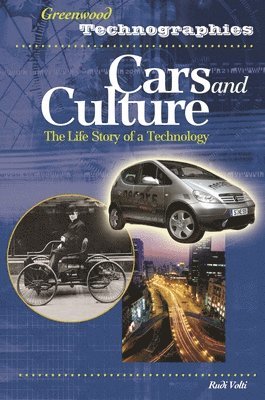
More than any other artifact of modern technology, the automobile has shaped our physical, social, and cultural environment. At the same time, the history of the automobile demonstrates how decisions made by governments, entrepreneurs, and the general public have strongly affected the automobile's evolution. Cars and Cultures provides a succinct yet comprehensive history of the automobile. While the book highlights the technical changes that altered the appearance and performance of automobiles, it also explores the political, economic, social, and cultural forces that shaped the car's development. Because of the wide-ranging impact of the automobiles, no history would be complete without covering the components essential for our automotive-based transportation system—roads and highways, gasoline production, traffic laws, governmental regulation— as well as the other aspects of our social and cultural history that were deeply affected by the history of the automobile—labor unions, suburbanization, travel and recreation, and the fast-food industry.Anyone fascinated by the history of the automobile will find much of interest in this volume. Students and general readers will find such information as:• 4,192 cars produced in the U.S. in 1900, 1,681 were steam-powered, 1,575 were electrics, and only 936 used internal combustion engines• General John Pershing organized a convoy of 79 trucks that crossed the U.S. from Washington to San Francisco in 1919. Hampered by the poor state of the roads upon which they traveled, the trucks averaged only fifty miles a day, and needed 56 days to complete their journey• In 1960, the entire Japanese automobile industry exported fewer than 1000 cars to the United States; by the early 1980s, it became such a threat to the U.S. auto industry that the U.S. government limited Japanese imports to 1.65 million cars per year.Although focused on the United States, it is global in scope, with comparisons to how the automobile developed in Europe, Japan, and elsewhere. The volume includes a chronology of the automobile's evolution, a glossary of technical terms, a selected bibliography, and more than 20 photographs and illustrations.
568 kr
Skickas inom 10-15 vardagar
One of life's most frequently encountered technologies is perhaps the one most often taken for granted: the printed book. Daily contact with books makes these everyday objects so familiar that one is apt to forget that the invention of the book has more profoundly altered civilization than almost any other invention. This volume provides a broad overview of the printed book's development across many centuries, cultures, and in a variety of fields. It highlights the forerunners and offshoots of books that have come from and been dispersed to all corners of the globe. The creation of a single book requires diverse skills and techniques that have taken centuries to develop. This addition to the Greenwood Technographies series will give readers of all ages a greater appreciation for this familiar phenomenon that is part of everyone's life.The Book: The Life Story of a Technology provides a concise overview of many of the most compelling and important stories of the history of book printing: • The history of books, from papyrus scrolls to e-books• The importance of Gutenberg and his historical context• The development of book materials, bindings, typefaces, and printing methods• The book's social and cultural influences, from scientific research and religious beliefs to the structure of government• Modern technological advances in book printing technology, from linotype and lithography to computer composition and electronic publishingThe volume includes a glossary of terms, a timeline of important events, and a selected bibliography of useful resources for further information.
568 kr
Skickas inom 10-15 vardagar
Railroads altered the landscape of the United States. Within a few decades of the invention of the locomotive, railways stretched from coast to coast, enabling people and goods to travel far greater distances than ever before, completely altering our concept of time and space. And while railroads may seem like an old technology, they continue to be an essential means of transporting both good and people, and new technologies are making the railroads an increasingly relevant resource for the 21st century. This volume in the Greenwood Technographies series tells the life story of all aspects of railroad technology—everything from the structure of the track to communications to what powers the locomotive.The Railroad: The Life Story of a Technology gives students and railroad enthusiasts plenty of information on the development of this popular technology: ; Chronicles the early years of the railroad, from early wooden tramways in Massachusetts, to the famous Tom Thumb ; Discusses the important technological failures, such as the narrow-gauge craze of the late nineteenth century with track widths as small as two feet.; Covers all aspects of railroad technology — everything from the structure of the track to communications to what powers the locomotive.; Links the technology to broader social developments, such as the decline of the railroad in the mid-20th century to outmoded governmental and labor restrictions, and the current rise of railroad technology as a result of new managerial techniques.The volume includes a timeline of important dates in railroad history, a glossary of important terms, and a selected bibliography of works appropriate for further research.
695 kr
Skickas inom 10-15 vardagar
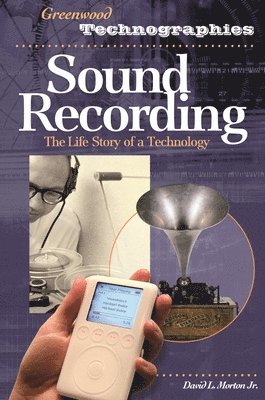
How did one of the great inventions of the 19th century— Thomas Edison's phonograph— eventually lead to one of the most culturally and economically significant technologies of the 20th and 21st centuries? Sound Recording tells that story, tracing the history of the business boom and the cultural revolution begun by Edison's invention. Ever since, recorded sound has been all around us—not just in reproducing and playing popular music, but also in more mundane areas, such as office dictation machines, radio and television programs, and even telephone answering machines. Just as the styles of music have evolved over the years, the formats on which this music was played have changed as well —from 78s to LPs, from LPs to cassette tapes, from cassettes to CDs—not to mention lesser-known innovations in the motion picture and television industries. The quest for better sound was one of the drivers of technological change, but so too were business strategies, patent battles, and a host of other factors.Sound Recording contains much information that will interest anyone interested in the history of recorded music and sound technology, such as: • The world-famous composer John Phillip Sousa once denounced sound recordings as a threat to good musical tasted. He nonetheless made many recordings over the years • Two innovative new products were introduced by RCA in 1958—the first modern cassette tape cartridge and the stereophonic LP record. The tape cartridge, which was about the size of a large paperback, flopped almost immediately; the stereo LP was the music industry's biggest hit ever• Chrysler automobiles of the late 1950s offered Highway Hi-Fi, a dashboard phonograph that could play a record without skipping• The predecessor of the Compact Disc was a 12-inch home videodisc system from the late 1970s—the first of its kind—called DiscoVision The volume includes a timeline and a bibliography for those interested in delving further into the history of recorded sound.
608 kr
Skickas inom 10-15 vardagar
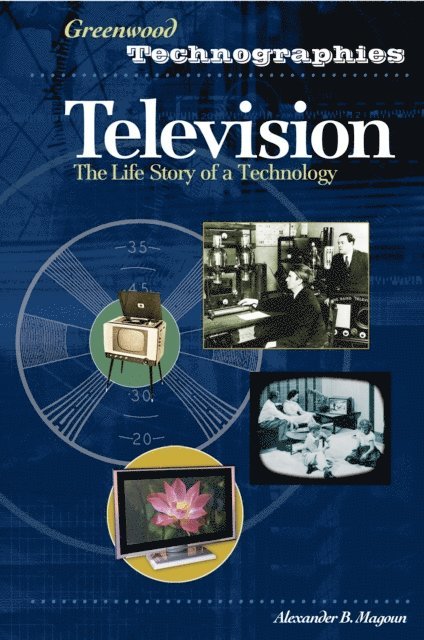
For better or worse, television has been the dominant medium of communication for 50 years. Almost all American households have a television set; many have more than one. Transmitting images and sounds electronically is a relatively recent invention, one that required passionate inventors, determined businessmen, government regulators, and willing consumers. This volume in the Greenwood Technographies series covers the entire history of television from 19the-century European conceptions of transmitting moving images electrically to the death of TV as a discrete system in a digital age. Magoun also discusses the changing face of television in the displays that people watch around the globe. Television: The Life Story of a Technology appeals to students and lay readers alike in highlighting key events and people: the American engineers and entrepreneus such as Vladimir Zworykin and David Sarnoff who ignited the television industry; the bloom of programming choices in tandem with the Baby Boom generation; the development of cable and satellite TV; the Asians who innovated American inventions in videorecording and flat-panel displays; the use of TV in wartime; and the new worlds of digital and high-definition television. Based on the latest research, this crisply written, sometimes provocative survey includes a glossary, timeline, and bibliography for further infomration.
626 kr
Skickas inom 10-15 vardagar
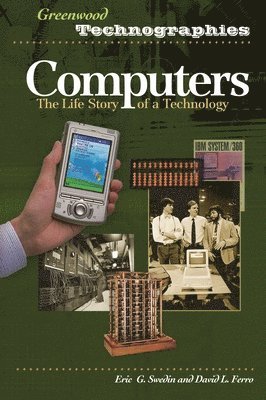
The computer is the great technological and scientific innovation of the last half of the twentieth century. It has revolutionized how we organize information, how we communicate with each other, and even the way that we think about the human mind. Computers have eased the drudgery of such tasks as calculating sums and clerical work, making them both more bearable and more efficient. The computer has become ubiquitous in many aspects of business, recreation, and everyday life, and the trend is that they are becoming both more powerful and easier to use. Computers: The Life Story of a Technology provides an accessible overview of this ever changing technology, giving students and lay readers an understanding of the complete scope of its history from ancient times to the present day.The volume includes a glossary of terms, a timeline of important events, and a selected bibliography of useful resources for further information.
608 kr
Skickas inom 10-15 vardagar
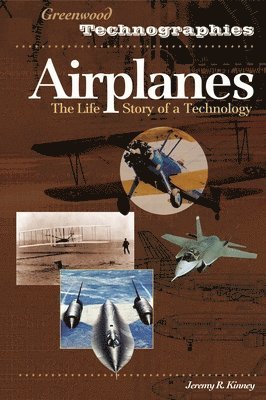
The invention of the airplane redefined the way in which people travel, conduct commerce, spend their leisure time, and wage war. From the Wright brothers' wood-and-fabric Flyer to the modern jet aircraft, the airplane has evolved in countless ways as its many uses have unfolded. The development of safe and efficient air travel required solving multiple engineering riddles about aerodynamics, control, propulsion, and structures. This volume in the Greenwood Technographies series shows how the solutions to these riddles helped spur dramatic changes in the world's social and cultural life.The volume includes a glossary of terms, a timeline of important events, and a selected bibliography of useful resources for further information.
608 kr
Skickas inom 10-15 vardagar
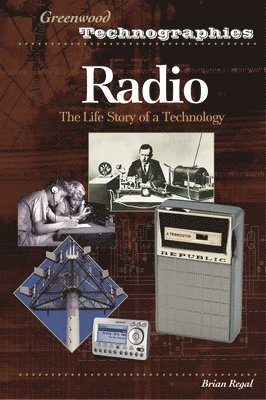
This book chronicles the history of radio as technology and as media. Radio grew from a clumsy, temperamental form of wireless telegraph to a system that is so ubiquitous and easy to use that it has disappeared to users as a technology and became part of the fabric of human existence. This biography charts the growth of the technical end of radio, starting with the history of electricity, and moving through the invention of vacuum tubes, the heterodyne, FM, transistors, and microchips. But the history of radio is not just wires and electricity—it's the story of strange characters, deep thinkers, visionary mystics, hyperactive minds, ambitious souls, power hungry demagogues, and utopian humanists; all of whom strove to make radio into what they thought it should be.In addition, Radio: The Life Story of a Technology looks at the technology as a cultural phenomenon, including the corporate aspects and history of the business of radio. In the middle of the 20th century people saw that radio could be used as an agent of social change, both good and bad. The transition of radio from private corporate device to public news provider to entertainment box back to political tool is at the heart of this work.
626 kr
Skickas inom 10-15 vardagar
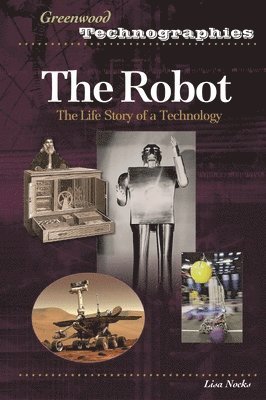
In almost all depictions of the future, one technology plays a prominent role - the robot. Science fiction movies and stories tell us that, in the not so distant future, robots - from Robbie the Robot to C3PO to the Terminator - will be everywhere, taking care of every human need. Those are projections of the future. But robots have a history as well, and The Robot: A Life Story of a Technology tells their story. During the Englightenment, automata were mechnical toys that could simulate human actions. Robots became essential parts of factories, performing tasks perfectly that would be either too dangerous or boring for humans. And recent advances in artificial intelligence have made robots that can behave with intelligence.
568 kr
Skickas inom 10-15 vardagar
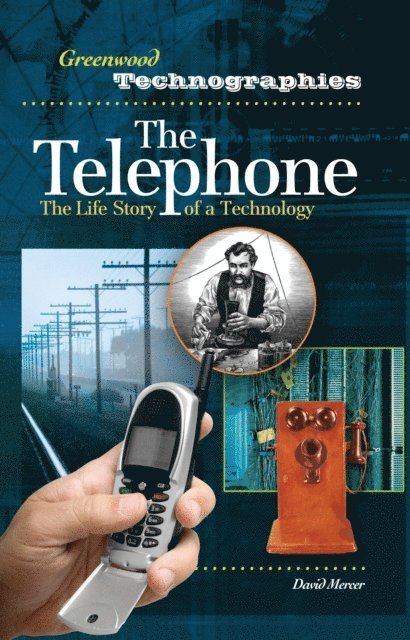
The telephone has played a central role in shaping the way we communicate. From the telegraph in the 19th century through the mobile phone of today, the technology of the telephone has drastically altered how people work, how they keep in touch with friends and loved ones, and how they organize their daily lives. It has also been crucial in enabling governments and large organizations to extend their influence, both within and across nations, and has required wide-ranging changes in the law and in business practices. This volume in the Greenwood Technographies series examines the life story of the telephone and shows how this ubiquitous technology so completely impacts our lives.The Telephone: A Life Story of a Technology discusses significant developments in the technological and social lives of people during the history of the telephone: The telegraph (1830s-1870s) and its impact on the expansion of empires The invention of the telephone, and the early designs and priority disputes between such inventors as Alexander Graham Bell and Elisha Gray The spread of the telephone, and the emergence of Universal Service The revolutionary impact of the mobile phone The volume includes a glossary of terms, a timeline, and a bibliography of the most useful resources for further research.
695 kr
Skickas inom 10-15 vardagar
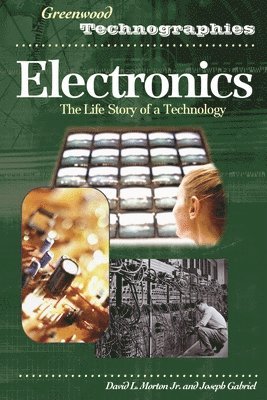
Electronics is the first book of its kind—a comprehensive account of the history of one of the late 20th century's greatest technologies—the field of electron devices. Some of these devices, the laser and the microchip for example, have become household words, but their origins and operation are largely unknown to the general public. Other devices that form the heart of important electronic systems are virtually unknown outside the field of engineering. Electronics is the first book to survey the histories of all these devices, showing how they relate to each other and to the world we live in. This work will be accessible to those without a technical background, but is precise enough for an engineer.The development of electronic devices was central to many of the most important historical events of the last 50 years, such as the introduction of television, Cold War, the Space Race, the rise of Asian semiconductor manufacturers, and the emergence of the surveillance society—this book explores them all. In addition, Electronics examines the fascinating stories of how scientists and engineers created these devices in the first place: One organization, the Bell Telephone Laboratories, was responsible for either the invention or, perhaps more importantly, the commercialization of many of the most important advances in the field.The book explains the origins and impact of a series of now-familiar technologies, including the Magnetron tube used to power microwave ovens, the CRT (television and computer display), the laser, the first integrated circuit, the microprocessor, and memory chips. The transistor—a single invention created to solve a specific engineering problem—was taken up by numerous researchers and transformed a technology—the so-called semiconductor devices—with an astonishing breadth of applications and a nearly ubiquitous presence. The book includes a timeline and a bibliography for those interested in learning more about the history of electron devices.
585 kr
Skickas inom 10-15 vardagar
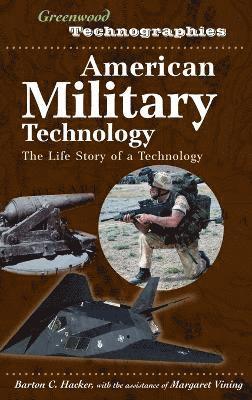
War is part of American history. This book examines how military technology both molded and reflected interactions between American military institutions and other American institutions. The growth of engineering and science has reshaped military technology, organization, and practice from the Colonial era to the present day. At the same time, military concerns influenced, and and sometimes channeled, American engineering and scientific development.American Military Technology chronicles the interactions of technology and science with America's armed forces from colonial times to the end of the 20th century. Each period of the nation's history brought new and influential changes to the interaction of the military and technology.The book is an excellent springboard for understanding the complex relationship of science, technology, and war in American history.
568 kr
Skickas inom 10-15 vardagar
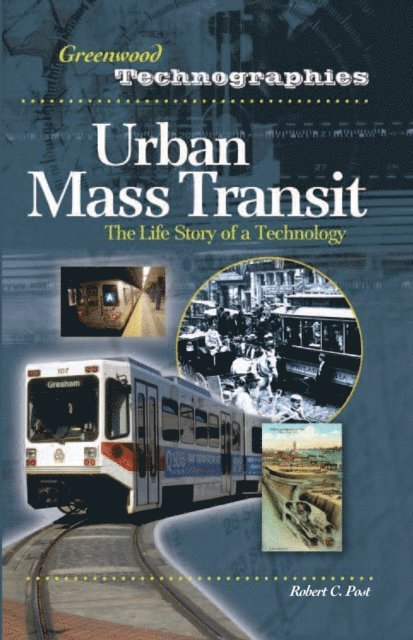
This volume in the Greenwood Technographies series covers urban mass transit - that is, the technologies that allow cities to move large numbers of people around. Just a few hundred years ago, the size of cities was limited by the time it took people to move from one part of the city to another. The development of successive technologies has forever altered the urban landscape. From horse-drawn omnibuses to subways to current light-rail, this volume highlights the technological and social struggles that have accompanied urbanization and the need for an efficient and cost-effective means of transportation in cities.The volume includes a timeline, a glossary, and a bibliography of resources useful for further research.