History of Cartography – serie
Visar alla böcker i serien History of Cartography. Handla med fri frakt och snabb leverans.
4 produkter
4 produkter
Del 4 - History of Cartography
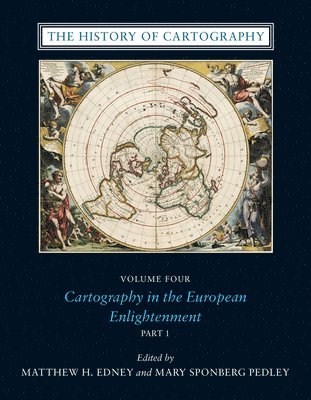
History of Cartography, Volume 4
Cartography in the European Enlightenment
Inbunden, Engelska, 2019
4 705 kr
Skickas inom 5-8 vardagar
Since its launch in 1987, the History of Cartography series has garnered critical acclaim and sparked a new generation of interdisciplinary scholarship. Cartography in the European Enlightenment, the highly anticipated fourth volume, offers a comprehensive overview of the cartographic practices of Europeans, Russians, and the Ottomans, both at home and in overseas territories, from 1650 to 1800. The social and intellectual changes that swept Enlightenment Europe also transformed many of its mapmaking practices. A new emphasis on geometric principles gave rise to improved tools for measuring and mapping the world, even as large-scale cartographic projects became possible under the aegis of powerful states. Yet older mapping practices persisted: Enlightenment cartography encompassed a wide variety of processes for making, circulating, and using maps of different types. The volume’s more than four hundred encyclopedic articles explore the era’s mapping, covering topics both detailed—such as geodetic surveying, thematic mapping, and map collecting—and broad, such as women and cartography, cartography and the economy, and the art and design of maps. Copious bibliographical references and nearly one thousand full-color illustrations complement the detailed entries.
Inbunden, Engelska, 2015
5 124 kr
Skickas inom 5-8 vardagar
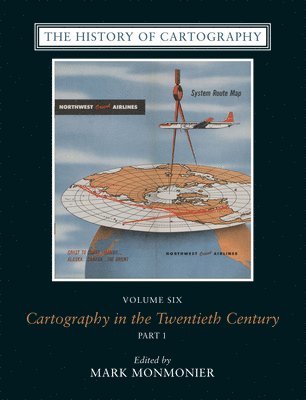
For more than thirty years, the History of Cartography Project has charted the course for scholarship on cartography, bringing together research from a variety of disciplines on the creation, dissemination, and use of maps. Volume 6, Cartography in the Twentieth Century, continues this tradition with a groundbreaking survey of the century just ended and a new full-color, encyclopedic format. The twentieth century is a pivotal period in map history. The transition from paper to digital formats led to previously unimaginable dynamic and interactive maps. Geographic information systems radically altered cartographic institutions and reduced the skill required to create maps. Satellite positioning and mobile communications revolutionized wayfinding. Mapping evolved as an important tool for coping with complexity, organizing knowledge, and influencing public opinion in all parts of the globe and at all levels of society. Volume 6 covers these changes comprehensively, while thoroughly demonstrating the far-reaching effects of maps on science, technology, and society - and vice versa.The lavishly produced volume includes more than five hundred articles accompanied by more than a thousand images, most in full color. Hundreds of expert contributors provide both original research, often based on their own participation in the developments they describe, and interpretations of larger trends in cartography. Designed for use by both scholars and the general public, this definitive volume is a reference work of first resort for all who study and love maps.
Inbunden, Engelska, 1998
2 487 kr
Skickas inom 5-8 vardagar
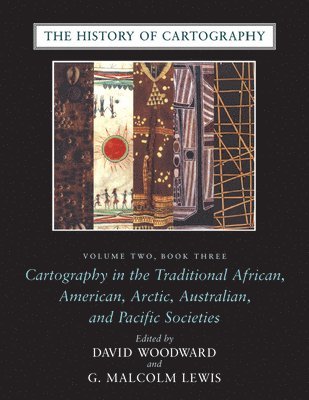
Although they are often rendered in forms unfamiliar to Western eyes, maps have existed in most cultures. In this text contributors from a variety of disciplines collaborate to describe and address the significance of traditional cartographies. Whether painted on rock walls in South Africa, chanted in a Melanesian ritual, or fashioned from palm fronds and shells in the Marshall Islands, all indigenous maps share a crucial role in representing and codifying the spatial knowledge of their various cultures.
Inbunden, Engelska, 2007
4 662 kr
Tillfälligt slut
When the University of Chicago Press launched the land-mark "History of Cartography" series nearly thirty years ago, founding editors J. B. Harley and David Woodward hoped to create a new basis for map history. They did not, however, anticipate the larger renaissance in map studies that the series would inspire. But as the renown of the series and the comprehensiveness and acuity of the present two-part volume demonstrate, the history of cartography has proven to be unexpectedly fertile ground. "Cartography in the European Renaissance" treats the period from 1450 to 1650, long considered the most important in the history of European mapping. This period witnessed a flowering in the production of maps comparable to that in the fields of literature and fine arts. Scientific advances, appropriations of classical mapping techniques, burgeoning trade routes - all such massive changes drove an explosion in the making and using of maps.While this volume presents detailed histories of mapping in such well-documented regions as Italy and Spain, it also breaks significant new ground by treating Renaissance Europe in its most expansive geographical sense, giving careful attention to often-neglected regions such as Scandinavia, East-Central Europe, and Russia, and by providing innovative interpretive essays on the technological, scientific, cultural, and social aspects of cartography. Lavishly illustrated with more than a thousand maps, many in color, "Cartography in the European Renaissance" will be the unsurpassable standard in its field, both defining it and propelling it forward.