Italian Academy Lectures - Böcker
Visar alla böcker i serien Italian Academy Lectures. Handla med fri frakt och snabb leverans.
7 produkter
7 produkter
402 kr
Skickas inom 3-6 vardagar
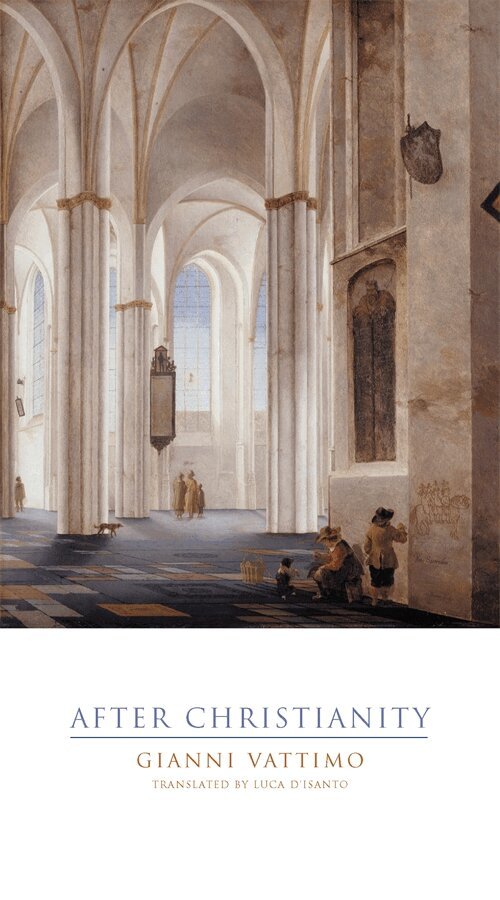
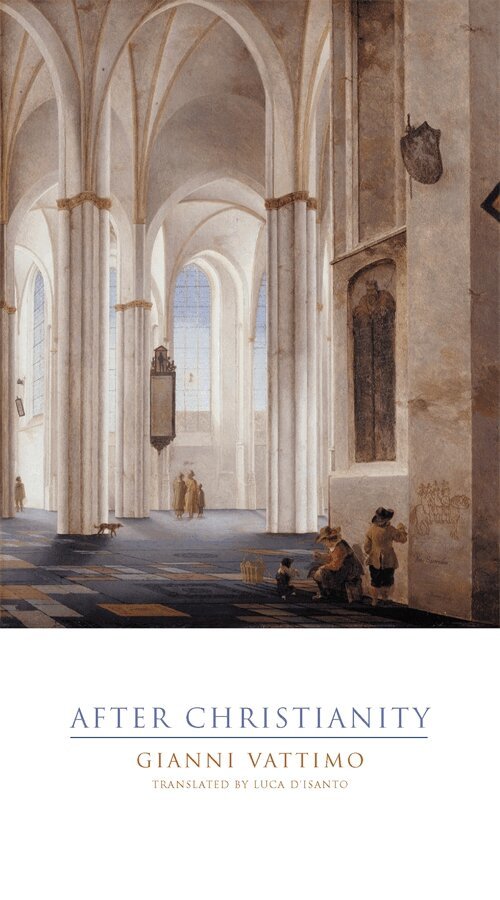
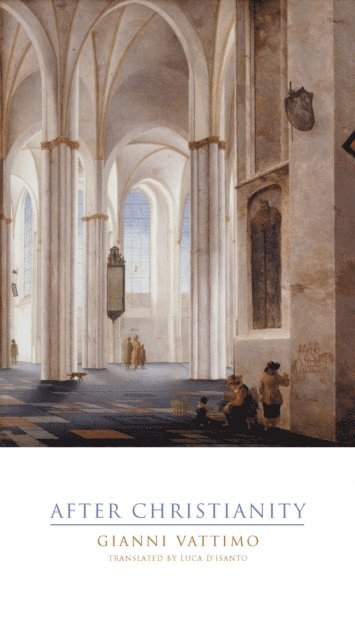
What has been the fate of Christianity since Nietzsche's famous announcement of the "death of God"? What is the possibility of religion, specifically Christianity, thriving in our postmodern era? In this provocative new book, Gianni Vattimo, leading Italian philosopher, politician, and framer of the European constitution, addresses these critical questions. When Vattimo was asked by a former teacher if he still believed in God, his reply was, "Well, I believe that I believe." This paradoxical declaration of faith serves as the foundation for a brilliant exposition on Christianity in the new millennium-an age characterized by a deep uncertainty of opinion-and a personal account of how Vattimo himself recovered his faith through Nietzsche and Heidegger. He first argues that secularization is in fact the fulfillment of the central Christian message, and prepares us for a new mode of Christianity. He then explains that Nietzsche's thesis concerns only the "moral god" and leaves room for the emergence of "new gods."Third, Vattimo claims that the postmodern condition of fragmentation, anti-Eurocentrism, and postcolonialism can be usefully understood in light of Joachim of Fiore's thesis concerning the "Spiritual Age" of history. Finally, Vattimo argues for the idea of "weak thought." Because philosophy in the postmetaphysical age can only acknowledge that "all is interpretation," that the "real" is always relative and not the hard and fast "truth" we once thought it to be, contemporary thought must recognize itself and its claims as "weak" as opposed to "strong" foundationalist claims of the metaphysical past. Vattimo concludes that these factors make it possible for religion and God to become a serious topic for philosophy again, and that philosophy should now formally engage religion.
596 kr
Skickas inom 7-10 vardagar
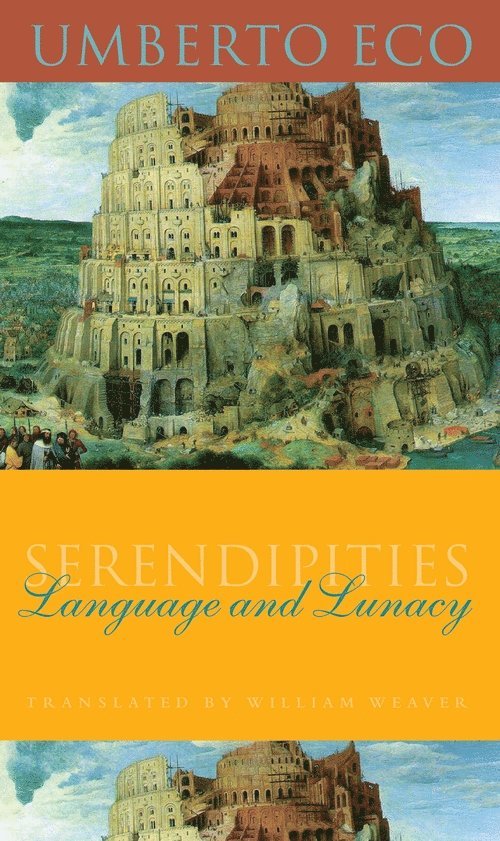
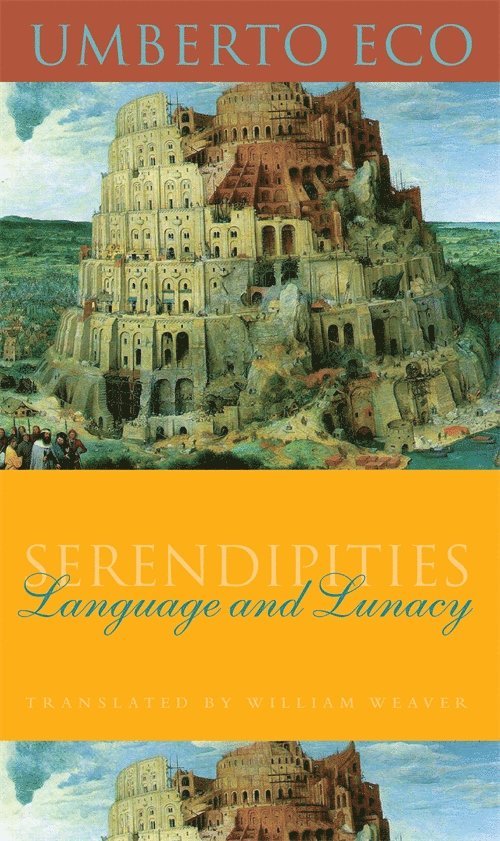
Best-selling author Umberto Eco's latest work unlocks the riddles of history in an exploration of the "linguistics of the lunatic," stories told by scholars, scientists, poets, fanatics, and ordinary people in order to make sense of the world. Exploring the "Force of the False," Eco uncovers layers of mistakes that have shaped human history, such as Columbus's assumption that the world was much smaller than it is, leading him to seek out a quick route to the East via the West and thus fortuitously "discovering" America. The fictions that grew up around the cults of the Rosicrucians and Knights Templar were the result of a letter from a mysterious "Prester John"-undoubtedly a hoax-that provided fertile ground for a series of delusions and conspiracy theories based on religious, ethnic, and racial prejudices. While some false tales produce new knowledge (like Columbus's discovery of America) and others create nothing but horror and shame (the Rosicrucian story wound up fueling European anti-Semitism) they are all powerfully persuasive. In a careful unraveling of the fabulous and the false, Eco shows us how serendipities-unanticipated truths-often spring from mistaken ideas.From Leibniz's belief that the I Ching illustrated the principles of calculus to Marco Polo's mistaking a rhinoceros for a unicorn, Eco tours the labyrinth of intellectual history, illuminating the ways in which we project the familiar onto the strange. Eco uncovers a rich history of linguistic endeavor-much of it ill-conceived-that sought to "heal the wound of Babel." Through the Middle Ages and the Renaissance, Greek, Hebrew, Chinese, and Egyptian were alternately proclaimed as the first language that God gave to Adam, while-in keeping with the colonial climate of the time-the complex language of the Amerindians in Mexico was viewed as crude and diabolical. In closing, Eco considers the erroneous notion of linguistic perfection and shrewdly observes that the dangers we face lie not in the rules we use to interpret other cultures but in our insistence on making these rules absolute. With the startling combination of erudition and wit, bewildering anecdotes and scholarly rigor that are Eco's hallmarks, Serendipities is sure to entertain and enlighten any reader with a passion for the curious history of languages and ideas.
148 kr
Skickas inom 7-10 vardagar
Best-selling author Umberto Eco's latest work unlocks the riddles of history in an exploration of the "linguistics of the lunatic," stories told by scholars, scientists, poets, fanatics, and ordinary people in order to make sense of the world. Exploring the "Force of the False," Eco uncovers layers of mistakes that have shaped human history, such as Columbus's assumption that the world was much smaller than it is, leading him to seek out a quick route to the East via the West and thus fortuitously "discovering" America. The fictions that grew up around the cults of the Rosicrucians and Knights Templar were the result of a letter from a mysterious "Prester John"-undoubtedly a hoax-that provided fertile ground for a series of delusions and conspiracy theories based on religious, ethnic, and racial prejudices. While some false tales produce new knowledge (like Columbus's discovery of America) and others create nothing but horror and shame (the Rosicrucian story wound up fueling European anti-Semitism) they are all powerfully persuasive. In a careful unraveling of the fabulous and the false, Eco shows us how serendipities-unanticipated truths-often spring from mistaken ideas.From Leibniz's belief that the I Ching illustrated the principles of calculus to Marco Polo's mistaking a rhinoceros for a unicorn, Eco tours the labyrinth of intellectual history, illuminating the ways in which we project the familiar onto the strange. Eco uncovers a rich history of linguistic endeavor-much of it ill-conceived-that sought to "heal the wound of Babel." Through the Middle Ages and the Renaissance, Greek, Hebrew, Chinese, and Egyptian were alternately proclaimed as the first language that God gave to Adam, while-in keeping with the colonial climate of the time-the complex language of the Amerindians in Mexico was viewed as crude and diabolical. In closing, Eco considers the erroneous notion of linguistic perfection and shrewdly observes that the dangers we face lie not in the rules we use to interpret other cultures but in our insistence on making these rules absolute. With the startling combination of erudition and wit, bewildering anecdotes and scholarly rigor that are Eco's hallmarks, Serendipities is sure to entertain and enlighten any reader with a passion for the curious history of languages and ideas.
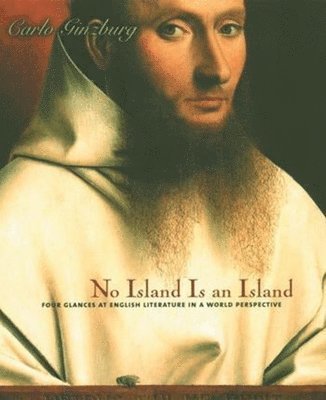
No Island Is an Island
Four Glances at English Literature in a World Perspective
Inbunden, Engelska, 2000
513 kr
Skickas inom 3-6 vardagar
In No Island Is an Island an internationally renowned historian approaches four works of English literature from unexpected angles. Following in the footsteps of a sixteenth-century Spanish bishop we gain a fresh view of Thomas More's Utopia. Comparing Bayle's Dictionary with Tristram Shandy we suddenly enter into Laurence Sterne's mind. A seemingly narrow dispute among Elizabethan critics for and against rhyme turns into an early debate on English national identity. Robert Louis Stevenson's story "The Bottle Imp" throws a new light on Bronislaw Malinowsky's attempts to discover meaning in the "kula" trading system among the Trobriand Islanders. Throughout, Ginzburg's inquiry is informed by his unique microhistorical sensibility, his attention to minute detail, and his extraordinary synthesizing imagination.
474 kr
Skickas inom 3-6 vardagar
The past is not just, as has been famously said, another country with foreign customs: it is a contested and colonized terrain. Indigenous histories have been expropriated, eclipsed, sometimes even wholly eradicated, in the service of imperialist aims buttressed by a distinctly Western philosophy of history. Ranajit Guha, perhaps the most influential figure in postcolonial and subaltern studies at work today, offers a critique of such historiography by taking issue with the Hegelian concept of World-history. That concept, he contends, reduces the course of human history to the amoral record of states and empires, great men and clashing civilizations. It renders invisible the quotidian experience of ordinary people and casts off all that came before it into the nether-existence known as "Prehistory." On the Indian subcontinent, Guha believes, this Western way of looking at the past was so successfully insinuated by British colonization that few today can see clearly its ongoing and pernicious influence.He argues that to break out of this habit of mind and go beyond the Eurocentric and statist limit of World-history historians should learn from literature to make their narratives doubly inclusive: to extend them in scope not only to make room for the pasts of the so-called peoples without history but to address the historicality of everyday life as well. Only then, as Guha demonstrates through an examination of Rabindranath Tagore's critique of historiography, can we recapture a more fully human past of "experience and wonder."
533 kr
Skickas inom 7-10 vardagar
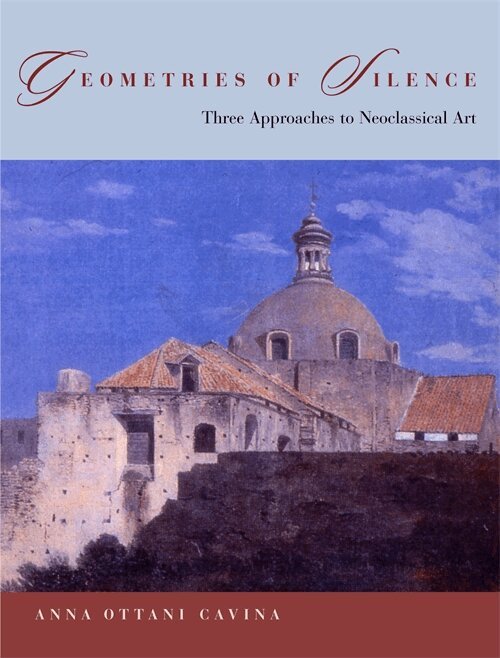
Based on little-known or hitherto unpublished material and enhanced by a wealth of rarely seen illustrations, this book offers access to the aesthetics of neoclassical Europe from a new perspective: landscape painting and interior decoration. The source documents, together with the nexus of relationships they helped to establish, reveal a world shaken by a series of epochal changes. This study of paintings, drawings, and documents touches on such themes as the rediscovery of the ancient world, aristocratic homes in the neoclassical period, and the birth of the rationalist landscape. While the most important artists are French, the chosen vantage point is Rome, because of the impact of antiquity on aesthetic perceptions toward the end of the century. The book insightfully analyzes the last years of the eighteenth century through the visual representation of that world, a world that has been handed down to us through the response of contemporary artists to momentous changes. This book portrays drawing as an instrument of knowledge: an absolute experience, not merely an intermediate phase in the production of a painting.Anna Ottani Cavina leads us to modernity, which through the rarefaction of the image, silence, and emptiness attained heights of emotional and intellectual intensity that drawing was able to capture with extraordinary immediacy.
214 kr
Skickas
What has been the fate of Christianity since Nietzsche's famous announcement of the "death of God"? What is the possibility of religion, specifically Christianity, thriving in our postmodern era? In this provocative new book, Gianni Vattimo, leading Italian philosopher, politician, and framer of the European constitution, addresses these critical questions. When Vattimo was asked by a former teacher if he still believed in God, his reply was, "Well, I believe that I believe." This paradoxical declaration of faith serves as the foundation for a brilliant exposition on Christianity in the new millennium—an age characterized by a deep uncertainty of opinion—and a personal account of how Vattimo himself recovered his faith through Nietzsche and Heidegger. He first argues that secularization is in fact the fulfillment of the central Christian message, and prepares us for a new mode of Christianity. He then explains that Nietzsche's thesis concerns only the "moral god" and leaves room for the emergence of "new gods." Third, Vattimo claims that the postmodern condition of fragmentation, anti-Eurocentrism, and postcolonialism can be usefully understood in light of Joachim of Fiore's thesis concerning the "Spiritual Age" of history. Finally, Vattimo argues for the idea of "weak thought." Because philosophy in the postmetaphysical age can only acknowledge that "all is interpretation," that the "real" is always relative and not the hard and fast "truth" we once thought it to be, contemporary thought must recognize itself and its claims as "weak" as opposed to "strong" foundationalist claims of the metaphysical past. Vattimo concludes that these factors make it possible for religion and God to become a serious topic for philosophy again, and that philosophy should now formally engage religion.