Materials Technology Series - Böcker
Visar alla böcker i serien Materials Technology Series. Handla med fri frakt och snabb leverans.
9 produkter
9 produkter
3 178 kr
Skickas inom 10-15 vardagar
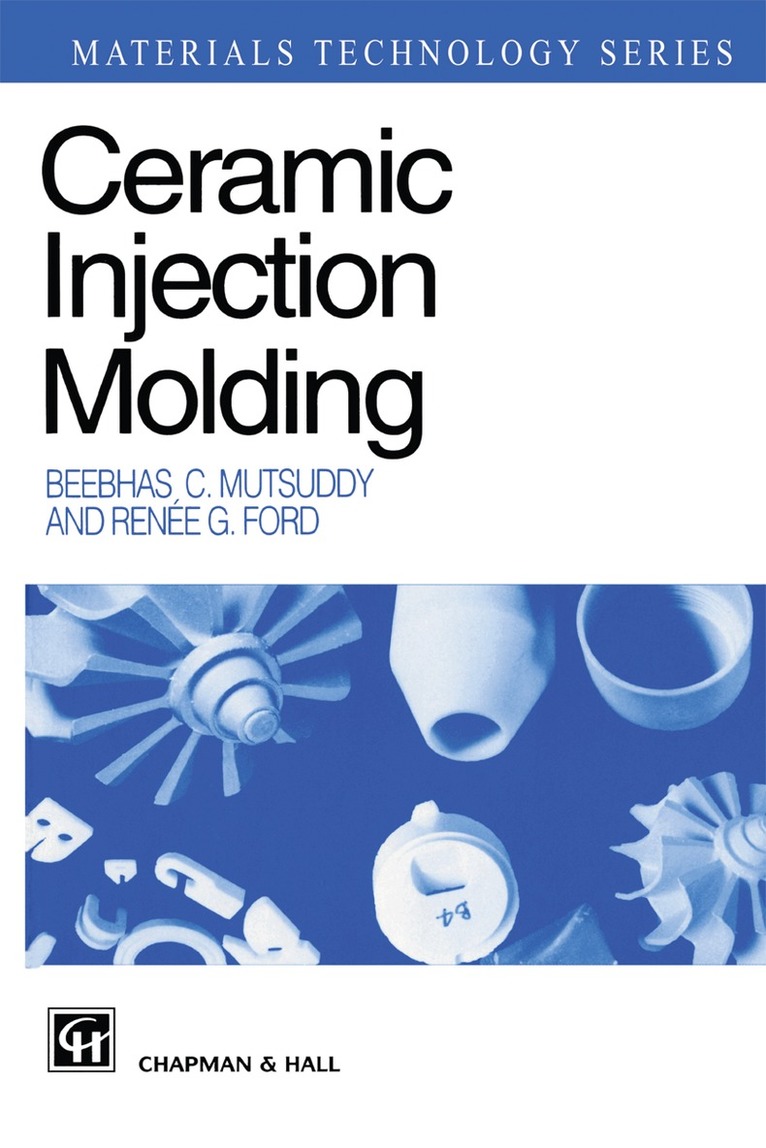
In recent years, injection molding has received special attention as a method for forming complex ceramic parts. High temperature applications in aerospace, advanced heat engines and electronics are but a few of the market areas that have opened up for these special materials. The aim of this book is to provide a comprehensive overview of the steps involved in the ceramic injection molding process. The particular binder systems, the molding and dewaxing processes serve as illustrative examples to indicate how problems can be solved. It is dedicated to providing the reader with a convenient and authoritative source of information and guidance on the use of materials, equipment and testing procedures associated with processing powders and additives into moldable formulations and for injection molding them into satisfactory ceramic products. Emphasis is placed on the applied aspects of the various process steps and the underlying theories are presented in sufficient detail that the reader will appreciate the significance of the various process parameters. All involved in the manufacture of complex ceramic parts will find this book invaluable.Ceramic engineers and anyone involved in the production of ceramics at any stage will find it of great interest and it provides a source of information for those studying ceramics at any level.
2 438 kr
Skickas inom 10-15 vardagar
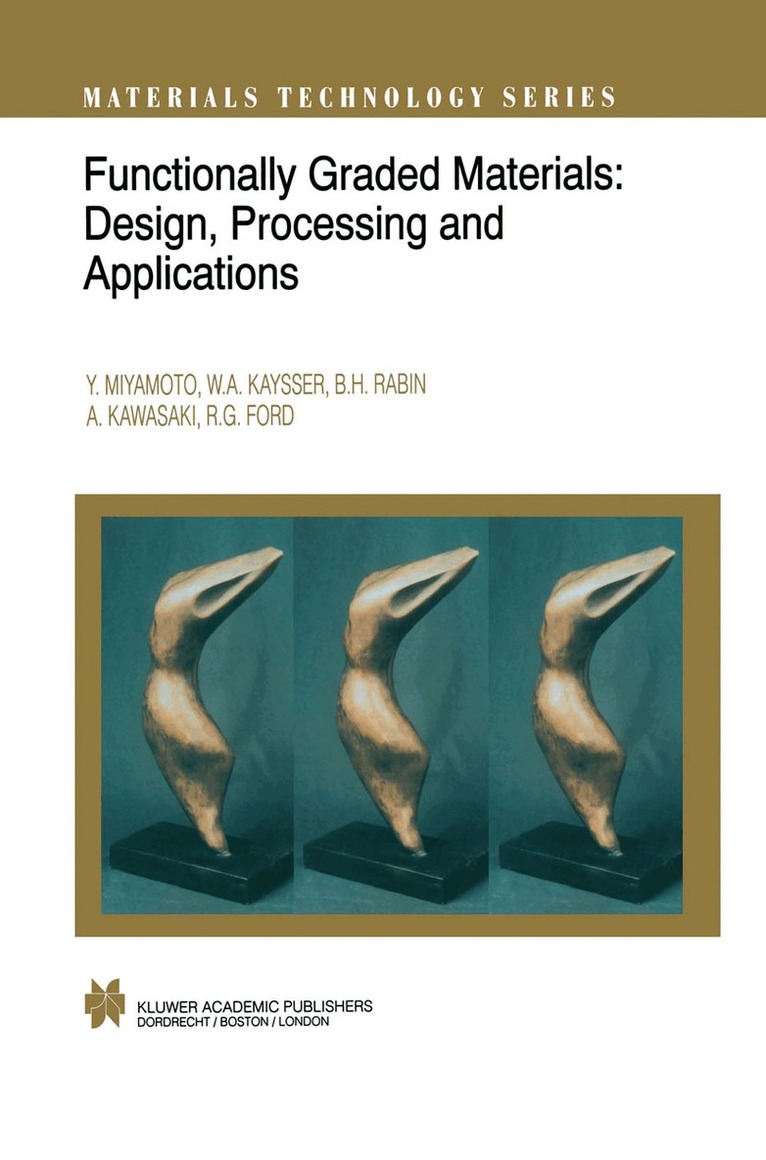
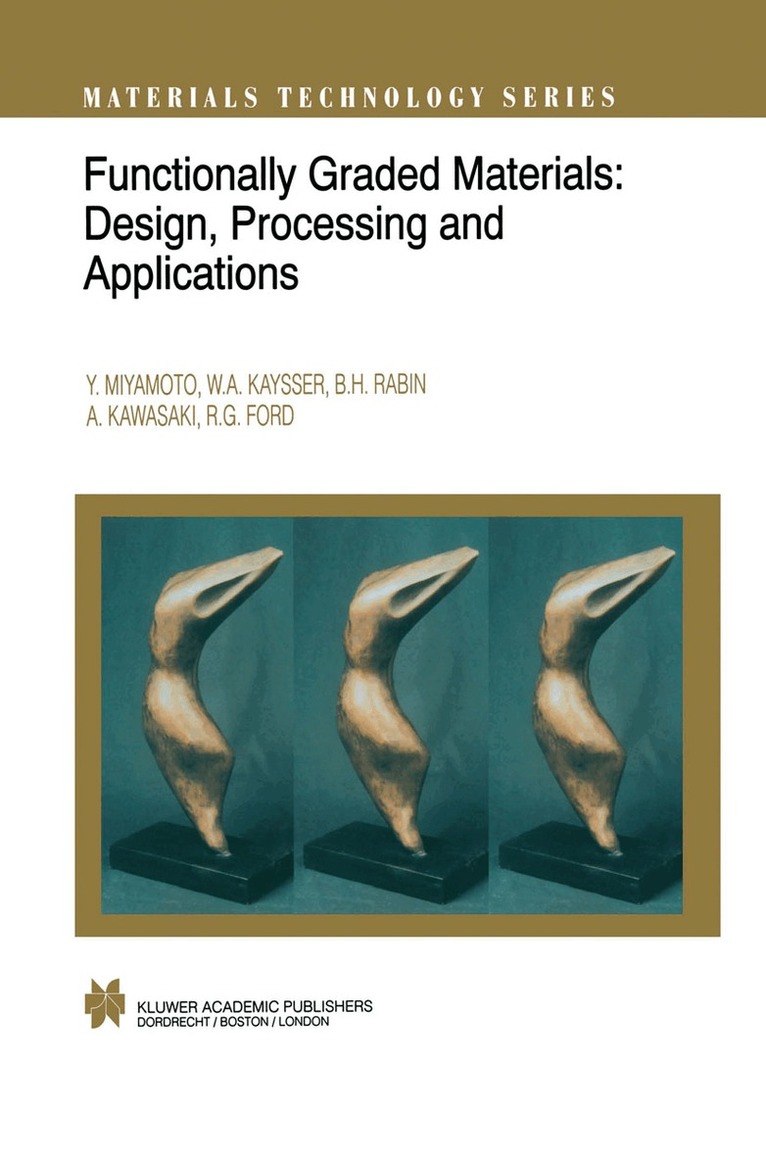
In a Functionally Graded Material (FGM), the composition and structure gradually change over volume, resulting in corresponding changes in the properties of the material. By applying the many possibilities inherent in the FGM concept, it is anticipated that materials will be improved and new functions for them created. A comprehensive description of design, modelling, processing, and evaluation of FGMs as well as their applications is covered in this book. In the simplest FGMs, two different material ingredients change gradually from one to the other. Discontinuous changes such as a stepwise gradation of the material ingredients can also be considered an FGM. The most familiar FGM is compositionally graded from a refractory ceramic to a metal. It can incorporate incompatible functions such as the heat, wear, and oxidation resistance of ceramics and the high toughness, high strength, machinability and bonding capability of metals without severe internal thermal stress. Pores are also important material ingredients for FGMs.The gradual increase of pore distribution from the interior to the surface can impart many properties such as mechanical shock resistance, thermal insulation, catalytic efficiency and relaxation of thermal stress. Even if the gradation of material ingredients is limited to a specific location in the material such as the interface, a joint, or a surface, it can be considered a functionally graded material because it includes the FGM concept. Although the FGM concept can be extended to materials with functions that are designed to change gradually over time or with changes in environmental conditions (e.g. a drug delivery system), these time-dependent functions are produced by tailoring the spatial distribution of the material ingredients. The production of multiple or new functions with graded structures rather than the graded material itself is the basis of the FGM concept reflected in this book.
1 593 kr
Skickas inom 10-15 vardagar
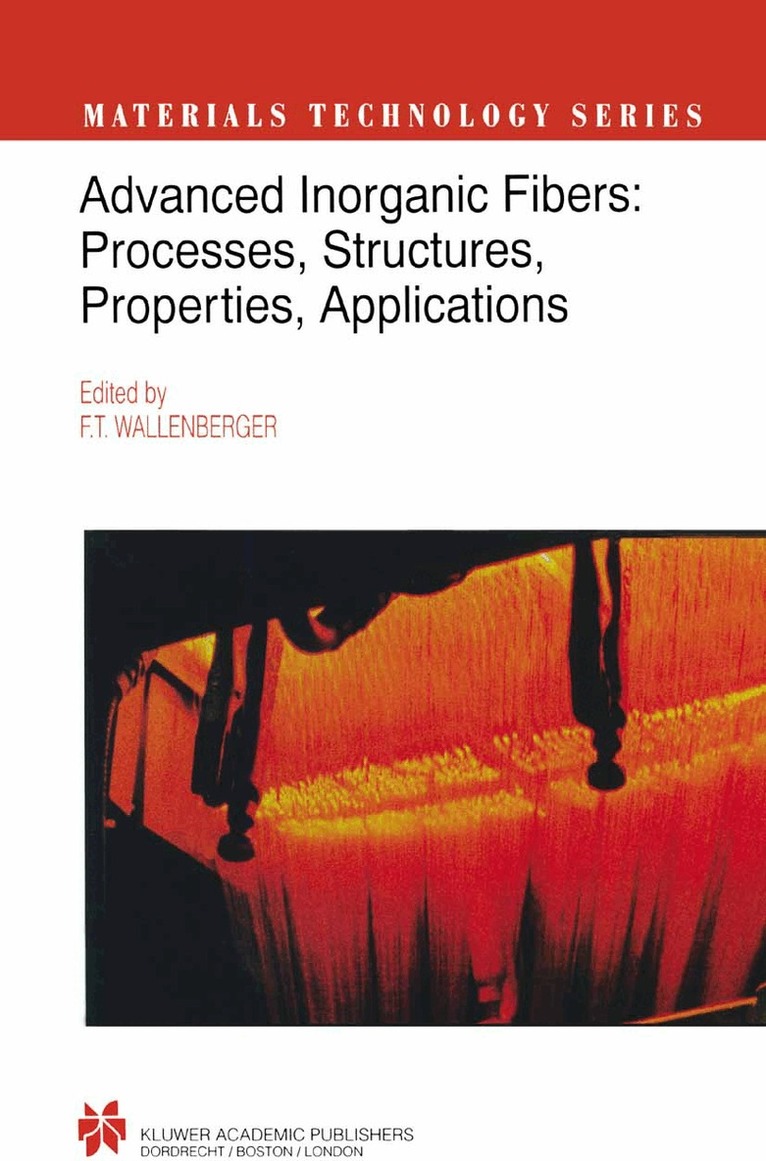
This text describes the fabrication, structures, properties and applications of advanced inorganic glass, glass-ceramic, ceramic and metal fibres for the researcher, industrial scientist and product designer. The text is divided into sections highlighting the commonalities of the three main fabrication routes. The section on vapour phase processes includes the production of silicon and silicon-carbide whiskers, and silicon-carbide, boron, diamond, and ultrasong fibres using a variety of techniques including physical, conventional chemical, and laser assisted chemical vapour deposition. The melt process section deals with glass, metal and single crystal sapphire fibres, using processes such as strong silicate and fragile supercooled melts, inviscid melts, and edge defined film fed growth or laser heated pedestal growth. The final section describes creating fibres from precursor fibres. PAN, pitch and other precursors are used to make carbon fibres, orgonometallic precursors for silicon nitride fibres, and the slurry process for alumina fibres.The text describes fibre testing, the economics of experimental processes, and highlights recent experimental and commerical breakthroughs with a strong emphasis on the conceptual relationship between commercial and advanced experimental processes. It offers a presentation of the state of inorganic fibre technology today, whilst offering insights into the progress of the future. It should be of interest to university libraries, industrial and university research groups in physics, materials science, chemistry, mechanical engineering and surface engineering.
2 121 kr
Skickas inom 10-15 vardagar
A range of advanced materials are prepared by cryogenic processing methods (also called freeze-drying synthesis). This work covers the cryochemical technology of advanced inorganic materials, the processes and applications of cryochemical synthesis and aspects of cryochemical processes and their physio-chemical background. In addition, it contains previously unpublished scientific material.
1 593 kr
Skickas inom 10-15 vardagar
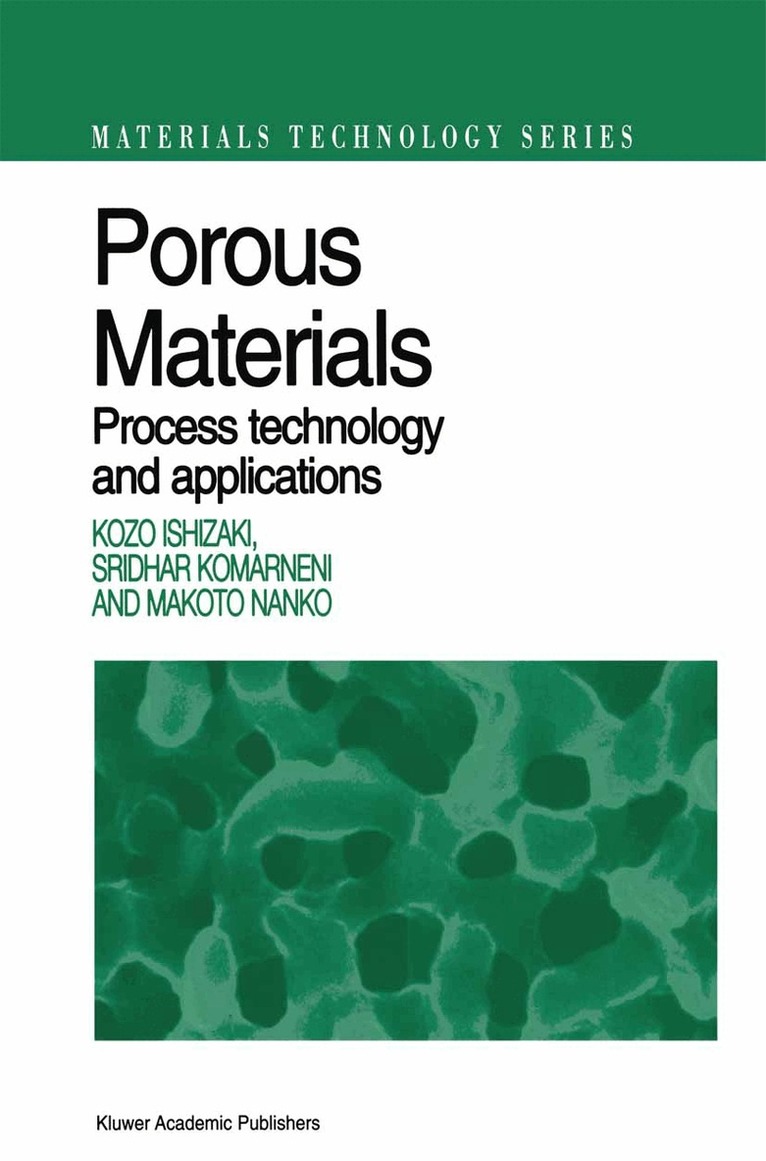
This text provides a reference for researchers and production engineers in industry. It covers a "hot" topic with important applications for energy saving and ecological issues. Basic knowledge of raw materials, evaluation and applications of porous materials are described along with the latest production methods of porous materials including sintering methods, sol-gel processing, and leaching. This interdisciplinary book thus provides a comprehensive and systematic coverage of porous materials. The text has been developed from short courses run at Materials Research Society meetings. This book should be of interest to university libraries, research laboratories and production engineers in industry.
3 748 kr
Skickas inom 10-15 vardagar
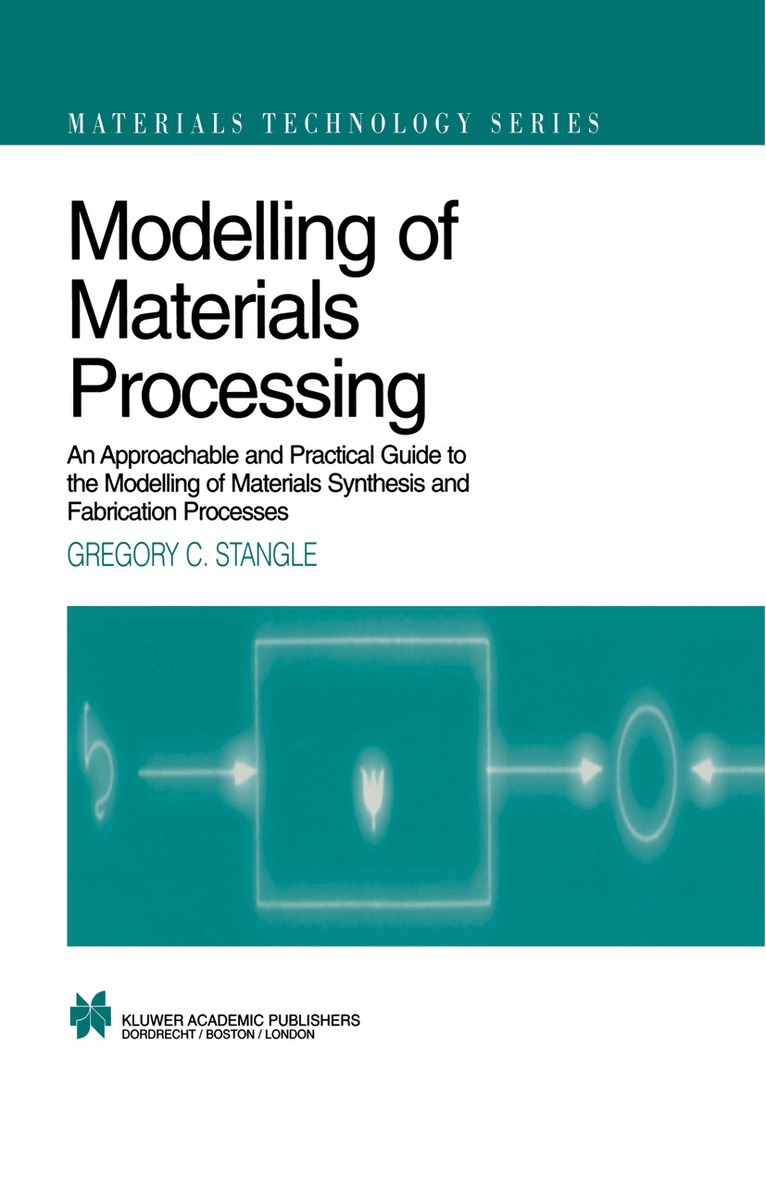
This text treats materials processing from a theoretical and thus mathematical and quantitative point of view. The first section draws on varied fields to provide a theoretical basis upon which any materials synthesis and/or fabrication process may be completely described. In the second section, the theory is applied to important materials processing operations. In addition, the practical side of theoretical materials processing is directly addressed: the details of useful numerical simulation methods; numerous tables of material property values; details of useful mathematical manipulations that are frequently required; and helpful, detailed and easy-to-use tables of unit conversions are included. Furthermore, the book begins with a purely qualitative discussion of the key aspects of theory, to establish a sufficiently good understanding of the same aspects when they are re-introduced in their more customary mathematical, quantitative form. Taken together, the various elements of this book provide a foundation for both the understanding and the use of this theoretical approach to materials processing.The book should be of interest to R+D personnel, industrial engineers and plants managers. It should also be of interest to graduates and undergraduates studying materials synthesis, processing and modelling.
2 642 kr
Skickas inom 10-15 vardagar
Seven years have elapsed since Dr. Renee Ford, editor-in-chief of Materials Technology, first suggested to me to publish a book on Functionally Graded Materials (FGMs). She said that the FGM concept, then largely unknown outside of Japan and a relatively few laboratories elsewhere, would be of great interest to everyone working in the materials field because of its potentially universal applicability. There was no book about FGMs in English at that time, although the number of research papers, review articles, and FGM conference proceedings had been increasing yearly. We discussed what the book should cover, and decided it should present a comprehensive description from basic theory to the most recent applications of FGMs. This would make it useful both as an introduction to FGMs for those simply curious about what this new materials field was all about, and also as a textbook for researchers, engineers, and graduate students in various material fields. The FGM Forum in Japan generously offered to support this publication program. is very difficult for an individual author to write a book that Because it covers such a wide range of various aspects of many different materials, I invited more than 30 eminent materials scientists throughout the world, who were associated with FGM research, to contribute selected topics. I also asked several leading researchers in this field to edit selected chapters: Dr. Barry H. Rabin, then at the U. S.
1 588 kr
Skickas inom 10-15 vardagar
Approximately four million years of human history has passed. We have been using materials to make a variety of tools. The first materials used were naturally occurring materials such as animal bones, stones, wood etc.; and some of these familiar materials are porous. Porous materials are so familiar that they are sometimes forgotten or ignored. The taste experience of ice cream is created not only by adjusting ingre dients, but also by including air as an ingredient, i.e. pores that give the smooth texture of ice cream. This book is designed to describe and explain about pores, the synthesis of materials with pores (porous materials), and applications of porous materi als. This book is intended for engineers and scientists of different disciplines and specialities, and is expected to be useful in the design and synthesis of porous materials for existing as well as potential new applications. Let us rediscover pores. K. Ishizaki, S. Komameni and M. Nanko January 1998 1 Introduction 1.1 WHAT ARE POROUS MATERIALS? Porous materials are dermed as solids containing pores. Figure 1.1 shows different porous materials. Generally speaking, porous materials have a porosity of 0.2-0.95. The porosity means the fraction of pore volume to the total volume. Porous materials have been used in various applications from daily necessities, such as purifying drinking water by activated carbon or porous ceramics, to uses in modern industries, for example removing dusts from high purity process gases for semiconductor production.
Del 3 - Materials Technology Series
Modelling of Materials Processing
An approachable and practical guide
Häftad, Engelska, 2014
3 168 kr
Skickas inom 10-15 vardagar
This is a book about mathematical modelling. It focuses on the modelling of the preparation of materials. Materials are important, of course, in an economic sense: the "goods" of goods-and-services are made of materials. This provides a strong incentive to produce good materials and to improve existing materials. Mathematical modelling can help in this regard. Without a doubt, modelling a materials processing operation is not strictly necessary. Materials synthesis and fabrication processes certainly existed before the invention of mathematics and computers, and well before the combined use of mathematics and computers. Modelling can, however, be of assistance--if done properly--and if used properly. The mathematical modelling described in this book is, at its root, a rather formal, structured way of thinking about materials synthesis and fabrication processes. It requires looking at a process as a whole. It requires considering everything that is or might be important. It requires translating the details of a given physical process into one or more mathematical equations. It requires knowing how to simplify the equations without over-simplifying them.