Medieval and Renaissance Clothing and Textiles - Böcker
Visar alla böcker i serien Medieval and Renaissance Clothing and Textiles. Handla med fri frakt och snabb leverans.
9 produkter
9 produkter
Del 7 - Medieval and Renaissance Clothing and Textiles
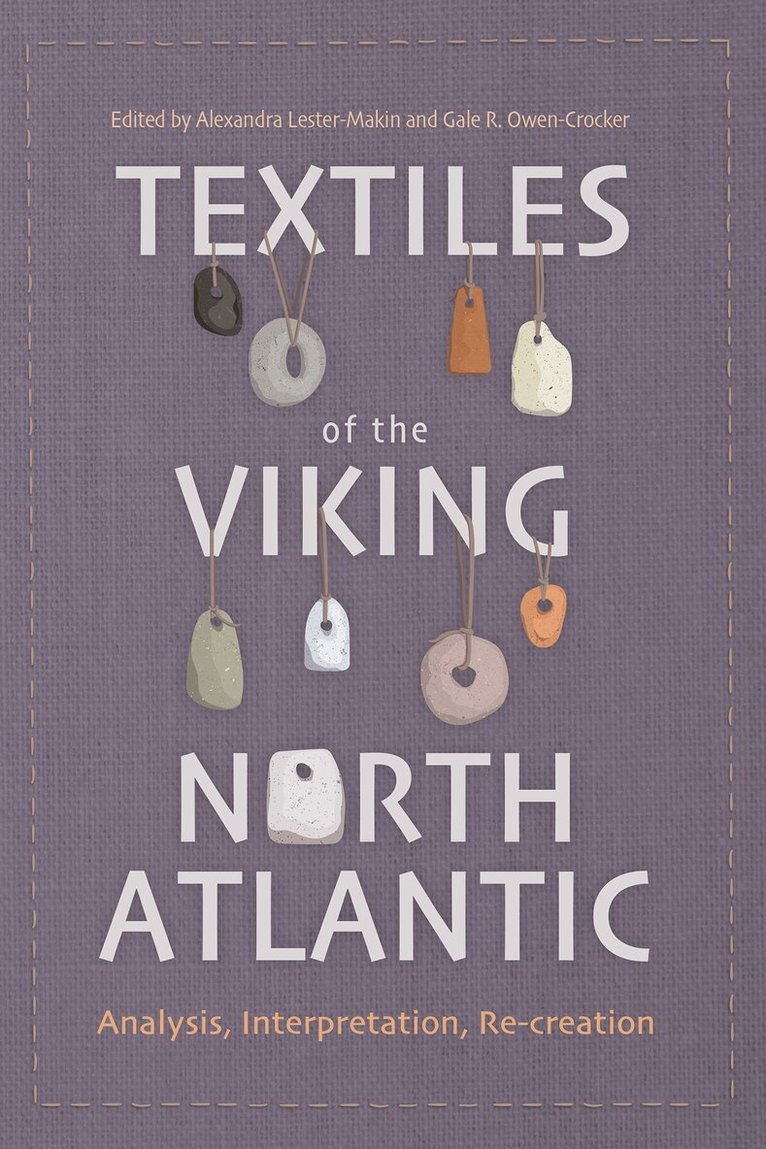
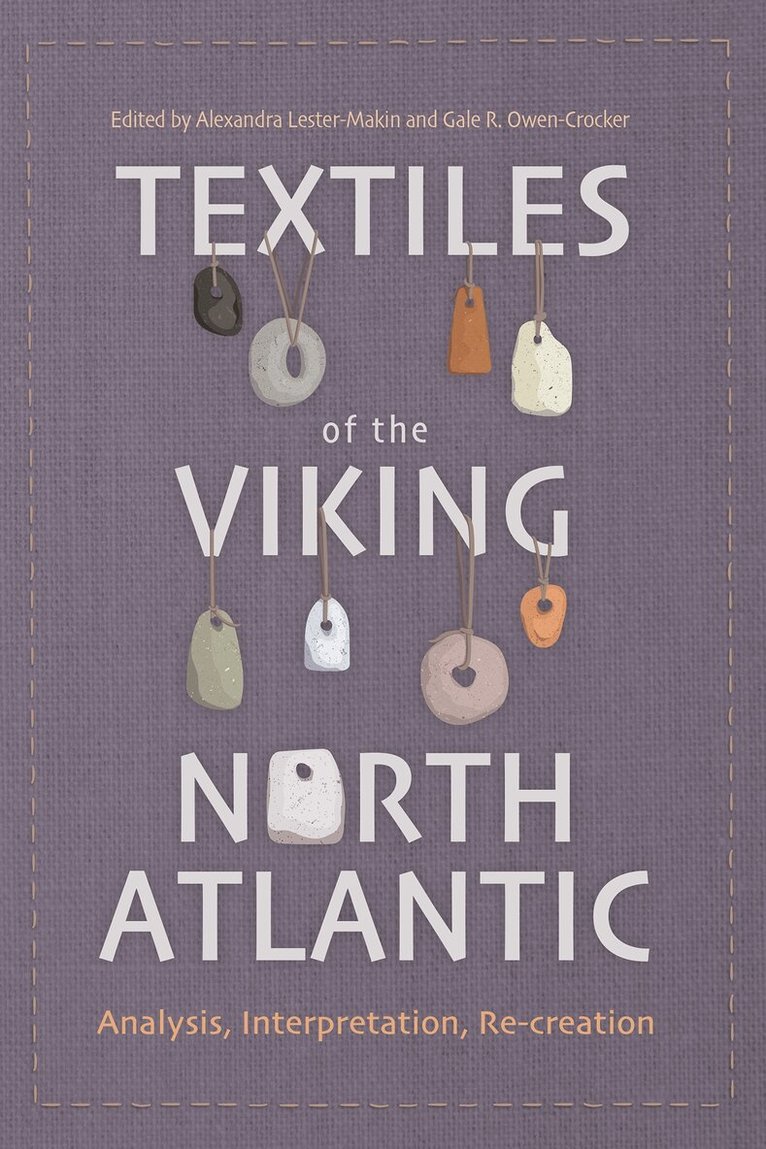
Textiles of the Viking North Atlantic
Analysis, Interpretation, Re-creation
Häftad, Engelska, 2026
369 kr
Skickas inom 7-10 vardagar
An examination of the uses, meanings, and social impact of Viking Age textiles. This volume offers the first full study of archaeological fabrics and their decoration found in the North Atlantic region and dating broadly from the Viking or Norse period. With contributions from both academic scholars and practitioners, it shows how approaching early medieval textiles from archaeological, historical and literary contexts, and through the processes of learning and employing the traditional skills of making them, brings about a more nuanced understanding of early medieval cloths: their creation, use and meanings within their respective societies. The book is divided into two parts. The first, "Textiles and their Interpretation", takes the reader on a journey from how wool was processed in the Viking Age, and the conservator's role in preserving and interpreting archaeological textiles, to different types of analyses that researchers use to understand and explain textiles from across the wide area of the Viking-influenced North Atlantic region. The second, "Understanding through Replicating", investigates the results of practical experiments in the reconstruction of surviving medieval fabrics and the resulting empirical conclusions that can be made about their manufacture and wider cultural implications.
Del 3 - Medieval and Renaissance Clothing and Textiles
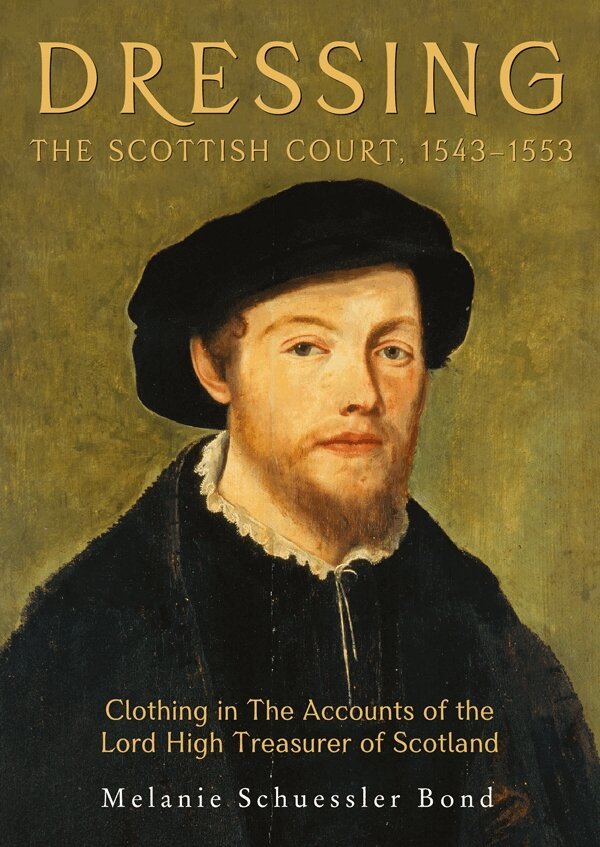
Dressing the Scottish Court, 1543-1553
Clothing in the Accounts of the Lord High Treasurer of Scotland
Inbunden, Engelska, 2019
1 198 kr
Skickas inom 7-10 vardagar
Analysis of accounts disbursed by the royal treasury, alongside text and translation in excerpt, provides richly detailed information on clothing at the time.The Accounts of the Lord High Treasurer of Scotland document money spent by the royal treasury and contain numerous references to clothing and textiles. This volume is designed to make the rich material in the Accounts from the regency of the Earl of Arran (whose ward was Mary Queen of Scots) available to those interested in the study of dress and accessories. In addition to overviews of the various types of garments mentioned in the Accounts and discussion of a number of specialty categories, such as wedding and funeral clothing, this book includes the original text of every entry from the Accounts pertaining to secular clothing, with facing translation into modern English.The Accounts' entries include information on materials and labour, and describe thousands of items for dozens of people, from court fools to nobles. They are grouped here by recipient, in "wardrobe biographies" which gather all ofthe entries for a particular person together in chronological order. Through the numerous clothing-related entries from this period it is possible to track the wardrobes of a number of people connected to the Scottish court, the popularity of various garments and accessories, details about their construction, and insights into the relationships of the people involved. MELANIE SCHUESSLER BOND is Professor of Costume Design, Eastern Michigan University.
Del 4 - Medieval and Renaissance Clothing and Textiles
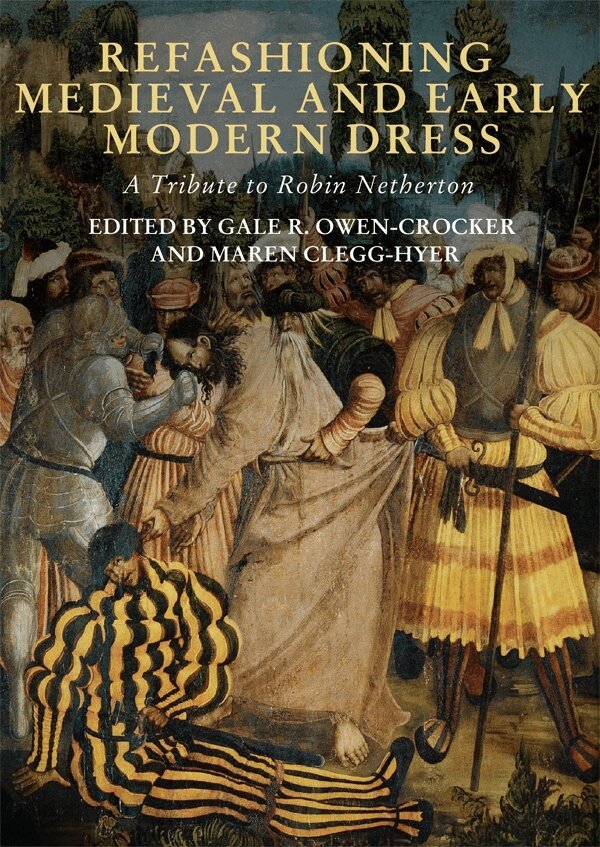
Refashioning Medieval and Early Modern Dress
A Tribute to Robin Netherton
Inbunden, Engelska, 2019
1 135 kr
Skickas inom 7-10 vardagar
Essays on costume, fabric and clothing in the Middle Ages and beyond.All those who work with historical dress and textiles must in some way re-fashion them. This fundamental concept is developed and addressed by the articles collected here, ranging over issues of gender, status and power. Topics include: the repurposing and transformation of material items for purposes of religion, memorialisation, restoration and display; attempts to regulate dress, both ecclesiastical and secular, the reasons for it and the refashioning which was both a result and a reaction; conventional ways in which dress was used to characterise children, and their transition into young men; how symbolism-laded dress items could indicate political/religious affiliations; waysin which allegorical, biblical and historical figures were depicted in art in dress familiar to the viewers of their own era, and the emotive and intellectual responses to these costumes the artists sought to elicit; and the use of clothing in medieval literature (often rich, exotic or unique) as narrative, structuring and rhetorical devices. Taken together, they honour the costume historian and editor Robin Netherton, who has been hugely influentialin the development of medieval and Renaissance dress and textile studies.GALE R. OWEN-CROCKER is Professor Emerita at the University of Manchester; MAREN CLEGG HYER is Professor of English at Valdosta State University.Contributors: Melanie Schuessler Bond, Elizabeth Coatsworth, Lisa Evans, Gina Frasson-Hudson, Charney Goldman, Sarah-Grace Heller, Maren Clegg Hyer, John Friedman, Thomas Izbicki, Drea Leed, Christine Meek, M.A. Nordtorp-Madson, Gale R. Owen-Crocker, Lucia Sinisi, Monica L. Wright.
Del 5 - Medieval and Renaissance Clothing and Textiles
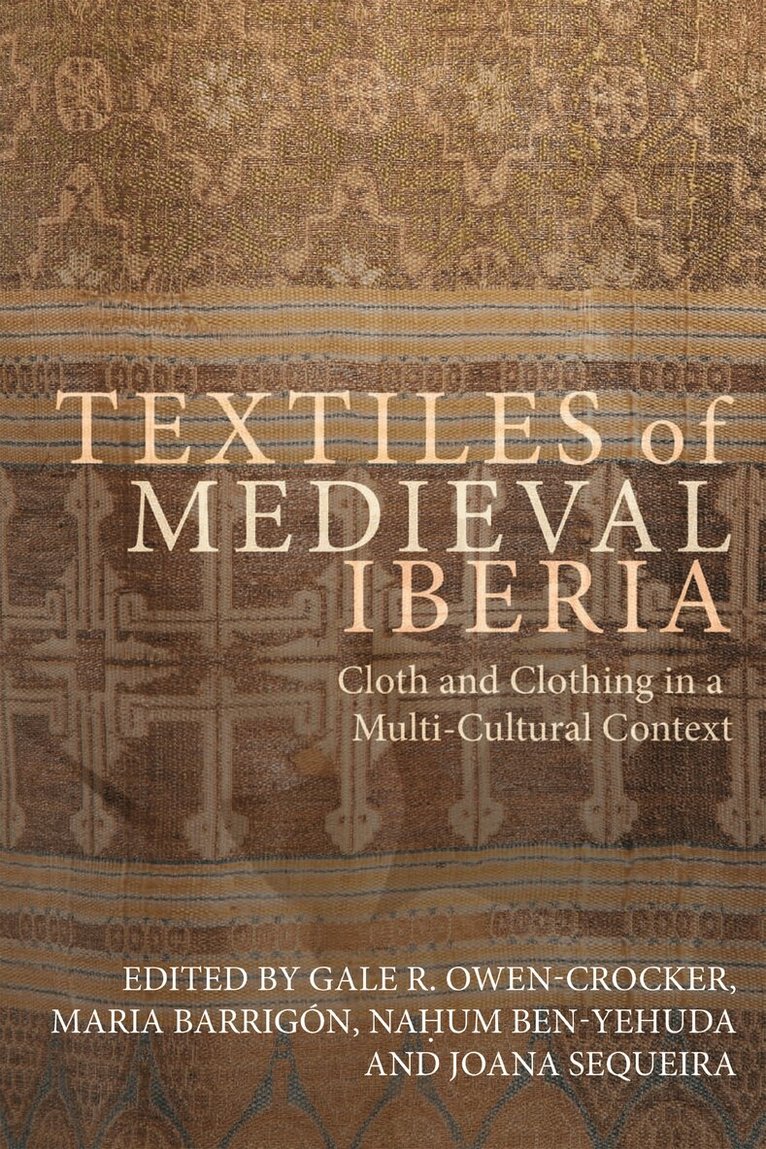
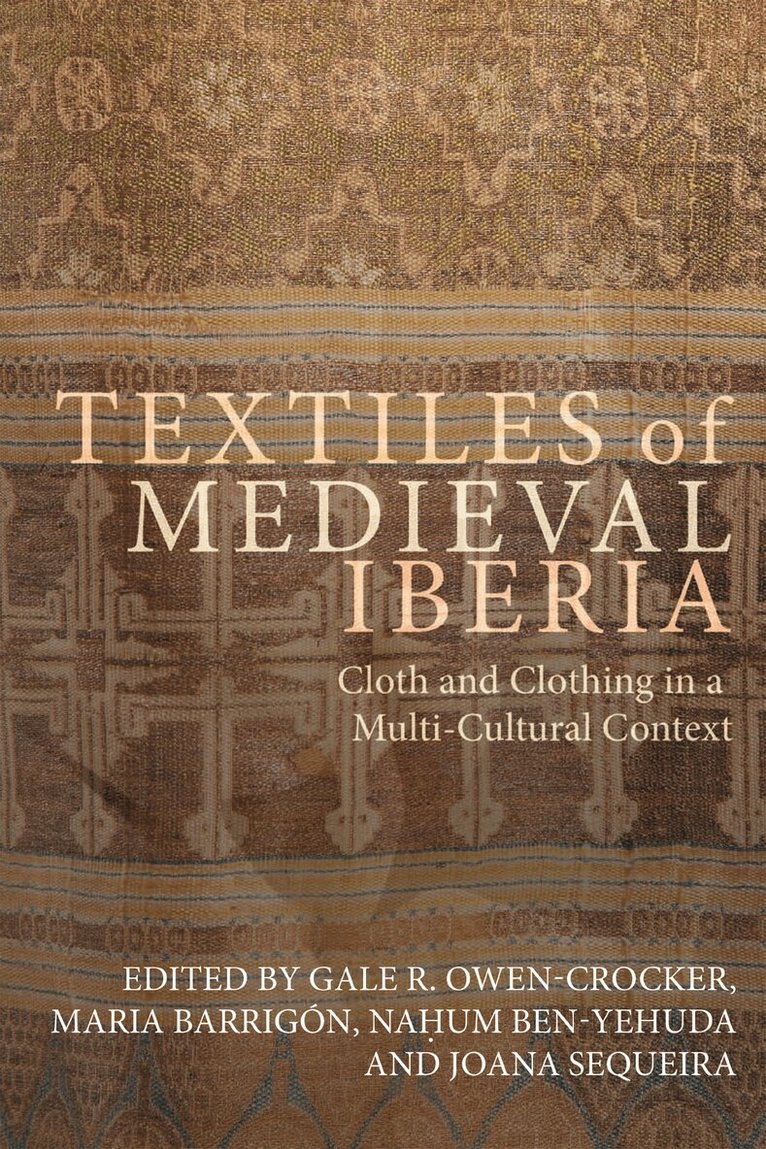
Textiles of Medieval Iberia
Cloth and Clothing in a Multi-Cultural Context
Inbunden, Engelska, 2022
1 448 kr
Skickas inom 7-10 vardagar
An examination of the fabrics, garments and cloth of the Iberian Middle Ages, bringing out in particular the international context.The Medieval Iberian Peninsula, encompassing various territories which make up present-day Spain and Portugal, was an ethnic and religious melting pot, comprising Christian, Jewish and Muslim communities, each contributing to a vibrant textile economy. They were also defined and distinguished by the material culture of clothing and dress, partly dictated by religious and cultural tradition, partly imposed by rulers anxious to avoid cross-ethnic relationships considered undesirable. Nevertheless, textiles, especially magnificent Islamic silks, crossed these barriers. The essays in this volume offer the first full analysis of Iberian textiles from the period, drawing on both material remains and historical documents, supported by evidence from contemporary artwork. Chapters cover surviving textiles, many of them magnificent silks; textile industries and trade; court dress and its use as a language of power and patronage; the vast market in utilitarian textiles for lower-status clothing and furnishings; and Muslim and Jewish dress. It also considers Arabic and Jewish texts as sources of information on textiles and the Arabic garment-names which crossed into Spanish. Particular emphasis is given to the the different ethnicities of Iberia and their influences on the use and trade of garments (both precious and common-place) and textiles.
Del 7 - Medieval and Renaissance Clothing and Textiles
Textiles of the Viking North Atlantic
Analysis, Interpretation, Re-creation
Inbunden, Engelska, 2024
1 072 kr
Skickas inom 7-10 vardagar
An examination of the uses, meanings, and social impact of Viking Age textiles. This volume offers the first full study of archaeological fabrics and their decoration found in the North Atlantic region and dating broadly from the Viking or Norse period. With contributions from both academic scholars and practitioners, it shows how approaching early medieval textiles from archaeological, historical and literary contexts, and through the processes of learning and employing the traditional skills of making them, brings about a more nuanced understanding of early medieval cloths: their creation, use and meanings within their respective societies. The book is divided into two parts. The first, "Textiles and their Interpretation", takes the reader on a journey from how wool was processed in the Viking Age, and the conservator's role in preserving and interpreting archaeological textiles, to different types of analyses that researchers use to understand and explain textiles from across the wide area of the Viking-influenced North Atlantic region. The second, "Understanding through Replicating", investigates the results of practical experiments in the reconstruction of surviving medieval fabrics and the resulting empirical conclusions that can be made about their manufacture and wider cultural implications.
Del 6 - Medieval and Renaissance Clothing and Textiles
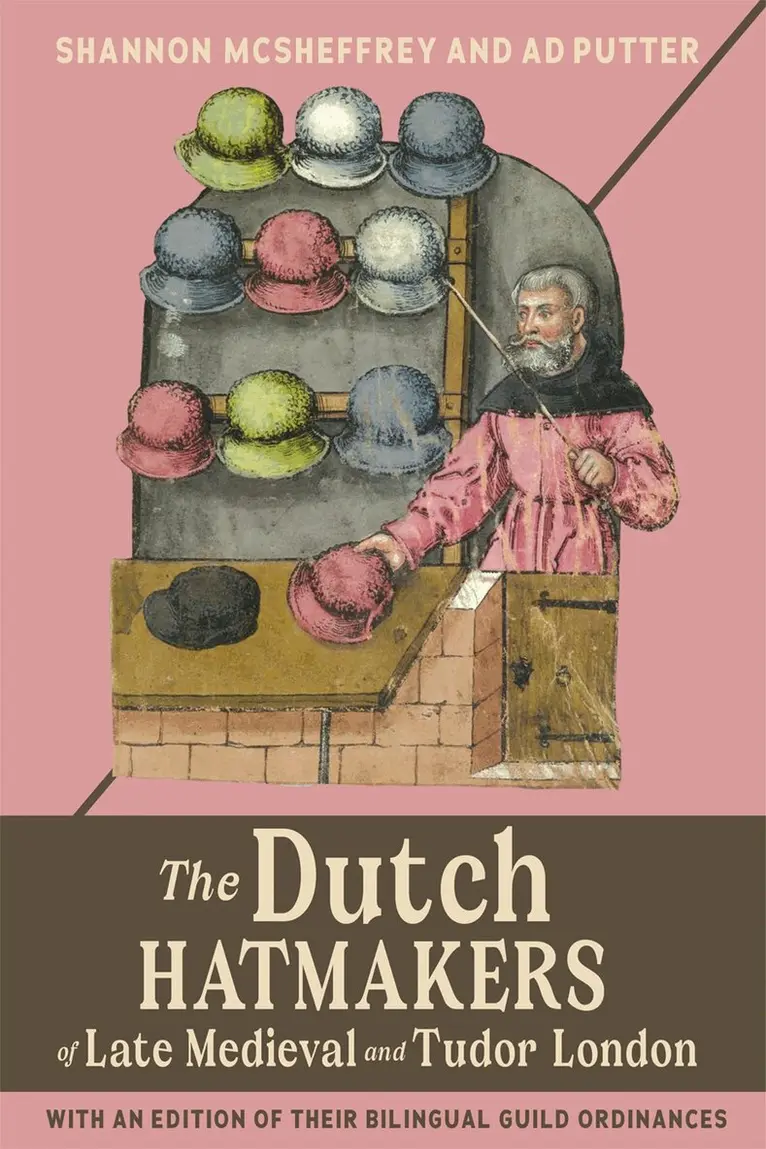
Dutch Hatmakers of Late Medieval and Tudor London
with an edition of their bilingual Guild Ordinances
Häftad, Engelska, 2023
320 kr
Skickas inom 7-10 vardagar
Uncovers the remarkable lives and writings of immigrant tradesmen, showing how they adapted to their new environment and responded to the challenges they faced.At the end of the Middle Ages, a group of hatmakers from the Low Countries migrated across the North Sea to London. These men brought with them new skills and technologies, unknown to English artisans, becoming the first to manufacture brimmed felts hats in England. However, though their wares were immediately popular with English consumers, from courtiers to ordinary people, they faced an economic environment in London that restricted and sometimes completely disallowed the production and retail of their goods. In the early years of the sixteenth century, the hatmakers' desire to remain independent from regulation and governance by London civic guilds led to their formation of a craft association of their own. The Hatmakers' fraternity of St James operated for about a decade, until in 1511 the royal council mandated their amalgamation with and subordination to the powerful London Haberdashers' Company. In their short period of independence, the Hatmakers' guild wrote bilingual ordinances, in English and Dutch, regulating the craft of hatmaking in London. The small parchment booklet in which they wrote the ordinances, now housed in the London Guildhall Library, contains more than a simple list of craft rules: it reveals how these Dutch craftsmen negotiated their immigrant lives in both the specifics of their artisanal practice and the broader social and linguistic realities of their daily interactions. This book, uniting historical and philological approaches, uncovers the remarkable lives and writings of these tradesmen, showing how they adapted to their new environment and reacted to the challenges they faced. It also presents a modern edition of the texts of the Hatmakers' guild book.Open Access to this volume will be available under the Creative Commons License: CC BY-NC-ND
Del 1 - Medieval and Renaissance Clothing and Textiles
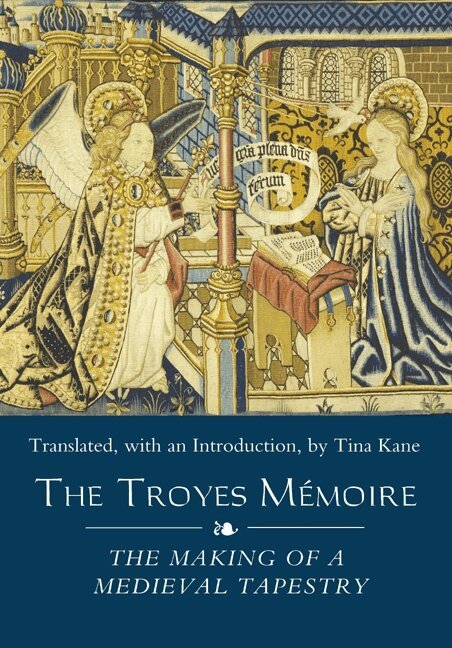
Troyes Mémoire: The Making of a Medieval Tapestry
Inbunden, Engelska, 2010
1 072 kr
Skickas inom 7-10 vardagar
First English translation of a late fifteenth century manuscript containing instructions for designing a medieval tapestry - the only such to survive.The "Troyes Mémoire", a late fifteenth-century manuscript preserved in the archives of the town of Troyes, France, is the sole surviving example of the written instructions used in designing tapestries during the Middle Ages. It is unique in its presentation of detailed information on how patrons and church officials communicated complex iconographic material to the medieval artists commissioned to paint cartoons for tapestries. It is here translated intoEnglish for the first time, with full introduction and extensive notes. The volume also includes a translation of another richly informative document from medieval Troyes: the Account Books of the Church of Sainte-Madeleine, whichintroduces us to the actual people who worked together, between 1416 and 1430, to produce a set of tapestries for the town's oldest church. They shed important new light on an era when tapestry represented a supreme form of art.Tina Kane is Conservator, Metropolitan Museum of Art, Department of Textile Conservation.
Del 2 - Medieval and Renaissance Clothing and Textiles
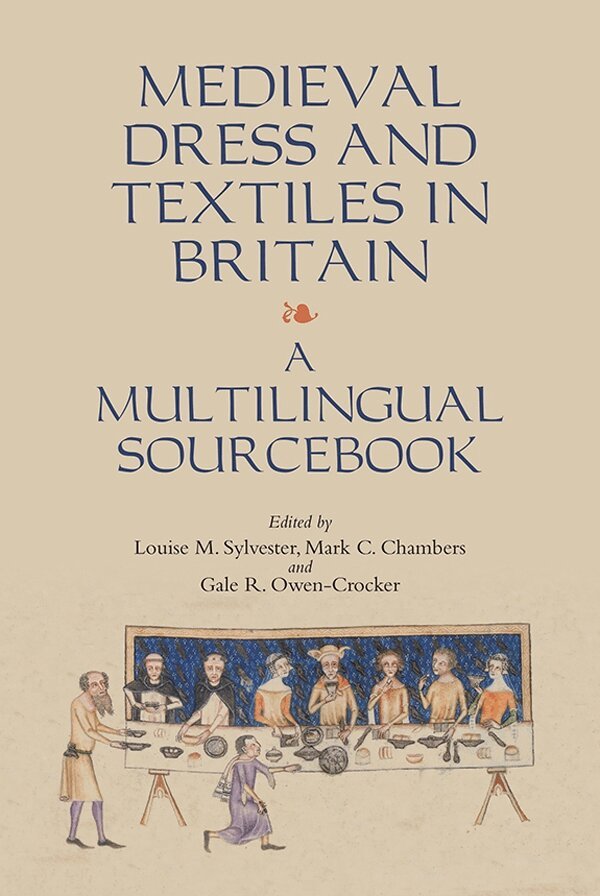
Medieval Dress and Textiles in Britain
A Multilingual Sourcebook
Inbunden, Engelska, 2014
1 636 kr
Skickas inom 7-10 vardagar
A vital sourcebook for information on clothing and textiles in the middle ages, containing many previously unprinted documents.Texts (with modern English translation) offering insights into the place of cloth and clothing in everyday life are presented here. Covering a wide range of genres, they include documents from the royal wardrobe accounts and petitions to king and Parliament, previously available only in manuscript form. The accounts detail royal expenditure on fabrics and garments, while the petitions demand the restoration of livery, for example, or protest about the needfor winter clothing for children who are wards of the king. In addition, the volume includes extracts from wills, inventories and rolls of livery, sumptuary laws, moral and satirical works condemning contemporary fashions, an OldEnglish epic, and English and French romances. The texts themselves are in Old and Middle English, Latin and Anglo-Norman French, with some of the documents switching between more than one of these languages. They are presented with introduction, glossary and detailed notes.Louise M. Sylvester is Reader in English Language at the University of Westminster; Mark Chambers is a Post-Doctoral Research Associate at Durham University; Gale R. Owen-Crocker is Professor of Anglo-Saxon Culture at the University of Manchester.
Del 8 - Medieval and Renaissance Clothing and Textiles
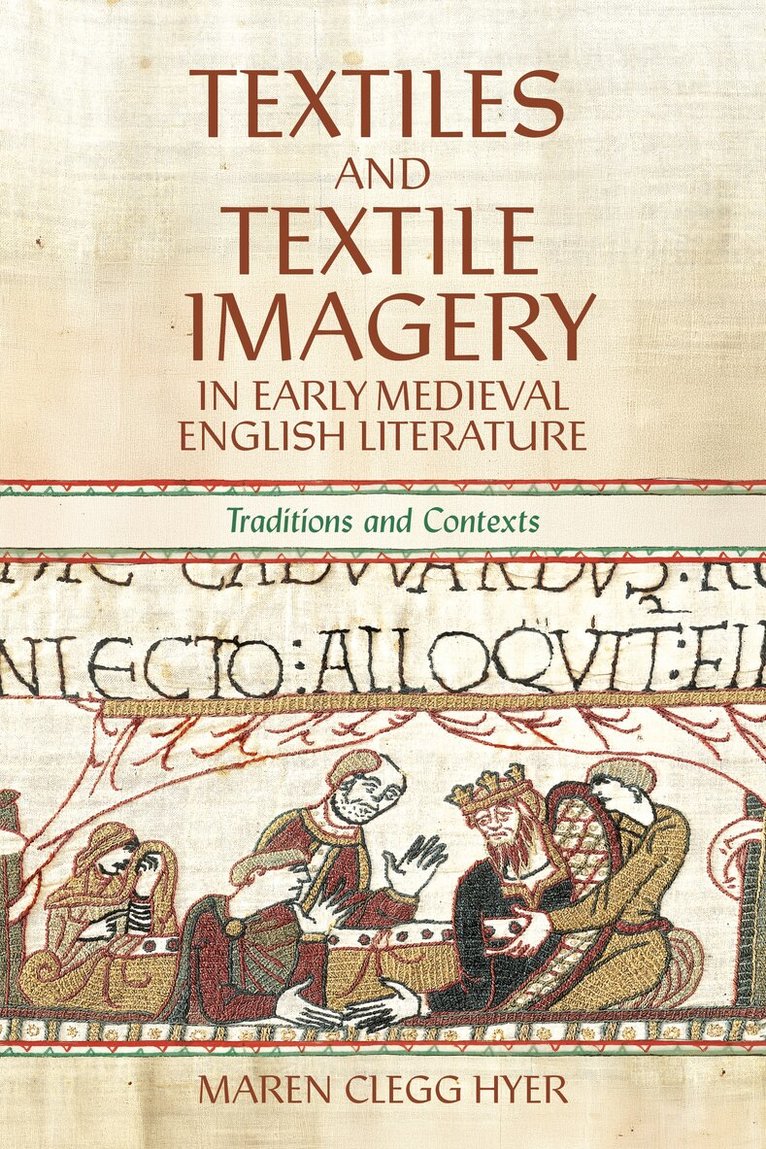
Textiles and Textile Imagery in Early Medieval English Literature
Traditions and Contexts
Inbunden, Engelska, 2025
1 197 kr
Skickas inom 7-10 vardagar
Identifies and analyses a wide range of textile metaphors and imagery from peace-weaving in Beowulf to word-crafting in Elene.Textile metaphors, or metaphors involving the process and product of cloth-making, occur widely in literary traditions around the world. The same phenomenon holds true among the peoples of early medieval England. As close observers of a long and culturally significant textile tradition, pre-Conquest English writers drew upon their close familiarity with spinning and weaving to create a wide range of metaphorical textile images in both Old English and Anglo-Latin literature. This book examines early medieval English textile imagery in close detail, situating it within its cultural and material contexts and addressing the ways in which lived experience informed these metaphors, whether inherited, invented, or both. It explores imagery linked to themes of creation, peace, death, magic, and fate in a comprehensive variety of texts, including Beowulf and Elene, Anglo-Latin letters and riddles, the Exeter Book riddles, prognostics, penitentials, hagiographic and homiletic texts, medical collections, and glosses. Overall, it demonstrates how an understanding of this important body of textile metaphors alters and shapes the ways in which we read the literature of this period.