Metropolitan Portraits - Böcker
Visar alla böcker i serien Metropolitan Portraits. Handla med fri frakt och snabb leverans.
7 produkter
7 produkter
378 kr
Skickas inom 10-15 vardagar
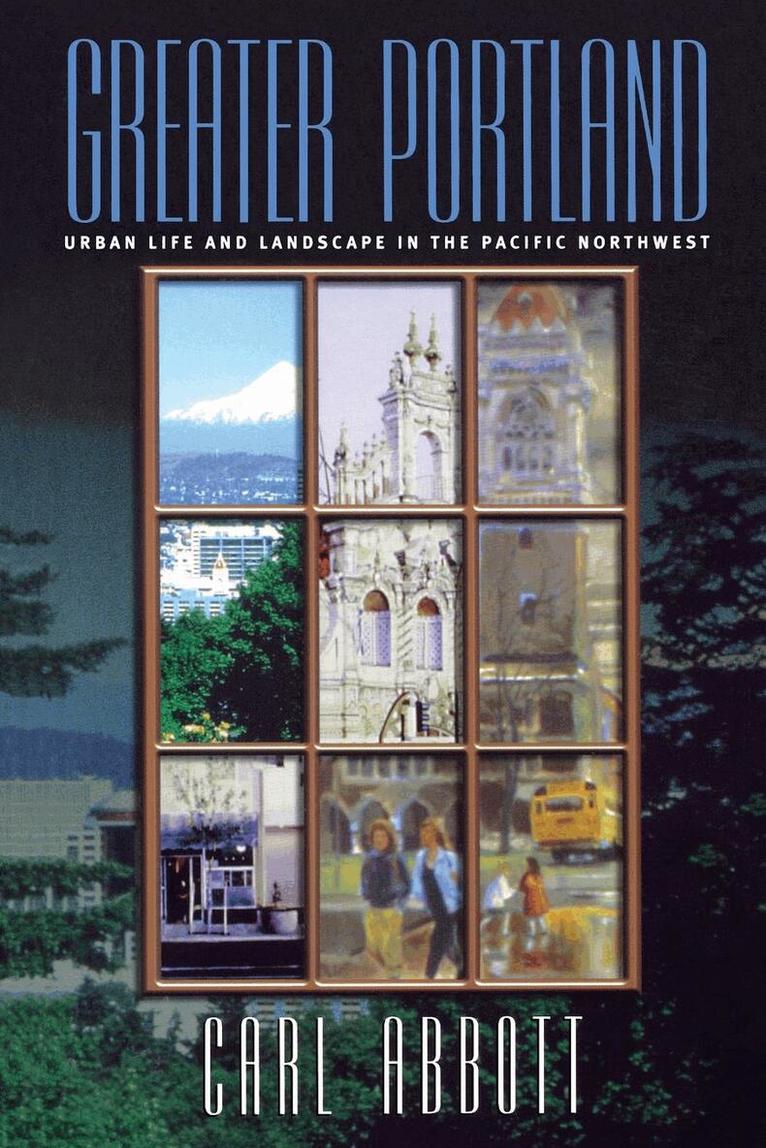
Selected by Choice magazine as an Outstanding Academic TitleIt has been called one of the nation's most livable regions, ranked among the best managed cities in America, hailed as a top spot to work, and favored as a great place to do business, enjoy the arts, pursue outdoor recreation, and make one's home. Indeed, years of cooperative urban planning between developers and those interested in ecology and habitability have transformed Portland from a provincial western city into an exemplary American metropolis. Its thriving downtown, its strong neighborhoods, and its pioneering efforts at local management have brought a steady procession of journalists, scholars, and civic leaders to investigate the "Portland style" that values dialogue and consensus, treats politics as a civic duty, and assumes that it is possible to work toward public good.Probing behind the press clippings, acclaimed urban historian Carl Abbott examines the character of contemporary Portland-its people, politics, and public life-and the region's history and geography in order to discover how Portland has achieved its reputation as one of the most progressive and livable cities in the United States and to determine whether typical pressures of urban growth are pushing Portland back toward the national norm.In Greater Portland, Abbott argues that the city cannot be understood without reference to its place. Its rivers, hills, and broader regional setting have shaped the economy and the cityscape. Portlanders are Oregonians, Northwesteners, Cascadians; they value their city as much for where it is as for what it is, and this powerful sense of place nurtures a distinctive civic culture. Tracing the ways in which Portlanders have talked and thought about their city, Abbott reveals the tensions between their diverse visions of the future and plans for development.Most citizens of Portland desire a balance between continuity and change, one that supports urban progress but actively monitors its effects on the region's expansive green space and on the community's culture. This strong civic participation in city planning and politics is what gives greater Portland its unique character, a positive setting for class integration, neighborhood revitalization, and civic values. The result, Abbott confirms, is a region whose unique initiatives remain a model of American urban planning.
323 kr
Skickas inom 10-15 vardagar
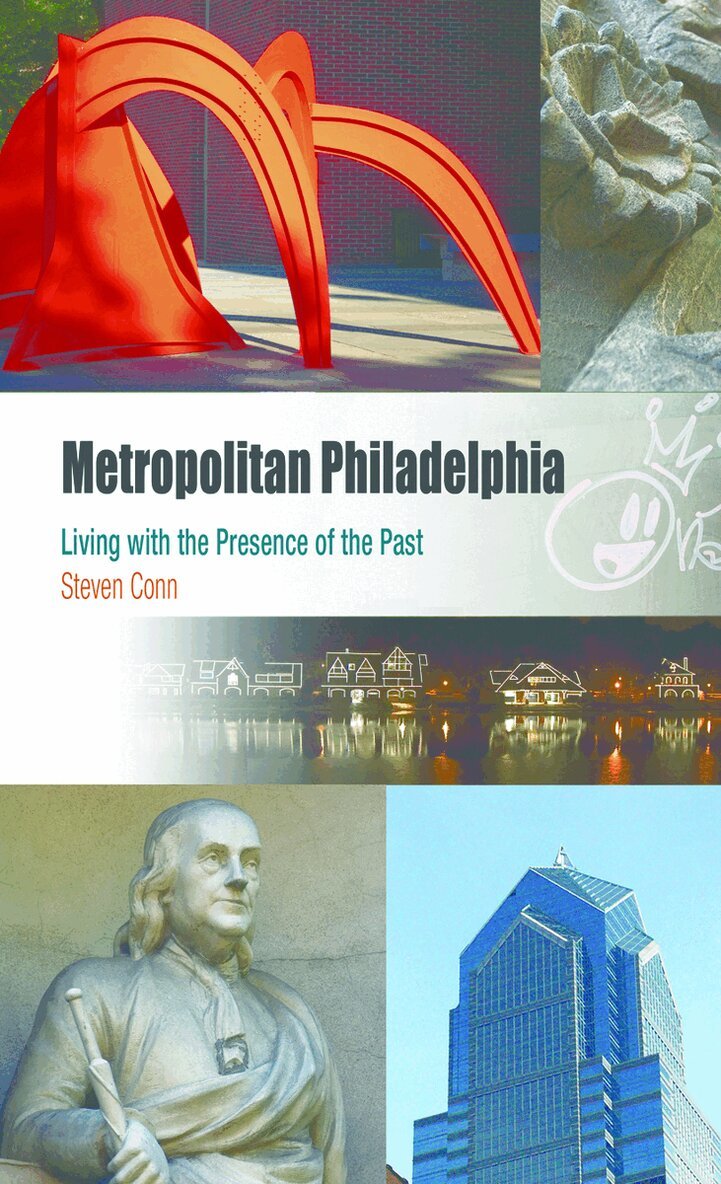
As America's fifth largest city and fourth largest metropolitan region, Philadelphia is tied to its surrounding counties and suburban neighborhoods. It is this vital relationship, suggests Steven Conn, that will make or break greater Philadelphia.The Philadelphia region has witnessed virtually every major political, economic, and social transformation of American life. Having once been an industrial giant, the region is now struggling to fashion a new identity in a postindustrial world. On the one hand, Center City has been transformed into a vibrant hub with its array of restaurants, shops, cultural venues, and restored public spaces. On the other, unchecked suburban sprawl has generated concerns over rising energy costs and loss of agriculture and open spaces. In the final analysis, the region will need a dynamic central city for its future, while the city will also need a healthy sustainable region for its long-term viability.Central to the identity of a twenty-first century Metropolitan Philadelphia, Conn argues, is the deep and complicated interplay of past and present. Looking at the region through the wide lens of its culture and history, Metropolitan Philadelphia moves seamlessly between past and present. Displaying a specialist's knowledge of the area as well as a deep personal connection to his subject, Conn examines the shifting meaning of the region's history, the utopian impulse behind its founding, the role of the region in creating the American middle class, the regional watershed, and the way art and cultural institutions have given shape to a resident identity.Impressionistic and beautifully written, Metropolitan Philadelphia will be of great interest to urbanists and at the same time accessible to the wider public intrigued in the rich history and cultural dynamics of this fascinating region. What emerges from the book is a wide-ranging understanding of what it means to say, "I'm from Philadelphia."
314 kr
Skickas inom 10-15 vardagar
Living within the influence of one of the largest and most important cities in the world, how does New Jersey define itself? Is it simply a region of commuters, or have communities created effective local governments and satisfying cultural activities for one of the most diverse populations in the country?In the state with the country's densest population, the region known as North Jersey has sacrificed more than 30 percent of its land area to the vast web of roads and highways that carry more than 300,000 commuters to work in New York. Greater New Jersey probes challenges posed to the identity of New Jersey by the New York-centered mass media, professional sports, and organized crime families, while examining pressures internal to the state itself, including extraordinary social diversity, high population, fragmented governments, extensive political corruption, and diminishing land and natural resources.Greater New Jersey sets itself apart from other works about the state by virtue of the scope of its inquiry. While contemporary in outlook, the book underscores the role of history in shedding light on the Manhattan and New Jersey of today. Dennis E. Gale examines the complex interactions that knit together a region that has dual citizenship and argues that northern New Jersey is undergoing a gradual transformation to become symbolic of a new kind of suburban area, one that borrows culture, image, and economy from a metropolis but also maintains the day-to-day living patterns of heartland America in the face of rapid social change. Readers interested in the puzzling intricacies of modern life will find much to interest them in this account of a regional identity asserting itself in the face of a looming megalopolis.
378 kr
Skickas inom 10-15 vardagar
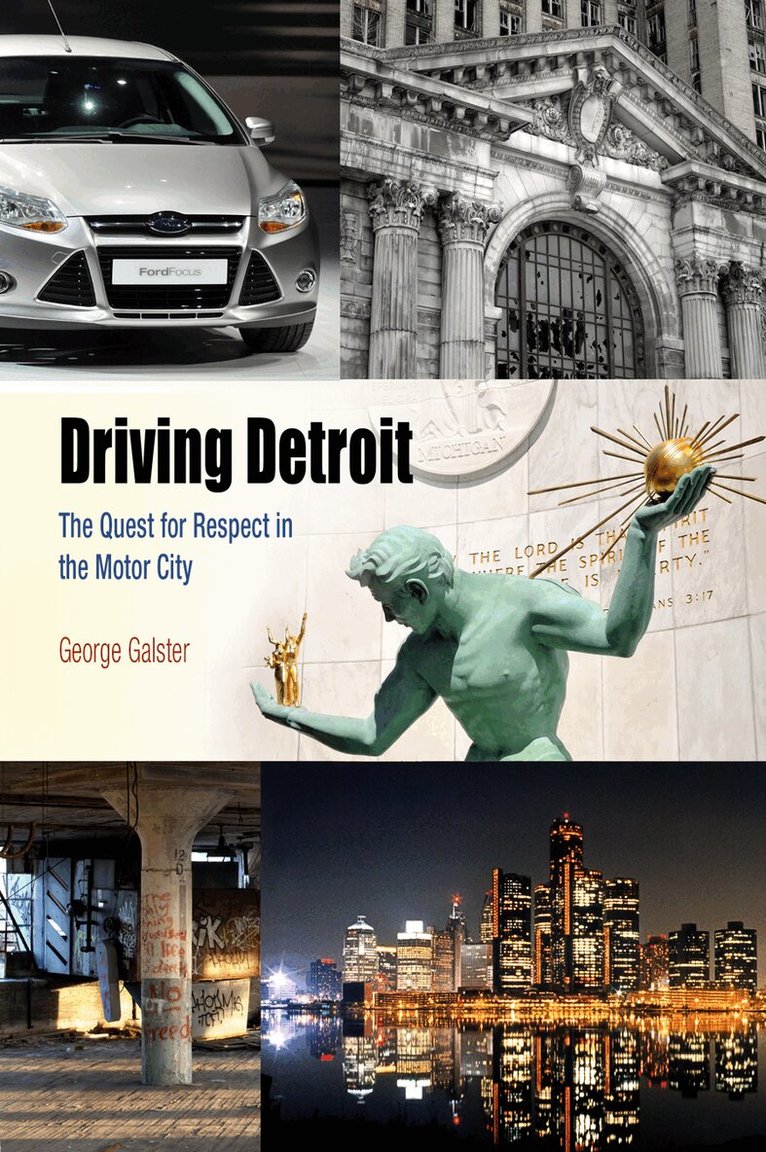
For most of the twentieth century, Detroit was a symbol of American industrial might, a place of entrepreneurial and technical ingenuity where the latest consumer inventions were made available to everyone through the genius of mass production. Today, Detroit is better known for its dwindling population, moribund automobile industry, and alarmingly high murder rate. In Driving Detroit, author George Galster, a fifth-generation Detroiter and internationally known urbanist, sets out to understand how the city has come to represent both the best and worst of what cities can be, all within the span of a half century. Galster invites the reader to travel with him along the streets and into the soul of this place to grasp fully what drives the Motor City.With a scholar's rigor and a local's perspective, Galster uncovers why metropolitan Detroit's cultural, commercial, and built landscape has been so radically transformed. He shows how geography, local government structure, and social forces created a housing development system that produced sprawl at the fringe and abandonment at the core. Galster argues that this system, in tandem with the region's automotive economic base, has chronically frustrated the population's quest for basic physical, social, and psychological resources. These frustrations, in turn, generated numerous adaptations-distrust, scapegoating, identity politics, segregation, unionization, and jurisdictional fragmentation-that collectively leave Detroit in an uncompetitive and unsustainable position.Partly a self-portrait, in which Detroiters paint their own stories through songs, poems, and oral histories, Driving Detroit offers an intimate, insightful, and perhaps controversial explanation for the stunning contrasts-poverty and plenty, decay and splendor, despair and resilience-that characterize the once mighty city.
314 kr
Skickas inom 10-15 vardagar
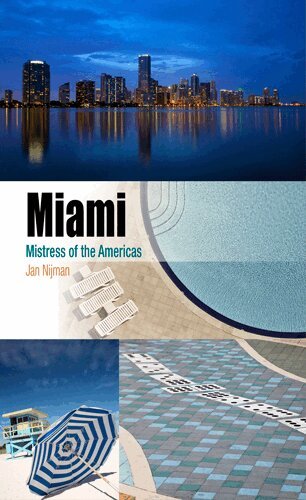
As a subtropical city and the southernmost metropolitan area in the United States, Miami has always lured both visitors and migrants from throughout the Americas. During its first half-century they came primarily from the American North, then from the Latin South, and eventually from across the hemisphere and beyond. But if Miami's seductive appeal is one half of the story, the other half is that few people have ever ended up staying there. Today, by many measures, Miami is one of the most transient of all major metropolitan areas in America.Miami: Mistress of the Americas tells the story of an urban transformation, perfectly timed to coincide with the surging forces of globalization. Author Jan Nijman connects different historical episodes and geographical regions to illustrate how transience has shaped the city to the present day, from the migrant labor camps in south Miami-Dade to the affluent gated communities along Biscayne Bay. Transience offers opportunities, connecting business flows and creating an ethnically hybrid workforce, and also poses challenges: high mobility and population turnover impede identification of Miami as home.According to Nijman, Miami is "mistress of the Americas" because of its cultural influence and economic dominance at the nexus of north and south. Nijman likens the city itself to a hotel; people check in, go about their business or pleasure, then check out. Locals, born and raised in the area, make up only one-fifth of the population. Exiles, those who have come to Miami as a temporary haven due to political or economic necessity, are typically yearning to return to their homeland. Mobiles, the affluent and well educated, who reside in Miami's most prized neighborhoods, are constantly on the move.As a social laboratory in urban change and human relationships in a high-speed, high-mobility era, Miami raises important questions about identity, citizenship, place-attachment, transnationalism, and cosmopolitanism. As such, it offers an intriguing window onto our global urban future.
541 kr
Skickas inom 10-15 vardagar
Extending a hundred miles across south-central Ontario, Toronto is the fifth largest metropolitan area in North America, with the highest population density and the busiest expressway. At its core old Toronto consists of walkable neighborhoods and a financial district deeply connected to the global economy. Newer parts of the region have downtown centers linked by networks of arterial roads and expressways, employment districts with most of the region's jobs, and ethnically diverse suburbs where English is a minority language. About half the population is foreign-born-the highest proportion in the developed world. Population growth because of immigration-almost three million in thirty years-shows few signs of abating, but recently implemented regional strategies aim to contain future urban expansion within a greenbelt and to accommodate growth by increasing densities in designated urban centers served by public transit.Toronto: Transformations in a City and Its Region traces the city's development from a British colonial outpost established in 1793 to the multicultural, polycentric metropolitan region of today. Though the original grid survey and much of the streetcar city created a century ago have endured, they have been supplemented by remarkable changes over the past fifty years in the context of economic and social globalization. Geographer Edward Relph's broad-stroke portrait of the urban region draws on the ideas of two renowned Torontonians-Jane Jacobs and Marshall McLuhan-to provide an interpretation of how its current forms and landscapes came to be as they are, the values they embody, and how they may change once again.
594 kr
Skickas inom 10-15 vardagar
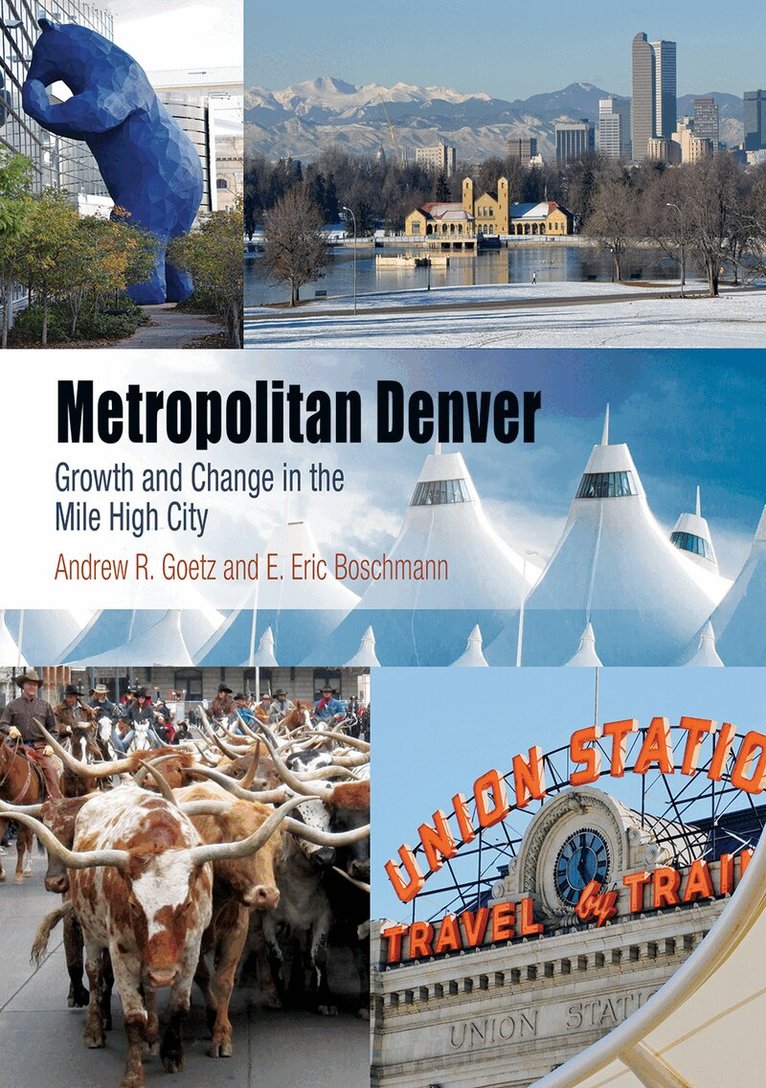
Nestled between the Rocky Mountains to the west and the High Plains to the east, Denver, Colorado, is nicknamed the Mile High City because its official elevation is exactly one mile above sea level. Over the past ten years, it has also been one of the country's fastest-growing metropolitan areas. In Denver's early days, its geographic proximity to the mineral-rich mountains attracted miners, and gold and silver booms and busts played a large role in its economic success. Today, its central location-between the west and east coasts and between major cities of the Midwest-makes it a key node for the distribution of goods and services as well as an optimal site for federal agencies and telecommunications companies.In Metropolitan Denver, Andrew R. Goetz and E. Eric Boschmann show how the city evolved from its origins as a mining town into a cosmopolitan metropolis. They chart the foundations of Denver's recent economic development-from mining and agriculture to energy, defense, and technology-and examine the challenges engendered by a postwar population explosion that led to increasing income inequality and rapid growth in the number of Latino residents. Highlighting the risks and rewards of regional collaboration in municipal governance, Goetz and Boschmann recount public works projects such as the construction of the Denver International Airport and explore the smart growth movement that shifted development from postwar low-density, automobile-based, suburban and exurban sprawl to higher-density, mixed use, transit-oriented urban centers.Because of its proximity to the mountains and generally sunny weather, Denver has a reputation as a very active, outdoor-oriented city and a desirable place to live and work. Metropolitan Denver reveals the purposeful civic decisions made regarding tourism, downtown urban revitalization, and cultural-led economic development that make the city a destination.