Monographs in Epidemiology and Biostatistics - Böcker
Visar alla böcker i serien Monographs in Epidemiology and Biostatistics. Handla med fri frakt och snabb leverans.
16 produkter
16 produkter
Del 20 - Monographs in Epidemiology and Biostatistics
Epidemiology and Control of Neural Tube Defects
Inbunden, Engelska, 1992
3 118 kr
Skickas inom 7-10 vardagar
Neural tube defects, spina bifida, anencephalus, and encephalocoele, are among the commonest severe congenital abnormalities in most countries. The last decade has seen many advances, including the use of antenatal diagnosis by chemical and ultrasound methods, population screening, and many new findings in epidemiology, culminating in the demonstration of the protective effect of folic acid on recurrences. The progress in both antenatal diagnosis and in aetiological research on neural tube defects has been particularly dramatic, and may well anticipate developments in regard to other congenital abnormalities. Primary prevention now appears as an attainable goal.This book presents a critical review of the extensive findings of epidemiological studies, discusses several methodological issues of wider relevance such as ascertainment, seasonal variation, ethical and legal issues. As well as providing a unique resource in regard to neural tube defects, much of the material is relevant to those with wider interests in the prevention, antenatal diagnosis, and control of major diseases.
Del 2 - Monographs in Epidemiology and Biostatistics
Case Control Studies
Design, Conduct, Analysis
Inbunden, Engelska, 1982
742 kr
Skickas inom 5-8 vardagar
Del 12 - Monographs in Epidemiology and Biostatistics
Statistical Methods in Epidemiology
Häftad, Engelska, 1989
787 kr
Skickas inom 5-8 vardagar
This book is based on Kahn's An Introduction to Epidemiological Methods (OUP, 1983). As the title change indicates, its discussion of the statistical concepts and methods that are fundamental to epidemiology has been substantially expanded. New material has been added throughout and there are two new chapters - 'Comparison of Numerical Results for Various methods of Adjustment' and 'The Primacy of Data Collection' - as well as an appendix of data from the Framingham Heart Study.
1 074 kr
Skickas inom 5-8 vardagar
Fundamentals of Genetic Epidemiology meets the need for a sophisticated approach to the investigation of the causes of complex chronic diseases. This integrated text describes the principles, methods, and approaches of epidemiology and genetics in the study of disease etiology. It provides an historical overview of genetics and epidemiology and their gradual rapprochement, describing the fundamental research strategies of genetic epidemiology including population and family studies. The authors also illustrate the increasing importance of genetic epidemiology in its application to preventive medicine, public health surveillance and the emerging ethical issues regarding the use of genetic information in society.
Del 23 - Monographs in Epidemiology and Biostatistics
AIDS Epidemiology
A Quantitative Approach
Inbunden, Engelska, 1994
1 146 kr
Skickas inom 5-8 vardagar
AIDS has appeared in more than 130 countries, and over 100,000 cases of AIDS have been reported in the U.S. alone. More and more, the public will be depending on statisticians to provide answers about the future course of this epidemic. This comprehensive work confronts the problems that are unique to AIDS research and unites them under a single conceptual framework. It focuses on methods for the design and analysis of epidemiologic studies, the natural history of AIDS and the transmission of HIV, methods for tracking and projecting the course of the epidemic, and statistical issues in therapeutic trials. The various methods of monitoring and forecasting this disease receive comprehensive treatment. These methods include back-calculation, which the authors developed; interpretation of survey data on HIV prevalence; mathematical models for HIV transmission; and approaches that combine different types of epidemiological data. Much of this material -- such as a discussion of methods for assessing safety of the blood supply, an evaluation of survey approaches, and methods to project paediatric AIDS incidence -- is not available in any other work.This is an essential purchase for all AIDS investigators and epidemiologists.
Del 26 - Monographs in Epidemiology and Biostatistics
Methods in Observational Epidemiology
Inbunden, Engelska, 1996
1 074 kr
Skickas inom 5-8 vardagar
Providing a comprehensive picture of the design, conduct, analysis, and interpretation of non-experimental studies of both infectious and non-infectious diseases, the Second Edition of this widely used text has been thoroughly updated to take into account the numerous developments in epidemiology over the past decade. Since the first edition was published in 1986, additional sources of data have become available through the increasing use of computerized records for health-related purposes. Also, a better understanding of the uses and limitations of certain epidemiologic concepts has been gained. Modifications of traditional study designs, including nested case-control studies and case-cohort studies, are now more frequently employed. Biological markers of exposure, disease susceptibility, and disease itself are used in many studies and methods of statistical analysis have been further developed. All of these developments have been considered in writing the Second Edition.The authors cover the full scope of observational studies, describing in detail cohort studies, case-control studies, cross-sectional studies, and epidemic investigation. The use of statistical procedures is described in easy-to-understand terms. Sample size estimation, sampling, measurement, and measurement error are fully discussed. Each chapter in the second edition has been updated and several chapters have been expanded. Chapter 3, which summarizes sources of data on disease occurrence, includes several additional sources of data. Chapter 5, which describes modifications of traditional study designs, now contains nested case-control and case-cohort studies. Chapter 15, on other types of measurement, has been expanded to include sections on measurement in epidemiologic studies of the elderly and on biological markers since these have become major areas of epidemiologic research in recent years. Much of the material in Chapters 6, 7, and 9 on the analysis of data from epidemiologic studies is also new to this edition.Perhaps the greatest challenge for the authors in writing this Second Edition was to make some of the modern, frequently used methods of statistical analysis understandable to readers with a limited mathematical or statistical background. Although this book is intended for readers who have had introductory courses in epidemiology and biostatistics, even readers who do not fully comprehend the theory behind some of the techniques should understand the rationale for their use and be able to interpret results when they appear on a computer printout or in the literature. The Second Edition of this widely used text will serve as a practical resource for students and practitioners of epidemiology, public health and biostatistics.
930 kr
Skickas inom 5-8 vardagar
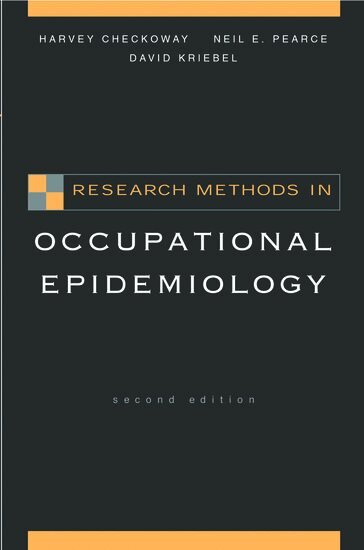
This widely used text provides a clear and critical summary of research approaches to the epidemiological study of workplace hazards. It describes the historical development of occupational epidemiology, methods for characterizing occupational exposures, and techniques for designing and implementing epidemiologic studies in this area. The relative strengths and limitations of various study designs for investigating specific health outcomes are emphasized. Also included are more advanced discussions of statistical analysis, exposure and dose modelling, and subsequent applications of data derived from epidemiologic research, as in meta-analysis, pooled analysis, and statistical analysis, exposure and dose modelling, and risk assessment. Since the first edition was published 15 years ago, there have been numerous advances in epidemiologic methods to accommodate a broadened scope of investigations of occupational exposures and associated adverse health outcomes. Thus, in this Second Edition the authors have updated their discussions of methodology to include such topics as case-cohort and case-crossover designs and statistical analysis of repeated measures data, and have expanded the examples they use throughout the book to demonstrate the applications of these methods to a wide range of acute and chronic health outcomes. They have also added a new chapter on occupational health surveillance. Their text is unique for its strong emphasis on the definition and assessment of exposures, the application of quantitative exposure data to epidemiologic models, and the recognition that improvements in workplace risk identification and quantification will come from careful integration of these approaches.
Del 28 - Monographs in Epidemiology and Biostatistics
Modern Applied Biostatistical Methods
Using S-Plus
Inbunden, Engelska, 1998
930 kr
Skickas inom 5-8 vardagar
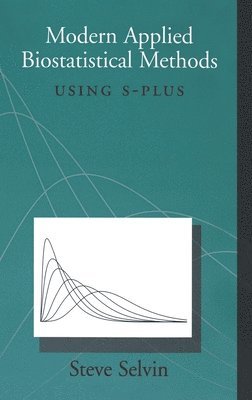
Statistical analysis typically involves applying theoretically generated techniques to the description and interpretation of collected data. In this text, theory, application and interpretation are combined to present the entire biostatistical process for a series of elementary and intermediate analytic methods. The theoretical basis for each method is discussed with a minimum of mathematics and is applied to a research data example using a computer system called S-PLUS. This system produces concrete numerical results and increases one's understanding of the fundamental concepts and methodology of statistical analysis.This text is not a computer manual, even though it makes extensive use of computer language to describe and illustrate applied statistical techniques. This makes the details of the statistical process readily accessible, providing insight into how and why a statistical method identifies the properties of sampled data. The first chapter gives a simple overview of the S-PLUS language. The subsequent chapters use this valuable statistical tool to present a variety of analytic approaches. Combining statistical logic, data and computer tools, the author explores such topics as random number generation, general linear models, estimation, analysis of tabular data, analysis of variance and survival analysis. The end result is a clear and complete explanation of the way statistical methods can help one gain an understanding of collected data.Modern Applied Biostatistical Methods is unlike other statistical texts, which usually deal either with theory or with applications. It integrates the two elements into a single presentation of theoretical background, data, interpretation, graphics, and implementation. This all-around approach will be particularly helpful to students in various biostatistics and advanced epidemiology courses, and will interest all researchers involved in biomedical data analysis.
Del 27 - Monographs in Epidemiology and Biostatistics
Design and Analysis of Group-Randomized Trials
Inbunden, Engelska, 1998
1 307 kr
Skickas inom 5-8 vardagar
This is the first comprehensive text on the design and analysis of group-randomized trials. It It collects information previously scattered among journals and texts in a variety of disciplines, and, in addition, presents much new material not available elsewhere. The book has been written to help those involved in these trials improve their ability to plan, fund, conduct, analyse, and interpret them, and to give students a detailed understanding of the field.Group-randomized trials are comparative studies in which the units of assignment are identifiable groups and the units of observation are members of those groups. The positive intraclass correlation expected among the members of each group poses unique and challenging issues for the design and analysis of these trials and separates them from the traditional clinical trial. After reviewing the underlying issues, Murray presents the research designs that are most widely used in group-randomized trials, together with their strengths, weaknesses, and appropriate applications. He describes the many approaches to analysis that are now available, presents mixed-model regression analyses appropriate to each design, and illustrates them using data from the Minnesota Heart Health Program. He also covers methods for estimating sample size, detectable difference, and power. This volume is not limited only to a conceptual treatment of the issues and solutions. It offers a review of the practical applications in a series of case studies, examples, and problems.
1 236 kr
Skickas inom 5-8 vardagar
The basis for much of medical public health practice comes from epidemiological research. This text describes current statistical tools that are used to analyse the association between possible risk factors and the actual risk of disease. Beginning with a broad conceptual framework on the disease process, it describes commonly used techniques for analysing proportions and disease rates. These are then extended to model fitting, and the common threads of logic that bind the two analytic strategies together are revealed. Each chapter provides a descriptive rationale for the method, a worked example using data from a published study, and an exercise that allows the reader to practice the technique. Each chapter also includes an appendix that provides further details on the theoretical underpinnings of the method. Among the topics covered are Mantel-Haenszel methods, rates, survival analysis, logistic regression, and generalised linear models. Methods for incorporating aspects of study design, such as matching, into the analysis are discussed, and guidance is given for determining the power or the sample size requirements of a study. This text will give readers a foundation in applied statistics and the concepts of model fitting to develop skills in the analysis of epidemiological data.
Del 31 - Monographs in Epidemiology and Biostatistics
Meta-Analysis, Decision Analysis, and Cost-Effectiveness Analysis
Inbunden, Engelska, 1999
1 002 kr
Skickas inom 5-8 vardagar
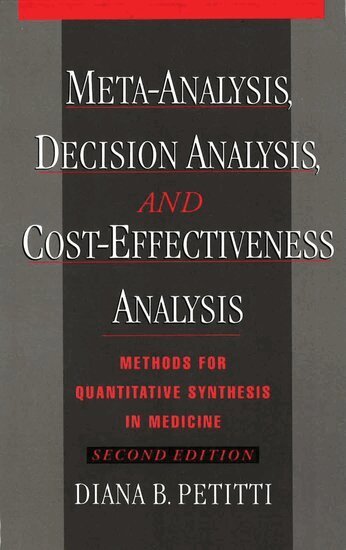
This is a lucid, comprehensive introduction to meta-analysis, decision analysis, and cost-effectiveness analysis. These three closely related methods have become even more important for synthesizing research since the first edition was published in 1994. And they have gained legitimacy as tools for guiding health policy. In the Second Edition, Petitti has added new material on cumlative meta-analysis and the exploration of heterogeneity, incorporated recommendations for standardizing the conduct of cost-effectiveness analysis, and updated the rest of the text.
Del 35 - Monographs in Epidemiology and Biostatistics
Statistical Analysis of Epidemiologic Data
Inbunden, Engelska, 2004
1 074 kr
Skickas inom 5-8 vardagar
Analytic procedures suitable for the study of human disease are scattered throughout the statistical and epidemiologic literature. Explanations of their properties are frequently presented in mathematical and theoretical language. This well-established text gives readers a clear understanding of the statistical methods that are widely used in epidemiologic research without depending on advanced mathematical or statistical theory. By applying these methods to actual data, Selvin reveals the strengths and weaknesses of each analytic approach. He combines techniques from the fields of statistics, biostatistics, demography and epidemiology to present a comprehensive overview that does not require computational details of the statistical techniques described.For the Third Edition, Selvin took out some old material (e.g. the section on rarely used cross-over designs) and added new material (e.g. sections on frequently used contingency table analysis). Throughout the text he enriched existing discussions with new elements, including the analysis of multi-level categorical data and simple, intuitive arguments that exponential survival times cause the hazard function to be constant. He added a dozen new applied examples to illustrate such topics as the pitfalls of proportional mortality data, the analysis of matched pair categorical data, and the age-adjustment of mortality rates based on statistical models. The most important new feature is a chapter on Poisson regression analysis. This essential statistical tool permits the multivariable analysis of rates, probabilities and counts.
841 kr
Skickas inom 5-8 vardagar
Over the past fifty years, the case-control method, and to a lesser extent its case-based variants, have become the most important tools for the investigator of health problems. The case control method is the study of persons with the disease and a suitable control group of persons who do not have the disease. The book helps readers address a number of general and specific questions dealing with the case-control and other case-based methods, including questions of how to design and implement a case-control study that minimizes biases, how to analyze the data to appropriately deal with confounding variables and help identify reactions, and how to interpret data and present the results from a case-control study.
760 kr
Skickas inom 5-8 vardagar
Examining the principles and methods of research on the evaluation of factors affecting the outcome of illness, this book emphasizes diagnostic and therapeutic interventions - the factors most readily modified by health care providers. It discusses the various ways of structuring observations on patient groups, and appraises the nature and strength of inferences drawn from those observations. It also demonstrates how the results of this type of research, clinical epidemiologic research, can be incorporated into the decision-making process utilized in clinical medicine.The book contains a concise account of topics such as the assessment of the use of diagnostics and screening tests and their role in improving the outcome of illness, the evaluation of therapeutic efficacy through experimental and nonexperimental studies, and a particularly useful chapter on assessment of therapeutic safety. It is an essential reference and guide to the quantitative assessment of the consequences of illness for clinicians in training or in practice.This new edition features a greatly expanded chapter on randomized control trials, and includes a new chapter on meta-analysis, authored by Peter Cummings. Meta-analysis, the statistical synthesis of data from comparable studies, was unheard of 30 years ago, but with the advent of increased computer technology, the method has been steadily growing in importance in the epidemiology community.
2 213 kr
Skickas inom 5-8 vardagar
First published in 1986, this landmark text is the definitive guide to clinical trials, written by one of the leading experts in the field. This fully-updated second edition continues to be the most authoritative reference text on randomized clinical trials. It contains a wealth of practical information on the design, conduct, and analysis of both single center and multicenter trials. No other book on clinical trials offers as much detail on such issues as sample size calculation, stratification and randomization, data systems design, development of consent forms, publication policies, preparation of funding requests, and reporting procedures.While the basics of design, conduct, and analysis of clinical trials remain the same, there have been significant changes since the first edition of Clinical Trials was published two decades ago. In this new edition, the author discusses the refinements and improvements made to methods and procedures, changes in the policies and guidelines underlying trials, as well as requirements for registration of trials. He also discusses current practices for data sharing, for gender representation, for treatment effects monitoring, and for ethical standards of clinical trials. The importance of the randomized controlled trial has grown significantly over time and they are now the cornerstone of all evidence-based medicine. Still rich in tables, checklists, charts, and other resources for the trialist, the second edition of Clinical Trials is an indispensable reference for clinicians, biostaticians, epidemiologists, and anyone involved in the design and implementation of a clinical trial.
Del 40 - Monographs in Epidemiology and Biostatistics
Nutritional Epidemiology
Inbunden, Engelska, 2012
1 842 kr
Skickas inom 7-10 vardagar
This text is intended for those who wish to understand the complex relationships between diet and risks of important diseases, such as cancer and cardiovascular disease. It is aimed both at researchers engaged in the unraveling of these complex relationships and at readers of the rapidly multiplying and often confusing scholarly literature on the subject. The book starts with an overview of research strategies in nutritional epidemiology-still a relatively new discipline that combines the vast knowledge compiled by nutritionists during this century with the methodologies developed by epidemiologists to study the determinants of diseases with multiple etiologies and long latent periods. A major section is devoted to the methods of dietary assessment using data on food intake, biochemical indicators of diet, and measures of body composition and size. The reproducibility and validity of each approach and the implications of measurement error are considered in detail. The analysis, presentation, and interpretation of data from epidemiologic studies of diet and disease are explored in depth. Particular attention is paid to the important influence of total energy intake on findings in such studies. To illustrate methodological issues in nutritional epidemiology, relationships of dietary factors to the incidence of lung and breast cancer, heart disease, and birth defects are examined in depth. The first edition of Nutritional Epidemiology, published in 1989, was widely praised and quickly established itself as the standard reference in this field. The second edition, published in 1998, added new chapters on the analysis and presentation of dietary data, nutritional surveillance, and folic acid and neural tube defects. This new edition, in addition to substantial updating of existing chapters, includes new chapters on assessment of physical activity, nutrition and genetic epidemiology, and the role of nutritional epidemiology in policy. This book will benefit epidemiologists, nutritionists, dietitians, policy makers, public health practitioners, oncologists, and cardiovascular and other clinical specialists.