Oxford Oriental Monographs – serie
Visar alla böcker i serien Oxford Oriental Monographs. Handla med fri frakt och snabb leverans.
20 produkter
20 produkter
Inbunden, Engelska, 2022
1 599 kr
Skickas inom 7-10 vardagar
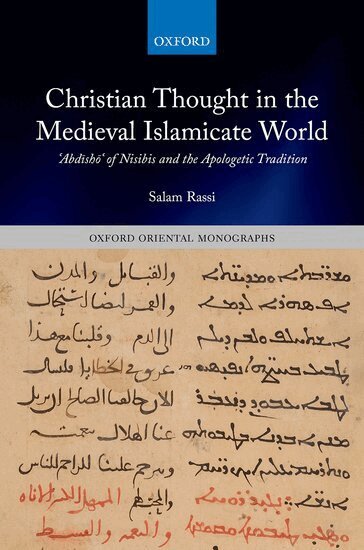
Christian Thought in the Medieval Islamicate World: ʿAbdīshōʿ of Nisibis and the Apologetic Tradition is the first monograph-length study and intellectual biography of ʿAbdīshōʿ of Nisibis (d. 1318), bishop and polymath of the Church of the East. Focusing on his works of apologetic theology, it examines the intellectual strategies he employs to justify Christianity against Muslim (and to a lesser extent Jewish) criticisms. Better known to scholars of Syriac literature as a poet, jurist, and cataloguer, ʿAbdīshōʿ wrote a considerable number of works in the Arabic language, many of which have only recently come to light. He flourished at a time when Syriac Christian writers were becoming increasingly indebted to Islamic models of intellectual production. Yet many of his writings were composed during mounting religious tensions following the official conversion of the Ilkhanate to Islam in 1295. In the midst of these challenges, ʿAbdīshōʿ negotiates a centuries-long tradition of Syriac and Arabic apologetics to remind his readers of the verity of the Christian faith. His engagement with this tradition reveals how anti-Muslim apologetics had long shaped the articulation of Christian identity in the Middle East since the emergence of Islam. Through a selective process of encyclopaedism and systematisation, ʿAbdīshōʿ navigates a vast corpus of Syriac and Arabic apologetics to create a synthesis and theological canon that remains authoritative to this day.
Inbunden, Engelska, 2022
1 552 kr
Skickas inom 5-8 vardagar
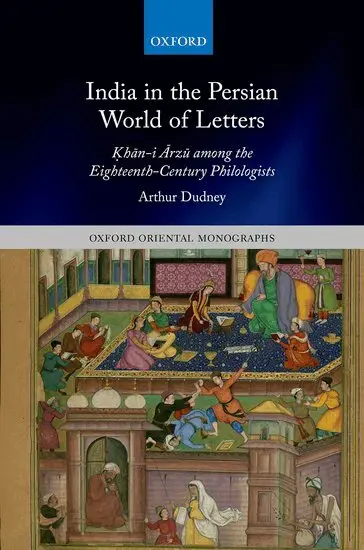
This is an open access title available under the terms of a CC BY-NC-ND 4.0 International licence. It is free to read at Oxford Scholarship Online and offered as a free PDF download from OUP and selected open access locations.This book traces the development of philology (the study of literary language) in the Persian tradition in India, concentrating on its socio-political ramifications. The most influential Indo-Persian philologist of the eighteenth-century was Sirāj al-Dīn 'Alī Khān, (d. 1756), whose pen-name was Ārzū. Besides being a respected poet, Ārzū was a rigorous theoretician of language whose Intellectual legacy was side-lined by colonialism. His conception of language accounted for literary innovation and historical change in part to theorize the tāzah-go'ī [literally, "fresh-speaking"] movement in Persian literary culture. Although later scholarship has tended to frame this debate in anachronistically nationalist terms (Iranian native-speakers versus Indian imitators), the primary sources show that contemporary concerns had less to do with geography than with the question of how to assess innovative "fresh-speaking" poetry, a situation analogous to the Quarrel of the Ancients and the Moderns in early modern Europe. Ārzū used historical reasoning to argue that as a cosmopolitan language Persian could not be the property of one nation or be subject to one narrow kind of interpretation. Ārzū also shaped attitudes about reḳhtah, the Persianized form of vernacular poetry that would later be renamed and reconceptualized as Urdu, helping the vernacular to gain acceptance in elite literary circles in northern India. This study puts to rest the persistent misconception that Indians started writing the vernacular because they were ashamed of their poor grasp of Persian at the twilight of the Mughal Empire.
Inbunden, Engelska, 2001
4 549 kr
Skickas inom 7-10 vardagar
The epistle ascribed to Salim Ibn Dhakwan is a tract against 'wrong' doctrines regarding the classification and treatment of opponents. Written by an Ibadi before AD 800 and taking issue with both Kharijite extremists and Murji'ites, it was brought to the attention of Western Islamicists in the early 1970s by Amr Khalifa Ennami, and is here edited, translated, and discussed in full for the first time.The early centuries of Islamic religious thought have become a dynamic field in the last few years, and there is renewed interest in the attempt to use the early literature of the Muslim sects as windows onto the wider scene of doctrinal discussion in the period before the mainstream tradition becomes plentiful. In addition to making available a new source, this study seeks to open up the Ibadi tradition for future research on early Islamic thought, partly by making heavy use of Ibadi sources in its interpretation of Salim's epistle and by partly by offering systematic information about the Ibadi figures and literary works involved in the appendices and bibliography.
Inbunden, Engelska, 1996
3 404 kr
Skickas inom 5-8 vardagar
After the invention of a national script, c.400 AD, Armenians rapidly developed their own literary forms, drawing on foreign texts as well as their own traditions. Historical writing is the most original genre in classical and medieval Armenian literature. Greek works (including the Chronicle of Eusebius, now lost in Greek but preserved in Armenian) constituted the major part of translated histories. But in the thirteenth century the extensice Chronicle of the Syrian Patriarch Michael and the first part of the Georgian chronicles were adapted for an Armenian readership. The collection known as the `Georgian Chronicles' was finally codified in the eighteenth century and represents only a small part of Georgian historical writing. The thirteenth century Armenian version is in fact the earliest attestation of this growing corpus of texts, predating all extant Georgian manuscripts of it.This book presents the two texts, Georgian and Armenian, in English translation for the first time. The Introduction and Commentary draw attention to the ways in which the unknown Armenian translator changed his original material in a pro-Armenian fashion. His rendering became the standard source for early Georgian history used by later Armenian historians. The book includes a useful overview of the background to the chronicles, the history and culture of Christian Georgia and Armenia, and their respective languages and literature.
Inbunden, Engelska, 1997
3 029 kr
Skickas inom 5-8 vardagar
The classical period of Arab civilization produced the most extensive and highly developed bacchic tradition in world literature, In this book, the author traces the history of classical Arabic wine poetry from its origins in sixth century Arabia to its heyday in Baghdad at the turn of the ninth century. The focus is on the greatest and perhaps most likeable of Arabic poets, Abú Nuwás. Although wine poetry is only one of the many genres for which he is known, it is the one that has ensured his fame, and the one on which this book concentrates. The wine songs of the poet are analysed and their connections with poetics, ethics, and religion are explored. The author also puts Abú Nuwás in perspective by comparing him with his most important predecessors and contemporaries and by discussing his interaction with other poetic genres such as amatory, invective, ascetic, or gnomic verse.
Inbunden, Engelska, 1996
3 175 kr
Skickas inom 7-10 vardagar
One of the most important sects in the Islamic world, Sufism has had a long and active history. Yet it has been no stranger to controversy. This has been particularly pronounced in modern times, as radical Islamic groups and modernist reformers have sought to identify Sufism as a source of either unwelcome innovation or reactionary superstition. This book focuses on the efforts of the Sufis of Egypt, expressed in the writings of one of the order's sheikhs, to meet the critical challenge. The sheikh offers a vigorous defence of Sufism in the context of controversial issues such as festivals, processions, congregational invocation, and the principle of guidance by the sheikh. He also touches on broader issues such as the metaphysical status of the Prophet and the question of miracles, considering these in a characteristically Sufi light. However, he also downplays or reworks certain key elements of Sufi belief and practice in an attempt to forestall hostile criticism. In this book Dr Johansen discusses these ideas and places them in a broader context, basing his analysis on material recorded at Sufi gatherings in Cairo between 1988-90, as well as published and unpublished texts.
Inbunden, Engelska, 2016
1 561 kr
Skickas inom 5-8 vardagar
Printed editions of midrashim, rabbinic expositions of the Bible, flooded the market for Hebrew books in the sixteenth century. First published by Iberian immigrants to the Ottoman Empire, they were later reprinted in large numbers at the famous Hebrew presses of Venice. This study seeks to shed light on who read these new books and how they did so by turning to the many commentaries on midrash written during the sixteenth century. These innovative works reveal how their authors studied rabbinic Bible interpretation and how they anticipated their readers would do so. Benjamin WIlliams focuses particularly on the work of Abraham ben Asher of Safed, the Or ha-Sekhel (Venice, 1567), an elucidation of midrash Genesis Rabba which contains both the author's own interpretations and also the commentary he mistakenly attributed to the most celebrated medieval commentator Rashi. Williams examines what is known of Abraham ben Asher's life, his place among the Jewish scholars of Safed, and the publication of his book in Venice. By analysing selected passages of his commentary, this study assesses how he shed light on rabbinic interpretation of Genesis and guided readers to correct interpretations of the words of the sages. A consideration of why Abraham ben Asher published a commentary attributed to Rashi shows that he sought to lend authority to his programme of studying midrash by including interpretations ascribed to the most famous commentator alongside his own. By analysing the production and reception of the Or ha-Sekhel, therefore, this work illuminates the popularity of midrash in the early modern period and the origins of a practice which is now well-established-the study of rabbinic Bible interpretation with the guidance of commentaries.
Häftad, Engelska, 2019
931 kr
Skickas inom 3-6 vardagar
Previous research on Mesopotamian Flood traditions tended to focus on a few textual sources. How the traditions originated and developed as a whole has not been seriously investigated. By systematically examining a large body of relevant cuneiform sources of diverse genres from the Early Dynastic III period (ca. 2600-2350 B.C.) to the end of the first millennium B.C., this book observes that it is during the Old Babylonian period (ca. 2000-1600) and classical attestations of the Flood traditions are found. On linguistic, conceptual and literary-historical grounds, the book argues that the Flood traditions emerged relatively late in Sumerian traditions. It traces different evolutionary stages of the Flood traditions, from the emergence of the Flood motif within the socio-political and cultural contexts of the early Isin dynasty (ca. 2017-1896 B.C.), to the diverse mythological representations of the motif in literary traditions, to the historicisation of the motif in chronography, and finally to the interactions between various strands of the Flood traditions and other Mesopotamian literary traditions, such as Sumerian and Babylonian compositions about Gilgames.By uncovering the processes through which the Flood traditions were constructed, the book offers a valuable case study on the complex and dynamic relationship between myth-making, the development of literature, the rise of historical consciousness and historiography, and socio-political circumstances in the ancient world. The origins and development of the Flood traditions examined in the book, furthermore, represent one of the best documented examples illustrating the continuities and changes in Mesopotamian intellectual, linguistic, literary, socio-political and religious history over the course of two and a half millennia.
Inbunden, Engelska, 2020
1 131 kr
Skickas inom 5-8 vardagar
Ownership and Inheritance in Sanskrit Jurisprudence provides an account of various theories of ownership (svatva) and inheritance (dāya) in Sanskrit jurisprudential literature (Dharmaśāstra). It examines the evolution of different juridical models of inheritance--in which families held property in trusts or in tenancies-in-common--against the backdrop of related developments in the philosophical understanding of ownership in the Sanskrit text-traditions of hermeneutics (Mīmāṃsā) and logic (Nyāya) respectively. Christopher T. Fleming reconstructs medieval Sanskrit theories of property and traces the emergence of various competing schools of Sanskrit jurisprudence during the early modern period (roughly fifteenth-nineteenth centuries) in Bihar, Bengal, and Varanasi. Fleming attends to the ways in which ideas from these schools of jurisprudence shaped the codification of Anglo-Hindu personal law by administrators of the British East India Company during the late eighteenth and early nineteenth centuries. While acknowledging the limitations of colonial conceptions of Dharmaśāstra as positive law, this study argues for far greater continuity between pre-colonial and colonial Sanskrit jurisprudence than accepted previously. It charts the transformation of the Hindu law of inheritance--through precedent and statute--over the late nineteenth, twentieth, and early twenty-first centuries.
Inbunden, Engelska, 2021
1 839 kr
Skickas inom 5-8 vardagar
A Revolution in Rhyme: Poetic Co-option under the Islamic Republic offers, for the first time, an original, timely examination of the pivotal role poetry plays in policy, power and political legitimacy in modern-day Iran. Through a compelling chronological and thematic framework, Shams presents fresh insights into the emerging lexicon of coercion and unrest in the modern Persian canon. Analysis of the lives and work of ten key poets traces the evolution of the Islamic Republic, from the 1979 Revolution, through to the Iran-Iraq War, the death of a leader and the rise of internal conflicts. Ancient forms jostle against didactic ideologies, exposing the complex relationship between poetry, patronage and literary production in authoritarian regimes, shedding light on a crucial area of discourse that has been hitherto overlooked.
Inbunden, Engelska, 2021
1 350 kr
Skickas inom 5-8 vardagar
This book is the first in-depth study of the Śaiva oeuvre of the celebrated polymath Appaya Dīkṣita (1520-1593). Jonathan Duquette documents the rise to prominence and scholarly reception of Śivādvaita Vedānta, a Sanskrit-language school of philosophical theology which Appaya single-handedly established, thus securing his reputation as a legendary advocate of Śaiva religion in early modern India. Based to a large extent on hitherto unstudied primary sources in Sanskrit, Duquette offers new insights on Appaya's early polemical works and main source of Śivādvaita exegesis, Śrīkaṇṭha's Brahmamīmāmsābhāṣya; identifies Appaya's key intellectual influences and opponents in his reconstruction of Śrīkaṇṭha's theology; and highlights some of the key arguments and strategies he used to make his ambitious project a success. Centred on his magnum opus of Śivādvaita Vedānta, the Śivārkamanidīpikā, this book demonstrates that Appaya's Śaiva oeuvre was mainly directed against Viśiṣtādvaita Vedānta, the dominant Vaiṣṇava school of philosophical theology in his time and place. A far-reaching study of the challenges of Indian theism, this book opens up new possibilities for our understanding of religious debates and polemics in early modern India as seen through the lenses of one of its most important intellectuals.
Inbunden, Engelska, 2002
2 849 kr
Skickas inom 5-8 vardagar
This accessible study is the first critical investigation of the cult of saints among Muslims and Jews in medieval Syria and the Near East. Through case studies of saints and their devotees, discussion of the architecture of monuments, examination of devotional objects, and analysis of ideas of 'holiness', Meri depicts the practices of living religion and explores the common heritage of all three monotheistic faiths. Critical readings of a wide range of contemporary sources - travel writing, geographical works, pilgrimage guides, legal writings, historical sources, hagiography, and biography - reveal a vibrant religious culture in which the veneration of saints and pilgrimage to tombs and shrines were fundamental.
Inbunden, Engelska, 2002
2 284 kr
Skickas inom 5-8 vardagar
This is a book about religious transformation in South Asia in the nineteenth century. On the one hand, a fundamental conceptual transformation in the world of religion among people who were exposed to English language and culture took place. This transformation crystallized religious communities with sharp boundaries and distinct histories. On the other hand, the emerging feeling of religious-communal identity motivated religious and lay leaders to work in the interest of the community. This book is about both of these interrelated developments: the conceptual change and the application of the new ideas to political discourse; the construction and the politics of religious identity.
Inbunden, Engelska, 2004
2 828 kr
Skickas inom 7-10 vardagar
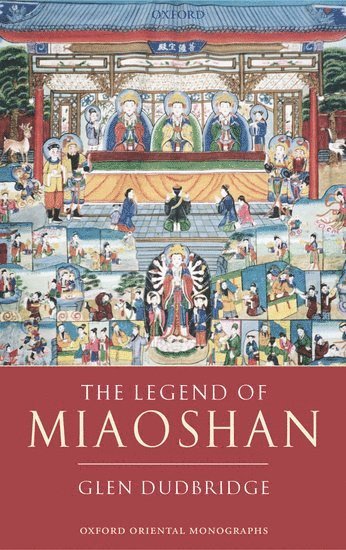
In Chinese legend, the princess Miaoshan defied her father by refusing to marry, and pursued her austere religious vocation to the death, but returned to life to be his saviour and the saviour of all mankind. The story is inseparable from the female bodhisattva Guanyin, whose cult dominated religious life at all levels in traditional China and is still powerful in rural China today. Miaoshan herself became a lasting symbol of the tension in women's lives between individual spiritual fulfilment and the imperatives of family duty.The previous edition of this book was the first full monograph on the subject. It deals with the story's background, early history, and more developed later versions, bringing much of this material to the attention of modern readers for the first time. It analyses the basic sources, many of them in Buddhist scripture, and the overall pattern of development. It finally offers a range of interpretations which discover here myths of religious celibacy, of filial piety, and of ritual salvation of the dead.The legend of Miaoshan spans the uncertain boundaries between Chinese popular literature, theatre, and religion, and this book directly addresses students of those fields. But it holds a larger significance for those interested in the position of women in traditional society, and students of comparative literature and folklore will find here a version of the 'King Lear' story.This new edition takes account of epigraphical evidence, discovered and accessed since the time of first publication, which enriches and refines the discussion. This and other additional evidence, introduced for the sake of a more complete picture, leave the argument and conclusions of the original study still essentially intact.
Inbunden, Engelska, 2004
3 752 kr
Skickas inom 5-8 vardagar
In third-century CE Palestine, the leading member of the rabbinic movement put together a highly popular wisdom treatise entitled Tractate Avot. Though Avot has inspired hundreds of commentaries, this book marks the first comprehensive effort to situate Avot within the context of the Graeco-Roman Near East. Following his novel interpretation of Avot, Amram Tropper relates the text to ancient Jewish literary paradigms as well as to relevant socio-political, literary, and intellectual streams of the contemporary Near East. Through comparisons to ancient wisdom literature, the Second Sophistic, Greek and Christian historiography, contemporary collections of sayings, and classical Roman jurisprudence, Tropper interprets Avot in light of the local Jewish context as well as the ambient cultural atmosphere of the contemporary Near East.
Inbunden, Engelska, 2010
2 596 kr
Skickas inom 5-8 vardagar
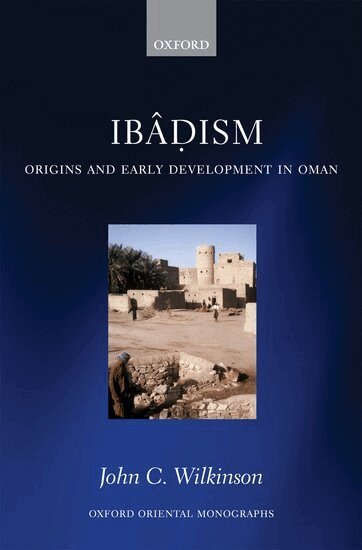
Ibâdism represents a branch of the third great division in Islam, that of the Khawârij. It survives in some isolated communities in North Africa, but manifested itself periodically in Oman as a full Imamate well into the twentieth century. Using early material recorded in Basran and Omani sources, this book deconstructs the standard account of origins, showing that Ibâdism's evolution into a madhhab (school) can only be understood in a wider historical perspective of the tribal and regional dimensions. Its activation among the Yamani tribes of Iraq requires reappraising what the Yaman-Nizâr division represented in the Umayyad period, and the opening chapters demonstrate that there was a real split in pre-Islamic times between northern and southern Arabs that was reflected in the great revolts of Ibn al-As'ath al-Kindi and Yazid b. al-Muhallab al-Azdi. The nascent Ibâdi movement in Basra, whose solidarity was enshrined in walâya, the spiritual and physical cement binding the community to God, exploited the resulting resentment to establish Imamates in southern Arabia, followed by North Africa. Study of the earliest sources throws considerable light not only on Ibâdi origins, but also the early emergence of Islamic kalâm and fiqh and the influence of contemporary theological debate. The history of Ibâdism in the first six Islamic centuries is essential for understanding both the evolution of institutions and practical law. One of is strengths is the ability to adapt to different situations, and the pragmatic rulings concerning agriculture, trade, mining, and in the case of Oman, its major role in expanding Indian Ocean commerce represents a unique maritime legal code. In parallel comes an increasing convergence towards Sunni-Ash'ari norms and the evolution of Ibâdi identity as a madhhab. Sunna and hadîth were absorbed into the âthâr of the community, which now develops as a formal line of transmission and even the production of their own hadîth collection in the Maghrib. Nevertheless, interpretation still remained essentially open, thus giving the system a flexibility that ensured survival in widely different environments.
Inbunden, Engelska, 2012
2 380 kr
Skickas inom 3-6 vardagar
Muhyī l-Dīn Ibn `Arabī (1165-1240) was a hugely influential figure in the development of Sufism, yet although interest in his work continues to grow, his poetry has received very little attention. This book is the first full-length monograph devoted to his Dīwān (collected poems). It begins by attempting to define Ibn `Arabī's poetic style and his understanding of poetics, which is closely intertwined with his metaphysics: the rhythms of poetry echo those of creation, and meaning combines with form just as the spirit descends on matter. Drawing on a pre-Islamic theme, he insists that his poetry was revealed to him word for word by a spirit. At the same time, however, his attitude to the function of poetry and its relation to scripture is closer to mainstream medieval Islamic, Jewish and Christian theology than has usually been thought. Denis E. McAuley focuses on close readings of books in unusual verse forms, including poetic responses to chapters of the Qur'an; imitations of earlier poets; poems that use only one rhyme word; and a cycle of poems modelled on the letters of the alphabet. In so doing, he makes frequent comparisons with other Islamic and European poets from the sixth century to the dawn of the twentieth, many of them virtually unstudied. Ibn `Arabī emerges as a highly original poet whose work casts a fresh light on the period and on classical Arabic literature as a whole.
Inbunden, Engelska, 2013
1 736 kr
Skickas inom 7-10 vardagar
The anecdotal literature of late-medieval China is not unknown, but it is under-used. Glen Dudbridge explores two collections of anecdotal memoirs to construct an intimate portrait of the first half of the tenth century as seen by people who lived through it. The author Wang Renyu's adult life coincided closely with that period, and his memoirs, though not directly transmitted, can be largely recovered from encyclopaedia quotations. His experience led from early life on the north-west border with Tibet, through service with the kingdom of Shu, to a mainstream career under four successive dynasties in northern China. He bore personal witness to some great events, but also travelled widely and transcribed material from a lifetime of conversations with colleagues in the imperial Hanlin Academy. The study first sets Wang's life in its historical context and discusses the nature and value of his memoirs. It then pursues a number of underlying themes that run through the collections, presenting nearly 80 distinct items in translation. Together these offer a characterization of an age of inter-regional warfare in which individual lives, not grand historical narrative, form the focus. A nuanced self-portrait of the author emerges, combining features that seem alien to modern values with others that seem more familiar. Four appendixes give the text of the author's tombstone epitaph; a detailed list of his surviving memoir items; data from Song catalogues on the early transmission of his writings; and Wang Renyu's own definition of the four musical modes inherited from the Tang dynasty.
Inbunden, Engelska, 2013
1 877 kr
Skickas inom 7-10 vardagar
Previous research on Mesopotamian Flood traditions tended to focus on a few textual sources. How the traditions originated and developed as a whole has not been seriously investigated. By systematically examining a large body of relevant cuneiform sources of diverse genres from the Early Dynastic III period (ca. 2600-2350 B.C.) to the end of the first millennium B.C., this book observes that it is during the Old Babylonian period (ca. 2000-1600) and classical attestations of the Flood traditions are found. On linguistic, conceptual and literary-historical grounds, the book argues that the Flood traditions emerged relatively late in Sumerian traditions. It traces different evolutionary stages of the Flood traditions, from the emergence of the Flood motif within the socio-political and cultural contexts of the early Isin dynasty (ca. 2017-1896 B.C.), to the diverse mythological representations of the motif in literary traditions, to the historicisation of the motif in chronography, and finally to the interactions between various strands of the Flood traditions and other Mesopotamian literary traditions, such as Sumerian and Babylonian compositions about Gilgameš.By uncovering the processes through which the Flood traditions were constructed, the book offers a valuable case study on the complex and dynamic relationship between myth-making, the development of literature, the rise of historical consciousness and historiography, and socio-political circumstances in the ancient world. The origins and development of the Flood traditions examined in the book, furthermore, represent one of the best documented examples illustrating the continuities and changes in Mesopotamian intellectual, linguistic, literary, socio-political and religious history over the course of two and a half millennia.
Inbunden, Engelska, 2013
2 333 kr
Skickas inom 5-8 vardagar
This book is about a sacred place called Balkh, known to the ancient Greeks as Bactra. Located in the north of today's Afghanistan, along the silk road, Balkh was holy to many. The Prophet Zoroaster is rumoured to have died here, and during late antiquity, Balkh was the home of the Naw Bahār, a famed Buddhist temple and monastery. By the tenth century, Balkh had become a critical centre of Islamic learning and early poetry in the New Persian language that grew after the Islamic conquests and continues to be spoken in Iran, Afghanistan and parts of Central Asia today.In this book, Arezou Azad provides the first in-depth study of the sacred sites and landscape of medieval Balkh, which continues to exemplify age-old sanctity in the Persian-speaking world and the eastern lands of Islam generally. Azad focuses on the five centuries from the Islamic conquests in the eighth century to just before the arrival of the Mongols in the thirteenth century, the crucial period in the emergence of Perso-Islamic historiography and Islamic legal thought. The book traces the development of 'sacred landscape', the notion that a place has a sensory meaning, as distinct from a purely topographical space. This opens up new possibilities for our understanding of Islamisation in the eastern Islamic lands, and specifically the transition from Buddhism to Islam. Azad offers a new look at the medieval local history of Balkh, the Faḍā"il-i Balkh, and analyses its creation of a sacred landscape for Balkh. In doing so, she provides a compelling example of how the sacredness of a place is perpetuated through narratives, irrespective of the dominant religion or religious strand of the time.