Political Economy Forum – serie
Visar alla böcker i serien Political Economy Forum. Handla med fri frakt och snabb leverans.
11 produkter
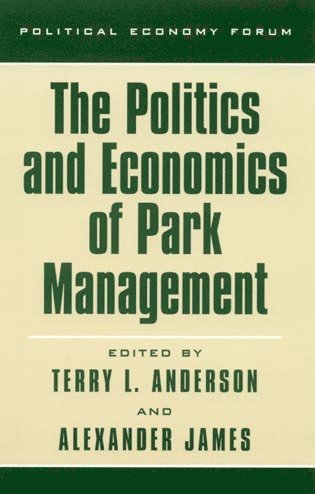
Politics and Economics of Park Management
Av Terry L. Anderson, Alexander James
Häftad, 2000
711 kr
Lägg i varukorg
The Politics and Economics of Park Management examines national protected area systems, in both developed and developing countries, that have made a transformation from "fortress parks" to a sustainable use model. The contributors—park management, academics, and members of nongovenmental …
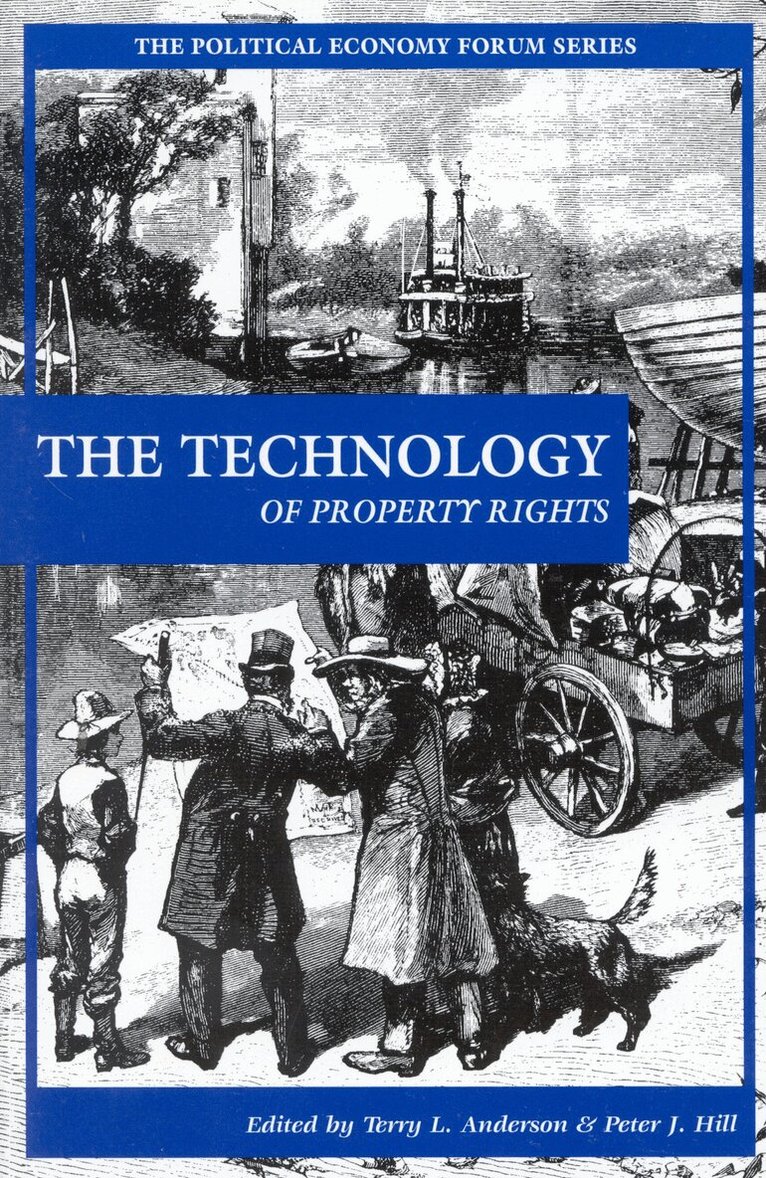
Technology of Property Rights
Av Terry L. Anderson, Peter J. Hill
Häftad, 2001
711 kr
Lägg i varukorg
The Technology of Property Rights combines the understanding of institutions and institutional change with a discussion of the latest technologies and their influence on the measurement and monitoring of property rights. The contributors analyze specific applications for fisheries, whales, water …
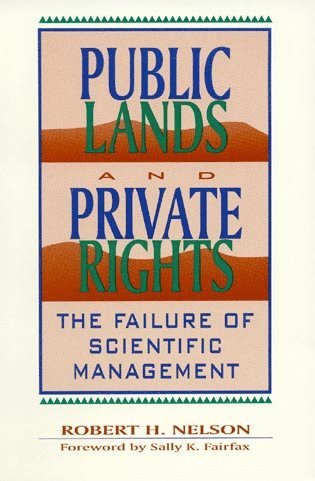
Public Lands and Private Rights
The Failure of Scientific Management
Av Robert H. Nelson, Sally K. Fairfax
Häftad, 1995
993 kr
Lägg i varukorg
One of the leading experts on public lands and land rights issues, Robert H. Nelson here brings together a collection of his finest essays. Nelson demonstrates that the 'progressive' goal of achieving scientific management of public lands has not been realized; instead, public land management has …
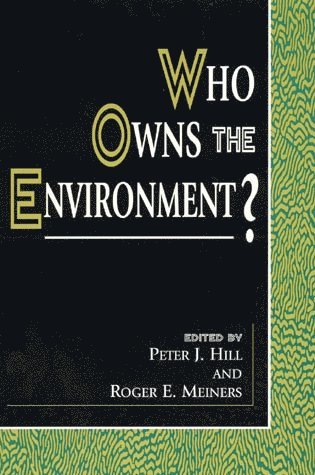
Who Owns the Environment?
Av Peter J. Hill, Roger E. Meiners
Häftad, 1998
950 kr
Lägg i varukorg
The past several decades have witnessed a growing recognition that environmental concerns are essentially property rights issues. Despite agreement that an absence of well-defined and consistently enforced property rights results in the exploitation of air, water, and other natural resources, there …
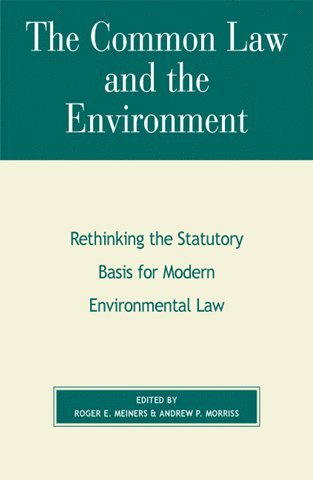
Common Law and the Environment
Rethinking the Statutory Basis for Modern Environmental Law
Av Roger E. Meiners, Andrew P. Morriss
Häftad, 2000
784 kr
Lägg i varukorg
Since 1970, when the Clean Air Act was passed and the Environmental Protection Agency was created, the primary means for addressing environmental problems in the U.S. has been through comprehensive federal statutes and detailed regulations. Evaluating almost three decades of experience with the …
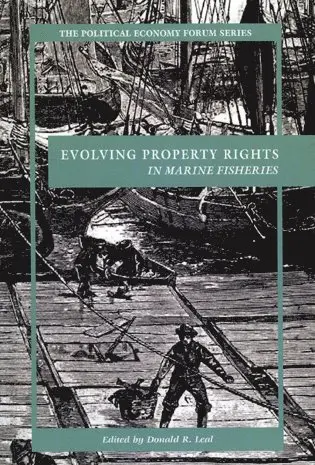
Evolving Property Rights in Marine Fisheries
Inbunden, 2004
1572 kr
Tillfälligt slut
This book examines the development of property rights in marine fisheries, and asks whether the obstacles to their continued development cannot be more easily overcome. The contributed chapters generally focus on the consequences of a lack of property rights of commercial and small-time fishers …
Political Economy of Customs and Culture
Informal Solutions to the Commons Problem
Av Terry L. Anderson, Randy Simmons
Inbunden, 1993
823 kr
Tillfälligt slut
Since the writings of Adam Smith, economists have understood the important role that private property rights play in a well functioning economic system. Without well-defined, enforced, and transferable property rights, the tragedy of the commons is said to result as in the classic case of …
Political Economy of the American West
Av Terry L. Anderson, Peter J. Hill
Inbunden, 1994
740 kr
Tillfälligt slut
In the American West, trappers, miners, and farmers often preceded the formal institutions of government and therefore had to invent their own institutional framework. Early historians like Frederick Jackson Turner and Walter Prescott Webb found heroes in this romantic frontier. Modern historians, …
Public Lands and Private Rights
The Failure of Scientific Management
Av Robert H. Nelson, Sally K. Fairfax
Inbunden, 1995
1010 kr
Tillfälligt slut
One of the leading experts on public lands and land rights issues, Robert H. Nelson here brings together a collection of his finest essays. Nelson demonstrates that the 'progressive' goal of achieving scientific management of public lands has not been realized; instead, public land management has …
Wildlife in the Marketplace
Av Terry L. Anderson, Peter J. Hill
Häftad, 1995
341 kr
Tillfälligt slut
This collection of new and classic essays by a group of distinguished economists and wildlife experts challenges the prevailing idea that wildlife and markets are inimical to one another, arguing that markets can play an important role in preserving animal species and their habitat. In fact, the …
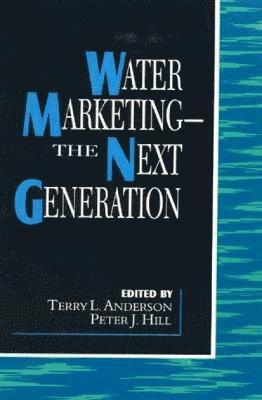
Water Marketing
The Next Generation
Av Terry L. Anderson, Peter J. Hill
Häftad, 1996
341 kr
Tillfälligt slut
Unified by their desire to produce innovative solutions to the problem of allocating fresh water, the prominent contributors to Water Marketing argue that government regulations inadvertently encourage the waste of our most vital resource by preventing the evolution of property rights to water …