Political Theory Today - Böcker
Visar alla böcker i serien Political Theory Today. Handla med fri frakt och snabb leverans.
20 produkter
20 produkter
446 kr
Skickas inom 7-10 vardagar
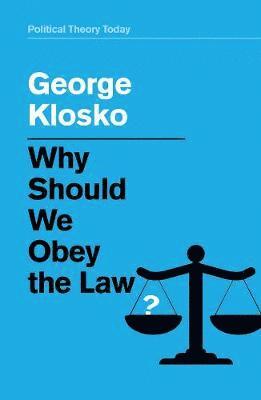
Whether we should obey the law is a question that affects everyone’s day-to-day life, from traffic laws to taxes. Most people obey out of habit, but the question remains: why are we morally required to do so? If we fail to obey, the state may enforce compliance, but is it right for it to do this, and if so, why?In this book, George Klosko, a renowned authority on political obligation, skillfully probes these questions. He considers various prominent theories of obligation and shows why they are unconvincing, contending that only an approach that interweaves multiple principles, rooted in "fair play," is fully persuasive.Klosko develops the fullest statement of his own well-known theory of political obligation while providing a clear overview of the subject. The result is both an essential introductory text for students of political theory and philosophy and a cutting-edge, original contribution to the debate.
138 kr
Skickas inom 7-10 vardagar
Whether we should obey the law is a question that affects everyone’s day-to-day life, from traffic laws to taxes. Most people obey out of habit, but the question remains: why are we morally required to do so? If we fail to obey, the state may enforce compliance, but is it right for it to do this, and if so, why?In this book, George Klosko, a renowned authority on political obligation, skillfully probes these questions. He considers various prominent theories of obligation and shows why they are unconvincing, contending that only an approach that interweaves multiple principles, rooted in "fair play," is fully persuasive.Klosko develops the fullest statement of his own well-known theory of political obligation while providing a clear overview of the subject. The result is both an essential introductory text for students of political theory and philosophy and a cutting-edge, original contribution to the debate.
446 kr
Skickas inom 7-10 vardagar
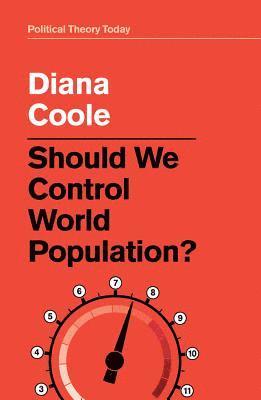
By 2100, the human population may exceed 11 billion. Having recently surpassed 7.5 billion, it has trebled since 1950. Are such numbers sustainable, given a deepening environmental crisis? Can so many live well? Or should world population be controlled? The population question, one of the twentieth century’s most bitterly contested issues, is being debated once again. In this compelling book, Diana Coole examines some of the profound political and ethical questions involved. Are ethical objections to government interference with individuals’ reproductive freedom definitive? Is it possible to limit population in a non-coercive way that is consistent with liberal-democratic values? Interweaving erudite original analysis with an accessible overview of the crucial debates, Coole argues that a case can be made for reducing our numbers in ways that are compatible with human rights.This book will be essential reading for anyone interested in one of the most important questions facing our planet, from concerned citizens to students of politics, sociology, political economy, gender studies and environmental studies.
204 kr
Skickas inom 7-10 vardagar
By 2100, the human population may exceed 11 billion. Having recently surpassed 7.5 billion, it has trebled since 1950. Are such numbers sustainable, given a deepening environmental crisis? Can so many live well? Or should world population be controlled? The population question, one of the twentieth century’s most bitterly contested issues, is being debated once again. In this compelling book, Diana Coole examines some of the profound political and ethical questions involved. Are ethical objections to government interference with individuals’ reproductive freedom definitive? Is it possible to limit population in a non-coercive way that is consistent with liberal-democratic values? Interweaving erudite original analysis with an accessible overview of the crucial debates, Coole argues that a case can be made for reducing our numbers in ways that are compatible with human rights.This book will be essential reading for anyone interested in one of the most important questions facing our planet, from concerned citizens to students of politics, sociology, political economy, gender studies and environmental studies.
446 kr
Skickas inom 7-10 vardagar
Violence – from state coercion to wars and revolutions – remains an enduring global reality. But whereas it is often believed that the point of constitutional politics is to make violence unnecessary, others argue that it is an unavoidable element of politics.In this lucid and erudite book, Elizabeth Frazer and Kimberly Hutchings address these issues using vivid contemporary and historic examples. They carefully explore the strategies that have been deployed to condone violence, either as means to certain ends or as an inherent facet of politics. Examining the complex questions raised by different types of violence, they conclude that, ultimately, all attempts to justify political violence fail.This book will be essential introductory reading for students and scholars of the ethics and politics of political violence.
204 kr
Skickas inom 7-10 vardagar
Violence – from state coercion to wars and revolutions – remains an enduring global reality. But whereas it is often believed that the point of constitutional politics is to make violence unnecessary, others argue that it is an unavoidable element of politics.In this lucid and erudite book, Elizabeth Frazer and Kimberly Hutchings address these issues using vivid contemporary and historic examples. They carefully explore the strategies that have been deployed to condone violence, either as means to certain ends or as an inherent facet of politics. Examining the complex questions raised by different types of violence, they conclude that, ultimately, all attempts to justify political violence fail.This book will be essential introductory reading for students and scholars of the ethics and politics of political violence.
446 kr
Skickas inom 7-10 vardagar
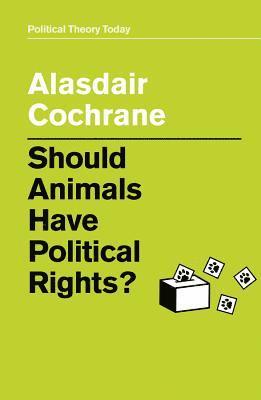
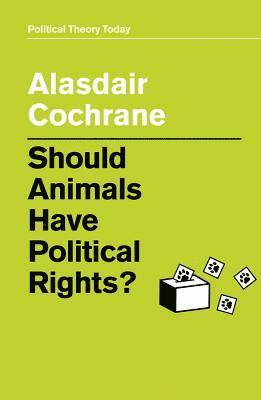
All political communities must make decisions about how to regulate the treatment of animals. Most states currently protect animals through outlawing the infliction of ‘unnecessary suffering’. But do animals’ rights end there? In this book, Alasdair Cochrane argues that states must go much further. Animals have rights to be protected not only from the cruelty of individuals, but also from those structures and institutions which routinely (and, in some cases, necessarily) cause them harm, such as industrialised animal agriculture. But even that isn’t adequate. In order to ensure that their interests are taken seriously, it is imperative that we represent their interests throughout the political process – they require not only rights to protection, but also to democratic membership. Cochrane’s important intervention in this controversial debate will be essential reading for anyone interested in the intersection of political theory and animal rights.
138 kr
Skickas inom 7-10 vardagar
All political communities must make decisions about how to regulate the treatment of animals. Most states currently protect animals through outlawing the infliction of ‘unnecessary suffering’. But do animals’ rights end there? In this book, Alasdair Cochrane argues that states must go much further. Animals have rights to be protected not only from the cruelty of individuals, but also from those structures and institutions which routinely (and, in some cases, necessarily) cause them harm, such as industrialised animal agriculture. But even that isn’t adequate. In order to ensure that their interests are taken seriously, it is imperative that we represent their interests throughout the political process – they require not only rights to protection, but also to democratic membership. Cochrane’s important intervention in this controversial debate will be essential reading for anyone interested in the intersection of political theory and animal rights.
446 kr
Skickas inom 7-10 vardagar
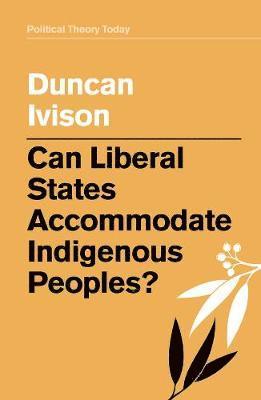
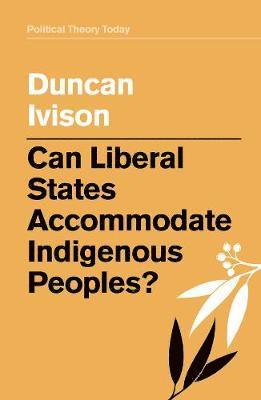
The original – and often continuing – sin of countries with a settler colonial past is their brutal treatment of indigenous peoples. This challenging legacy continues to confront modern liberal democracies ranging from the USA and Canada to Australia, New Zealand and beyond. Duncan Ivison’s book considers how these states can justly accommodate indigenous populations today. He shows how indigenous movements have gained prominence in the past decade, driving both domestic and international campaigns for change. He examines how the claims made by these movements challenge liberal conceptions of the state, rights, political community, identity and legitimacy. Interweaving a lucid introduction to the debates with his own original argument, he contends that we need to move beyond complaints about the ‘politics of identity’ and towards a more historically and theoretically nuanced liberalism better suited to our times. This book will be a key resource for students and scholars interested in political theory, historic injustice, Indigenous studies and the history of political thought.
138 kr
Skickas inom 7-10 vardagar
The original – and often continuing – sin of countries with a settler colonial past is their brutal treatment of indigenous peoples. This challenging legacy continues to confront modern liberal democracies ranging from the USA and Canada to Australia, New Zealand and beyond. Duncan Ivison’s book considers how these states can justly accommodate indigenous populations today. He shows how indigenous movements have gained prominence in the past decade, driving both domestic and international campaigns for change. He examines how the claims made by these movements challenge liberal conceptions of the state, rights, political community, identity and legitimacy. Interweaving a lucid introduction to the debates with his own original argument, he contends that we need to move beyond complaints about the ‘politics of identity’ and towards a more historically and theoretically nuanced liberalism better suited to our times. This book will be a key resource for students and scholars interested in political theory, historic injustice, Indigenous studies and the history of political thought.
446 kr
Skickas inom 7-10 vardagar
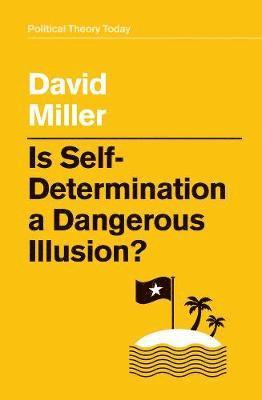
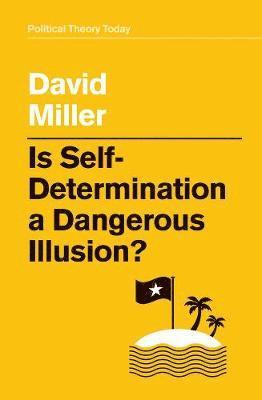
Claims to self-determination are rife in world politics today. They range from Scottish and Catalonian campaigns for independence to calls for the devolution of power to regions and cities. But is self-determination meaningful or desirable in the twenty-first century, or merely a dangerous illusion? In this book, David Miller mounts a powerful defence of political self-determination. He explains why it is valuable and argues that geographic proximity alone is not enough for groups to have the capacity for self-determination: group members must also identify with each other. He explores the different political forms that self-determination can take, and he suggests some realistic constraints on how it can be achieved, concluding that people exercising their collective agency is still both feasible and important. Anyone concerned by the theoretical issues raised by the various secessionist and nationalist movements around the world should read this book.
138 kr
Skickas inom 7-10 vardagar
Claims to self-determination are rife in world politics today. They range from Scottish and Catalonian campaigns for independence to calls for the devolution of power to regions and cities. But is self-determination meaningful or desirable in the twenty-first century, or merely a dangerous illusion? In this book, David Miller mounts a powerful defence of political self-determination. He explains why it is valuable and argues that geographic proximity alone is not enough for groups to have the capacity for self-determination: group members must also identify with each other. He explores the different political forms that self-determination can take, and he suggests some realistic constraints on how it can be achieved, concluding that people exercising their collective agency is still both feasible and important. Anyone concerned by the theoretical issues raised by the various secessionist and nationalist movements around the world should read this book.
532 kr
Skickas inom 7-10 vardagar
The secrecy of the ballot, a crucial basic element of representative democracy, is under threat. Attempts to make voting more convenient in the face of declining turnout – and the rise of the “ballot selfie” – are making it harder to guarantee secrecy. Leading scholars James Johnson and Susan Orr go back to basics to analyze the fundamental issues surrounding the secret ballot, showing how secrecy works to protect voters from coercion and bribery. They argue, however, that this protection was always incomplete: faced with effective ballot secrecy, powerful actors turned to manipulating turnout – buying presence or absence at the polls – to obtain their electoral goals. The authors proceed to show how making both voting and voting in secret mandatory would foreclose both undue influence and turnout manipulation. This would enhance freedom for voters by liberating them from coercion or bribery in their choice of both whether and how to vote.This thought-provoking and insightful text will be invaluable for students and scholars of democratic theory, elections and voting, and political behavior.
138 kr
Skickas inom 7-10 vardagar
The secrecy of the ballot, a crucial basic element of representative democracy, is under threat. Attempts to make voting more convenient in the face of declining turnout – and the rise of the “ballot selfie” – are making it harder to guarantee secrecy. Leading scholars James Johnson and Susan Orr go back to basics to analyze the fundamental issues surrounding the secret ballot, showing how secrecy works to protect voters from coercion and bribery. They argue, however, that this protection was always incomplete: faced with effective ballot secrecy, powerful actors turned to manipulating turnout – buying presence or absence at the polls – to obtain their electoral goals. The authors proceed to show how making both voting and voting in secret mandatory would foreclose both undue influence and turnout manipulation. This would enhance freedom for voters by liberating them from coercion or bribery in their choice of both whether and how to vote.This thought-provoking and insightful text will be invaluable for students and scholars of democratic theory, elections and voting, and political behavior.
446 kr
Skickas inom 7-10 vardagar
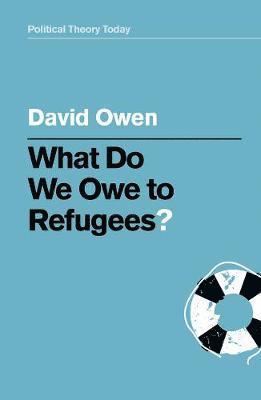
Who are refugees? Who, if anyone, is responsible for protecting them? What forms should this protection take? In a world of people fleeing from civil wars, state failure, and environmental disasters, these are ethically and politically pressing questions.In this book, David Owen reveals how the contemporary politics of refuge is structured by two rival historical pictures of refugees. In reconstructing this history, he advocates an understanding of refugeehood that moves us beyond our current impasse by distinguishing between what is owed to refugees in general and what is owed to different types of refugee. He provides an account of refugee protection and the forms of international cooperation required to implement it that is responsive to the claims of both refugees and states.At a time when refugee protection is once again prominent on the international agenda, this book offers a guide to understanding the challenges this topic raises and shows why addressing it matters for all of us.
204 kr
Skickas inom 7-10 vardagar
Who are refugees? Who, if anyone, is responsible for protecting them? What forms should this protection take? In a world of people fleeing from civil wars, state failure, and environmental disasters, these are ethically and politically pressing questions.In this book, David Owen reveals how the contemporary politics of refuge is structured by two rival historical pictures of refugees. In reconstructing this history, he advocates an understanding of refugeehood that moves us beyond our current impasse by distinguishing between what is owed to refugees in general and what is owed to different types of refugee. He provides an account of refugee protection and the forms of international cooperation required to implement it that is responsive to the claims of both refugees and states.At a time when refugee protection is once again prominent on the international agenda, this book offers a guide to understanding the challenges this topic raises and shows why addressing it matters for all of us.
446 kr
Skickas inom 7-10 vardagar
In the wake of major terrorist attacks, calls for ever more draconian policies to prevent further outrages are common. Such responses raise the pressing question: is it possible to effectively fight terrorism while respecting democratic values of equality and trust? Examining recent examples of terrorist atrocities – from the murder of Muslims in New Zealand and Jews in Pittsburgh to the Charlie Hebdo attacks – Patti Tamara Lenard considers how democracies should tackle terrorism within the constraints imposed by democratic principles. For many, the tension between liberty and security necessarily means that the only way to protect security is to sacrifice liberty—but Lenard rejects this claim, and instead argues that security’s goal should be to keep all citizens equally secure in the face of terrorist threats. Critiquing existing policies, from exile to racial profiling, she outlines what ethical counter-terrorism policies should look like, arguing for strategies that respect equality and thereby maintain trust among diverse communities in democratic states. This erudite guide to how states might ethically fight terrorism will be essential reading for any student or scholar of public affairs, security, counter-terrorism, and democratic governance.
138 kr
Skickas inom 7-10 vardagar
In the wake of major terrorist attacks, calls for ever more draconian policies to prevent further outrages are common. Such responses raise the pressing question: is it possible to effectively fight terrorism while respecting democratic values of equality and trust? Examining recent examples of terrorist atrocities – from the murder of Muslims in New Zealand and Jews in Pittsburgh to the Charlie Hebdo attacks – Patti Tamara Lenard considers how democracies should tackle terrorism within the constraints imposed by democratic principles. For many, the tension between liberty and security necessarily means that the only way to protect security is to sacrifice liberty—but Lenard rejects this claim, and instead argues that security’s goal should be to keep all citizens equally secure in the face of terrorist threats. Critiquing existing policies, from exile to racial profiling, she outlines what ethical counter-terrorism policies should look like, arguing for strategies that respect equality and thereby maintain trust among diverse communities in democratic states. This erudite guide to how states might ethically fight terrorism will be essential reading for any student or scholar of public affairs, security, counter-terrorism, and democratic governance.
446 kr
Skickas inom 7-10 vardagar
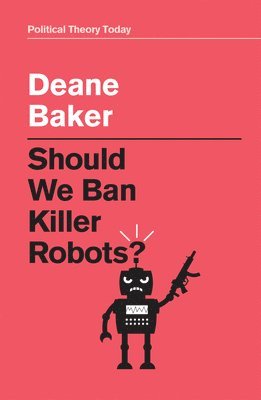
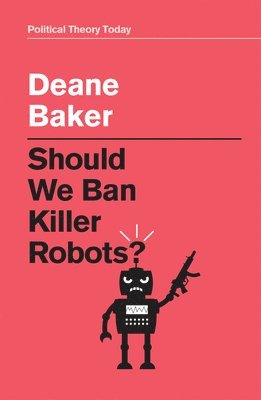
Images of killer robots are the stuff of science fiction – but also, increasingly, of scientific fact on the battlefield. Should we be worried, or is this a normal development in the technology of war?In this accessible volume ethicist Deane Baker cuts through the confusion over whether lethal autonomous weapons – so-called killer robots – should be banned. Setting aside unhelpful analogies taken from science fiction, Baker looks instead to our understanding of mercenaries (the metaphorical ‘dogs of war’) and weaponized animals (the literal dogs of war) to better understand the ethical challenges raised by the employment of lethal autonomous weapons (the robot dogs of war). These ethical challenges include questions of trust and reliability, control and accountability, motivation and dignity. Baker argues that, while each of these challenges is significant, they do not – even when considered together – justify a ban on this emerging class of weapon systems.This book offers a clear point of entry into the debate over lethal autonomous weapons – for students, researchers, policy makers and interested general readers.
138 kr
Skickas inom 7-10 vardagar
Images of killer robots are the stuff of science fiction – but also, increasingly, of scientific fact on the battlefield. Should we be worried, or is this a normal development in the technology of war?In this accessible volume ethicist Deane Baker cuts through the confusion over whether lethal autonomous weapons – so-called killer robots – should be banned. Setting aside unhelpful analogies taken from science fiction, Baker looks instead to our understanding of mercenaries (the metaphorical ‘dogs of war’) and weaponized animals (the literal dogs of war) to better understand the ethical challenges raised by the employment of lethal autonomous weapons (the robot dogs of war). These ethical challenges include questions of trust and reliability, control and accountability, motivation and dignity. Baker argues that, while each of these challenges is significant, they do not – even when considered together – justify a ban on this emerging class of weapon systems.This book offers a clear point of entry into the debate over lethal autonomous weapons – for students, researchers, policy makers and interested general readers.