Principles and Practice in Records Management and Archives - Böcker
Visar alla böcker i serien Principles and Practice in Records Management and Archives. Handla med fri frakt och snabb leverans.
10 produkter
10 produkter
1 276 kr
Skickas
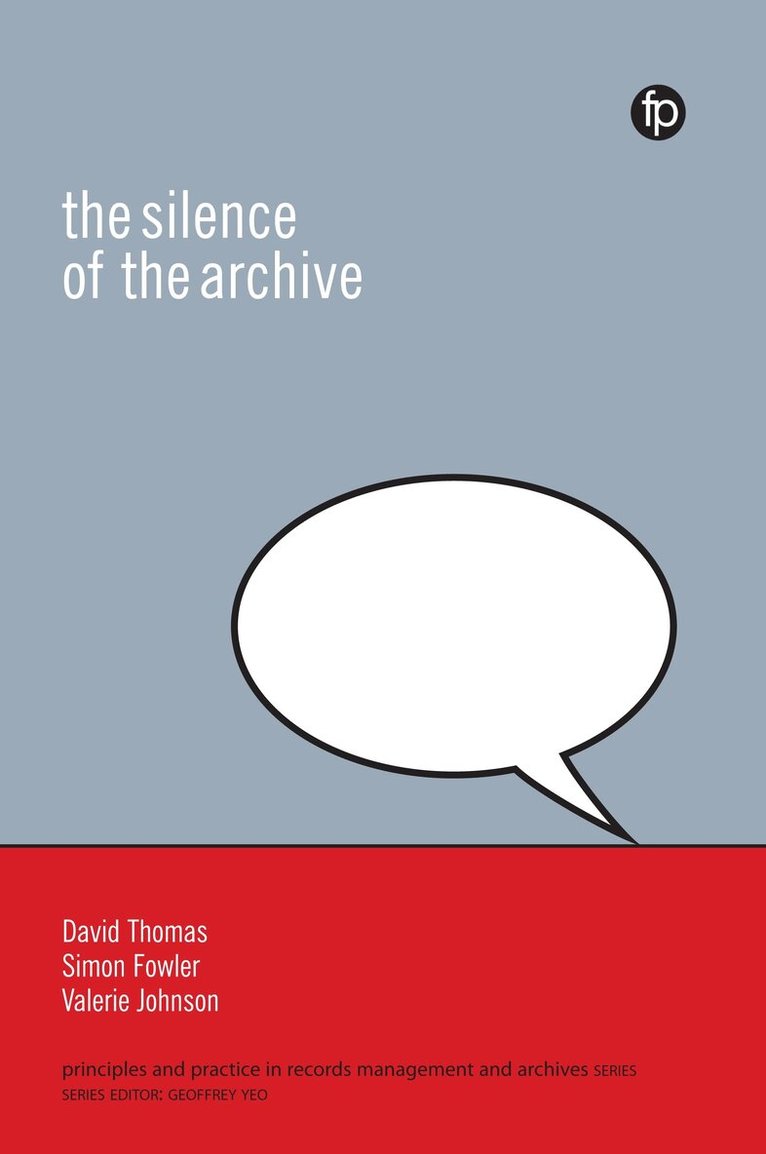
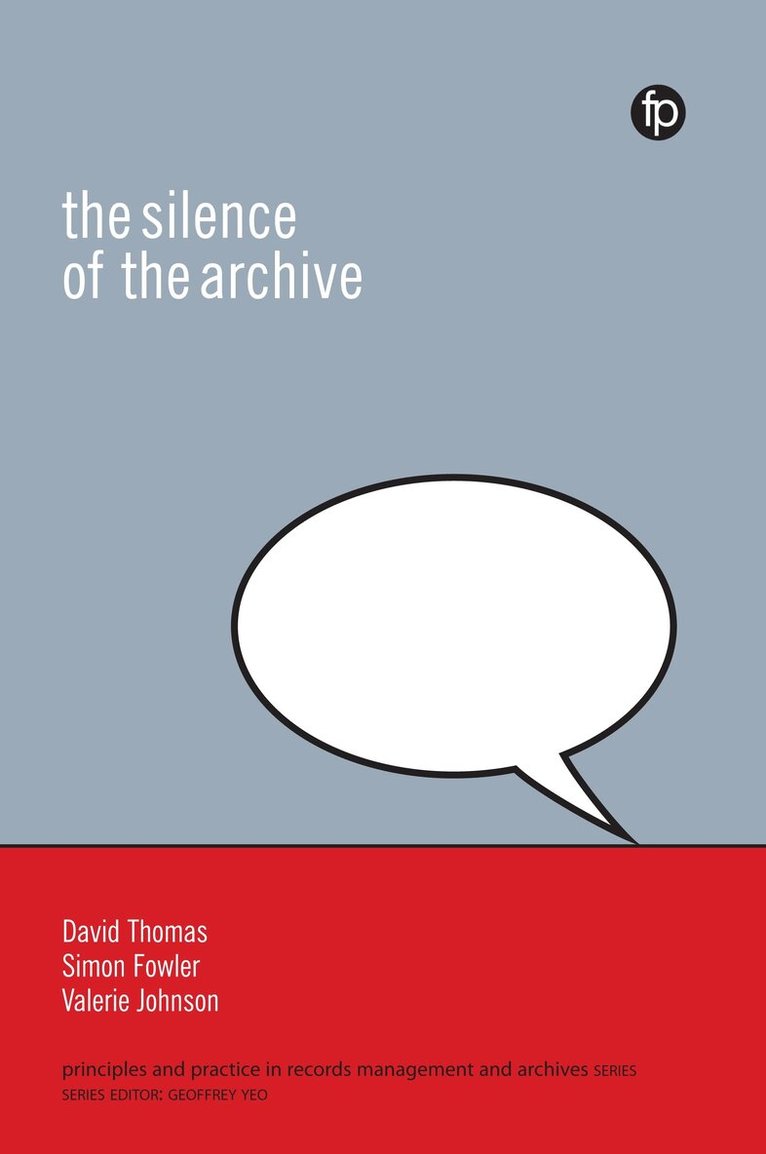
In recent years big data initiatives, not to mention Hollywood, the video game industry and countless other popular media, have reinforced and even glamorized the public image of the archive as the ultimate repository of facts and the hope of future generations for uncovering ‘what actually happened’. The reality is, however, that for all sorts of reasons the record may not have been preserved or survived in the archive. In fact, the record may never have even existed – its creation being as imagined as is its contents. And even if it does exist, it may be silent on the salient facts, or it may obfuscate, mislead or flat out lie.The Silence of the Archive is written by three expert and knowledgeable archivists and draws attention to the many limitations of archives and the inevitability of their having parameters.Silences or gaps in archives range from details of individuals’ lives to records of state oppression or of intelligence operations. The book brings together ideas from a wide range of fields, including contemporary history, family history research and Shakespearian studies. It describes why these silences exist, what the impact of them is, how researchers have responded to them, and what the silence of the archive means for researchers in the digital age. It will help provide a framework and context to their activities and enable them to better evaluate archives in a post-truth society.This book includes discussion of: enforced silencesexpectations and when silence means silencedigital preservation, authenticity and the futuredealing with the silencepossible solutions; challenging silence and acceptancethe meaning of the silences: are things getting better or worse?user satisfaction and audience development.This book will make compelling reading for professional archivists, records managers and records creators, postgraduate and undergraduate students of history, archives, librarianship and information studies, as well as academics and other users of archives.
2 392 kr
Tillfälligt slut
In recent years big data initiatives, not to mention Hollywood, the video game industry and countless other popular media, have reinforced and even glamorized the public image of the archive as the ultimate repository of facts and the hope of future generations for uncovering ‘what actually happened’. The reality is, however, that for all sorts of reasons the record may not have been preserved or survived in the archive. In fact, the record may never have even existed – its creation being as imagined as is its contents. And even if it does exist, it may be silent on the salient facts, or it may obfuscate, mislead or flat out lie.The Silence of the Archive is written by three expert and knowledgeable archivists and draws attention to the many limitations of archives and the inevitability of their having parameters.Silences or gaps in archives range from details of individuals’ lives to records of state oppression or of intelligence operations. The book brings together ideas from a wide range of fields, including contemporary history, family history research and Shakespearian studies. It describes why these silences exist, what the impact of them is, how researchers have responded to them, and what the silence of the archive means for researchers in the digital age. It will help provide a framework and context to their activities and enable them to better evaluate archives in a post-truth society.This book includes discussion of: enforced silencesexpectations and when silence means silencedigital preservation, authenticity and the futuredealing with the silencepossible solutions; challenging silence and acceptancethe meaning of the silences: are things getting better or worse?user satisfaction and audience development.This book will make compelling reading for professional archivists, records managers and records creators, postgraduate and undergraduate students of history, archives, librarianship and information studies, as well as academics and other users of archives.
991 kr
Skickas inom 5-8 vardagar
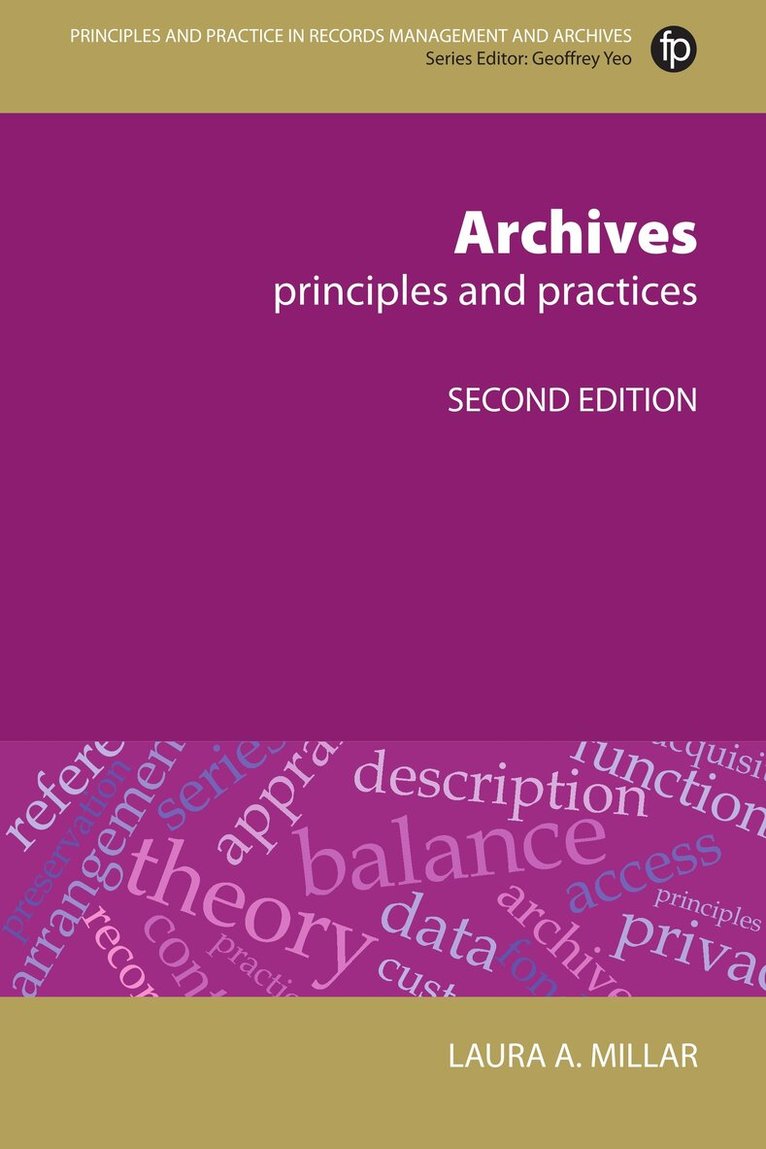
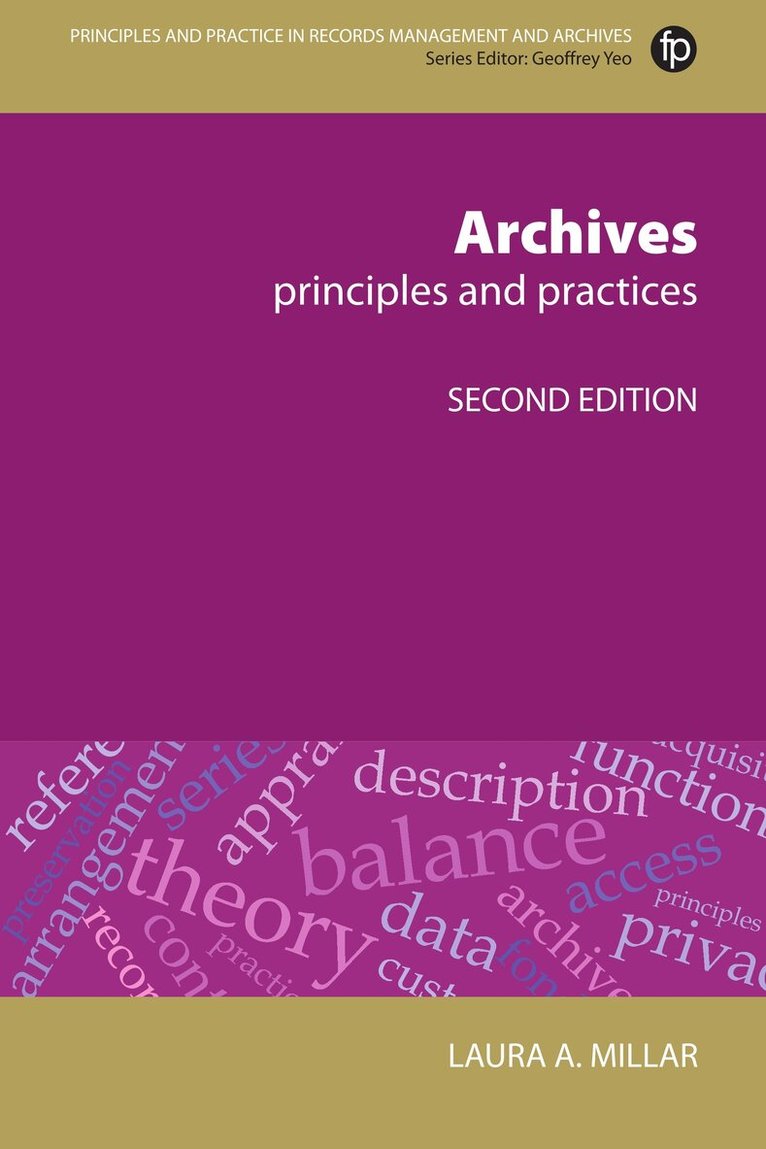
This new and extensively revised second edition offers an international perspective on archives management, providing authoritative guidance relevant to collections-based repositories and to organizations responsible for managing their own institutional archives. Written in clear language with lively examples, Archives: Principles and practices introduces core archival concepts, explains best-practice approaches and discusses the central activities that archivists need to know to ensure the documentary materials in their charge are cared for as effectively as possible. Topics addressed include:core archival principles and conceptsarchival history and the evolution of archival theoriesthe nature and diversity of archival materials and institutionsthe responsibilities and duties of the archivistissues in the management of archival institutionsthe challenges of balancing access and privacy in archival servicebest practice principles and strategic approaches to central archival tasks such as acquisition, preservation, reference and accessdetailed comparison of custodial, fonds-oriented approaches and post-custodial, functional approaches to arrangement and description.Discussion of digital archives is woven throughout the book, including consideration of the changing role of the archivist in the digital age. In recasting her book to address the impact of digital technologies on records and archives, Millar offers us an archival manual for the twenty-first century. This book will be essential reading for archival practitioners, archival studies students and professors, librarians, museum curators, local authorities, small governments, public libraries, community museums, corporations, associations and other agencies with archival responsibility.
2 053 kr
Skickas inom 5-8 vardagar
This new and extensively revised second edition offers an international perspective on archives management, providing authoritative guidance relevant to collections-based repositories and to organizations responsible for managing their own institutional archives. Written in clear language with lively examples, Archives: Principles and practices introduces core archival concepts, explains best-practice approaches and discusses the central activities that archivists need to know to ensure the documentary materials in their charge are cared for as effectively as possible. Topics addressed include:core archival principles and conceptsarchival history and the evolution of archival theoriesthe nature and diversity of archival materials and institutionsthe responsibilities and duties of the archivistissues in the management of archival institutionsthe challenges of balancing access and privacy in archival servicebest practice principles and strategic approaches to central archival tasks such as acquisition, preservation, reference and accessdetailed comparison of custodial, fonds-oriented approaches and post-custodial, functional approaches to arrangement and description.Discussion of digital archives is woven throughout the book, including consideration of the changing role of the archivist in the digital age. In recasting her book to address the impact of digital technologies on records and archives, Millar offers us an archival manual for the twenty-first century. This book will be essential reading for archival practitioners, archival studies students and professors, librarians, museum curators, local authorities, small governments, public libraries, community museums, corporations, associations and other agencies with archival responsibility.
Records, Information and Data
Exploring the role of record keeping in an information culture
Häftad, Engelska, 2018
1 289 kr
Skickas inom 5-8 vardagar
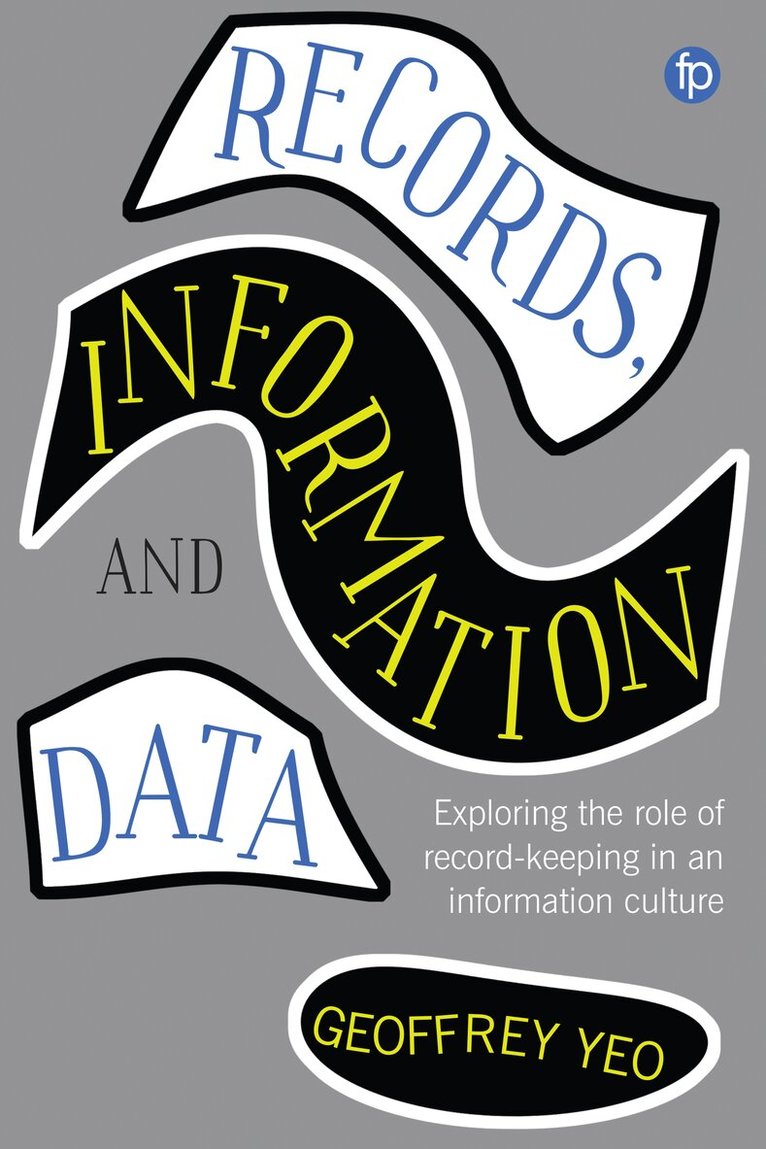
This dynamic book considers whether and how the management of records (and archives) differs from the management of information (and data). Can archives and records management still make a distinctive contribution in the 21st century, or are they now being dissolved into a wider world of information governance? What should be our conceptual understanding of records in the digital era? What are the practical implications of the information revolution for the work of archivists and records managers?Geoffrey Yeo, a distinguished expert in the global field, explores concepts of ‘records’ and ‘archives’ and sets today’s record-keeping and archival practices in their historical context. He examines changing perceptions of the nature and purpose of records management and archival work, notions of convergence among information-related disciplines, and archivists’ and records managers’ attitudes to information and its governance. Starting with Peter Morville’s dictum that ‘when we try to define information, we become lost in a hall of mirrors’, Yeo considers different understandings of the concept of ‘information’ and their applicability to the field of archives and records management. He also looks at the world of data science and data administration, and asks whether and how far recent work in this area can enhance our knowledge of how records function and how they relate to the information universe.Key topics covered include:The keeping of records: a brief historical overviewThinking about records and archives: the transition to the digitalArchivists, records managers and the allure of informationFinding a way through the hall of mirrors: concepts of informationRecords and data Why records are not (just) information; understanding records in the digital era.This thought provoking and timely book is primarily intended for records managers and archivists, but should also be of interest to professionals in a range of information-related disciplines. In addressing the place of record-keeping in contemporary information culture, it aims to provide a balance of theory and practice that will appeal to practitioners as well as students and academics around the world.
Records, Information and Data
Exploring the role of record keeping in an information culture
Inbunden, Engelska, 2018
2 727 kr
Skickas inom 11-20 vardagar
This dynamic book considers whether and how the management of records (and archives) differs from the management of information (and data). Can archives and records management still make a distinctive contribution in the 21st century, or are they now being dissolved into a wider world of information governance? What should be our conceptual understanding of records in the digital era? What are the practical implications of the information revolution for the work of archivists and records managers?Geoffrey Yeo, a distinguished expert in the global field, explores concepts of ‘records’ and ‘archives’ and sets today’s record-keeping and archival practices in their historical context. He examines changing perceptions of the nature and purpose of records management and archival work, notions of convergence among information-related disciplines, and archivists’ and records managers’ attitudes to information and its governance. Starting with Peter Morville’s dictum that ‘when we try to define information, we become lost in a hall of mirrors’, Yeo considers different understandings of the concept of ‘information’ and their applicability to the field of archives and records management. He also looks at the world of data science and data administration, and asks whether and how far recent work in this area can enhance our knowledge of how records function and how they relate to the information universe.Key topics covered include:The keeping of records: a brief historical overviewThinking about records and archives: the transition to the digitalArchivists, records managers and the allure of informationFinding a way through the hall of mirrors: concepts of informationRecords and data Why records are not (just) information; understanding records in the digital era.This thought provoking and timely book is primarily intended for records managers and archivists, but should also be of interest to professionals in a range of information-related disciplines. In addressing the place of record-keeping in contemporary information culture, it aims to provide a balance of theory and practice that will appeal to practitioners as well as students and academics around the world.
2 545 kr
Skickas inom 11-20 vardagar
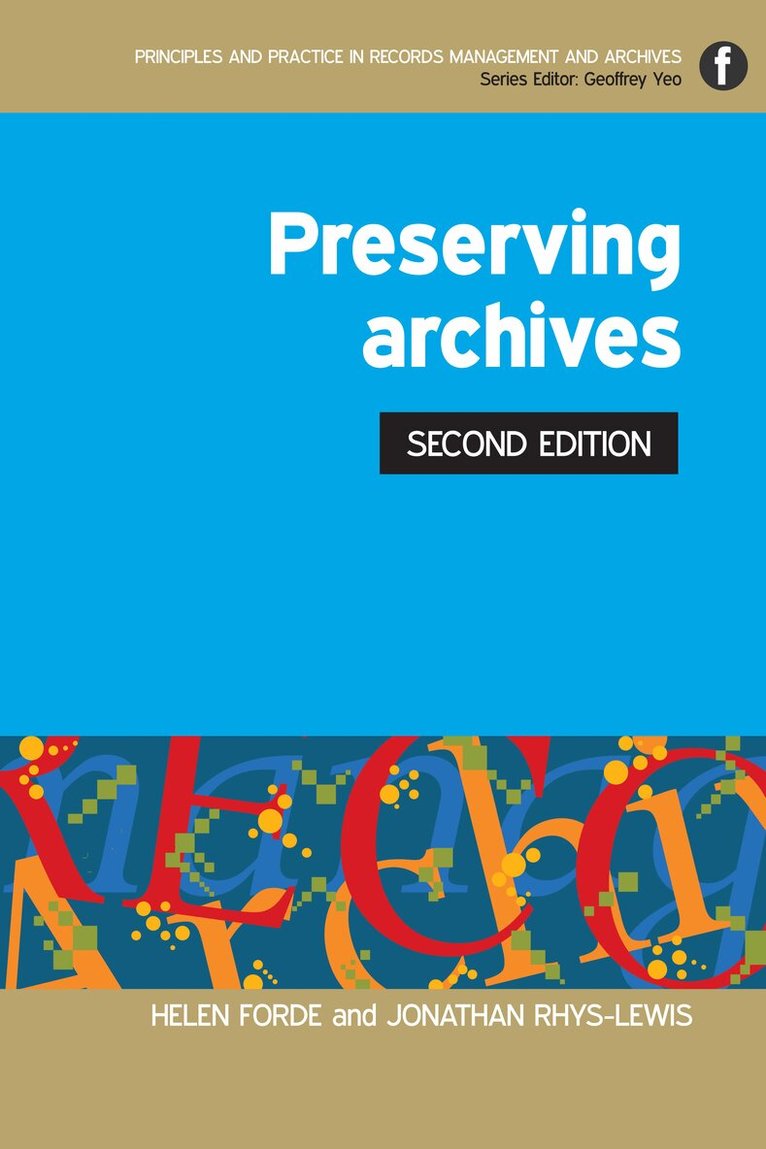
A brand new and fully updated edition of this seminal work on archival preservation. Access to archival material – the documentary heritage of people all over the world that gives them their identity and ensures their rights – is dependent on the survival of fragile materials: paper, parchment, photographic materials, audiovisual materials and, most recently, magnetic, optical and increasingly digital formats. The primary importance of such survival is widely acknowledged but sometimes overlooked in a rush to provide ever better means of access. But without the basic material, no services can be offered. Preservation is at the heart of archival activity. Archivists in all types of organizations face questions on how to plan a preservation strategy in less than perfect circumstances, or deal with a sudden emergency. This book considers the causes of threats to the basic material, outlines the preservation options available and offers flexible solutions applicable in a variety of situations. It offers a wide range of case studies and examples from international specialists. This revised edition includes additional material on digital preservation and green building as well as a new chapter on the management and training of volunteers, reflecting a key concern for many archival institutions. Key topics are: • Understanding archival materials and their characteristics • Managing digital preservation • Archive buildings and their characteristics • Safeguarding the building and its contents • Managing archival storage • Managing risks and avoiding disaster • Creating and using surrogates • Exhibiting archives • Handling the records • Managing a pest control programme • Training and the use of volunteers • Putting preservation into practice. Readership: Archivists, librarians, curators and enthusiasts, trained and untrained, in museums, local studies centres and voluntary societies in need of good clear advice.
1 385 kr
Skickas inom 11-20 vardagar
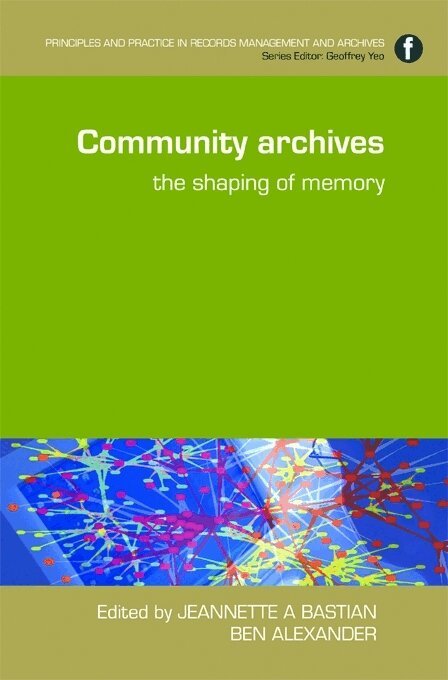
How do archives and other cultural institutions such as museums determine the boundaries of a particular community, and of their own institutional reach, in constructing effective strategies and methodologies for selecting and maintaining appropriate material evidence? This book offers guidance for archivists, record managers and museums professionals faced with such issues in their daily work. This edited collection explores the relationships between communities and the records they create at both practical and scholarly levels. It focuses on the ways in which records reflect community identity and collective memory, and the implications of capturing, appraising and documenting these core societal elements – with particular focus on the ways in which recent advances in technology can overcome traditional obstacles, as well as how technologies themselves offer possibilities of creating new virtual communities. It is divided into five themes: - a community archives model - communities and non-traditional record keeping - records loss, destruction and recovery - online communities: how technology brings communities and their records together - building a community archive. Readership: This book will appeal to practitioners, researchers, and academics in the archives and records community as well as to historians and other scholars concerned with community building and social issues.
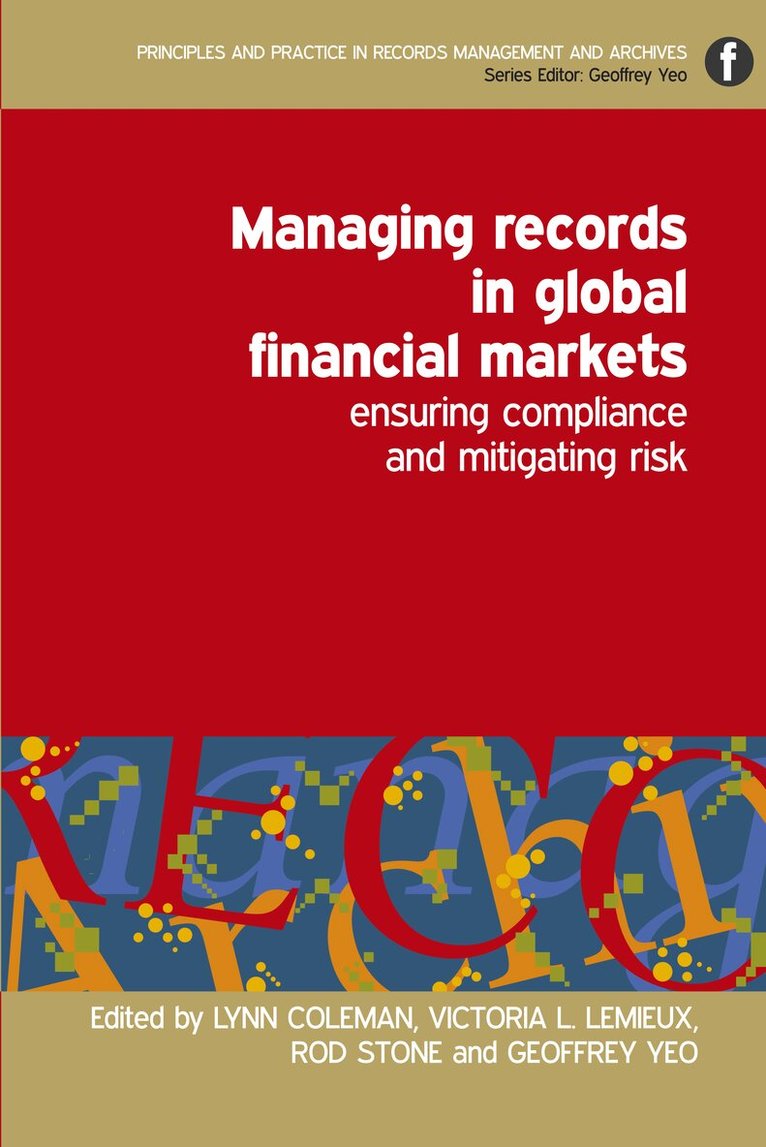
Managing Records in Global Financial Markets
Ensuring Compliance and Mitigating Risk
Häftad, Engelska, 2011
1 282 kr
Tillfälligt slut
There are a number of publications covering records management generically, however very few are focused on the specific challenges of particular sectors, and fewer still on current regulatory, legal and governance issues associated with managing records in global banking and finance businesses. This timely book fills this gap by exploring these complex issues fully, and offers strategies and examples of best practice to meet the recordkeeping challenges to which they give rise in corporate and commercial banking enterprises operating in global capital markets. The examples and cases studies encompass recordkeeping in investment banking, asset management, brokerage and other financial services which serve global markets, and the book will be of particular significance to the financial sector. However, covering as it does the issues that arise from operating across borders and jurisdictions, it will also be of relevance to multi-national businesses in other sectors. "Records and information are the living history of how a financial institution steers its course in a brutally competitive market. This outstanding volume has achieved something important: the editors deliver a resource that provides reliable and trustworthy navigation through the diverse challenges of global banking and financial services and the rigour of specific national rules. Balanced, thorough, accessible - an essential tool for any professional." - Jeffrey Ritter "I would recommend this book to all records managers in business and also to the higher education institutions providing any type of information studies." - Information Research "…a must-have resource for experienced finance industry professionals working to advance their RIM/information governance programs to full maturity." - Information Management
1 276 kr
Skickas inom 11-20 vardagar
A brand new and fully updated edition of this seminal work on archival preservation. Access to archival material – the documentary heritage of people all over the world that gives them their identity and ensures their rights – is dependent on the survival of fragile materials: paper, parchment, photographic materials, audiovisual materials and, most recently, magnetic, optical and increasingly digital formats. The primary importance of such survival is widely acknowledged but sometimes overlooked in a rush to provide ever better means of access. But without the basic material, no services can be offered. Preservation is at the heart of archival activity. Archivists in all types of organizations face questions on how to plan a preservation strategy in less than perfect circumstances, or deal with a sudden emergency. This book considers the causes of threats to the basic material, outlines the preservation options available and offers flexible solutions applicable in a variety of situations. It offers a wide range of case studies and examples from international specialists. This revised edition includes additional material on digital preservation and green building as well as a new chapter on the management and training of volunteers, reflecting a key concern for many archival institutions. Key topics are: • Understanding archival materials and their characteristics • Managing digital preservation • Archive buildings and their characteristics • Safeguarding the building and its contents • Managing archival storage • Managing risks and avoiding disaster • Creating and using surrogates • Exhibiting archives • Handling the records • Managing a pest control programme • Training and the use of volunteers • Putting preservation into practice. Readership: Archivists, librarians, curators and enthusiasts, trained and untrained, in museums, local studies centres and voluntary societies in need of good clear advice.